
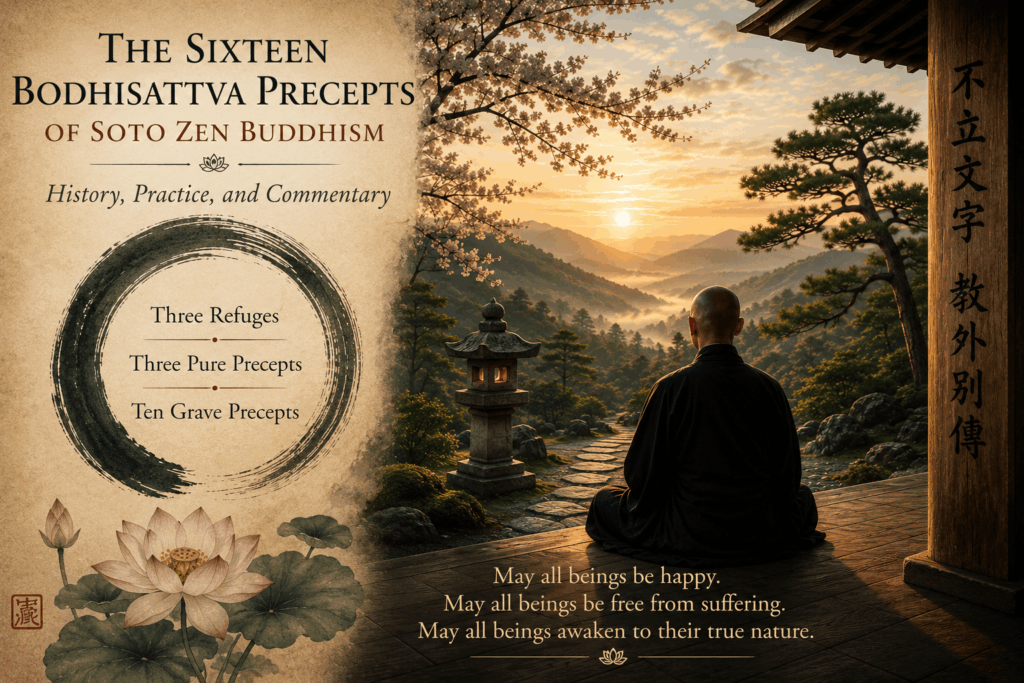
The Sixteen Bodhisattva Precepts of Soto Zen Buddhism
The Sixteen Bodhisattva Precepts occupy a unique place within Soto Zen Buddhism. They are at once vows, ethical principles, contemplative teachings, and expressions of awakening itself.

Depth Without Dogma — Seeking Meaning in the Modern World
Explore secular and sacred forms of spiritual life—where awe, purpose, and personal growth intersect with rational inquiry and cultural wisdom.
The Sixteen Bodhisattva Precepts occupy a unique place within Soto Zen Buddhism. They are at once vows, ethical principles, contemplative teachings, and expressions of awakening itself.

A vision of a modern Zen Renaissance where meditation, science, education, healthcare, and technology work together to cultivate human flourishing.

Explore the Soto Zen Meal Chants through a Science Abbey translation and commentary on oryoki, gratitude, mindfulness, interdependence, and awakening.
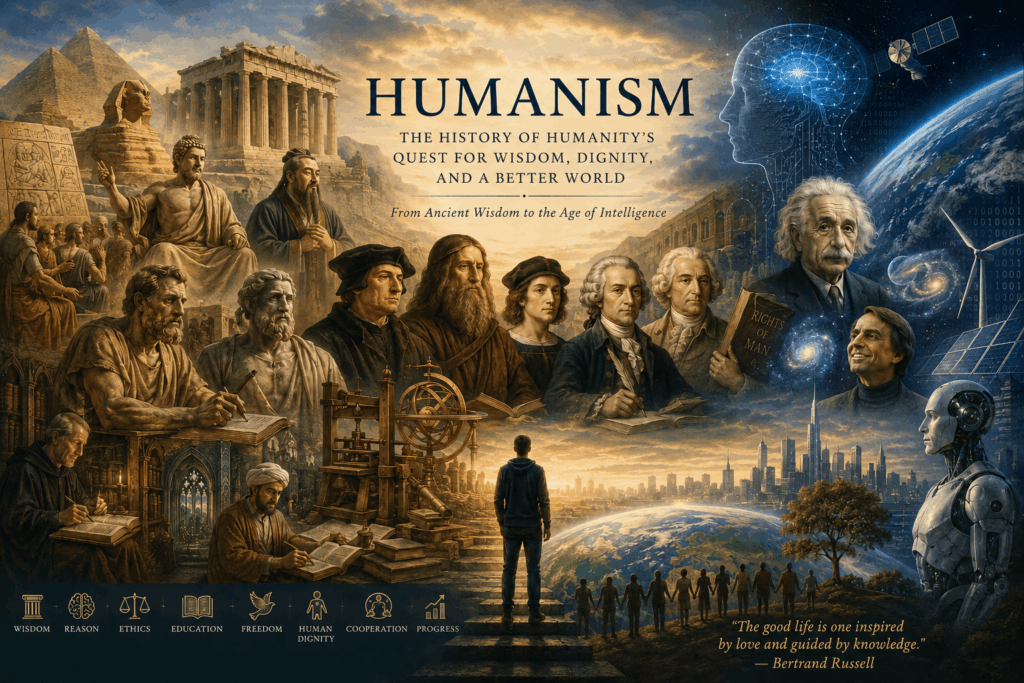
A history of humanism from the ancient world to the Age of Intelligence, exploring how philosophy, religion, science, democracy, and human rights shaped humanity’s ongoing pursuit of wisdom, dignity, and human flourishing.

Read Dōgen’s Fukanzazengi with a clear modern translation and commentary on Soto Zen, zazen, shikantaza, mindfulness, and awakening.
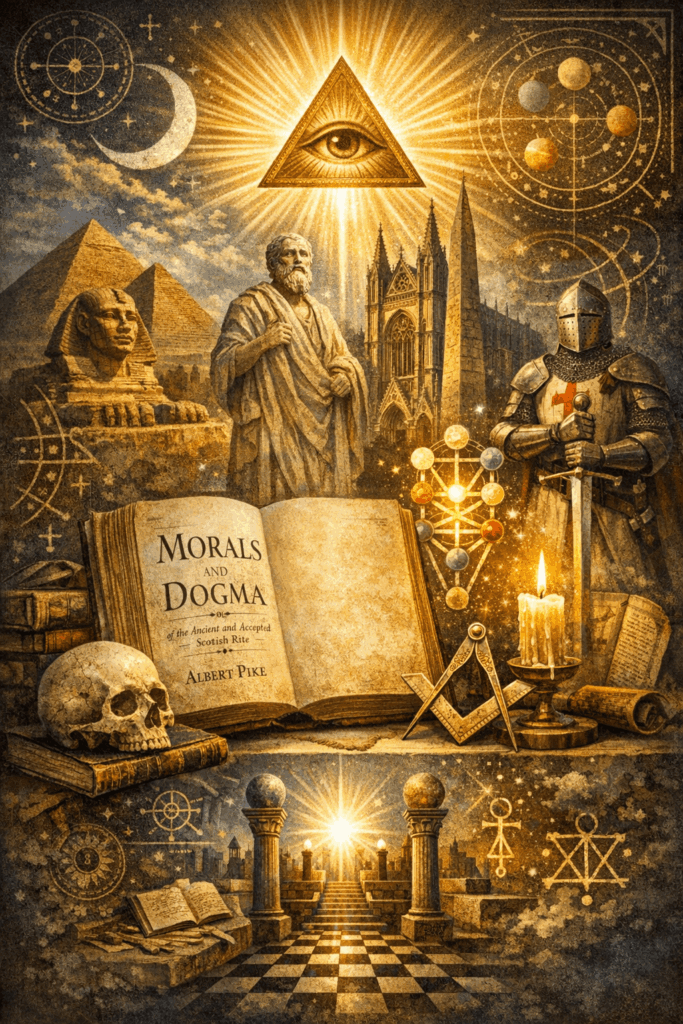
Pike’s influential Masonic masterpiece through modern scholarship, separating enduring insights on morality, symbolism, education, and human development from outdated theories while exploring its relevance for Freemasonry and civilization in the twenty-first century.

Explore the origins of Renaissance Humanism, the revival of classical learning, Civic Humanism, art, science, and the rise of modern civilization through the thinkers and ideals that transformed Europe and shaped the modern world.

A scientific humanist exploration of Dōgen Zenji’s Eihei Shingi, revealing how Zen monastic discipline functions as a system of mindfulness, behavioral design, and conscious institutional life.

The I Ching (Yijing, Book of Changes) sits at the intersection of philosophy, cosmology, mathematics, political ethics, and early systems thinking. It can be explored not as supernatural divination but as one of humanity’s earliest models of dynamic complexity and moral decision-making.

Neutral Analytical Vigilance Institute (NAVI) | Science Abbey Global Intelligence Initiative | Policy Brief — For Government, Civil Society, and International Institutions

Explore The Science of Community—how human connection evolved from tribe to global society, and how reason and compassion can guide a more unified world.
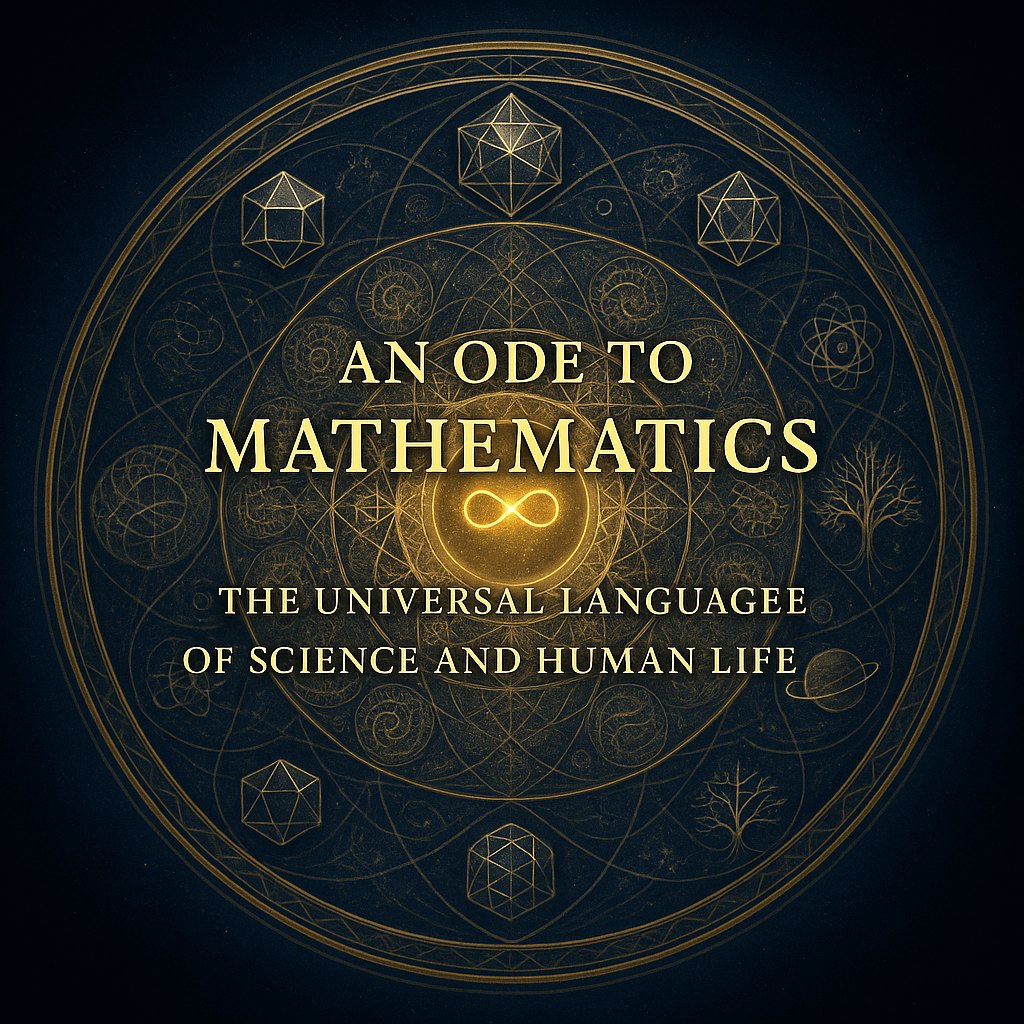
Explore the universal language of numbers, patterns, and proofs—revealing how math shapes science, technology, society, and human life.