
The Yijing (I Ching) – The Book of Changes
Humanity’s Earliest Systems Philosophy
Table of Contents
1. Introduction — The Book of Changes and the Science of Transformation
Overview of the Yijing as one of humanity’s earliest attempts to understand the patterns of change in nature, society, and human life.
2. Historical Origins of the Yijing
Origins in early Chinese civilization, legends of Fu Xi, development during the Zhou dynasty under King Wen of Zhou and Duke of Zhou, and philosophical reinterpretation by Confucius.
3. The Structure of the Yijing: Trigrams, Hexagrams, and Binary Logic
Explanation of the Bagua (Eight Trigrams), formation of the sixty-four hexagrams, and their combinatorial mathematical structure.
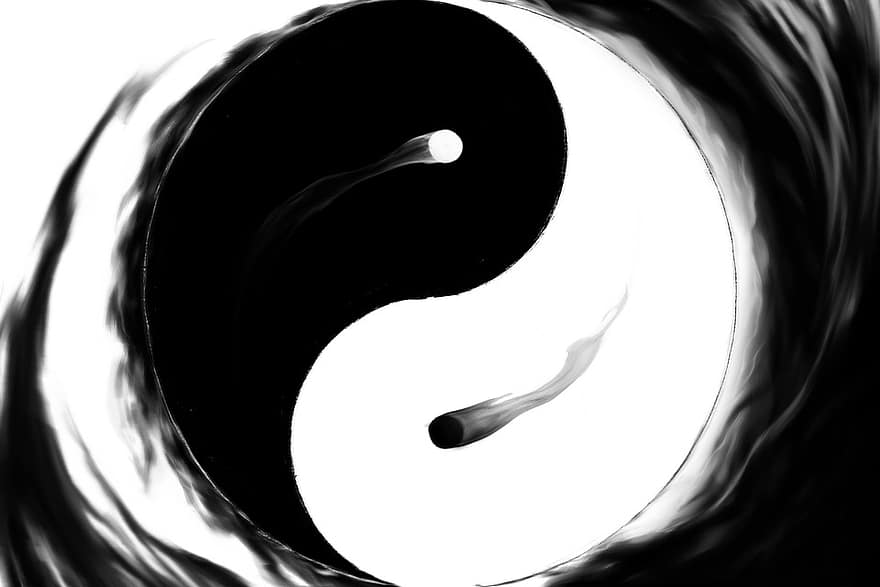
4. Yin and Yang: The Cosmology of Dynamic Balance
Philosophical meaning of yin and yang and their role in modeling the dynamic balance of natural systems.
5. The Sixty-Four Hexagrams as a Model of Situational Ethics
How the hexagrams represent stages of evolving circumstances rather than rigid moral laws.
6. Divination and Decision-Making: Ancient Cognitive Technology
How casting hexagrams functioned as an early decision-support method encouraging reflection and scenario analysis.
7. Confucian Interpretations and the Moralization of the Yijing
Transformation of the Yijing into a moral and political philosophy within Confucian scholarship.
8. Daoist Interpretations and the Philosophy of Natural Flow
Daoist readings emphasizing spontaneity, harmony with nature, and effortless action.
9. The Yijing and Early Chinese Scientific Thought
Influence on early Chinese natural philosophy, medicine, astronomy, and cosmology.
10. Mathematical and Systems Thinking in the Hexagram Structure
The binary logic of the hexagrams and its later recognition by Gottfried Wilhelm Leibniz.
11. Influence on East Asian Culture and Governance
The Yijing’s role in Chinese statecraft, education, military strategy, and philosophy across East Asia.
12. Psychological Interpretations of the Yijing
Modern psychological interpretations including the work of Carl Jung and reflective decision-making frameworks.
13. Modern Scientific and Philosophical Reinterpretations
How scholars today interpret the Yijing through systems theory, philosophy of science, and complexity thinking.
14. The Yijing in the Age of Complexity Science
Connections between the Yijing and modern ideas in complexity science, cybernetics, and adaptive systems.
15. A Full Explanation of the Sixty-Four Hexagrams Grouped into Evolutionary Cycles
Explanation of how the hexagrams can be interpreted as stages of transformation such as emergence, conflict, crisis, renewal, and completion.
16. An Integrated Humanist Reading of the Book of Changes
How the Yijing can be interpreted through the philosophical framework of Science Abbey and Integrated Humanism.
17. Lessons for the Age of Intelligence
What modern societies, scientists, and leaders can learn from the ancient philosophy of change.
18. Conclusion — The Book of Changes as a Global Heritage of Thought
The enduring intellectual significance of the Yijing as a bridge between ancient wisdom traditions and modern scientific thinking.

Introduction — The Book of Changes and the Science of Transformation
Among the great intellectual works of human civilization, few are as enigmatic and enduring as the I Ching, known in Chinese as the Yijing, the Book of Changes. For more than three millennia this remarkable text has guided philosophers, rulers, scholars, and spiritual seekers seeking to understand one of the most fundamental truths of existence: everything changes.
Mountains erode, rivers shift their course, dynasties rise and fall, technologies transform societies, and human lives unfold through cycles of opportunity, crisis, decline, and renewal. The sages who composed the Yijing observed these patterns and attempted something extraordinary: they sought to create a symbolic model of change itself.
Unlike many ancient religious texts, the Yijing does not present a fixed doctrine or divine commandment. Instead it describes a universe defined by continuous transformation and dynamic balance. It portrays reality as a flowing interplay of forces whose interactions give rise to the situations we experience in both nature and human society.
In this respect, the Book of Changes stands closer to systems philosophy than to theology.
The text offers a symbolic language for describing:
- emerging opportunities
- growing tensions
- moments of crisis
- processes of decline
- and the renewal that follows transformation.
For centuries the Yijing was consulted through a method known as divination, in which random processes such as coin casting generated one of sixty-four symbolic patterns known as hexagrams. These patterns were then interpreted as descriptions of the current situation and guidance for wise action.
From a modern perspective, however, the Yijing can be understood less as a supernatural oracle than as a cognitive tool for reflection and strategic thinking. By presenting symbolic representations of evolving situations, the text encourages the reader to examine the underlying patterns of events rather than reacting impulsively to immediate circumstances.
In this sense, the Book of Changes may be viewed as one of the earliest surviving attempts to understand complex adaptive systems—the kinds of dynamic processes that modern science studies in fields such as ecology, economics, political science, and network theory.
The philosophical foundations of the Yijing also resonate with insights from thinkers across world history. The Greek philosopher Heraclitus famously declared that everything flows and that no one steps into the same river twice. In China, the traditions associated with Confucius and Laozi likewise emphasized the importance of understanding natural patterns and acting in harmony with them.
Today, in an era defined by rapid technological development, environmental uncertainty, and geopolitical transformation, humanity once again confronts the challenge of navigating complex systems whose behavior is difficult to predict.
For this reason the Yijing remains surprisingly relevant.
From the perspective of Integrated Humanism, the Book of Changes can be appreciated not as a relic of ancient superstition but as a profound intellectual experiment in understanding the dynamics of reality. Its symbolic framework anticipates many ideas that later emerged in modern science, including binary logic, systems thinking, and the study of feedback cycles within complex environments.
This article explores the Yijing from that broader perspective. It examines the historical origins of the text, the symbolic structure of its trigrams and hexagrams, its influence on Chinese philosophy and governance, and its modern reinterpretation through the lens of systems science and psychology.
Ultimately, the Book of Changes invites us to cultivate a deeper awareness of the patterns shaping our world. Its message is simple yet profound:
Wisdom does not lie in resisting change, nor in attempting to control every outcome. Wisdom lies in recognizing the rhythms of transformation and acting with clarity, balance, and moral intelligence within them.
2. Historical Origins of the Yijing
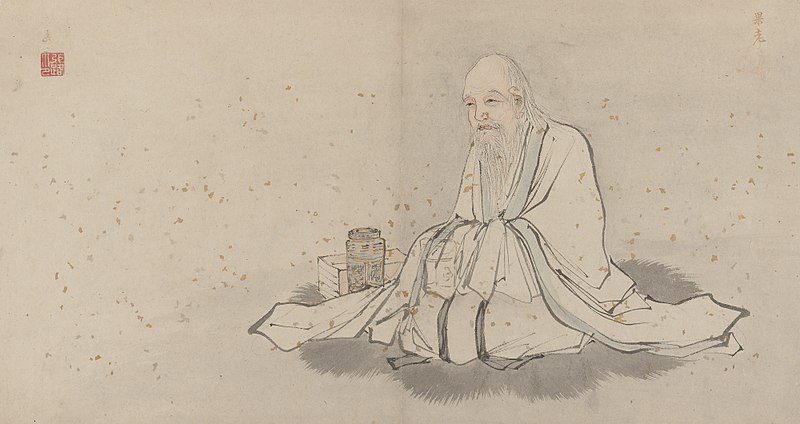
The origins of the I Ching—the Yijing, or Book of Changes—reach deep into the early intellectual and cultural history of China. Unlike many texts with a single author or clear moment of composition, the Yijing emerged gradually over many centuries through a process of observation, symbolic invention, philosophical commentary, and political application. It represents the cumulative thought of generations of early Chinese thinkers seeking to understand the patterns governing nature and human affairs.
Tradition places the earliest foundations of the Yijing in the mythological age of Chinese civilization. According to classical accounts, the legendary culture hero Fu Xi discovered the fundamental symbolic patterns that later formed the basis of the text. Fu Xi was said to have studied the movements of the heavens, the patterns of rivers and mountains, and the behaviors of animals. Through careful observation of these natural processes he devised a system of eight symbolic figures known as trigrams—each composed of three lines representing the interaction of yin and yang, the two fundamental forces of transformation.
Whether or not Fu Xi was a historical individual, the legend reflects an important intellectual reality: the symbolic system of the Yijing was rooted in systematic observation of nature. Early Chinese thinkers believed that the patterns governing human society mirrored those operating in the natural world. If one could understand these patterns, one could govern wisely and act harmoniously within the unfolding processes of the universe.
The next major stage in the development of the Yijing occurred during the early Zhou dynasty (c. 1046–256 BCE). According to traditional history, the system of trigrams was expanded into sixty-four hexagrams—figures composed of six stacked lines—during the political turmoil surrounding the rise of the Zhou state. The expansion of the system is traditionally attributed to the Zhou ruler King Wen of Zhou while he was imprisoned by the last ruler of the Shang dynasty. During this time of confinement, King Wen is said to have reorganized the hexagrams into a meaningful sequence and attached brief interpretive statements to each symbol.
His son, the statesman and strategist Duke of Zhou, is believed to have added further commentary explaining the significance of the individual lines within each hexagram. These early interpretations provided guidance for rulers and officials facing complex political situations, such as questions of diplomacy, warfare, governance, and social stability.
In its earliest form, therefore, the Yijing was not primarily a philosophical treatise but a manual of symbolic consultation used by rulers and advisors attempting to understand the evolving dynamics of political events.
Several centuries later, during the period of intense intellectual activity known as the Hundred Schools of Thought (approximately the 6th to 3rd centuries BCE), the Yijing underwent a profound transformation. The philosopher Confucius and his followers are traditionally credited with composing a series of interpretive essays known as the Ten Wings. These commentaries expanded the meaning of the hexagrams beyond practical divination and framed them as expressions of universal moral and cosmological principles.
Through these commentaries, the Yijing was elevated to the status of one of the Five Classics, the foundational texts of Confucian scholarship that shaped Chinese education and governance for more than two thousand years. Scholars studied the Book of Changes not merely to interpret symbols but to cultivate wisdom, ethical judgment, and insight into the dynamic relationships governing society and nature.
Over time the Yijing became a central reference point for multiple intellectual traditions in East Asia. Confucian scholars treated it as a guide to moral leadership and political harmony, while Daoist philosophers interpreted its patterns as expressions of the natural flow of the cosmos. Physicians, astronomers, and geomancers drew upon its symbolic system to understand the rhythms of health, climate, and landscape.
By the time of the imperial Chinese academies, the Book of Changes had become far more than a divination manual. It was regarded as a cosmological map of reality, a philosophical framework describing how all phenomena arise through the interplay of opposing yet complementary forces.
From the perspective of intellectual history, the Yijing represents one of humanity’s earliest surviving attempts to construct a systematic model of change in the universe. Long before the development of modern scientific theories of dynamic systems, early Chinese thinkers were already exploring the idea that reality unfolds through patterns of transformation that can be studied, interpreted, and understood.
The historical evolution of the Yijing—from mythic observation of nature, to political advisory tool, to philosophical classic—illustrates the remarkable capacity of early civilizations to develop sophisticated symbolic frameworks for understanding the world.
In the next section, we will examine the structural architecture of the Yijing itself, exploring how the system of trigrams and hexagrams forms a surprisingly elegant symbolic and mathematical model of transformation.
3. The Structure of the Yijing: Trigrams, Hexagrams, and Binary Logic
At the heart of the I Ching lies a symbolic structure of remarkable simplicity and elegance. Built from only two basic elements, the system generates a complex map of possible situations in nature and human life. This structure—formed from trigrams and hexagrams—constitutes one of the earliest known symbolic models of transformation in the natural world.
The entire system begins with the interplay of two fundamental principles:
Yang — represented by a solid line (—)
Yin — represented by a broken line (– –)
These two symbols represent the dynamic polarity that early Chinese thinkers observed throughout nature: light and dark, activity and rest, expansion and contraction, heaven and earth. Rather than opposites locked in conflict, yin and yang are understood as complementary forces whose interaction produces all phenomena.
From these two elements, increasingly complex symbolic forms are constructed.
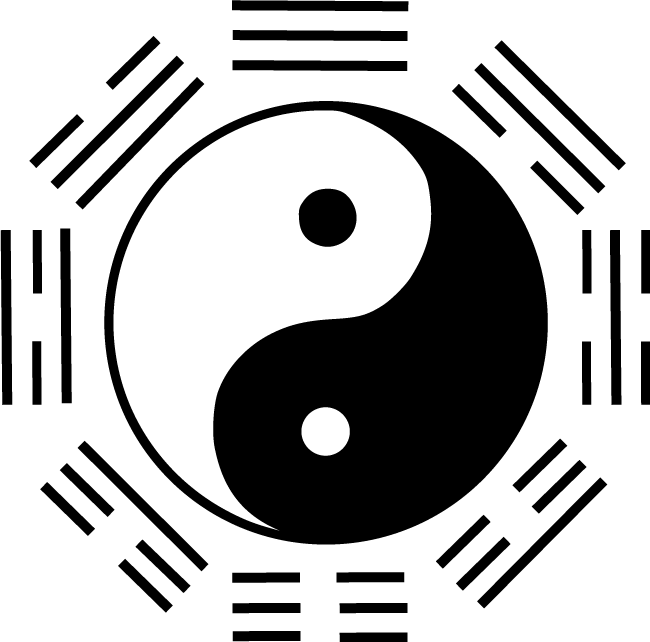
The Eight Trigrams (Bagua)
Three lines stacked together form a trigram. Because each line may be either yin or yang, there are eight possible combinations. These eight patterns are known collectively as the Bagua, or Eight Trigrams.
Each trigram symbolizes a fundamental pattern found in nature and human life. Early Chinese philosophers associated them with natural forces, family relationships, and stages of transformation within the cosmos.
| Trigram | Symbolic Meaning | Natural Association | Human Quality |
| Qian | Heaven | Sky | Creativity, leadership |
| Kun | Earth | Soil | Receptivity, support |
| Zhen | Thunder | Storm | Sudden awakening |
| Xun | Wind/Wood | Air, growth | Influence, penetration |
| Kan | Water | Rivers | Depth, danger |
| Li | Fire | Light | Clarity, awareness |
| Gen | Mountain | Stillness | Stability, reflection |
| Dui | Lake | Joyful openness | Communication, harmony |
Traditional accounts attribute the discovery of these trigrams to the ancient cultural figure Fu Xi, who is said to have observed patterns in the heavens and the earth and translated them into symbolic form.
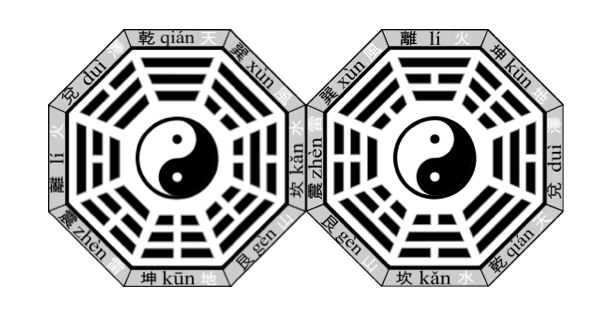
Two major arrangements of the trigrams became central to Chinese cosmology:
The Earlier Heaven Arrangement (Fu Xi sequence)
A symmetrical diagram representing the ideal equilibrium of cosmic forces.
The Later Heaven Arrangement
Associated with King Wen of Zhou, this sequence reflects the dynamic cycles of change in the natural world, including seasonal transformations and the movement of energy through space.
These trigram arrangements became foundational diagrams used in many traditional Chinese disciplines, including cosmology, medicine, architecture, and martial arts.
The Sixty-Four Hexagrams
The next step in the symbolic system of the Yijing occurs when two trigrams are combined.
A trigram placed above another trigram creates a figure composed of six lines called a hexagram. Because each line may be yin or yang, the number of possible hexagrams is determined by simple combinatorics.
There are:
2⁶ = 64 possible hexagrams.
Each hexagram represents a distinct configuration of forces—a situation arising from the interaction of two fundamental conditions represented by the upper and lower trigrams.
For example:
| Hexagram | Upper Trigram | Lower Trigram | Symbolic Meaning |
| 1 | Heaven | Heaven | Creative Force |
| 2 | Earth | Earth | Receptive Power |
| 11 | Earth | Heaven | Peace, harmony |
| 23 | Mountain | Earth | Splitting apart |
| 49 | Lake | Fire | Revolution |
| 63 | Water | Fire | After Completion |
| 64 | Fire | Water | Before Completion |
Each hexagram includes not only a general interpretation but also six individual line statements, corresponding to the stages through which a situation evolves over time. The bottom line represents the beginning of a process, while the top line represents its culmination.
In this way, the hexagrams function not merely as static symbols but as dynamic narratives of transformation.
Binary Logic in the Yijing
One of the most fascinating features of the Yijing is its implicit binary structure.
Because each line has two possible states—yin or yang—the entire hexagram system can be represented numerically:
Yang = 1
Yin = 0
Thus every hexagram corresponds to a six-digit binary number.
For example:
| Hexagram | Line Pattern | Binary Representation |
| Creative (1) | six yang lines | 111111 |
| Receptive (2) | six yin lines | 000000 |
| After Completion (63) | alternating lines | 101010 |
| Before Completion (64) | alternating lines | 010101 |
This mathematical structure attracted the attention of the German philosopher and mathematician Gottfried Wilhelm Leibniz in the seventeenth century. When Leibniz encountered diagrams of the hexagrams sent to Europe by Jesuit missionaries in China, he immediately recognized that the system mirrored the binary arithmetic he was developing.
Binary notation later became the fundamental language of modern computing. Every digital system—from microprocessors to artificial intelligence algorithms—ultimately relies on sequences of binary states.
Although the ancient Chinese scholars who developed the Yijing did not use binary mathematics in the modern sense, their symbolic system represents one of the earliest known examples of a complete binary combinatorial structure.
A Symbolic Model of Change
The structure of the Yijing therefore combines several remarkable intellectual features:
• a minimal symbolic alphabet (yin and yang)
• combinatorial generation of patterns (trigrams and hexagrams)
• representation of evolving processes (line stages)
• and a binary structure anticipating modern information systems.
What began as a simple symbolic language eventually became a profound philosophical tool for describing the patterns through which change unfolds in nature and human life.
In the next section, we will examine the cosmological foundation underlying this symbolic system: the theory of yin and yang, the dynamic balance of complementary forces that governs transformation throughout the universe.

4. Yin and Yang: The Cosmology of Dynamic Balance
The symbolic system of the I Ching rests upon one of the most influential philosophical ideas in East Asian thought: the principle of yin and yang. These two forces are represented in the Yijing by the simplest possible symbols—a broken line for yin and a solid line for yang—yet together they form a cosmological model intended to explain the changing patterns of the natural world.
In early Chinese philosophy, yin and yang are not moral categories such as good and evil, nor are they rigid opposites in conflict. Instead, they represent complementary aspects of a single dynamic process. The universe, according to this view, is not static but constantly transforming through the interaction of these paired tendencies.
Yang is typically associated with qualities such as activity, brightness, expansion, and outward expression. Yin is associated with receptivity, darkness, contraction, and inward movement. These associations arise from observation of the natural world. Day alternates with night, summer follows winter, and growth is followed by decline before renewal begins again.
A simple comparison illustrates the relationship:
| Yin | Yang |
| receptive | active |
| dark | light |
| earth | heaven |
| rest | motion |
| inward | outward |
| winter | summer |
Yet the philosophy of yin and yang emphasizes that these forces do not exist independently. Each contains the potential for the other, and each transforms into the other over time. Night gradually becomes day, and day eventually yields to night. Growth leads to maturity, maturity to decline, and decline eventually gives way to renewal.
This cyclical transformation is central to the cosmology underlying the Yijing. Rather than describing the universe as a static arrangement of objects, the Book of Changes presents reality as a continuously evolving field of relationships.
In this worldview, stability is not achieved by eliminating opposing forces but by maintaining dynamic balance between them. Too much expansion leads to collapse; too much rigidity prevents growth. Wisdom lies in recognizing when one tendency is reaching its limits and when its complementary force is beginning to emerge.
This understanding resonates strongly with many concepts recognized in modern science. In physics and ecology, complex systems often maintain stability through dynamic equilibrium, a condition in which opposing processes balance each other over time. Ecosystems regulate themselves through feedback mechanisms, while physical systems stabilize through the interplay of forces such as energy input and dissipation.
Similarly, the Yijing portrays natural processes as self-regulating cycles of change. When one tendency becomes extreme, conditions naturally shift toward its opposite. This idea appears repeatedly in the hexagram interpretations, which often warn that excessive success can lead to decline and that apparent adversity may contain the seeds of renewal.
The cosmological significance of yin and yang was later elaborated in several important Chinese philosophical traditions. Daoist thinkers, drawing on texts such as the Tao Te Ching attributed to Laozi, emphasized the importance of aligning human action with the natural flow of these forces. Confucian philosophers interpreted the balance of yin and yang as a model for ethical conduct and harmonious social relationships.
Over time, the yin–yang framework also influenced multiple scientific and practical disciplines in East Asia. Traditional Chinese medicine, for example, interprets health as a state of balance between complementary physiological processes, while astronomy and calendar science incorporated cyclical models derived from similar cosmological assumptions.
In the context of the Yijing itself, yin and yang serve as the building blocks of the symbolic system. Each hexagram is composed of alternating combinations of these two lines, representing the ever-changing relationship between receptive and active forces within a given situation. The movement of individual lines—from yin to yang or from yang to yin—symbolizes transitions that occur during the development of events.
From the perspective of Integrated Humanism, the philosophical importance of yin and yang lies not in mystical speculation but in the recognition that complex systems operate through interacting tendencies rather than through isolated causes. Human societies, ecological systems, and even technological networks often behave according to similar principles of dynamic balance.
The sages who developed the cosmology of yin and yang were attempting to articulate a fundamental insight: the world is shaped not by static entities but by relationships, cycles, and transformations. Understanding these patterns allows individuals and communities to respond more intelligently to changing circumstances.
Thus the doctrine of yin and yang provides the conceptual foundation upon which the entire structure of the Book of Changes rests. By expressing the interplay of complementary forces through simple symbolic forms, the Yijing invites readers to perceive the world not as a fixed structure but as a living process of continuous transformation.
In the next section we will explore how this cosmological framework gives rise to one of the most distinctive features of the Yijing: the sixty-four hexagrams, which together form a symbolic map of situations and their evolving ethical implications.
5. The Sixty-Four Hexagrams as a Model of Situational Ethics
One of the most distinctive philosophical features of the I Ching is that it does not present morality in the form of rigid commandments. Instead, it offers guidance through a series of symbolic patterns representing changing circumstances. The sixty-four hexagrams of the Yijing function as a map of evolving situations, illustrating how ethical action depends upon understanding context, timing, and the balance of forces within a given moment.
Each hexagram represents a particular configuration of yin and yang lines, symbolizing the interaction of complementary tendencies such as activity and receptivity, strength and flexibility, initiative and restraint. These patterns are not meant to define permanent conditions. Rather, they describe stages within a process of transformation.
For this reason, the Book of Changes rarely provides simple moral instructions such as “always act in this way” or “never act in that way.” Instead, it describes situations and suggests attitudes or strategies appropriate to the conditions represented by the hexagram. In one context decisive action may be necessary; in another, patience and restraint may be the wiser course.
This approach reflects a deep philosophical insight: ethical behavior cannot be separated from the circumstances in which decisions are made. The same action may be beneficial under one set of conditions and harmful under another.
The hexagrams therefore function as situational models. Each one describes a pattern of forces shaping the environment in which a person must act. By recognizing these patterns, individuals can better judge how to respond with wisdom and balance.
For example, the first hexagram, often translated as “The Creative,” represents pure yang energy—initiative, leadership, and dynamic action. The text associated with this hexagram praises perseverance and the capacity to guide others through strength and vision. In contrast, the second hexagram, “The Receptive,” emphasizes qualities of support, patience, and adaptability. In a situation symbolized by the Receptive, success comes not from imposing one’s will but from cooperating with existing conditions and allowing processes to unfold.
These contrasting hexagrams illustrate that the Yijing does not privilege one set of virtues over all others. Instead, it teaches that different circumstances call for different qualities of character. Courage may be admirable in one situation, while humility may be wiser in another.
The dynamic nature of the hexagrams becomes even clearer when one considers the changing lines within each figure. A hexagram consists of six lines stacked from bottom to top, and each line represents a stage in the development of a situation. The lower lines correspond to early phases, while the upper lines represent later developments approaching completion or transformation.
As a situation evolves, individual lines may change from yin to yang or from yang to yin, symbolizing shifts in the balance of forces. These changes generate a new hexagram, representing the next stage in the unfolding process. In this way, the Yijing portrays reality as a sequence of transitions rather than a fixed state.
The ethical lesson implicit in this structure is that wisdom requires attentiveness to timing. Acting too early or too late can disrupt the natural rhythm of events. The Book of Changes repeatedly emphasizes the importance of recognizing the moment when conditions are favorable for action and the moment when restraint is necessary.
This perspective aligns with a broader philosophical tradition in Chinese thought that values harmony and balance over rigid adherence to abstract rules. Ethical judgment is understood as a form of practical wisdom cultivated through reflection, observation, and experience.
From the standpoint of Integrated Humanism, the Yijing’s approach to ethics can be interpreted as an early attempt to model decision-making within complex systems. In real-world situations—whether political, economic, or personal—outcomes depend on the interaction of many variables. Effective leadership and moral responsibility therefore require the ability to interpret patterns and respond adaptively.
Modern fields such as systems theory, strategic planning, and behavioral psychology similarly emphasize that human actions occur within dynamic environments where simple rules are often insufficient. Decision-makers must consider changing conditions, feedback loops, and the potential consequences of different choices.
The hexagrams of the Book of Changes can thus be understood as a symbolic language designed to stimulate reflective judgment. By contemplating the patterns represented by a hexagram, readers are encouraged to step back from immediate impulses and consider the broader structure of the situation they face.
This reflective process transforms the Yijing from a tool of divination into a guide for ethical awareness and strategic insight. Rather than dictating behavior, it invites individuals to examine the interplay of forces shaping their circumstances and to act with prudence, flexibility, and integrity.
In the next section we will explore how this reflective process was historically practiced through methods of divination and consultation, and how these practices functioned as a form of ancient cognitive technology for decision-making.
6. Divination and Decision-Making: Ancient Cognitive Technology
For most of its long history, the I Ching was consulted through a practice commonly translated as divination. At first glance this practice may appear purely mystical or superstitious. Yet when examined more closely, the process reveals a sophisticated method of structured reflection and decision-making. The casting of hexagrams functioned as a kind of early cognitive technology—one that helped individuals and leaders analyze complex situations, consider alternative outcomes, and clarify their own thinking.
The basic method involved generating one of the sixty-four hexagrams through a randomized process. The earliest and most elaborate technique used yarrow stalks, a bundle of dried plant stems manipulated according to a set of numerical procedures. Later, a simpler method using three coins became common. In both systems, the random outcome determined whether each line of the hexagram would be yin or yang, and whether it would be a “changing line” that transforms into its opposite state.
Once the six lines were determined, the resulting hexagram was identified in the text of the Yijing. The reader would then study the interpretation associated with that symbol, including any statements connected to changing lines. If lines were changing, a second hexagram was formed, representing the potential direction in which the situation might evolve.
To a modern observer, the random generation of hexagrams might appear to claim supernatural knowledge about the future. However, many scholars today interpret the process in a different way. The random element serves not to reveal fate but to interrupt habitual patterns of thinking. By presenting the reader with an unexpected symbolic scenario, the system forces a shift in perspective and encourages deeper reflection on the problem at hand.
In this sense, the Yijing consultation process resembles several modern techniques used in psychology and strategic planning. One comparable method is scenario analysis, in which decision-makers explore different possible developments of a situation in order to better prepare for uncertainty. Another parallel can be found in psychological tools such as projective tests, which use ambiguous images or narratives to stimulate introspection and reveal hidden assumptions.
The symbolic language of the hexagrams provides a structured framework for this reflective process. Each hexagram describes a pattern of circumstances—such as emerging opportunity, rising conflict, fragile stability, or impending transformation. By interpreting these patterns in relation to their own situation, readers are encouraged to examine underlying dynamics that might otherwise remain unnoticed.
For example, a leader facing a difficult negotiation might cast a hexagram representing tension between opposing forces. The associated commentary may emphasize the importance of restraint, patience, or careful timing. While the text does not dictate a specific action, it prompts the reader to reconsider whether immediate confrontation or delayed diplomacy would better serve the situation.
The concept of changing lines further enriches this analytical process. Because individual lines within the hexagram can transform from yin to yang or vice versa, the system encourages the reader to consider how conditions may evolve over time. The resulting second hexagram symbolizes the potential direction of change, reminding the decision-maker that current circumstances are not fixed but part of a larger unfolding process.
Historically, the Yijing was consulted by rulers, military strategists, scholars, and officials attempting to navigate uncertain conditions. In this context the book functioned as a strategic advisory tool rather than a mystical oracle. Its symbolic framework helped leaders think through the consequences of different actions while remaining attentive to timing and balance.
From the perspective of Integrated Humanism, the value of the Yijing lies precisely in this capacity to stimulate reflective judgment. By combining randomness with structured symbolism, the consultation process encourages individuals to pause, analyze their circumstances, and explore alternative interpretations of the situation they face.
Modern cognitive science suggests that decision-making often suffers from predictable biases. People tend to rely on habitual assumptions, overlook emerging risks, or react emotionally under pressure. Techniques that disrupt automatic thinking—such as random prompts or symbolic frameworks—can help broaden awareness and improve the quality of deliberation.
Seen in this light, the divination practices associated with the Book of Changes represent an early attempt to design a decision-support system capable of addressing uncertainty and complexity. The hexagrams do not predict the future; instead, they provide a structured mirror through which individuals can examine their own situation more carefully.
In the centuries that followed its early use as a consultation manual, the Yijing was increasingly interpreted through philosophical lenses that emphasized moral development and harmony with the natural order. The next sections will explore how two of China’s most influential intellectual traditions—Confucianism and Daoism—reinterpreted the Book of Changes and integrated it into their broader visions of ethics, governance, and cosmology.
7. Confucian Interpretations and the Moralization of the Yijing
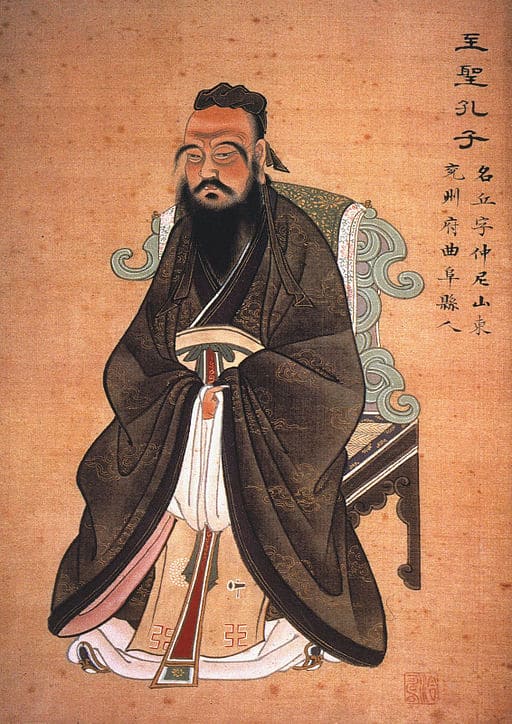
As the I Ching (Yijing) evolved from an early system of symbolic consultation into one of the central classics of Chinese civilization, its interpretation was profoundly shaped by the intellectual tradition associated with Confucius. Through the work of Confucian scholars, the Book of Changes was gradually transformed from a practical guide for interpreting circumstances into a text expressing ethical principles, political wisdom, and moral self-cultivation.
This transformation occurred primarily during the late Zhou and early imperial periods, when the Yijing became incorporated into the canon of the Five Classics, the foundational texts studied by generations of Chinese scholars and government officials. Central to this reinterpretation were a series of philosophical commentaries traditionally known as the Ten Wings, which elaborated the symbolic meanings of the hexagrams and connected them to broader moral and cosmological ideas.
Although modern historians debate whether Confucius himself authored these essays, the commentaries clearly reflect the intellectual spirit of Confucian thought. They reinterpret the hexagrams not merely as descriptions of changing situations but as expressions of universal patterns governing both nature and human conduct.
Within Confucian scholarship, the Yijing came to be understood as a guide to ethical awareness and responsible leadership. The dynamic transformations described in the hexagrams were interpreted as lessons about the proper conduct of individuals within families, communities, and governments. In this reading, the Book of Changes revealed how wise leaders should act in accordance with the rhythms of the world.
A central Confucian concept associated with this interpretation is self-cultivation. Confucian philosophy teaches that individuals must develop moral character through disciplined reflection, education, and ethical behavior. The Yijing’s symbolic patterns were seen as tools for this process, encouraging readers to reflect on their own actions and align themselves with the principles of balance, moderation, and harmony.
For Confucian scholars, the hexagrams illustrated how virtues such as humility, perseverance, and integrity should be practiced in response to changing circumstances. A leader who acted rashly or selfishly disrupted the natural balance represented by yin and yang, while a ruler who governed with wisdom and restraint helped maintain harmony within society.
The Confucian interpretation also emphasized the importance of timing and moral responsibility in governance. Many passages in the Yijing warn that power carries the danger of excess. Success, if pursued without moderation, can lead to decline. Wise rulers must therefore recognize when to advance boldly and when to exercise restraint. These lessons were particularly important for officials responsible for managing the stability of the state.
Through this lens, the Book of Changes became a manual of political philosophy. It taught that effective governance requires attentiveness to the evolving conditions of society and the ability to respond appropriately to emerging challenges. Just as the hexagrams depict shifting patterns of yin and yang, so too must political leaders remain responsive to the changing needs of the people.
Confucian scholars also interpreted the Yijing as a cosmological text expressing the unity between human society and the natural world. The patterns governing the heavens and the earth were believed to reflect the same principles that should guide ethical behavior. In this view, the moral order of human life was not separate from the structure of the cosmos but an extension of it.
This philosophical reading transformed the Yijing into more than a divination manual; it became a framework for understanding the moral structure of reality. The hexagrams illustrated the consequences of imbalance and the benefits of harmonious action, reinforcing the Confucian belief that personal virtue and social order are deeply interconnected.
Over many centuries, Confucian scholars wrote extensive commentaries on the Book of Changes, interpreting its symbols in light of evolving political and philosophical debates. The text became a central component of the Chinese civil service examination system, ensuring that educated officials throughout the empire were familiar with its lessons.
From the perspective of Integrated Humanism, the Confucian reinterpretation of the Yijing represents an early effort to integrate cosmology, ethics, and political theory into a coherent vision of responsible leadership. By connecting the patterns of nature with the moral obligations of individuals and governments, Confucian thinkers sought to cultivate rulers who would govern with wisdom, humility, and concern for the common good.
Yet Confucianism was not the only tradition to engage deeply with the Book of Changes. Another influential philosophical current in Chinese thought approached the Yijing from a different perspective—one that emphasized spontaneity, natural flow, and harmony with the rhythms of the universe. In the next section, we will examine how Daoist thinkers interpreted the Yijing and incorporated its symbolic language into their own philosophy of living in accordance with the Way.
8. Daoist Interpretations and the Philosophy of Natural Flow
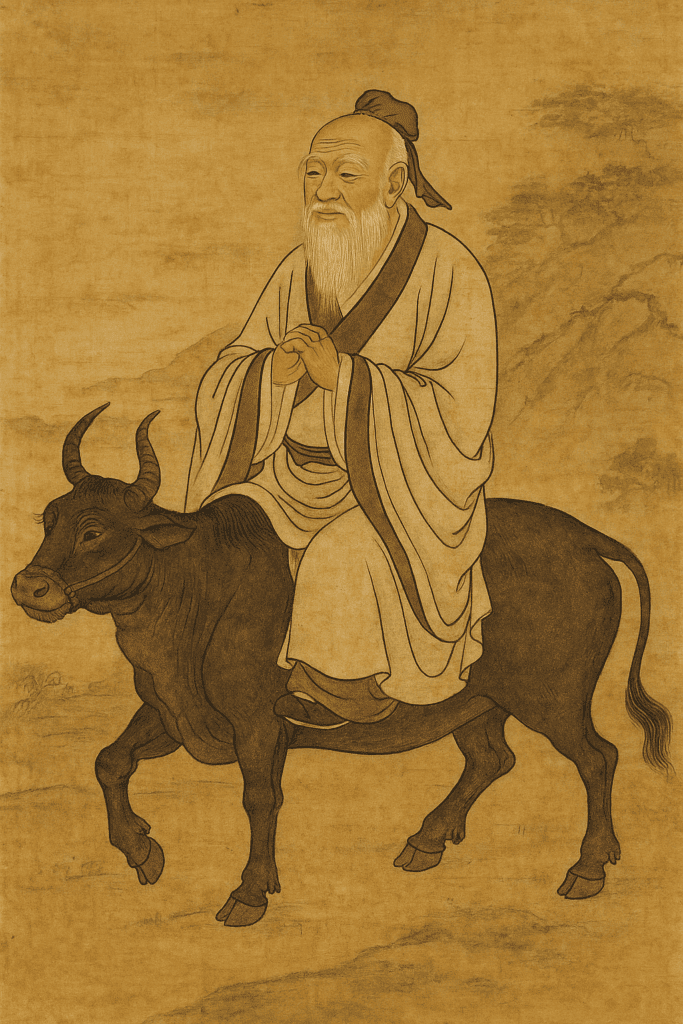
While Confucian scholars interpreted the I Ching primarily as a guide to ethical conduct and political responsibility, another influential intellectual tradition approached the text from a different perspective. Within the philosophy associated with Laozi and Zhuangzi, the Book of Changes was understood not primarily as a moral handbook but as a profound expression of the natural rhythms of the universe.
For Daoist thinkers, the Yijing illustrated the dynamic movement of the Dao, the underlying process through which all phenomena arise and transform. The Dao is not a deity or external authority but the fundamental pattern of reality itself—the flowing order through which nature unfolds.
In this view, the alternating lines of yin and yang depicted in the hexagrams symbolize the continuous transformations through which the Dao expresses itself in the world. Day gives way to night, strength turns into weakness, stillness becomes motion, and every condition contains the seeds of its opposite.
The Yijing thus appeared to Daoist philosophers as a symbolic map of the self-regulating balance of nature.
Where Confucian thinkers emphasized moral discipline and social order, Daoist interpretations focused on harmony with natural processes. Rather than striving to impose rigid structures upon the world, the Daoist sage seeks to understand the currents of change and move with them rather than against them.
A key concept associated with this perspective is wu wei, often translated as “non-forcing” or “effortless action.” This idea does not imply passivity or laziness. Instead, it suggests acting in ways that align with the natural momentum of circumstances rather than resisting them through unnecessary struggle.
The hexagrams of the Yijing frequently illustrate this principle. Many interpretations caution against excessive ambition, warning that attempts to dominate a situation prematurely may lead to imbalance or collapse. Other passages emphasize the wisdom of patience, suggesting that conditions must sometimes be allowed to develop before effective action can occur.
For Daoist readers, these lessons reflected a fundamental truth: the world is governed by cycles of emergence, growth, decline, and renewal. Interfering blindly with these processes can disrupt the natural balance that sustains life.
The Daoist interpretation of the Yijing also emphasizes the importance of simplicity and spontaneity. In texts such as the Tao Te Ching, Laozi describes the ideal sage as someone who acts without artificial complexity, responding naturally to circumstances rather than imposing rigid schemes.
The hexagrams reinforce this idea by portraying situations in which flexibility and adaptability prove more effective than rigid control. For example, many passages highlight the value of humility and yielding—qualities associated with yin—when confronting powerful or unstable conditions.
This perspective influenced many aspects of Chinese intellectual culture. Daoist scholars and practitioners used the symbolic language of the Yijing to interpret natural phenomena, understand cycles of energy within the body, and explore the relationship between human life and the rhythms of the cosmos.
The Daoist reading of the Book of Changes also shaped traditions of meditation, internal cultivation, and martial arts. In these practices, practitioners learn to sense subtle shifts in balance and to respond fluidly rather than reacting with force. The goal is to cultivate a state of awareness in which action arises naturally from understanding the situation.
From the standpoint of Integrated Humanism, the Daoist interpretation of the Yijing highlights an important dimension of systems thinking. Complex systems—whether ecological, social, or technological—often resist attempts at rigid control. Effective interaction with such systems requires attentiveness, adaptability, and sensitivity to feedback.
Modern disciplines such as ecology and complexity science similarly recognize that sustainable systems depend upon dynamic balance and responsiveness to changing conditions. Interventions that ignore these underlying dynamics may produce unintended consequences.
The Daoist reading of the Yijing therefore offers a philosophical complement to the Confucian approach. Where Confucian scholars emphasized ethical responsibility within social structures, Daoist thinkers emphasized the importance of aligning human activity with the deeper processes of nature.
Together, these interpretations reveal the remarkable versatility of the Book of Changes. The same symbolic system could serve as a guide to governance, a model of cosmic balance, and a philosophical reflection on the art of living wisely within a changing world.
In the next section, we will explore how the ideas embedded in the Yijing influenced early Chinese attempts to understand natural phenomena, contributing to developments in astronomy, medicine, and natural philosophy that shaped the scientific traditions of East Asia.
9. The Yijing and Early Chinese Scientific Thought
Beyond its role as a philosophical and divinatory text, the I Ching exerted a profound influence on the development of early Chinese natural philosophy. For centuries, scholars used the symbolic patterns of the Yijing as a conceptual framework for understanding the processes governing the natural world. Its ideas shaped fields ranging from cosmology and astronomy to medicine and environmental theory, providing a model through which observers could interpret patterns of change within nature.
At the core of this influence was the Yijing’s emphasis on dynamic relationships rather than static substances. Early Chinese thinkers tended to interpret natural phenomena not as isolated objects but as expressions of interacting forces whose balance produced the observable world. The alternating patterns of yin and yang, represented in the hexagrams, were seen as symbolic representations of the same processes shaping weather, seasons, human physiology, and celestial cycles.
One of the most important developments arising from this worldview was the theory of correlative cosmology. In this intellectual tradition, natural phenomena were understood through networks of correspondences linking the heavens, the earth, and human society. The same patterns that governed cosmic movement were believed to influence climate, agriculture, political stability, and the health of individuals.
The symbolic system of the Yijing provided a convenient framework for organizing these correspondences. Each trigram and hexagram could be associated with particular natural elements, directions, seasons, or environmental conditions. Through these associations, scholars attempted to understand how changes in one domain might correspond to transformations in another.
This approach played a particularly significant role in the development of traditional Chinese medicine. Medical theorists interpreted the human body as a dynamic system governed by the balance of complementary forces similar to yin and yang. Health was understood as the result of harmonious interaction among bodily processes, while illness arose when these relationships became imbalanced.
Although classical medical texts such as the Huangdi Neijing (The Yellow Emperor’s Inner Canon) developed their own theoretical frameworks, the cosmological assumptions underlying them were deeply influenced by the same concepts found in the Yijing. Physicians interpreted symptoms not merely as isolated conditions but as signals of systemic imbalance within the body’s internal networks.
Astronomy and calendar science were also shaped by this cosmological perspective. Ancient Chinese astronomers closely observed the movements of the sun, moon, and stars in order to construct calendars that regulated agriculture and ritual life. The cyclical patterns of celestial motion were often interpreted through symbolic systems similar to those of the Yijing, emphasizing periodic transformation and balance.
These astronomical observations contributed to the development of sophisticated calendar systems capable of predicting eclipses and seasonal transitions. While these achievements were based on empirical observation rather than divination, the broader cosmological framework remained consistent with the Yijing’s emphasis on cyclical patterns of change.
Natural philosophy in early China also incorporated ideas related to the Five Phases (often translated as wood, fire, earth, metal, and water), which described recurring cycles of generation and transformation in nature. Although this system developed somewhat independently, it shared with the Yijing the assumption that natural processes operate through dynamic relationships rather than through static elements.
Together, these frameworks formed a worldview in which the universe was understood as an interconnected system governed by rhythms and transformations. The Yijing’s symbolic language provided a means of expressing these relationships in a compact and flexible form.
From the perspective of modern science, many of the specific correspondences proposed by early Chinese cosmology may appear speculative or metaphorical. However, the underlying methodological insight remains significant. Early Chinese thinkers sought to understand nature by observing patterns of change and interaction rather than focusing solely on the properties of individual objects.
This orientation anticipated aspects of modern scientific thinking, particularly in fields that study complex systems such as ecology, climate science, and network theory. In these disciplines, understanding the relationships among components of a system often proves more important than analyzing each component in isolation.
Thus, the Yijing contributed to an intellectual tradition that emphasized the importance of systemic relationships, cyclical processes, and dynamic balance within the natural world. Although its symbolic language differs greatly from modern scientific terminology, the conceptual framework it inspired reflects an early effort to grapple with the complexity of natural phenomena.
In the next section we will explore another remarkable aspect of the Book of Changes: the mathematical structure underlying its hexagrams and the surprising connection between this ancient symbolic system and the development of binary logic in modern mathematics and computing.
10. Mathematical and Systems Thinking in the Hexagram Structure
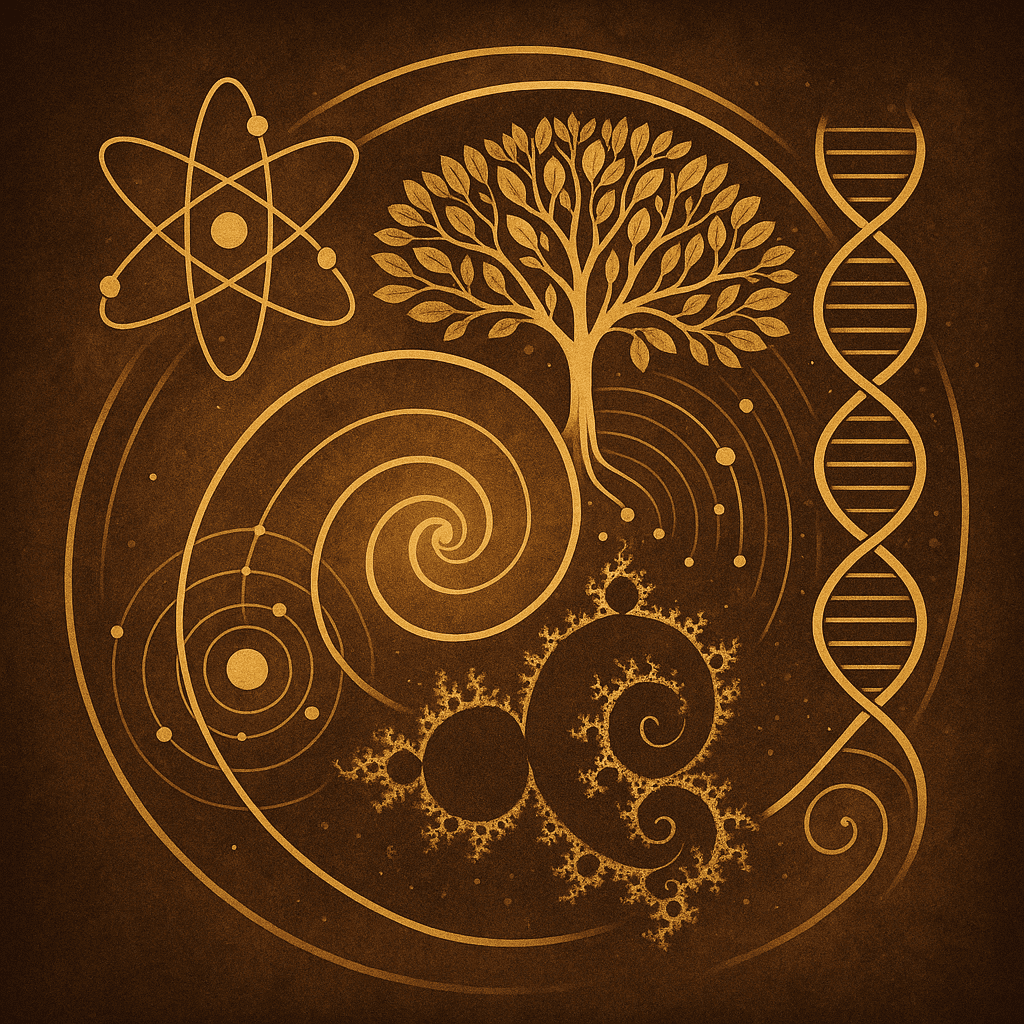
Among the many remarkable features of the I Ching is the elegant mathematical structure underlying its symbolic system. Although the text emerged in a pre-scientific age, the arrangement of its trigrams and hexagrams reveals a deep intuitive understanding of combinatorial patterns and binary relationships. These features would later attract the attention of mathematicians and philosophers seeking to understand the foundations of logical systems.
The symbolic architecture of the Yijing begins with two simple elements: yin and yang, represented respectively by a broken line and a solid line. These two symbols form the basic units from which the entire system is constructed. When three lines are combined, they form the eight trigrams; when two trigrams are stacked together, they produce the sixty-four hexagrams.
From a mathematical perspective, this structure can be understood as a binary system. Each line has two possible states, and each hexagram consists of six lines. The total number of possible combinations therefore follows a straightforward formula:
2⁶ = 64.
In other words, the hexagrams represent all possible configurations that can be generated from six binary elements. Although ancient Chinese scholars did not express this relationship in modern mathematical notation, the system itself is fundamentally binary in structure.
This mathematical property became widely recognized in Europe during the seventeenth century through the work of the German philosopher and mathematician Gottfried Wilhelm Leibniz. Leibniz was one of the most influential intellectual figures of the early modern period, contributing to developments in calculus, logic, and philosophy. Among his many interests was the search for a universal symbolic language capable of representing logical relationships.
In the course of his correspondence with Jesuit missionaries in China, Leibniz received diagrams of the hexagrams from the Yijing. Upon examining them, he immediately noticed that the patterns corresponded to the binary arithmetic system he had been developing.
In Leibniz’s binary notation, numbers are represented using only two digits: 0 and 1. Each position in the sequence represents a power of two. When the hexagrams are interpreted through this framework, each solid line can be represented as “1” and each broken line as “0.” The six-line hexagrams therefore correspond to six-digit binary numbers.
For example:
| Hexagram Pattern | Binary Representation |
| six yang lines | 111111 |
| six yin lines | 000000 |
| alternating yang and yin | 101010 |
| alternating yin and yang | 010101 |
This discovery fascinated Leibniz, who saw in the Yijing a striking confirmation of the universality of binary logic. In his writings, he speculated that the ancient Chinese sages had intuitively grasped a principle that modern mathematics was only beginning to articulate.
Although historians caution against overstating the direct connection between Chinese cosmology and European mathematics, the comparison highlights the remarkable conceptual efficiency of the Yijing’s symbolic design. With only two basic symbols and a simple combinatorial rule, the system generates a complete set of sixty-four configurations capable of representing diverse situations and transformations.
From the standpoint of systems thinking, this structure illustrates an important principle: complex patterns can arise from simple rules. Modern computational science operates on precisely this idea. Digital computers process vast amounts of information using sequences of binary states, while complex simulations model dynamic systems through combinations of simple elements interacting over time.
The hexagram system also reflects another aspect of systems thinking: the representation of states and transitions. Each hexagram describes a particular configuration of forces, while the transformation of individual lines produces a new hexagram representing the next stage in a process. In this way, the Book of Changes models reality as a series of evolving states linked by transitions.
Modern systems theory frequently employs similar concepts. In fields such as computer science, ecology, and network analysis, researchers describe systems in terms of states that evolve according to underlying rules or interactions. While the mathematical tools used today are far more precise, the conceptual framework of the Yijing anticipates this approach in symbolic form.
The recognition of binary logic in the hexagram structure has also inspired modern reinterpretations of the Yijing within fields such as information theory and complexity science. Scholars have noted that the hexagram system can be viewed as a kind of ancient information architecture, encoding patterns of change in a compact symbolic language.
From the perspective of Integrated Humanism, this mathematical dimension of the Book of Changes illustrates the creative interplay between philosophical insight and symbolic reasoning. The ancient sages who developed the Yijing were not mathematicians in the modern sense, yet they devised a system whose logical structure resonates with ideas central to contemporary science and technology.
The hexagrams therefore stand not only as philosophical symbols but also as an early example of human attempts to model complexity through structured patterns. By recognizing how simple binary elements generate a rich array of possibilities, the Yijing offers a striking reminder that profound insights into the nature of systems can arise from careful observation and elegant symbolic design.
In the next section we will examine how the Book of Changes influenced the broader cultural and political life of East Asia, shaping traditions of governance, education, and philosophy across China, Korea, Japan, and beyond.
11. Influence on East Asian Culture and Governance
For more than two thousand years, the I Ching was not merely a philosophical text but a central component of the intellectual life of East Asia. Its symbolic system and cosmological insights influenced traditions of governance, education, military strategy, literature, and social philosophy across multiple civilizations. Within China and later throughout Korea, Japan, and Vietnam, the Book of Changes became one of the most widely studied works in the classical canon.
The influence of the Yijing was particularly strong in the political culture shaped by the teachings of Confucius and later Confucian scholars. As the text became incorporated into the Five Classics, it was included in the curriculum studied by candidates preparing for the imperial civil service examinations. These examinations served as the principal pathway into government administration for centuries, meaning that many officials responsible for governing the Chinese empire were deeply familiar with the symbolic and ethical lessons of the Yijing.
In this context, the Book of Changes functioned as a guide for responsible leadership and statecraft. The hexagrams were interpreted as descriptions of conditions that might arise within political life—periods of stability, conflict, alliance, decline, or renewal. Officials studying the text were encouraged to reflect on how leaders should act when confronted with changing circumstances.
The emphasis on timing and moderation within the hexagram interpretations was especially important in political thought. Many passages warn that excessive ambition or inflexible policies can disrupt the balance necessary for social stability. Wise governance, according to this tradition, requires attentiveness to the evolving needs of the population and the ability to adjust policies as conditions change.
Military strategists also found value in the symbolic insights of the Yijing. Although the famous military treatise The Art of War by Sun Tzu does not explicitly depend upon the hexagram system, both works reflect a shared intellectual culture emphasizing strategic awareness, adaptability, and the careful reading of circumstances. In both texts, success depends not on brute force but on understanding the structure of a situation and responding appropriately to it.
The language of the hexagrams sometimes appears in discussions of diplomacy and warfare, where commanders or advisors might consult the Book of Changes when evaluating uncertain situations. In these cases the Yijing served as a reflective tool that encouraged strategic analysis rather than impulsive decision-making.
Beyond political and military thought, the influence of the Yijing extended into the broader cultural life of East Asia. Philosophers, poets, and artists frequently drew upon its symbolic language to express themes of transformation and balance. The alternating patterns of yin and yang became powerful metaphors for the rhythms of nature and human experience.
The text also played an important role in shaping intellectual traditions beyond China. In Korea and Japan, where Confucian scholarship became deeply embedded in educational institutions, the Yijing was studied alongside other classical works as part of the formation of scholars and officials. Interpretations of the hexagrams were adapted to local philosophical traditions, creating new commentaries that blended Chinese cosmology with regional intellectual developments.
Japanese scholars of the Edo period, for example, produced extensive studies of the Book of Changes that explored its implications for ethics, governance, and natural philosophy. In Korea, Neo-Confucian thinkers examined the cosmological principles of the Yijing while debating the relationship between moral order and the structure of the universe.
Throughout these traditions, the Book of Changes served as a bridge between cosmology and human conduct. By presenting the universe as a dynamic system governed by cycles of transformation, the text encouraged leaders and scholars to view social institutions as part of a larger pattern of natural order.
From the standpoint of Integrated Humanism, the historical role of the Yijing illustrates the power of philosophical frameworks to shape entire civilizations. The symbolic language of the hexagrams offered a way of thinking about governance and society that emphasized balance, responsiveness to change, and the ethical responsibilities of leadership.
Although modern political systems operate under very different institutional structures, the fundamental insight underlying this tradition remains relevant. Effective governance requires leaders who are capable of recognizing evolving conditions, interpreting complex situations, and adjusting their strategies accordingly.
The Book of Changes provided generations of East Asian thinkers with a conceptual toolkit for engaging with these challenges. Its influence demonstrates how symbolic models of transformation can guide not only personal reflection but also the development of enduring cultural and political traditions.
In the next section we will turn from historical governance to the realm of modern psychology, examining how twentieth-century thinkers reinterpreted the Yijing as a tool for introspection, creativity, and the exploration of the human mind.

12. Psychological Interpretations of the Yijing
In the twentieth century, scholars and psychologists began reinterpreting the I Ching in ways that moved beyond its traditional role as a divination manual or philosophical classic. Instead of treating the hexagrams as supernatural predictions, modern thinkers increasingly viewed the Book of Changes as a tool for psychological reflection and insight. This reinterpretation placed the Yijing within a broader tradition of symbolic systems used to stimulate introspection, creativity, and self-understanding.
One of the most influential figures in this modern reinterpretation was the Swiss psychologist Carl Jung. Jung became interested in the Yijing through his collaboration with the German translator Richard Wilhelm, whose early twentieth-century translation introduced the text to a wide Western audience. Jung wrote the famous foreword to Wilhelm’s translation, in which he proposed a psychological explanation for how the Yijing might function.
Jung suggested that the apparent meaningfulness of Yijing consultations did not arise from supernatural prediction but from what he called synchronicity. According to Jung, synchronicity refers to meaningful coincidences in which internal psychological states correspond to external events or symbols without a direct causal connection. In the case of the Yijing, the randomly generated hexagram might resonate with the psychological situation of the person asking the question.
Rather than revealing fate, the hexagram acts as a symbolic mirror, reflecting the individual’s inner concerns and prompting deeper reflection.
From Jung’s perspective, the power of the Yijing lies in its rich symbolic language. The hexagrams represent archetypal situations—conflict, growth, crisis, cooperation, completion, or transformation. When individuals contemplate these symbolic descriptions in relation to their own circumstances, they engage in a process of active interpretation that can reveal unconscious assumptions or emotional dynamics.
This interpretation aligns with Jung’s broader theory of the collective unconscious, which proposes that certain symbolic patterns recur across cultures because they arise from shared structures within the human psyche. In this sense, the hexagrams can be seen as archetypal representations of recurring patterns in human experience.
Modern psychology offers additional ways of understanding how the Yijing may function as a reflective tool. Decision-making research shows that individuals often rely on mental shortcuts or habitual assumptions when confronting complex problems. These cognitive patterns can lead to biases that distort judgment.
Tools that interrupt habitual thinking—such as symbolic prompts, randomization, or metaphorical frameworks—can help individuals reconsider their situation from new perspectives. The consultation process of the Yijing accomplishes precisely this. The random generation of a hexagram introduces an unexpected pattern that invites the reader to reconsider their assumptions.
In contemporary terms, the Book of Changes can therefore be understood as a kind of structured reflective system. The hexagrams provide narrative frameworks that encourage individuals to think about their situation in terms of broader patterns of development.
For example, a hexagram describing tension between opposing forces may prompt a reader to reflect on conflicts within their own professional or personal life. Another hexagram emphasizing patience and gradual progress may encourage reconsideration of whether immediate action is truly necessary.
Because the interpretations are symbolic rather than prescriptive, they stimulate interpretive thinking rather than dictating specific conclusions. The reader must actively connect the hexagram’s imagery to the realities of their situation.
This psychological process resembles several modern methods used in leadership training, therapy, and strategic planning. Scenario planning exercises, for instance, ask participants to imagine different future conditions and evaluate possible responses. Similarly, narrative-based reflection techniques invite individuals to examine their experiences through symbolic frameworks.
In each case, the goal is not prediction but expanded awareness.
Within this context, the Yijing can be seen as an ancient precursor to modern reflective practices. Its symbolic system provides a structured way to pause, consider the complexity of a situation, and explore alternative interpretations of events.
From the standpoint of Integrated Humanism, the psychological interpretation of the Book of Changes highlights its value as a tool for cognitive humility and thoughtful decision-making. Rather than claiming certainty about the future, the Yijing encourages individuals to recognize the evolving nature of circumstances and the limits of their own knowledge.
By prompting reflection on patterns of change, the hexagrams help readers develop a more nuanced understanding of their environment and their own responses to it.
In the next section, we will explore how modern philosophers and scientists have begun to reinterpret the Yijing within broader frameworks of systems theory, complexity science, and the philosophy of knowledge, revealing surprising parallels between this ancient text and contemporary scientific thinking.
13. Modern Scientific and Philosophical Reinterpretations
In recent decades, scholars from diverse disciplines—including philosophy, mathematics, anthropology, and systems science—have revisited the I Ching with renewed interest. Rather than interpreting the text purely through the lenses of religion or divination, many contemporary researchers view the Yijing as an early intellectual attempt to describe dynamic systems, evolving processes, and patterns of transformation in the natural world.
This modern reinterpretation situates the Book of Changes within a broader history of humanity’s efforts to understand complexity. In this context, the hexagram system appears not as a mystical code but as a symbolic framework for representing states of a system and transitions between those states.
Systems theory, a field that emerged in the twentieth century, studies how complex systems behave when many components interact over time. Whether examining ecosystems, economies, neural networks, or technological infrastructures, systems theorists emphasize that outcomes arise from the relationships among elements rather than from isolated causes.
When viewed through this perspective, the Yijing’s structure begins to resemble a primitive model of system states. Each hexagram represents a configuration of interacting forces symbolized by yin and yang. As individual lines change, the configuration shifts, producing a new hexagram that represents the next stage in the system’s development.
This concept parallels the idea of state transitions in modern systems science, where a system moves between different configurations as conditions evolve.
Philosophers of science have also been intrigued by the way the Book of Changes conceptualizes knowledge. Instead of seeking universal laws expressed through fixed formulas, the Yijing approaches reality through patterns of transformation. It suggests that understanding a situation requires recognizing its position within an ongoing process rather than isolating it from its context.
This perspective aligns with several modern philosophical approaches that emphasize the importance of dynamic processes. In twentieth-century philosophy, thinkers such as Alfred North Whitehead developed process philosophies that describe reality as a network of evolving events rather than a collection of static objects. Similarly, contemporary complexity theory examines how order and structure emerge from interactions within dynamic systems.
From this standpoint, the Book of Changes can be interpreted as a symbolic representation of process-oriented thinking long before such ideas were formalized in modern scientific language.
Researchers studying the history of science have also pointed out that the Yijing reflects an alternative intellectual tradition to the one that developed in classical Greek philosophy. Western scientific thought historically emphasized analytical reduction—breaking complex phenomena into smaller components in order to understand their behavior. Chinese natural philosophy, by contrast, often focused on relationships and patterns connecting different aspects of the world.
The Yijing exemplifies this relational approach. Rather than explaining events through causal mechanisms alone, it emphasizes the configuration of forces within a situation and how those configurations evolve over time. This method resembles contemporary approaches in fields such as ecology and network science, where the behavior of systems depends heavily on the interactions among their components.
The mathematical properties of the hexagram system have also inspired modern reinterpretations. As discussed earlier, the binary structure of the hexagrams attracted the attention of Gottfried Wilhelm Leibniz, whose work on binary arithmetic eventually became foundational for digital computing. While the ancient Chinese scholars who developed the Yijing did not conceive of it in computational terms, the symbolic system they created can be viewed as a kind of early information architecture representing different states of transformation.
More recently, scholars interested in complexity science have noted parallels between the Yijing and modern models of adaptive systems. In such systems—whether biological, ecological, or technological—conditions evolve through feedback loops and nonlinear interactions. Stability and instability alternate as systems move through phases of growth, tension, and reorganization.
The hexagrams of the Book of Changes describe similar cycles. Some represent periods of expansion and creativity; others depict moments of tension, fragmentation, or renewal. Taken together, they form a symbolic catalog of the kinds of transformations that occur within complex systems.
From the perspective of Integrated Humanism, these modern reinterpretations reveal the enduring intellectual significance of the Yijing. The ancient authors of the Book of Changes did not possess modern scientific tools or mathematical theories, yet they attempted to grapple with one of the most fundamental features of reality: the world is constantly changing, and understanding those changes requires recognizing patterns that unfold over time.
By presenting a symbolic system capable of representing dynamic relationships, the Yijing offers an early example of humanity’s effort to model complexity. While contemporary science uses sophisticated mathematical frameworks to describe such systems, the underlying intuition—that reality unfolds through interconnected processes rather than static conditions—remains strikingly similar.
In the next section we will examine how these insights connect directly with the field of complexity science, exploring how the Book of Changes anticipates ideas about adaptive systems, feedback cycles, and nonlinear transformation that have become central to modern scientific thought.
14. The Yijing in the Age of Complexity Science
In the twenty-first century, scholars increasingly recognize that many of the conceptual insights embedded in the I Ching resonate with ideas that have emerged in modern complexity science. Although separated by thousands of years and developed in very different intellectual environments, both frameworks attempt to understand how systems evolve through dynamic interactions and changing conditions.
Complexity science studies systems composed of many interacting components whose behavior cannot be fully predicted from the properties of individual parts alone. Examples include ecosystems, economies, climate systems, biological networks, and social institutions. In such systems, patterns emerge through feedback loops, adaptation, and nonlinear interactions.
The Book of Changes approaches reality in a strikingly similar way. Rather than describing isolated objects or static laws, the Yijing portrays the world as a series of configurations of forces that evolve through transformation. Each hexagram represents a particular arrangement of yin and yang—symbolic expressions of complementary tendencies within a system.
As conditions shift, individual lines change, generating a new hexagram that represents the next stage of the evolving situation. In modern terms, this resembles a model of state transitions within a dynamic system.
This structural similarity has led some scholars to view the hexagram system as a symbolic precursor to modern frameworks used to analyze adaptive systems. Although the Yijing expresses its insights through metaphor and imagery rather than equations, the underlying idea—that complex processes unfold through identifiable patterns of change—is closely aligned with contemporary scientific thinking.
Another point of connection lies in the concept of feedback. Many hexagram interpretations emphasize that actions taken within a system influence the future course of events. Excessive expansion can provoke resistance; rigidity may trigger collapse; restraint may create opportunities for renewal.
This perspective parallels ideas developed in twentieth-century cybernetics, a field concerned with the regulation and communication processes that allow systems to maintain stability. Cybernetic systems adjust their behavior in response to feedback from their environment, much as the hexagram transformations reflect shifts in the balance of forces within a situation.
The Yijing also anticipates aspects of nonlinear dynamics, a concept central to complexity science. In nonlinear systems, small changes in conditions can lead to dramatic transformations in outcomes. The Book of Changes repeatedly illustrates this principle through symbolic narratives in which minor shifts in circumstance eventually produce major transitions.
For example, a hexagram describing gradual development may transform into one representing sudden upheaval if certain lines change. The symbolic progression emphasizes that critical thresholds exist within evolving systems, beyond which the character of the situation changes fundamentally.
Modern scientists encounter similar phenomena in studies of tipping points in ecological systems, financial markets, and climate dynamics. These systems often remain stable for long periods before undergoing rapid transformation when underlying conditions reach certain thresholds.
Another connection between the Yijing and complexity science lies in the recognition that order and disorder are interdependent. In complex systems, stability and instability alternate as systems adapt to changing environments. Periods of equilibrium may be followed by phases of turbulence during which new structures emerge.
The hexagram sequence reflects comparable cycles. Some hexagrams depict harmony and stability, while others describe conflict, fragmentation, or renewal. Together they illustrate the idea that change is not merely disruptive but also a source of creativity and transformation.
From the standpoint of Integrated Humanism, the relevance of the Yijing in the age of complexity science lies in its encouragement of adaptive thinking. Modern societies confront challenges—such as climate change, technological disruption, and geopolitical instability—that involve highly interconnected systems.
Linear solutions often fail in such environments because actions taken in one part of the system can produce unexpected consequences elsewhere. Effective decision-making therefore requires a deeper understanding of feedback loops, interdependencies, and evolving conditions.
The symbolic framework of the Book of Changes invites precisely this kind of awareness. By presenting situations as configurations of interacting forces rather than isolated events, it encourages individuals to consider the broader context in which decisions occur.
While contemporary science employs mathematical models and computational simulations to study complex systems, the Yijing provides a philosophical reminder that understanding change begins with recognizing patterns of interaction and transformation.
In this sense, the Book of Changes remains relevant not as a predictive oracle but as a conceptual tool that encourages holistic thinking about the systems within which human life unfolds.
In the next section we will explore how these insights can be integrated into a modern philosophical framework by examining an Integrated Humanist interpretation of the Yijing, connecting its ancient symbolic wisdom with the values of scientific inquiry, ethical responsibility, and global understanding.
15. A Full Explanation of the Sixty-Four Hexagrams Grouped into Evolutionary Cycles
One of the most illuminating ways to understand the structure of the I Ching is to view the sixty-four hexagrams not simply as isolated symbols but as stages within recurring cycles of transformation. The Book of Changes portrays reality as a dynamic process in which conditions arise, develop, encounter tension, reach crisis points, and eventually reorganize into new patterns.
Although the classical Yijing does not explicitly divide the hexagrams into a single universal cycle, later philosophers and modern interpreters have recognized that many of the hexagrams naturally cluster into evolutionary phases. These phases describe the general trajectory through which situations develop within complex systems.
From the perspective of Integrated Humanism and systems thinking, the hexagrams can be interpreted as representing several broad stages of transformation:
- Emergence and Creation
- Growth and Development
- Interaction and Cooperation
- Tension and Conflict
- Crisis and Transformation
- Decline and Fragmentation
- Renewal and Reorganization
- Completion and Transition
Each phase reflects patterns frequently observed in natural, social, and organizational systems.
Phase I — Emergence and Creative Potential
The first phase describes the birth of new conditions. In this stage, energy gathers and possibilities emerge, but the direction of development is not yet fully determined.
Key hexagrams associated with emergence include:
| Hexagram | Meaning | Description |
| 1 | The Creative | Pure initiative and generative energy |
| 2 | The Receptive | Fertile ground for development |
| 3 | Difficulty at the Beginning | Initial chaos of new beginnings |
| 4 | Youthful Folly | Learning and early experimentation |
These hexagrams describe the earliest stages of transformation when new structures begin to take shape. Growth is possible, but uncertainty and instability are common.
Phase II — Growth and Development
Once a process begins to stabilize, it enters a phase of structured growth. Relationships form, institutions develop, and patterns become more organized.
Representative hexagrams include:
| Hexagram | Meaning | Description |
| 5 | Waiting | Preparation and patience |
| 6 | Conflict | Tensions emerge during development |
| 7 | The Army | Organization of collective effort |
| 8 | Holding Together | Formation of alliances |
| 9 | Small Taming | Gradual progress through restraint |
| 10 | Treading | Learning proper conduct |
These hexagrams emphasize the importance of discipline, cooperation, and careful management of emerging relationships.
Phase III — Harmony and Productive Order
As systems mature, they often enter periods of stability and cooperation. During this stage, institutions function effectively and social relationships become balanced.
Examples include:
| Hexagram | Meaning | Description |
| 11 | Peace | Harmony between opposing forces |
| 12 | Standstill | Breakdown of communication |
| 13 | Fellowship | Cooperative community |
| 14 | Great Possession | Abundance and strength |
| 15 | Modesty | Balance through humility |
| 16 | Enthusiasm | Collective motivation |
These hexagrams illustrate how prosperity and social harmony depend upon balance and ethical leadership.
Phase IV — Rising Tension and Conflict
Even stable systems eventually encounter pressure and competition. As interests diverge and resources become strained, tensions arise that challenge the existing order.
Key hexagrams include:
| Hexagram | Meaning | Description |
| 17 | Following | Alignment of groups |
| 18 | Work on What Has Been Spoiled | Repairing corruption |
| 19 | Approach | Leadership emerging |
| 20 | Contemplation | Reflective awareness |
| 21 | Biting Through | Confronting injustice |
| 22 | Grace | Cultural refinement amid tension |
These hexagrams illustrate the delicate balance between maintaining order and confronting emerging problems.
Phase V — Crisis and Transformation
When tensions intensify, systems may reach a stage of crisis. At this point, existing structures can no longer sustain equilibrium, and decisive transformation becomes necessary.
Representative hexagrams include:
| Hexagram | Meaning | Description |
| 23 | Splitting Apart | Structural collapse |
| 24 | Return | Renewal after breakdown |
| 25 | Innocence | Reset to fundamental principles |
| 26 | Great Taming | Controlled rebuilding |
| 27 | Nourishment | Sustaining recovery |
| 28 | Great Excess | Critical instability |
These hexagrams describe moments when transformation becomes unavoidable. The challenge is to navigate crisis in ways that allow renewal rather than destruction.
Phase VI — Decline and Fragmentation
Following periods of upheaval, systems may experience decline or fragmentation before stabilizing again. Leadership falters, alliances weaken, and uncertainty spreads.
Examples include:
| Hexagram | Meaning | Description |
| 29 | The Abysmal | Repeated danger |
| 30 | The Clinging | Dependence on illumination |
| 31 | Influence | Subtle persuasion |
| 32 | Duration | Seeking long-term stability |
| 33 | Retreat | Strategic withdrawal |
| 34 | Great Power | Resurgence of strength |
These hexagrams emphasize resilience and the careful rebuilding of stability.
Phase VII — Renewal and Reorganization
After turbulence, systems reorganize themselves into new patterns of growth and renewal.
Key hexagrams include:
| Hexagram | Meaning | Description |
| 35 | Progress | Forward movement |
| 36 | Darkening of the Light | Navigating oppression |
| 37 | The Family | Reestablishing social order |
| 38 | Opposition | Managing differences |
| 39 | Obstruction | Encountering obstacles |
| 40 | Deliverance | Liberation from difficulty |
These hexagrams illustrate the slow reconstruction of order after disruption.
Phase VIII — Completion and Transition
Eventually, a process approaches completion. At this stage, the system reaches a moment of apparent balance—but this equilibrium also contains the seeds of future change.
Important hexagrams include:
| Hexagram | Meaning | Description |
| 63 | After Completion | Order achieved but fragile |
| 64 | Before Completion | Transition toward a new cycle |
These final hexagrams emphasize that completion is never permanent. Once a system stabilizes, the forces of change begin preparing the next cycle of transformation.
Cycles of Change
The evolutionary grouping of the hexagrams illustrates a central insight of the Yijing: every condition contains the potential for transformation. Stability eventually gives rise to tension, tension leads to crisis, crisis creates opportunities for renewal, and renewal generates new structures.
Modern systems science observes similar patterns in many complex systems. Ecosystems undergo cycles of growth and collapse, economic systems expand and contract, and social institutions periodically reorganize in response to changing conditions.
The Book of Changes therefore presents a symbolic language for understanding the recurring rhythms of transformation that shape the world.
From the standpoint of Integrated Humanism, these cycles remind us that progress is rarely linear. Human societies must continually adapt to changing circumstances while preserving ethical principles and scientific understanding.
By studying the patterns represented by the hexagrams, readers gain a deeper appreciation for the dynamics of emergence, conflict, renewal, and completion that characterize both nature and human history.
In the next section we will explore how these insights can be synthesized within the philosophical framework of Integrated Humanism, revealing how the Yijing’s ancient wisdom can inform modern approaches to ethics, governance, and scientific understanding in a rapidly changing world.

16. An Integrated Humanist Reading of the Book of Changes
From the perspective of Science Abbey and the philosophy of Integrated Humanism, the I Ching can be understood as one of humanity’s earliest attempts to develop a systemic philosophy of change. While the historical text emerged in an ancient cultural context that included ritual divination and cosmological speculation, its deeper insights transcend those origins. When interpreted through a scientific and humanist framework, the Yijing becomes a powerful intellectual artifact illustrating how early thinkers attempted to understand the dynamic structure of reality.
Integrated Humanism begins with the recognition that human knowledge advances through observation, reasoning, experimentation, and the cumulative insights of civilizations across time. Ancient philosophical traditions are therefore not dismissed as superstition but examined as early stages in humanity’s long investigation of nature, society, and consciousness. Within this historical continuum, the Book of Changes represents an early symbolic model of transformation—one that anticipated several ideas later formalized in modern systems science.
The hexagram system of the Yijing can be interpreted as a conceptual map describing how conditions evolve within complex environments. Each hexagram represents a configuration of forces, while the transformation of lines symbolizes transitions between states. Although expressed through poetic imagery rather than mathematical equations, this structure parallels modern models used to study dynamic systems.
From the standpoint of Integrated Humanism, the value of the Yijing lies not in supernatural prediction but in its ability to cultivate situational awareness and reflective judgment. The symbolic language of the hexagrams encourages readers to step back from immediate circumstances and consider the broader patterns shaping events. This reflective posture aligns with the scientific habit of examining systems in their larger context before drawing conclusions.
Integrated Humanism also emphasizes the ethical responsibilities that accompany knowledge. Scientific understanding must ultimately serve the well-being of humanity and the preservation of the biosphere. In this regard, the Yijing’s emphasis on balance and moderation resonates strongly with contemporary concerns about sustainability and responsible governance.
Many hexagram interpretations warn against excessive ambition, rigid control, or the abuse of power. They emphasize the importance of humility, adaptability, and respect for natural processes. These themes mirror modern insights into the dangers of destabilizing complex systems—whether through ecological exploitation, economic imbalance, or political extremism.
Within the Science Abbey framework, the Book of Changes can therefore be interpreted as an early exploration of systemic ethics. Ethical action is not defined solely by abstract rules but by understanding how choices affect the stability and evolution of interconnected systems. Decisions must take into account long-term consequences, feedback loops, and the potential for unintended outcomes.
This perspective aligns with the broader mission of Integrated Humanism, which seeks to integrate scientific knowledge with ethical responsibility and global cooperation. In a world shaped by technological acceleration and planetary-scale challenges, humanity must develop forms of wisdom capable of navigating complex systems responsibly.
The Yijing offers a symbolic reminder that change is the fundamental condition of reality. Political institutions evolve, ecosystems shift, technologies transform societies, and human cultures continually adapt to new conditions. Recognizing these patterns allows individuals and communities to respond thoughtfully rather than react impulsively.
For Science Abbey, the Book of Changes also illustrates the value of cross-cultural intellectual dialogue. The history of science and philosophy is not confined to any single civilization. Insights into the nature of reality have emerged independently in many cultures, and modern knowledge advances most effectively when these traditions are examined together.
By studying texts such as the Yijing alongside developments in Western science, systems theory, and modern philosophy, scholars can better understand the diverse pathways through which humanity has attempted to comprehend the world. Such comparative exploration enriches our understanding of both ancient wisdom and contemporary scientific thought.
Ultimately, an Integrated Humanist reading of the Book of Changes treats the hexagrams not as mystical predictions but as tools for reflective inquiry. They invite readers to observe patterns, consider alternative perspectives, and approach complex situations with humility and intellectual curiosity.
The enduring significance of the Yijing lies in this invitation to think carefully about the dynamics of change. By recognizing the interconnected processes shaping our world, individuals and societies can make wiser decisions about how to navigate the challenges of the future.
In the next section we will consider what lessons the Book of Changes offers for humanity in the present era—an age defined by technological transformation, global interdependence, and the unprecedented complexity of modern civilization.
17. Lessons for the Age of Intelligence
Humanity now lives in what many thinkers describe as the Age of Intelligence—an era defined by unprecedented access to information, rapidly advancing technologies, global communication networks, and the emergence of artificial intelligence. In such a world, decisions made by scientists, engineers, governments, and citizens can influence complex systems at planetary scale. Climate dynamics, economic networks, digital infrastructures, and political institutions have become deeply interconnected.
Within this context, the ancient insights of the I Ching remain surprisingly relevant. Although composed thousands of years ago, the Book of Changes addresses one of the central challenges of modern civilization: how to act wisely within systems that are constantly evolving and difficult to predict.
The Yijing teaches that change is not an occasional disruption but the fundamental condition of reality. Every structure—whether ecological, social, or technological—exists within an ongoing process of transformation. Understanding these processes requires attentiveness to patterns rather than reliance on static assumptions.
For modern societies, this insight carries several important lessons.
Recognizing the Limits of Prediction
Modern technology has given humanity powerful tools for modeling and forecasting complex systems. Climate simulations, economic projections, and artificial intelligence algorithms can analyze vast quantities of data. Yet these systems remain subject to uncertainty, nonlinear interactions, and unexpected outcomes.
The philosophy underlying the Yijing reminds us that uncertainty is inherent in dynamic systems. Even with advanced analytical tools, no model can capture every variable influencing future events. The hexagrams of the Book of Changes illustrate how conditions evolve through interactions that cannot always be predicted in advance.
For scientists and policymakers, this insight encourages humility in the face of complexity. Effective strategies must remain adaptable rather than rigidly tied to fixed predictions.
The Importance of Timing
Another recurring theme in the Yijing is the importance of acting at the appropriate moment. Many hexagram interpretations emphasize that success depends not only on choosing the right action but also on recognizing when conditions are favorable for that action.
In the Age of Intelligence, timing remains crucial in fields ranging from technological innovation to international diplomacy. Introducing a new technology too early may lead to instability, while delaying necessary reforms can allow problems to escalate.
Leaders must therefore cultivate the ability to read emerging patterns within complex systems and respond at moments when interventions can produce constructive change.
Balancing Innovation and Stability
Technological progress often generates rapid transformation in social and economic systems. While innovation can produce extraordinary benefits, it can also destabilize existing institutions if changes occur too quickly or without sufficient ethical consideration.
The Yijing repeatedly illustrates the interplay between creative expansion and stabilizing restraint, symbolized by the dynamic relationship between yang and yin. Periods of rapid growth eventually require consolidation and reflection in order to maintain balance.
For modern societies, this suggests that sustainable progress requires both bold innovation and careful governance capable of managing the consequences of change.
Understanding Interconnected Systems
Perhaps the most profound lesson of the Book of Changes is the recognition that events rarely occur in isolation. Each situation arises from the interaction of multiple forces, and actions taken within one part of a system can influence conditions elsewhere.
This insight is particularly relevant in an era of global interdependence. Environmental policies adopted in one region may influence ecosystems worldwide. Economic decisions in major financial centers can affect communities across continents. Technological innovations developed in one country may reshape global industries.
Understanding these interconnected dynamics requires approaches similar to those encouraged by the Yijing: examining relationships among forces rather than focusing narrowly on individual events.
Ethical Responsibility in a Changing World
The philosophy of the Book of Changes also emphasizes that human choices carry consequences within larger systems. Leaders who ignore the balance of forces surrounding them risk destabilizing the structures upon which their societies depend.
In the Age of Intelligence, this principle acquires even greater significance. Technological power has expanded humanity’s ability to alter the environment, influence public opinion, and reshape economic systems. With this power comes the responsibility to consider the long-term implications of decisions.
Integrated Humanism highlights the need for ethical frameworks grounded in scientific understanding. By recognizing the complexity of the systems we inhabit, societies can develop policies that promote sustainability, cooperation, and human well-being.
Cultivating Adaptive Wisdom
Ultimately, the Book of Changes encourages a form of wisdom that remains essential in the modern world: the capacity to adapt intelligently to changing conditions. Rather than clinging to rigid doctrines or reacting impulsively to crises, individuals and institutions must cultivate awareness of evolving patterns and respond thoughtfully to emerging challenges.
This adaptive mindset is increasingly important as humanity navigates technological revolutions, environmental transformations, and shifting geopolitical landscapes. The ability to recognize when to advance, when to pause, and when to redirect collective effort may determine the stability of societies in the decades ahead.
The ancient sages who composed the Yijing understood that stability is not achieved by resisting change but by learning to move with it intelligently.
Their symbolic system offers a timeless reminder that wisdom lies in recognizing the rhythms of transformation and acting with clarity, balance, and foresight within them.
In the final section of this article, we will reflect on the enduring significance of the Book of Changes as part of humanity’s shared intellectual heritage and consider how its insights continue to inspire dialogue between ancient wisdom traditions and modern scientific thought.
18. Conclusion — The Book of Changes as a Global Heritage of Thought
Across more than three millennia of human history, the I Ching—the Yijing, or Book of Changes—has remained one of the most enduring intellectual creations of civilization. Emerging from the early cultural and philosophical traditions of China, it evolved into a text that has influenced scholars, leaders, artists, and philosophers across East Asia and, eventually, throughout the world.
What explains this remarkable longevity is not the practice of divination alone, but the deeper philosophical insight at the heart of the work: reality is shaped by continual transformation.
The sages who developed the symbolic system of trigrams and hexagrams attempted to capture something fundamental about the nature of existence. They observed that natural phenomena—weather patterns, seasonal cycles, political fortunes, and human lives—do not remain fixed. Instead, they unfold through rhythms of emergence, growth, tension, crisis, and renewal.
The Book of Changes therefore represents one of humanity’s earliest efforts to construct a conceptual model of dynamic systems.
Throughout Chinese history, this insight shaped traditions of ethics, governance, and natural philosophy. Confucian scholars interpreted the hexagrams as lessons in moral responsibility and wise leadership, while Daoist thinkers saw them as expressions of the flowing balance of the cosmos. Physicians, astronomers, and philosophers incorporated the Yijing’s cosmological principles into their own frameworks for understanding the world.
Over time the influence of the text expanded beyond its original cultural context. In early modern Europe, the binary structure of the hexagrams fascinated the mathematician Gottfried Wilhelm Leibniz, who recognized its correspondence with the binary arithmetic underlying modern computing. In the twentieth century, the psychologist Carl Jung interpreted the hexagrams as symbolic expressions of archetypal psychological patterns.
Today, scholars studying complexity science, systems theory, and philosophy of knowledge continue to find parallels between the Yijing’s symbolic framework and modern attempts to understand dynamic systems.
These connections do not imply that the Book of Changes anticipated modern science in a literal sense. The Yijing speaks through metaphor, narrative, and symbolic imagery rather than through mathematical models or experimental data. Yet its central intuition—that reality unfolds through patterns of interaction and transformation—resonates strongly with contemporary scientific perspectives.
From the standpoint of Integrated Humanism and the mission of Science Abbey, the enduring significance of the Yijing lies in its role as a bridge between intellectual traditions. It reminds us that the human quest to understand the world has unfolded across many civilizations, each contributing insights shaped by its own cultural and historical context.
Ancient wisdom traditions and modern scientific inquiry are not necessarily adversaries. Both arise from the same fundamental impulse: the desire to comprehend the forces shaping our existence and to live wisely within them.
The Book of Changes stands as a testament to this universal pursuit of knowledge. Its elegant symbolic system demonstrates how early thinkers sought to interpret the complexity of the world long before the emergence of modern scientific methodologies.
In an age defined by rapid technological change and global interconnection, the lessons of the Yijing retain surprising relevance. The text encourages humility in the face of uncertainty, attentiveness to evolving conditions, and respect for the delicate balance upon which stable systems depend.
Perhaps its most enduring message is also its simplest: change is inevitable. The challenge facing individuals and societies is not to resist this reality but to understand its patterns and respond with wisdom, foresight, and ethical responsibility.
Seen in this light, the Book of Changes is not merely an ancient artifact of Chinese civilization. It is part of humanity’s shared intellectual heritage—a reminder that across cultures and centuries, people have sought to understand the rhythms of transformation that shape the world we inhabit.
As modern science continues to explore the dynamics of complex systems, the symbolic wisdom of the Yijing offers a historical companion to that journey. It invites us to see change not only as a challenge but also as an opportunity for learning, adaptation, and renewal.
In this way, the ancient Book of Changes continues to speak to the modern world, offering insights into the evolving relationship between knowledge, responsibility, and the ever-changing fabric of reality.
Here is a Chicago-style bibliography suitable for the Science Abbey article on the Yijing / I Ching, covering historical sources, translations, philosophy, psychology, systems science, and modern interpretations. This selection balances classical Chinese scholarship, modern academic research, and interdisciplinary perspectives, which fits well with the Integrated Humanist approach of your article.
Bibliography
Adler, Joseph A. Reconstructing the Confucian Dao: Zhu Xi’s Appropriation of Zhou Dunyi. Albany: State University of New York Press, 2014.
Blofeld, John. The Book of Change (I Ching): A New Translation of the Ancient Chinese Text. New York: E. P. Dutton, 1965.
Cheng, Yi. I Ching: The Book of Changes. Translated by Thomas Cleary. Boston: Shambhala Publications, 1986.
Cook, Scott. The Bamboo Texts of Guodian: A Study and Complete Translation. Ithaca: Cornell University East Asia Program, 2012.
Fung, Yu-lan. A History of Chinese Philosophy. Translated by Derk Bodde. Princeton: Princeton University Press, 1952.
Huang, Alfred. The Complete I Ching: The Definitive Translation. Rochester, VT: Inner Traditions, 1998.
Jung, Carl Gustav. Foreword to The I Ching or Book of Changes, translated by Richard Wilhelm and Cary F. Baynes. Princeton: Princeton University Press, 1950.
Kohn, Livia. Daoism and Chinese Culture. Cambridge, MA: Three Pines Press, 2001.
Legge, James. The Yi King. In The Sacred Books of the East, Vol. 16. Oxford: Clarendon Press, 1882.
Lynn, Richard John. The Classic of Changes: A New Translation of the I Ching as Interpreted by Wang Bi. New York: Columbia University Press, 1994.
Nielsen, Bent. A Companion to Yi Jing Numerology and Cosmology. London: RoutledgeCurzon, 2003.
Needham, Joseph. Science and Civilisation in China, Vol. 2: History of Scientific Thought. Cambridge: Cambridge University Press, 1956.
Ni, Hua-Ching. The I Ching: The Book of Changes and the Unchanging Truth. Los Angeles: SevenStar Communications, 1991.
Nylan, Michael. The Five “Confucian” Classics. New Haven: Yale University Press, 2001.
Peterson, Willard J. “Making Connections: ‘Commentary on the Attached Verbalizations’ of the Book of Changes.” Harvard Journal of Asiatic Studies 42, no. 1 (1982): 67–116.
Ritsema, Rudolf, and Stephen Karcher. I Ching: The Classic Chinese Oracle of Change. Shaftesbury: Element Books, 1994.
Smith, Richard J. The I Ching: A Biography. Princeton: Princeton University Press, 2012.
Shaughnessy, Edward L. Unearthing the Changes: Recently Discovered Manuscripts of the Yi Jing and Related Texts. New York: Columbia University Press, 2014.
Wilhelm, Richard. The I Ching or Book of Changes. Translated by Cary F. Baynes. Princeton: Princeton University Press, 1950.
Wilhelm, Hellmut. Change: Eight Lectures on the I Ching. Princeton: Princeton University Press, 1960.
Zhu Xi. The Original Meaning of the Yijing. Translated by Joseph A. Adler. New York: Columbia University Press, 2020.
AUTHOR
D. B. Smith is a long-time student of Chinese philosophy and contemplative traditions. For more than thirty years he has studied classical Chinese thought, including Daoism, Confucianism, and Chan/Zen Buddhism, alongside regular practice of taijiquan (Tai Chi Chuan) and Zen meditation. He has lived in South-East Asia for over fifteen years, where he continues to study, practice, and write about Asian philosophy, meditation traditions, and their relationship to science and modern humanism. His work for Science Abbey explores the meeting point of classical wisdom traditions and contemporary scientific thought.