
TABLE OF CONTENTS
Introduction
1. What Is Humanism?
2. Religious Humanism and Secular Humanism Compared
3. Humanism and Democracy
PART I — PROTO-HUMANISM IN THE ANCIENT WORLD
1. Humanism Before the Word “Humanism” • 2. Ancient Egypt, Mesopotamia, and Early Ethical Civilization • 3. India, Buddhism, and the Ethics of Human Flourishing • 4. Confucian Humanism and the Harmonious Society • 5. Greek Philosophy and the Birth of Rational Humanism • 6. Rome, Stoicism, and the Ideal Citizen • 7. Cosmopolitanism and the Early Idea of Universal Humanity
PART II — HUMANISM IN THE RELIGIOUS WORLD
8. Learning, Monasticism, and the Preservation of Civilization • 9. The Islamic Golden Age and the Expansion of Knowledge • 10. Jewish Philosophy and the Ethics of Reason • 11. Scholasticism, Universities, and Medieval Inquiry • 12. Erasmus, Thomas More, and Christian Humanism • 13. Faith, Reason, and the Foundations of Modern Humanism
PART III — RENAISSANCE HUMANISM
14. Petrarch and the Recovery of Classical Wisdom • 15. Florence and the Rise of Civic Humanism • 16. Education, Rhetoric, and the Humanist Curriculum • 17. Leonardo da Vinci and the Union of Art and Science • 18. Pico della Mirandola and Human Potential • 19. Printing, Literacy, and the Democratization of Knowledge • 20. Renaissance Humanism and the Birth of Modernity
PART IV — ENLIGHTENMENT HUMANISM
21. The Scientific Revolution and the Authority of Reason • 22. Locke, Voltaire, Rousseau, and the Rights of Humanity • 23. Democracy, Constitutionalism, and Secular Government • 24. Journalism, Education, and the Public Sphere • 25. Humanism and the Abolition of Tyranny • 26. Enlightenment Ideals and The Scientific Revolution
PART V — SCIENTIFIC HUMANISM
27. Darwin and Humanity’s Place in Nature • 28. Science, Progress, and the Modern Worldview • 29. Einstein, Russell, and the Ethics of Knowledge • 30. Psychology, Neuroscience, and Human Development • 31. Carl Sagan and the Cosmic Perspective • 32. Secular Humanism in the Twentieth Century • 33. Human Rights, Globalism, and Scientific Civilization
PART VI — THE CRISIS OF HUMANISM
34. Totalitarianism and the Collapse of Civilization • 35. Propaganda, Nationalism, and Information Warfare • 36. Consumerism, Nihilism, and Social Fragmentation • 37. Postmodernism and the Crisis of Truth • 38. Artificial Intelligence, Algorithms, and Human Autonomy • 39. The Problem of Meaning in the Modern World
PART VII — MODERN HUMANISM: ORGANIZATIONS, POLITICS, AND PUBLIC LIFE
40. The Modern Humanist Movement • 41. Global Humanist Organizations • 42. Major National Humanist Organizations • 43. Humanism in India and Jawaharlal Nehru’s Scientific Humanism • 44. Humanism and Political Representation • 45. Humanism in Politics and Society
PART VIII — INTEGRATED HUMANISM AND THE AGE OF INTELLIGENCE
46. The Emergence of Integrated Humanism • 47. Scientific Humanism and Global Civilization • 48. Civic Humanism and Democratic Responsibility • 49. The Global Civic Curriculum (GCC) • 50. NAVI and the Future of Neutral Intelligence • 51. Human Maturity in the Age of Artificial Intelligence • 52. Ethical Technology and Planetary Coordination • 53. The Future of Human Civilization
Conclusion
The Human Future
Appendix
Timeline of Humanist History • Major Humanist Thinkers Across History
Introduction
What Is Humanism?
Humanism is one of the most influential—and most misunderstood—ideas in human history. To some, the word refers primarily to secularism or atheism. To others, it evokes Renaissance art, classical education, or modern liberal democracy. Some associate it with science and reason, while others understand it as a philosophy of compassion, ethics, and human dignity.
In reality, humanism is all of these things, yet also something far larger. It is a civilizational tradition centered upon the cultivation, flourishing, and advancement of human beings.
At its core, humanism is the belief that human life possesses inherent value and that humanity bears responsibility for shaping its own future through wisdom, ethics, education, creativity, and cooperation. It is the conviction that societies can improve; that reason and dialogue are preferable to ignorance and tyranny; and that human beings are capable of intellectual, moral, and civic development.
Humanism is therefore not merely a philosophy, but a recurring orientation toward civilization itself.
The word humanism emerged relatively late in history, but the underlying impulse is ancient. Across civilizations, philosophers, teachers, reformers, artists, scientists, monks, and statesmen repeatedly asked similar questions: What does it mean to live well? What qualities produce a flourishing human being? How should society be organized? What obligations do we owe one another? How can knowledge reduce suffering and elevate civilization?
These questions appeared in the teachings of Confucius in China, in the dialogues of Socrates in Greece, in Buddhist ethics in India, in Stoic philosophy in Rome, in Renaissance Italy, and eventually in the scientific and democratic movements of the modern world.
Humanism has never existed in only one form. Ancient humanism emphasized virtue, harmony, and civic responsibility. Religious humanism sought to reconcile faith with moral and intellectual refinement. Renaissance humanism celebrated classical learning, rhetoric, creativity, and human potential. Enlightenment humanism championed reason, liberty, science, and universal rights.
Modern secular humanism emphasized evidence-based ethics independent of religious authority. Scientific humanism later extended these principles through evolutionary biology, psychology, cosmology, and the scientific study of humanity itself.
One of the most important distinctions within the modern humanist tradition is that between religious humanism and secular humanism. Religious humanists generally believe that human dignity, ethics, and flourishing can be understood within a spiritual or religious framework.
Throughout history, many Christian, Jewish, Buddhist, Muslim, Hindu, and other thinkers have embraced deeply humanistic values while maintaining religious commitments. Renaissance Humanism, Christian Humanism, and many forms of Buddhist and Daoist thought fall within this broad tradition.
Secular humanists, by contrast, generally ground ethics, meaning, and social responsibility in human experience, reason, science, and shared human values rather than supernatural authority. Modern secular humanism emerged most visibly during the nineteenth and twentieth centuries alongside advances in science, democratic governance, and freedom of conscience.
Despite these differences, religious and secular humanists share substantial common ground. Both typically emphasize human dignity, education, ethical conduct, compassion, intellectual freedom, rational inquiry, and the improvement of society. Historically, both have contributed significantly to the broader development of humanist civilization.
Several enduring themes unite the humanist tradition as a whole. Humanism consistently places importance upon:
- human dignity,
- education and literacy,
- rational inquiry,
- ethical responsibility,
- freedom of thought,
- scientific curiosity,
- civic participation,
- and the possibility of human improvement.
Over centuries, these ideals profoundly shaped the modern world. The development of universities, constitutional government, scientific institutions, secular education, journalism, human rights theory, and democratic reform all bear the imprint of humanist thought.
At its best, humanism encouraged societies to expand the circle of moral concern beyond tribe, race, sect, or nation toward a broader conception of shared humanity.
Yet the history of humanism is not a simple story of progress. Humanist ideals often coexisted with empire, inequality, colonialism, elitism, and exclusion. Scientific advancement produced both medicine and mechanized warfare. Modern technologies expanded access to knowledge while also enabling propaganda, surveillance, manipulation, and social fragmentation.
The history of humanism is therefore not the history of perfection, but the history of humanity struggling to align intelligence, ethics, and power.
Today humanity stands at another turning point. Artificial intelligence, biotechnology, planetary communications networks, and global interdependence are transforming civilization at unprecedented speed. Vast scientific and technological power now exists alongside polarization, misinformation, ecological strain, political instability, and widespread crises of meaning.
Under such conditions, the central humanist question returns with renewed urgency:
What kind of civilization should humanity become?
This article explores the long and evolving history of humanism from the ancient world to the Age of Intelligence. It examines the philosophical, religious, scientific, artistic, and political traditions that contributed to humanity’s understanding of itself and its place in the world.
It also explores the emergence of Integrated Humanism: a contemporary scientific and civic framework seeking to unite reason, ethics, emotional maturity, democratic responsibility, and global coordination in service of a flourishing planetary civilization.
The history of humanism is ultimately the history of humanity’s effort to understand itself—and to become something wiser.
Part I — Proto-Humanism in the Ancient World
1. Humanism Before the Word “Humanism”
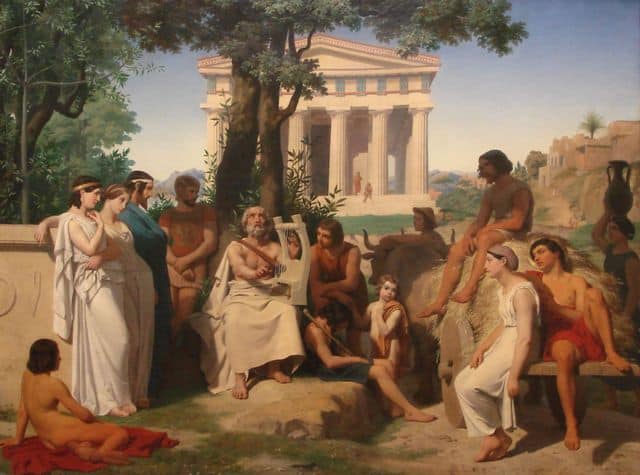
Long before the word humanism existed, human beings were already wrestling with questions that would later become central to the humanist tradition. Across ancient civilizations, thinkers sought to understand how individuals should live, how societies should be organized, and what qualities produced wisdom, justice, and flourishing.
The term itself would not emerge until the Renaissance, yet many of the values associated with humanism—education, ethical conduct, civic responsibility, rational inquiry, and human dignity—appeared thousands of years earlier. Ancient philosophers, religious teachers, lawmakers, and rulers often focused not only on the nature of the gods or the cosmos, but also on the practical improvement of human life.
These early traditions did not generally separate the human world from the spiritual world. Most ancient societies viewed ethics, politics, religion, and cosmology as interconnected. Nevertheless, many developed remarkably sophisticated ideas about virtue, justice, compassion, self-cultivation, and social harmony that continue to influence humanity today.
Although ancient civilizations differed greatly in culture and belief, many shared a common concern: how to create a good life and a stable society. In this sense, the roots of humanism are nearly as old as civilization itself.
2. Ancient Egypt, Mesopotamia, and Early Ethical Civilization
The earliest urban civilizations of Egypt and Mesopotamia laid important foundations for later humanist thought. While these societies were deeply religious, they also developed extensive systems of law, education, administration, and moral instruction that focused on human conduct and social order.
In ancient Egypt, the concept of Ma’at represented truth, justice, harmony, balance, and proper conduct. Pharaohs were expected to uphold Ma’at not merely as a religious obligation but as a practical framework for maintaining a flourishing society. Egyptian wisdom literature advised honesty, moderation, generosity, humility, and self-control—virtues that would later appear in many humanist traditions.
Mesopotamian civilizations likewise produced sophisticated legal and ethical systems. The famous Code of Hammurabi sought to establish predictable standards of justice within a complex society. Although harsh by modern standards, such legal codes represented an important step toward replacing arbitrary power with recognizable rules and responsibilities.
Ancient scribal schools trained generations of administrators, scholars, and officials. These institutions preserved knowledge, developed literacy, and helped establish the idea that education could improve both individuals and society.
While these civilizations remained hierarchical and deeply intertwined with religion, they helped create the intellectual and administrative foundations upon which later philosophical and humanist traditions would build.
3. India, Buddhism, and the Ethics of Human Flourishing
Ancient India produced some of humanity’s most profound explorations of consciousness, ethics, and human development. Hindu, Jain, and Buddhist traditions all sought to understand suffering, virtue, self-discipline, and the path toward a more meaningful existence.
Among these traditions, Buddhism is particularly notable for its emphasis on practical human transformation. Rather than focusing primarily on divine intervention, the Buddha directed attention toward the causes of suffering and the methods by which individuals could cultivate wisdom, compassion, and liberation.
The Four Noble Truths and the Noble Eightfold Path provided a systematic framework for ethical and psychological development. The Buddha taught that greed, hatred, and delusion were the ultimate sources of suffering, and that individuals could reduce suffering through ethical conduct, meditation, and insight.
Buddhist teachings encouraged compassion toward all sentient beings and emphasized personal responsibility for one’s actions. These ideas contributed to a broader moral vision that transcended tribe, caste, ethnicity, and political boundaries.
Although Buddhism is not humanism in the modern secular sense, its focus on human flourishing, moral development, and universal compassion has made it one of the most influential proto-humanist traditions in world history.
4. Confucian Humanism and the Harmonious Society
If any ancient tradition can be described as strongly human-centered, it is Confucianism. Living during a period of political instability in ancient China, Confucius sought not to speculate extensively about supernatural matters but to improve human relationships, governance, education, and moral character.
Confucius taught that social harmony depended upon the cultivation of virtue. Good societies emerged when individuals developed qualities such as benevolence (ren), righteousness (yi), wisdom (zhi), trustworthiness (xin), and proper conduct (li).
Education occupied a central place in Confucian thought. Confucius argued that moral excellence was not limited to aristocrats or hereditary elites. Through study, self-reflection, and disciplined practice, individuals could improve themselves and contribute positively to society.
Confucianism also emphasized civic responsibility. Government officials were expected to serve as moral examples rather than merely exercise power. The legitimacy of rulers depended not only on authority but on virtue and competence.
For more than two millennia, Confucian ideals shaped Chinese civilization and influenced much of East Asia. Its enduring emphasis on education, ethical self-cultivation, and responsible governance remains one of the world’s most significant humanist legacies.
5. Greek Philosophy and the Birth of Rational Humanism
The ancient Greeks introduced a new emphasis on rational inquiry that would profoundly influence the future of humanism. While earlier civilizations often relied heavily upon tradition and authority, Greek philosophers increasingly encouraged critical questioning and logical investigation.
Socrates became famous for challenging assumptions and encouraging self-examination. His conviction that “the unexamined life is not worth living” reflected a deeply human-centered approach to philosophy. Rather than accepting inherited beliefs unquestioningly, individuals were encouraged to investigate truth through reasoned dialogue.
Plato expanded these inquiries into questions of justice, ethics, education, and political organization. Aristotle, perhaps the most influential philosopher of the ancient world, developed systematic approaches to logic, science, ethics, and political theory.
Aristotle’s concept of eudaimonia—often translated as flourishing or human fulfillment—became one of the foundational ideas in the history of humanism. He argued that the good life involved cultivating virtue, developing one’s capacities, and contributing to the broader community.
Greek philosophy helped establish the enduring belief that reason, inquiry, and education could improve both individuals and society. This intellectual legacy would later become one of the pillars of Renaissance and Enlightenment humanism.
6. Rome, Stoicism, and the Ideal Citizen
Roman civilization inherited many ideas from Greece while adding its own emphasis on law, citizenship, administration, and civic duty. Roman thinkers were particularly concerned with the practical responsibilities of living within a large and complex society.
Among the Roman Empire’s greatest contributions to humanist thought was Roman Stoicism. Stoic philosophers such as Seneca, Epictetus, and the emperor Marcus Aurelius taught that individuals should cultivate wisdom, courage, justice, and self-control regardless of external circumstances.
The Stoics argued that all human beings possessed the capacity for reason and shared membership in a common moral community. Personal character, rather than wealth, status, or power, became the measure of a good life.
Roman statesman Cicero further developed ideas of natural law, civic virtue, and public service. He argued that political leadership should be guided by justice and responsibility rather than personal ambition.
These traditions helped establish enduring ideals of citizenship, ethical leadership, and service to the common good that would later influence republican government and civic humanism.
7. Cosmopolitanism and the Early Idea of Universal Humanity
One of the most remarkable developments of the ancient world was the gradual emergence of cosmopolitanism—the idea that human beings belong not only to local communities but also to a broader human community.
The Stoics were among the earliest advocates of this perspective. They taught that every individual participates simultaneously in multiple circles of belonging: family, city, nation, and humanity as a whole. Moral progress involved expanding one’s concern outward to encompass all people.
Similar universalist tendencies appeared in Buddhism, which extended compassion beyond social divisions, and in various philosophical and religious traditions that emphasized the shared dignity of human beings.
Although ancient societies remained deeply divided by class, ethnicity, and political boundaries, these early visions planted the seeds of a powerful idea: that humanity possesses a common moral destiny.
This concept would later inspire movements for human rights, international cooperation, democratic citizenship, and global ethics.
The ancient world did not produce humanism in its modern form. Yet it generated many of the questions, values, and ideals that would shape the humanist tradition for centuries to come. The pursuit of wisdom, virtue, justice, education, and human flourishing began long before the Renaissance—and continues today.

Part II — Humanism in the Religious World
8. Learning, Monasticism, and the Preservation of Civilization
The medieval period witnessed both the preservation and the destruction of knowledge. In Christian Europe, religious institutions often became the dominant centers of literacy, education, and record-keeping, but this position was frequently achieved through the displacement, suppression, or replacement of earlier intellectual and spiritual traditions. The history of medieval learning is therefore not simply a story of preservation, but also of cultural conflict, religious competition, and the selective transmission of knowledge.
The centuries following the decline of the Western Roman Empire witnessed profound political, economic, cultural, and intellectual transformation throughout Europe. As Christian institutions expanded their influence, they increasingly became the dominant authorities over education, literacy, religious life, and the transmission of knowledge.
This dominance came at a significant cost. The Christianization of Europe was frequently accompanied by the suppression of competing religious traditions, the destruction of sacred sites, censorship of ideas considered heretical, and the concentration of intellectual authority within religious institutions. Many elements of pre-Christian culture, philosophy, literature, and spiritual practice disappeared through a combination of neglect, replacement, prohibition, and deliberate destruction.
At the same time, because religious institutions increasingly controlled literacy and education, many surviving texts passed through their hands. Monasteries, cathedral schools, and religious scriptoria copied selected manuscripts, maintained archives, and transmitted forms of knowledge that aligned with their priorities and interests.
Christian monasteries copied manuscripts, maintained libraries, and preserved portions of the literary inheritance of Greece and Rome. Many classical texts survive today because generations of scribes reproduced them by hand. At the same time, the Christianization of Europe was accompanied by the destruction of temples, shrines, libraries, sacred sites, and literary traditions associated with non-Christian religions. Countless works of pagan philosophy, mythology, ritual practice, and local cultural history were lost through neglect, suppression, censorship, or deliberate destruction.
The Church’s relationship with knowledge was therefore deeply contradictory. Religious institutions preserved certain forms of learning while discouraging, restricting, or condemning others. Throughout different periods and regions, ecclesiastical authorities sponsored specific forms of scholarship and education, whilst enforcing doctrinal conformity, suppressing dissenting ideas, censoring texts, prosecuting heresy, and restricting intellectual freedom.
Monastic communities also served as centers of education, agriculture, medicine, administration, and technological development. Their contributions to literacy, record-keeping, and social organization were significant. Yet these achievements existed alongside broader systems of religious authority that generally sought to shape intellectual life according to the priorities of the few in power, often shaping theological doctrines for the purpose of preserving and extending their own positions of wealth and influence.
Similar complexities can be found elsewhere. Buddhist monasteries throughout Asia preserved scriptures, advanced philosophy, operated schools, and translated important texts across cultures. Yet Buddhist institutions, like Christian, Islamic, Hindu, and other religious establishments, were not immune to political struggles, sectarian conflicts, or efforts to suppress rival traditions.
The association with the “Dark Ages” stems from several historical realities of the Early Middle Ages:
- Destruction of Literature & Knowledge: The collapse of Roman infrastructure led to the loss or intentional destruction of countless classical texts. Early Christian iconoclasm also led to the destruction of pagan art, libraries, and ancient religious sites in favor of the newly dominant faith. The collapse of literacy and infrastructure was largely confined to Western Europe. At the exact same time, flourishing scientific and intellectual advancements were happening in the Islamic world, the Byzantine Empire, and East Asia.
- Mass Forced Conversions & Intolerance: The spread of Christianity often involved the forceful suppression of indigenous European practices, mass conversions under threat of violence (e.g., Charlemagne’s Saxon Wars, the Christianization of Scandinavia), and the active persecution of non-believers and dissenting sects.
- Anti-Science and Medicine: Natural philosophy was strictly subordinated to religious dogma. Autopsies and empirical medicine were frequently discouraged, and medical treatment often relied heavily on superstition, divine intervention, or relics.
- Oppressive Laws & Imprisonment: The justice system was brutal. Punishments like torture and execution were officially sanctioned, and laws (often tied to the Church or local lords) were utilized to enforce conformity and suppress dissent.
- Serfdom: The shift to feudalism bound millions of peasants (serfs) to the land. They lacked basic rights, were heavily taxed by the aristocracy, and effectively served as the unfree labor class supporting the nobility.
Historians use terms like “Early Middle Ages” not to excuse the religious violence or the suppression of science, but to describe the era more precisely without adopting the specific biases of Renaissance writers. However, their point is vital to civilization: minimizing the dogmatic control, the destruction of knowledge, and the human suffering of that era risks obscuring how easily societies can slide backward into oppression when fundamentalism takes over.
The medieval world should therefore be understood neither as an age of pure intellectual preservation nor as one of unrelenting repression. It was a period in which knowledge survived, evolved, and was transmitted, but often through institutions that simultaneously acted as custodians, gatekeepers, editors, and sometimes destroyers of competing forms of knowledge.
Although medieval religious institutions were not humanist in the modern sense, they formed part of the historical environment from which later humanist movements emerged—sometimes as beneficiaries of preserved learning, and sometimes as critics of religious authority and intellectual control.
9. The Islamic Golden Age and the Expansion of Knowledge
Between the eighth and thirteenth centuries, much of the Islamic world experienced an extraordinary flowering of science, philosophy, medicine, mathematics, and literature. This period, often known as the Islamic Golden Age, became one of the most important chapters in the preservation and expansion of human knowledge.
In cities such as Baghdad, Cordoba, Cairo, and Samarkand, scholars translated and studied works from Greece, Persia, India, and other civilizations. The famous House of Wisdom in Baghdad became a center for scholarship, translation, and scientific inquiry.
Muslim scholars did not merely preserve ancient knowledge; they expanded it. Advances in algebra, astronomy, medicine, optics, geography, chemistry, and engineering transformed intellectual life across Eurasia.
Figures such as Al-Khwarizmi helped establish the foundations of algebra and algorithms. Ibn Sina produced influential medical texts studied for centuries in both the Islamic world and Europe. Ibn al-Haytham pioneered methods of empirical investigation that anticipated aspects of the modern scientific method.
This intellectual culture encouraged rigorous inquiry into both nature and humanity. While rooted in a religious civilization, many scholars believed that reason and observation complemented faith rather than threatened it.
The Islamic Golden Age demonstrated that religious societies could become powerful engines of scientific and philosophical advancement, helping preserve and extend the intellectual heritage of humanity.
10. Jewish Philosophy and the Ethics of Reason
Jewish intellectual traditions likewise contributed significantly to the development of humanistic thought. For centuries, Jewish scholars explored the relationship between revelation, ethics, law, reason, and human responsibility.
A central feature of Jewish scholarship was its culture of interpretation and debate. The study of scripture encouraged questioning, analysis, and intellectual engagement rather than passive acceptance. This emphasis on learning became a defining characteristic of Jewish civilization.
Among the most influential figures was Maimonides, whose work sought to reconcile religious belief with philosophical reason. Drawing upon both Jewish tradition and Greek philosophy, he argued that truth could be approached through rational inquiry as well as faith.
Jewish thinkers frequently emphasized moral responsibility, justice, education, and the dignity of human beings. These concerns aligned closely with themes that would later become central to humanist philosophy.
Living as minorities in many societies, Jewish communities also developed traditions of resilience, scholarship, and ethical reflection that contributed substantially to the intellectual life of Europe, North Africa, and the Middle East.
The Jewish philosophical tradition helped demonstrate that reason and religious commitment need not be enemies, and that ethical inquiry could serve as a bridge between them.
11. Scholasticism, Universities, and Medieval Inquiry
By the High Middle Ages, Europe witnessed the emergence of one of its most important intellectual innovations: the university.
Institutions such as University of Bologna, University of Paris, and University of Oxford created structured environments for advanced study and debate. These institutions became the ancestors of the modern research university.
The dominant intellectual movement within these universities was Scholasticism. Scholastic scholars sought to apply logic and systematic reasoning to questions of theology, philosophy, law, and natural science.
Among the most influential scholastics was Thomas Aquinas. Drawing heavily upon Aristotle, Aquinas argued that reason and faith ultimately pointed toward the same truth. Human beings, he maintained, possessed rational capacities that allowed them to investigate the natural world and understand moral principles.
Contrary to popular stereotypes, many medieval scholars valued argument, evidence, and intellectual rigor. University culture encouraged formal debate, critical analysis, and careful examination of competing viewpoints.
Although much of medieval inquiry remained framed within religious assumptions, scholasticism helped cultivate habits of disciplined reasoning that later contributed to the rise of modern science and humanism.
12. Erasmus, Thomas More, and Christian Humanism
As Europe approached the Renaissance, a new intellectual movement emerged that sought to combine classical learning with Christian ethics. This movement became known as Christian Humanism.
Christian humanists believed that education, moral cultivation, and the study of classical literature could improve both individuals and society. They sought to return to original texts, encourage critical scholarship, and promote ethical reform within religious institutions.
Among the most important figures was Desiderius Erasmus. Erasmus advocated education, tolerance, intellectual freedom, and moral self-improvement. He emphasized the importance of reading original sources and applying reason to religious understanding.
Another influential Christian humanist was Thomas More, whose work Utopia explored questions of justice, governance, social organization, and human welfare.
Unlike later secular humanists, Christian humanists generally viewed faith and reason as complementary rather than competing forces. They believed that human beings could cultivate virtue and improve society while remaining deeply religious.
Their efforts helped bridge the medieval and modern worlds, preparing the way for the Renaissance, Reformation, and Enlightenment.
13. Faith, Reason, and the Foundations of Modern Humanism
The history of humanism is often presented as a struggle between religion and reason. In reality, the relationship was far more complex.
Many of the intellectual traditions that contributed to modern humanism developed within religious civilizations. Monks preserved classical texts. Islamic scholars expanded science and philosophy. Jewish thinkers explored ethics and rational inquiry. Christian humanists championed education and critical scholarship. Universities emerged under religious patronage.
This does not mean that religious institutions always encouraged intellectual freedom. Throughout history, conflicts undoubtedly arose between authority and inquiry, orthodoxy and innovation, tradition and reform. Yet the historical record shows that religious and humanistic ideas frequently interacted, influenced one another, and evolved together.
The most enduring contribution of these traditions may have been the gradual recognition that human beings possess the capacity—and perhaps the responsibility—to seek truth through both moral reflection and rational investigation.
Humanism did not suddenly appear during the Renaissance. It grew gradually through centuries of dialogue between faith and reason, tradition and innovation, authority and inquiry. From that long conversation, a new vision of humanity was beginning to take shape—one that would transform the modern world.
Part III — Renaissance Humanism
14. Petrarch and the Recovery of Classical Wisdom
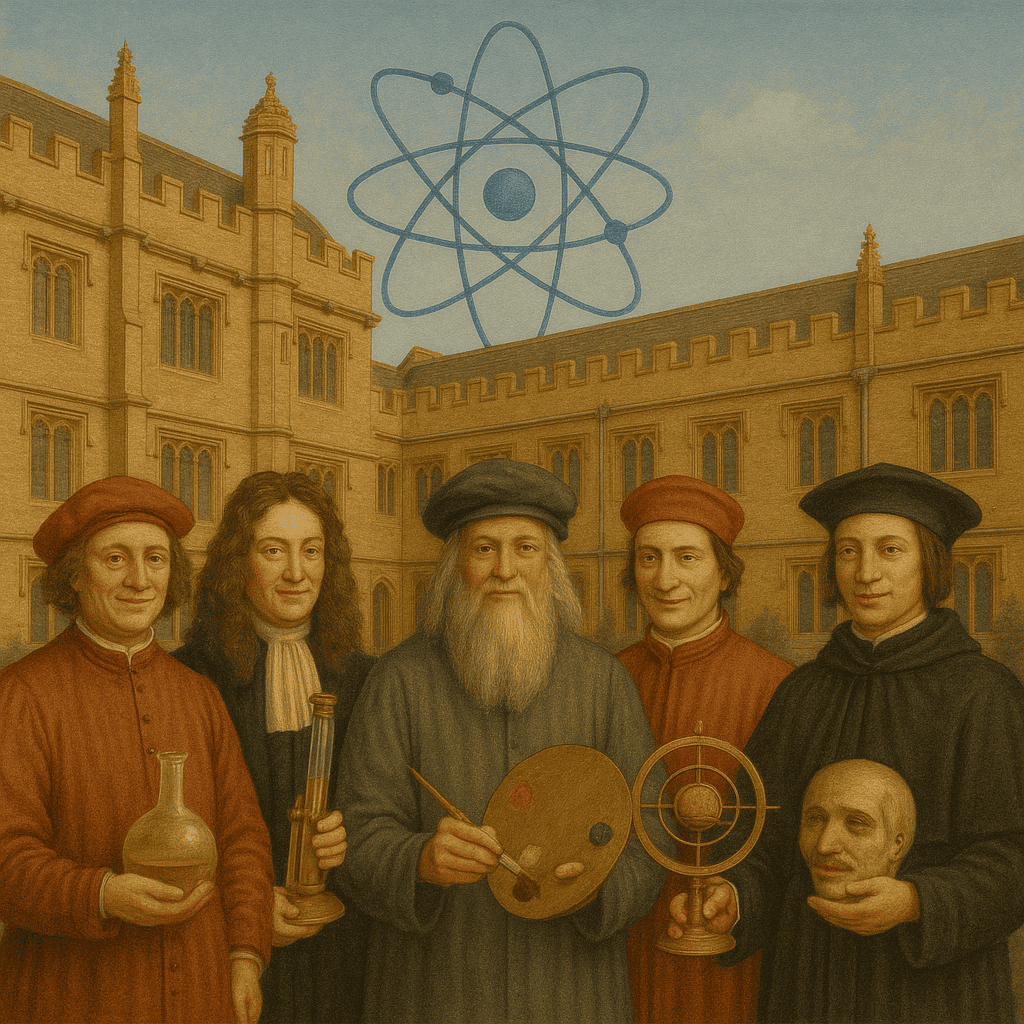
The Renaissance is often described as a rebirth of classical civilization. While this characterization simplifies a complex historical process, it captures an important truth: Renaissance scholars consciously sought to recover the intellectual achievements of ancient Greece and Rome and apply them to the challenges of their own age.
No figure symbolizes this movement more than Francesco Petrarca. Often called the “Father of Humanism,” Petrarch believed that many of the greatest insights into human character, ethics, and civic life could be found in classical literature.
Petrarch spent much of his life searching monasteries and libraries for forgotten manuscripts. Through his efforts and those of other scholars, important works by Cicero, Livy, Seneca, and other ancient authors were rediscovered and circulated throughout Europe.
Unlike medieval scholastics, who often focused on abstract theological questions, Petrarch emphasized literature, history, moral philosophy, and the study of human experience. He believed that education should cultivate wisdom, virtue, and eloquence rather than merely train specialists in technical disputes.
His work inspired generations of scholars to return ad fontes—”to the sources.” This intellectual movement would become one of the defining characteristics of Renaissance humanism.
15. Florence and the Rise of Civic Humanism
If Petrarch provided the intellectual spark of Renaissance humanism, Florence became its most influential laboratory.
During the fourteenth and fifteenth centuries, Florence emerged as one of Europe’s most dynamic commercial, artistic, and political centers. Wealth generated through banking and trade helped support scholars, artists, architects, and philosophers whose work would reshape Western civilization.
Florentine humanists believed that education should prepare individuals not merely for private contemplation but for active participation in public life. This perspective became known as Civic Humanism.
Thinkers such as Leonardo Bruni argued that citizens possessed responsibilities toward their communities and governments. Classical authors such as Cicero and Aristotle were studied not simply as historical figures but as guides to effective citizenship and ethical leadership.
The powerful Medici family played a significant role in fostering this intellectual environment. Through patronage of scholars, artists, and public institutions, Florence became a center of learning whose influence spread across Europe.
Civic Humanism helped revive ancient ideals of citizenship, public service, and republican government. These ideas would later influence democratic thought throughout the modern world.
16. Education, Rhetoric, and the Humanist Curriculum
At the heart of Renaissance humanism stood a revolutionary vision of education.
Humanists believed that education should cultivate well-rounded, thoughtful, ethical, and capable individuals. Rather than focusing exclusively on theology or professional specialization, they advocated a curriculum known as the studia humanitatis—the studies of humanity.
This curriculum typically included:
- grammar,
- rhetoric,
- poetry,
- history,
- moral philosophy,
- classical literature,
- and public speaking.
The goal was not merely the acquisition of knowledge but the formation of character.
Humanists believed that language mattered because communication shaped society. A well-educated person should be capable of expressing ideas clearly, reasoning persuasively, and participating effectively in civic life.
This educational philosophy transformed schools and universities across Europe. It also laid the foundations for the modern liberal arts tradition, which continues to influence education throughout the world.
The humanists viewed learning not as an end in itself but as a means of developing wiser, more virtuous, and more effective human beings.
17. Leonardo da Vinci and the Union of Art and Science
Among all the figures of the Renaissance, none better embodied its spirit than Leonardo da Vinci.
Painter, engineer, anatomist, inventor, architect, natural philosopher, and visionary, Leonardo represented the Renaissance ideal of the fully developed individual. His life demonstrated the humanist conviction that curiosity should know no boundaries.
Leonardo approached both art and science through observation. He studied anatomy by dissecting human bodies, analyzed the movement of water and air, investigated optics and mechanics, and filled notebooks with detailed sketches of machines, plants, animals, and human beings.
His artistic masterpieces reflected the same commitment to understanding reality. Whether painting a portrait or designing a flying machine, Leonardo sought to uncover the principles governing nature.
For Leonardo, art and science were not separate pursuits. Both required careful observation, disciplined inquiry, creativity, and imagination.
His life exemplified one of the Renaissance’s most enduring contributions: the belief that human potential expands when knowledge is allowed to flow freely across disciplines.
18. Pico della Mirandola and Human Potential
One of the most famous statements of Renaissance humanism appeared in the work of Giovanni Pico della Mirandola.
In his celebrated Oration on the Dignity of Man, Pico presented a bold vision of human freedom and possibility. Unlike other creatures, he argued, human beings are not confined to a fixed nature. Instead, they possess the unique capacity to shape themselves through learning, effort, and moral choice.
Pico portrayed humanity as occupying a special position within creation—not because of inherited privilege, but because of its potential for self-transformation.
His ideas reflected the growing confidence of the Renaissance age. Human beings were increasingly viewed not merely as passive subjects of fate but as active participants in their own development.
Pico’s ambitions extended far beyond moral philosophy. In 1486, he composed his famous 900 Theses, a collection of philosophical, theological, mystical, and scientific propositions that he intended to defend in a public debate in Rome. Drawing upon Greek philosophy, Christianity, Judaism, Islamic scholarship, Hermetic writings, and other traditions, Pico sought nothing less than a universal synthesis of human knowledge.
Central to this project was his belief in the prisca theologia, or “ancient theology.” Pico argued that a single divine wisdom had been revealed to humanity in remote antiquity and preserved in different forms by figures such as Orpheus, Zoroaster, Hermes Trismegistus, Pythagoras, Plato, and Moses. The apparent differences among religions and philosophies, he believed, concealed a deeper underlying unity.
Pico also became the first major Christian thinker to study Jewish Kabbalah extensively. He believed that Kabbalistic teachings contained ancient insights that could illuminate and support Christian theology, helping to establish the tradition later known as Christian Kabbalah.
Although many of his ideas proved controversial and several of his theses were condemned by Church authorities, Pico’s vision of intellectual synthesis reflected one of the defining aspirations of Renaissance humanism: the belief that truth could be sought across cultures, traditions, and disciplines.
Although Pico remained deeply religious, his emphasis on human agency, creativity, intellectual freedom, and self-cultivation became defining themes of later humanist thought. The notion that individuals can improve themselves through education, inquiry, and effort remains a cornerstone of humanism to this day.
19. Printing, Literacy, and the Democratization of Knowledge
The spread of Renaissance humanism would have been impossible without one of the most important technological innovations in history: the printing press.
Around the middle of the fifteenth century, Johannes Gutenberg perfected movable-type printing in Europe. What had once required months of labor by scribes could now be reproduced rapidly and at far lower cost.
The consequences were revolutionary.
Books became more accessible. Literacy expanded. Scholars could share ideas across vast distances. Classical texts, scientific discoveries, religious writings, and political arguments circulated more widely than ever before.
Printing accelerated intellectual exchange and weakened traditional monopolies on knowledge. Ideas that once remained confined to elite circles increasingly reached merchants, artisans, professionals, and eventually ordinary citizens.
The technology did not simply distribute information; it transformed civilization’s relationship with knowledge itself.
In many ways, the printing press played a role in the Renaissance comparable to that of the internet in the modern world.
20. Renaissance Humanism and the Birth of Modernity
The Renaissance was not only an artistic movement and a revival of classical learning. It also represented a profound shift in how human beings understood themselves and their place in the world.
Humanists encouraged people to study history, examine original sources, cultivate their talents, participate in civic life, and investigate nature through observation and reason. They promoted confidence in human capacities while continuing to grapple with enduring moral and spiritual questions.
Their efforts helped transform education, politics, literature, art, science, and public life. The Renaissance did not reject religion, nor did it fully embrace modern secularism. Instead, it created an intellectual environment in which inquiry, creativity, and individual development could flourish alongside faith.
Many of the institutions and ideals that define the modern world emerged directly or indirectly from this transformation. Liberal education, scientific curiosity, civic engagement, historical scholarship, and the concept of individual potential all owe much to the Renaissance humanist tradition.
The Renaissance marked the moment when humanity began to see itself not merely as the heir to the past, but as the creator of the future.
From this awakening would emerge the Scientific Revolution, the Enlightenment, modern democracy, and many of the defining ideas of contemporary civilization. Humanism had entered a new phase—one that would increasingly place reason, liberty, and universal rights at the center of human affairs.
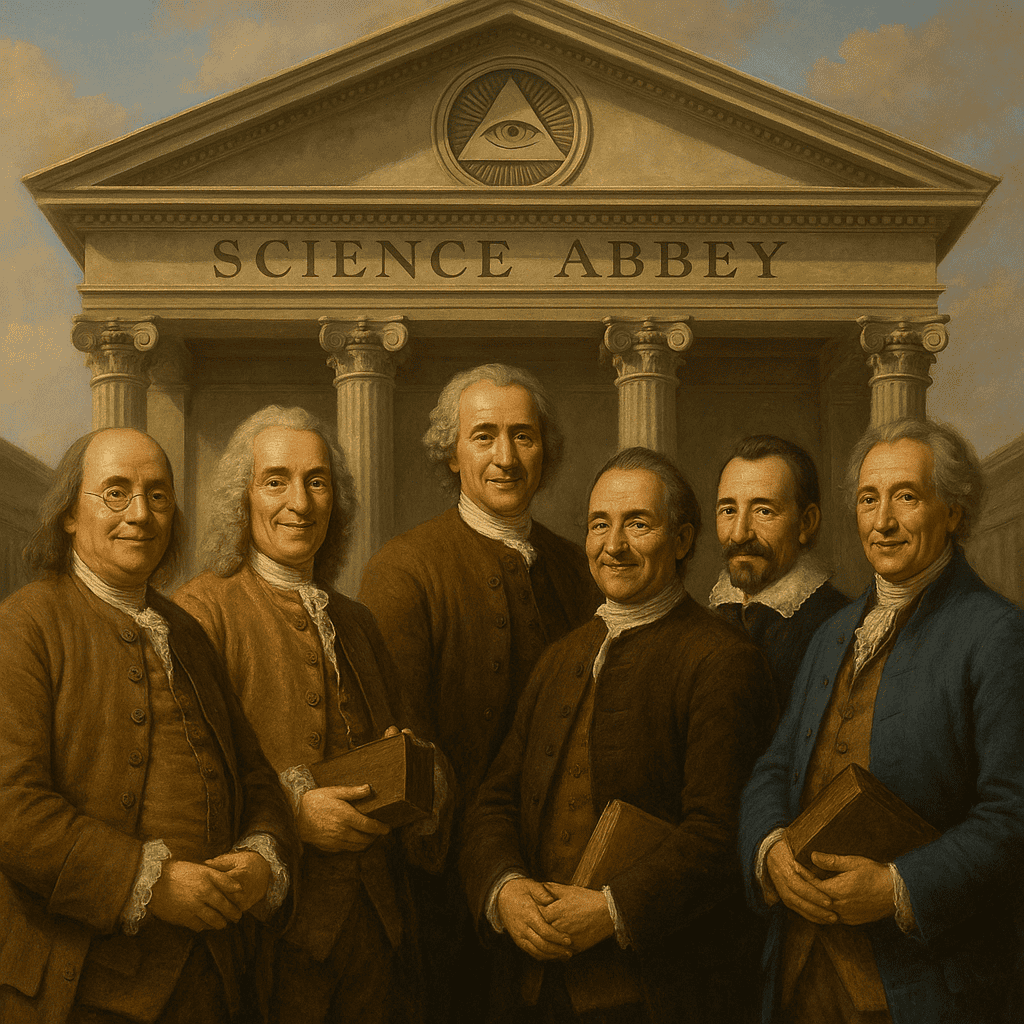
Part IV — Enlightenment Humanism
21. The Scientific Revolution and the Authority of Reason
The Renaissance had revived classical learning and confidence in human potential. The Scientific Revolution transformed that confidence into a new method for understanding reality itself.
Between the sixteenth and seventeenth centuries, European thinkers increasingly challenged inherited assumptions about nature, authority, and knowledge. Rather than relying solely upon tradition, scripture, or ancient authorities, they began emphasizing observation, experimentation, mathematics, and systematic inquiry.
Figures such as Nicolaus Copernicus, Galileo Galilei, Johannes Kepler, and Isaac Newton revolutionized humanity’s understanding of the cosmos. Their discoveries demonstrated that the universe operated according to intelligible laws that could be investigated through reason and evidence.
The Scientific Revolution did more than produce new knowledge. It changed how people thought about knowledge itself.
Increasingly, truth came to be seen as something that could be discovered through inquiry rather than merely inherited from authority. This shift profoundly influenced philosophy, politics, economics, and education.
The emerging authority of reason became one of the defining characteristics of Enlightenment humanism.
22. Locke, Voltaire, Rousseau, and the Rights of Humanity
The Enlightenment extended the spirit of scientific inquiry beyond nature into society, government, and human affairs.
Thinkers throughout Europe began asking whether political institutions should be subjected to the same critical examination that scientists applied to the natural world. If traditional beliefs about the cosmos could be questioned, why not traditional assumptions about kings, churches, and social hierarchies?
Among the most influential figures was John Locke, who argued that individuals possess natural rights that exist independently of governments. According to Locke, legitimate governments derive their authority from the consent of the governed and exist primarily to protect life, liberty, and property.
Voltaire became a powerful advocate for freedom of thought, religious tolerance, and intellectual liberty. Through satire and criticism, he challenged dogmatism and arbitrary authority.
Jean-Jacques Rousseau emphasized popular sovereignty and argued that political legitimacy arises from the collective will of citizens rather than hereditary privilege.
Together, these and other Enlightenment thinkers helped develop the modern language of rights, citizenship, liberty, and political equality.
Their work fundamentally reshaped humanity’s understanding of government and the individual.
23. Democracy, Constitutionalism, and Secular Government
One of the Enlightenment’s most enduring achievements was its influence on modern democratic government.
Enlightenment thinkers generally rejected the idea that rulers possessed unquestionable authority by divine right. Instead, they argued that governments should be accountable to citizens and constrained by laws and institutions.
This perspective contributed to the development of constitutional government, representative institutions, independent courts, and protections for civil liberties.
The political revolutions of the eighteenth century—including the American Revolution and the French Revolution—drew heavily upon Enlightenment ideas. Documents such as the United States Constitution and the Declaration of the Rights of Man and of the Citizen reflected growing commitments to liberty, equality before the law, and representative government.
The Enlightenment also encouraged the gradual separation of religious and political authority. While many Enlightenment thinkers remained religious, they generally supported freedom of conscience and opposed the coercive enforcement of religious belief by the state.
This emerging concept of secular government became one of the foundational principles of modern liberal democracy.
24. Journalism, Education, and the Public Sphere
The Enlightenment was not only a movement of philosophers and statesmen. It also transformed how ordinary people participated in public life.
The expansion of literacy, printing, newspapers, pamphlets, and coffeehouse culture created what historians often call the public sphere—a space in which citizens could exchange ideas, debate public issues, and hold institutions accountable.
Information increasingly circulated beyond royal courts and religious authorities. Political arguments, scientific discoveries, and social critiques became accessible to broader segments of society.
Education likewise assumed a new importance. Enlightenment thinkers argued that informed citizens were essential to the success of free societies. Schools, academies, libraries, and learned societies expanded throughout Europe and North America.
Knowledge came to be viewed not merely as a privilege of elites but as a public good.
This belief remains one of the defining principles of humanism. A flourishing society depends upon educated individuals capable of critical thinking, informed judgment, and meaningful participation in civic life.
25. Humanism and the Abolition of Tyranny
The humanist ideals of the Enlightenment inspired some of history’s most significant movements for reform.
If all individuals possess inherent dignity and rights, then systems based upon arbitrary domination become increasingly difficult to justify. Enlightenment arguments contributed to growing criticism of absolute monarchy, religious persecution, hereditary privilege, censorship, torture, and slavery.
Many reformers began advocating broader political participation, legal equality, and protections for individual liberty.
Although progress was uneven and often incomplete, humanist principles increasingly shaped campaigns for constitutional reform, religious freedom, expanded education, abolitionism, and democratic governance.
The abolition of the transatlantic slave trade and later movements to abolish slavery itself were influenced by a combination of religious, moral, and humanist arguments emphasizing the shared humanity of all people.
Humanism thus became not merely an intellectual philosophy but a force for social and political transformation.
The humanist project increasingly turned toward the improvement of laws, institutions, and systems of governance in service of human dignity, liberty, and flourishing.
26. Enlightenment Ideals and The Scientific Revolution
The Enlightenment transformed the modern world, but it was not without limitations and contradictions.
Many Enlightenment thinkers championed universal rights while living in societies that denied those rights to women, enslaved peoples, indigenous populations, and large segments of the population. Some advocates of liberty tolerated forms of exclusion that would later be challenged by subsequent generations.
European empires often justified colonial expansion even while professing commitments to reason and human equality. Scientific inquiry sometimes became entangled with pseudoscientific theories of racial hierarchy. Rationality itself occasionally evolved into forms of intellectual arrogance that underestimated the importance of culture, emotion, tradition, and social complexity.
These contradictions do not invalidate Enlightenment achievements, but they remind us that humanism has always been an unfinished project.
The history of humanism is not the story of perfect ideas flawlessly applied. It is the story of humanity gradually expanding its moral horizons while struggling to live up to its own ideals.
Nevertheless, the Enlightenment established principles that continue to shape the modern world: freedom of thought, constitutional government, human rights, scientific inquiry, public education, and the belief that societies can improve through reasoned reform.
These ideas would provide the foundation for the next major phase in the history of humanism. As science advanced and humanity’s understanding of nature deepened, a new form of humanism would emerge—one rooted not only in philosophy and politics, but in the scientific study of humanity itself.
The Scientific Revolution transformed humanism from a primarily philosophical and educational movement into a method for understanding reality itself.
Before the Scientific Revolution, humanists generally focused on ethics, literature, rhetoric, history, and civic life. Thinkers sought wisdom through the study of classical texts and human experience.
The Scientific Revolution introduced a new approach: systematic observation, experimentation, measurement, and mathematical analysis.
Scientists such as Copernicus, Galileo, Kepler, and Newton demonstrated that the natural world could be investigated through evidence rather than authority alone.
This development profoundly influenced humanism. Rational inquiry became increasingly central to human understanding. The pursuit of truth shifted from reliance upon tradition toward critical investigation and empirical verification.
Scientific humanism emerged from this transformation, combining the humanist concern for human flourishing with the scientific commitment to evidence-based knowledge.
Part V — Scientific Humanism
27. Darwin and Humanity’s Place in Nature
The Enlightenment expanded humanity’s confidence in reason and progress. The nineteenth century introduced a new and transformative question: What exactly are human beings?
For centuries, most cultures understood humanity as fundamentally separate from the rest of nature. Human beings were often viewed as occupying a unique position in creation, distinct from animals and governed by special principles.
This perspective was profoundly challenged by the work of Charles Darwin.
In 1859, Darwin published On the Origin of Species, presenting the theory of evolution by natural selection. He argued that the diversity of life emerged through natural processes operating over immense spans of time. Later, in The Descent of Man, Darwin extended these ideas to humanity itself.
The implications were revolutionary. Human beings were not separate from nature but part of it. Humanity shared common ancestry with all living organisms and had emerged through the same evolutionary processes that shaped every other species.
For many, this realization was unsettling. Yet it also offered a powerful new understanding of humanity’s place in the world. Human beings became not fallen creatures or cosmic exceptions, but products of a long evolutionary journey stretching back billions of years.
Scientific humanism embraced this perspective. Rather than diminishing human significance, it suggested that humanity’s greatest achievements—reason, creativity, morality, and culture—had emerged from nature itself.
28. Science, Progress, and the Modern Worldview
The nineteenth and early twentieth centuries witnessed extraordinary advances in scientific knowledge and technological capability.
Industrialization transformed economies. Modern medicine dramatically reduced mortality. Advances in chemistry, physics, engineering, and agriculture improved living standards for millions. Railroads, telegraphs, automobiles, airplanes, and electrical networks reshaped daily life.
These developments encouraged a growing belief that science could help solve many of humanity’s most pressing problems.
Scientific humanists argued that social progress should be guided by evidence, critical thinking, and rational inquiry rather than superstition, dogma, or inherited authority. Education, public health, scientific research, and technological innovation increasingly came to be viewed as engines of human advancement.
At its best, this worldview fostered optimism about humanity’s ability to improve its condition through knowledge and cooperation.
At the same time, the modern era revealed that scientific knowledge alone was insufficient. The same technologies that produced prosperity could also be used for exploitation, warfare, and environmental destruction.
Scientific humanism therefore gradually evolved beyond simple faith in progress toward a more nuanced recognition that scientific power must be accompanied by ethical responsibility.
29. Einstein, Russell, and the Ethics of Knowledge
As scientific knowledge expanded, many leading thinkers began reflecting on its moral implications.
Among the most influential was Albert Einstein. Although best known for his contributions to physics, Einstein also became a prominent advocate for peace, international cooperation, civil liberties, and global responsibility.
Einstein viewed scientific inquiry as one of humanity’s greatest achievements, yet he repeatedly warned that technological power without ethical wisdom posed grave dangers.
Similarly, Bertrand Russell argued that intellectual advancement must be accompanied by moral and social progress. Russell championed critical thinking, scientific literacy, free inquiry, and skepticism toward dogmatism of all kinds.
Both men witnessed the devastation of two world wars and the emergence of nuclear weapons. Their experiences reinforced a central lesson of scientific humanism: knowledge is powerful, but power alone does not guarantee wisdom.
The ethical use of knowledge became one of the defining concerns of twentieth-century humanist thought.
Scientific humanism increasingly emphasized not only what humanity could do, but what humanity ought to do.
30. Psychology, Neuroscience, and Human Development
The rise of modern psychology and neuroscience transformed humanity’s understanding of itself.
Earlier humanist traditions had explored ethics, character, and self-improvement primarily through philosophy and religion. Modern science introduced new methods for investigating the mind directly.
Psychologists began studying cognition, emotion, learning, motivation, personality, and behavior. Neuroscientists explored the structure and function of the brain. Researchers examined mental health, intelligence, social dynamics, and human development across the lifespan.
These discoveries revealed that many aspects of human experience arise from complex interactions among biology, psychology, culture, and environment.
The emergence of fields such as developmental psychology, positive psychology, cognitive science, and behavioral neuroscience expanded humanism’s understanding of flourishing.
Human well-being could increasingly be studied empirically rather than merely speculated about philosophically.
Scientific humanism thus became not only a philosophy of human dignity but also a scientific inquiry into the conditions that enable individuals and societies to thrive.
31. Carl Sagan and the Cosmic Perspective
Few figures embodied modern scientific humanism more effectively than Carl Sagan.
Sagan helped millions of people understand the universe through books, lectures, and the landmark television series Cosmos. He combined scientific rigor with a profound sense of wonder and humility.
One of Sagan’s most influential contributions was the promotion of the cosmic perspective. Humanity, he argued, occupies a tiny place within an immense universe. The Earth itself is but a small world orbiting an ordinary star in a vast galaxy among billions of others.
Far from diminishing human significance, Sagan believed this perspective could encourage humility, cooperation, and responsibility.
His famous reflection on the “Pale Blue Dot” emphasized that all human history—our triumphs, conflicts, religions, nations, and civilizations—has unfolded upon a single small planet.
For Sagan, science was not merely a collection of facts. It was a way of understanding reality, combating ignorance, and cultivating a sense of shared human destiny.
His work became one of the defining expressions of late twentieth-century scientific humanism.
32. Secular Humanism in the Twentieth Century
During the twentieth century, humanism increasingly developed into a distinct philosophical movement.
Secular humanists argued that ethical principles could be grounded in reason, evidence, empathy, and human experience without requiring supernatural authority. They emphasized individual freedom, scientific inquiry, democratic governance, and universal human rights.
Organizations, manifestos, and educational initiatives emerged throughout the world to promote these values. The publication of the Humanist Manifesto in 1933 and subsequent revisions helped articulate a modern humanist worldview centered on human welfare and responsibility.
Secular humanism generally rejected dogmatism while encouraging open inquiry and intellectual freedom. It sought to address moral and social questions through evidence, dialogue, and critical thinking.
Although critics sometimes portrayed secular humanism as merely atheism under another name, many humanists viewed it as a broader ethical and cultural framework focused on human flourishing.
Its influence can be seen in modern education, science advocacy, civil liberties movements, and efforts to promote evidence-based public policy.
33. Human Rights, Globalism, and Scientific Civilization
The horrors of the twentieth century—including world wars, genocide, totalitarianism, and nuclear weapons—forced humanity to confront fundamental questions about civilization itself.
In response, international efforts emerged to establish shared principles of human dignity and global cooperation.
The adoption of the Universal Declaration of Human Rights marked a historic milestone. For the first time, much of the world formally recognized that all human beings possess certain inherent rights regardless of nationality, ethnicity, religion, or social status.
Scientific advances simultaneously increased global interconnectedness. Communications technologies, transportation networks, international institutions, and scientific collaborations created an increasingly integrated world.
Scientific humanists increasingly viewed humanity as a single species sharing a common planetary future.
This perspective encouraged support for:
- universal education,
- public health,
- international scientific cooperation,
- environmental stewardship,
- conflict reduction,
- and the protection of human rights.
By the end of the twentieth century, scientific humanism had evolved into a broad worldview combining science, ethics, democracy, and global responsibility.
Yet new challenges were already emerging. The information revolution, rising political polarization, technological disruption, ecological pressures, and the rapid development of artificial intelligence would soon test many of the assumptions upon which modern humanism had been built.
The next chapter in the history of humanism would therefore become not merely a story of progress, but a story of crisis, uncertainty, and the search for a new path forward.

Part VI — The Crisis of Humanism
34. Totalitarianism and the Collapse of Civilization
The nineteenth century had fostered widespread optimism about progress, science, and human advancement. Many believed that education, democracy, technology, and economic development would gradually lead humanity toward a more enlightened future.
The twentieth century shattered that confidence.
Two world wars, industrialized slaughter, genocide, political extremism, and nuclear weapons revealed that scientific and technological progress did not automatically produce moral progress. The same scientific civilization that developed antibiotics and aviation also developed concentration camps, chemical weapons, and atomic bombs.
Totalitarian regimes emerged across Europe and Asia, demanding absolute loyalty to the state, party, race, or ideology. Individual rights were subordinated to collective myths and centralized power.
The crimes of Nazi Germany, Stalinist Soviet Union, Maoist China, Khmer Rouge Cambodia, and other totalitarian systems demonstrated how quickly civilization could descend into brutality when truth, freedom, and human dignity were sacrificed to ideology.
These tragedies forced humanists to confront an uncomfortable reality: intelligence and education alone were insufficient safeguards against tyranny.
The crisis was not merely political. It was civilizational. Humanity had acquired unprecedented power without acquiring corresponding levels of wisdom, restraint, or moral maturity.
35. Propaganda, Nationalism, and Information Warfare
The twentieth century also revealed the extraordinary power of propaganda.
Governments, political movements, and mass media increasingly learned how to shape public opinion through emotional appeals, selective information, repetition, and psychological manipulation.
Modern communication technologies allowed narratives to spread farther and faster than ever before. Radio, film, newspapers, television, and later digital media became powerful instruments for influencing human beliefs and behavior.
Extreme nationalism often amplified these dynamics. While love of country can inspire civic service and social cohesion, nationalism can also become exclusionary, portraying outsiders as threats and elevating collective identity above universal human concerns.
Throughout the twentieth century, propaganda and nationalism contributed to wars, ethnic violence, authoritarian movements, and social polarization.
Humanists increasingly recognized that the struggle for truth was not merely an intellectual challenge. It was also a psychological and institutional challenge. The defense of open societies required more than freedom of speech alone. It required education, media literacy, critical thinking, and resilient institutions capable of resisting manipulation.
In the digital age, these challenges would become even more severe.
36. Consumerism, Nihilism, and Social Fragmentation
As many societies became wealthier, a different challenge emerged.
Material prosperity improved living standards for millions, yet economic success did not necessarily provide meaning, purpose, or fulfillment. Many individuals found themselves surrounded by abundance while simultaneously experiencing loneliness, anxiety, and alienation.
Consumer culture increasingly encouraged people to define themselves through possessions, status, entertainment, and consumption. Economic growth generated extraordinary benefits, but it also fostered new forms of dissatisfaction and social comparison.
Meanwhile, traditional institutions that had historically provided identity and community—religious organizations, local associations, extended families, and civic groups—often weakened or transformed. For some, this produced greater freedom. For others, it generated feelings of isolation and disconnection.
At the same time, nihilistic attitudes gained influence in certain intellectual and cultural circles. If life possessed no inherent meaning and all values were merely subjective constructions, then questions of purpose and morality became increasingly difficult to answer.
Humanism found itself confronting a dilemma. If traditional sources of meaning were declining, what could replace them?
The search for human flourishing now required not only material prosperity and political liberty, but also a deeper understanding of purpose, belonging, and psychological well-being.
37. Postmodernism and the Crisis of Truth
The latter half of the twentieth century witnessed growing skepticism toward grand narratives, universal truths, and claims of objective certainty.
Many postmodern thinkers provided valuable critiques of power structures, cultural assumptions, and historical biases. They highlighted how institutions and dominant narratives sometimes concealed inequality, prejudice, and exclusion.
These critiques helped expose genuine flaws in previous intellectual traditions and encouraged greater awareness of diverse perspectives.
Yet some interpretations of postmodern thought went further, suggesting that truth itself was largely a social construction, that objectivity was unattainable, or that competing narratives were fundamentally equivalent.
Such views created tensions with both science and humanism.
Scientific inquiry depends upon the assumption that reality exists independently of individual beliefs and that evidence can help distinguish more accurate explanations from less accurate ones. Humanism likewise depends upon the possibility of reasoned dialogue and shared standards for evaluating claims.
As trust in institutions, expertise, and objective evidence declined in some sectors of society, public discourse became increasingly vulnerable to misinformation, conspiracy theories, and ideological tribalism.
The resulting crisis was not merely political. It was epistemological—a crisis concerning how human beings determine what is true.
38. Artificial Intelligence, Algorithms, and Human Autonomy
The rise of digital technology introduced new opportunities and new dangers.
Search engines, social media platforms, recommendation systems, and artificial intelligence dramatically expanded humanity’s access to information. Knowledge that once required years of research became available within seconds.
At the same time, algorithms increasingly shaped what people saw, read, believed, and discussed.
Digital platforms often optimized for engagement rather than understanding. Content that provoked outrage, fear, tribal loyalty, or emotional intensity frequently spread more effectively than careful analysis.
Artificial intelligence further complicated the landscape. AI systems demonstrated remarkable capabilities in communication, prediction, image generation, scientific research, and decision support. Yet they also raised concerns regarding misinformation, surveillance, labor disruption, concentration of power, and the future of human agency.
The central question was no longer how technology would influence society.
The question became whether humanity could maintain meaningful control over technologies increasingly capable of influencing humanity itself.
Humanism faced a new challenge: how to preserve human autonomy, dignity, and democratic accountability in a world increasingly shaped by intelligent machines.
39. The Problem of Meaning in the Modern World
Beneath many of these challenges lies a deeper question.
What is the purpose of human life?
For much of history, answers were supplied by religion, tradition, tribe, nation, or inherited social roles. In modern societies, individuals possess unprecedented freedom to define their own identities and values.
This freedom represents one of humanity’s great achievements. Yet it also creates new burdens.
Without shared sources of meaning, many people struggle with uncertainty, loneliness, anxiety, and a sense of disorientation. Technological advancement answers many practical questions but often leaves existential questions unresolved.
Science can explain how the universe works. It can illuminate the origins of life, the structure of matter, and the functioning of the brain. Yet science alone does not automatically provide purpose, wisdom, or ethical direction.
The crisis of modern humanism therefore extends beyond politics, economics, and technology. It reaches into the deepest questions of human existence.
How should individuals live?
What makes life meaningful?
What responsibilities do we owe one another?
How should power, knowledge, and technology be used?
Can humanity develop forms of meaning that are compatible with both scientific knowledge and human flourishing?
These questions increasingly define the human condition in the twenty-first century.
The crisis of humanism is therefore not simply a crisis of institutions. It is a crisis of integration—a challenge to unite knowledge with wisdom, freedom with responsibility, individuality with community, and technological power with ethical maturity.
The search for such an integration is giving rise to new forms of humanism designed for an interconnected, technologically advanced, and increasingly planetary civilization. It is to these emerging possibilities that we now turn.

Part VII — Modern Humanism: Organizations, Politics, and Public Life
40. The Modern Humanist Movement
The modern humanist movement consists of a diverse network of organizations, educational institutions, advocacy groups, charities, community associations, and independent local societies operating throughout the world.
Because many humanist communities function independently and are organized at local, regional, and national levels, precise membership figures are difficult to determine. However, there are well over 160 major national and regional humanist organizations operating across more than 80 countries. Most belong to Humanists International, the primary global umbrella organization representing the organized humanist movement.
Together, these organizations advocate for human dignity, freedom of conscience, scientific literacy, human rights, secular government, ethical living, democratic participation, and evidence-based public policy.
Although the movement remains smaller than many major religious traditions, modern humanism has become an increasingly visible force in education, public policy, civil society, science advocacy, and international human rights work.
41. Global Humanist Organizations
Humanists International
The principal global organization of the humanist movement is Humanists International.
Founded in Amsterdam in 1952 as the International Humanist and Ethical Union (IHEU), Humanists International serves as the worldwide representative body for organized humanism.
Today it unites more than 120 humanist, secular, rationalist, freethought, atheist, and ethical culture organizations across every inhabited continent.
Its major activities include:
- promoting freedom of thought and conscience,
- defending secular government,
- supporting human rights,
- monitoring discrimination against nonreligious individuals,
- representing humanist interests at international institutions,
- and encouraging cooperation among humanist organizations worldwide.
Its annual Freedom of Thought Report has become one of the most important resources documenting restrictions on religious liberty, freedom of conscience, apostasy, and blasphemy laws around the world.
Humanists International functions as the closest equivalent to a global representative body for the organized humanist movement.
European Humanist Federation
The European Humanist Federation serves as a major coordinating organization for secular and humanist groups throughout Europe.
Representing more than sixty member organizations, it promotes:
- secular governance,
- human rights,
- democratic values,
- freedom of conscience,
- scientific literacy,
- and evidence-based policymaking.
The Federation has played an important role in European discussions concerning church-state relations, education, equality law, and civil liberties.
Together with Humanists International, it helps coordinate many of the international efforts of the modern humanist movement.
42. Major National Humanist Organizations
Norwegian Humanist Association
The Norwegian Humanist Association is one of the largest humanist organization in the world.
Founded in 1956, it currently serves approximately 90,000–100,000 members, representing a significant proportion of Norway’s population.
The organization provides:
- educational programs,
- ethical education,
- youth programs,
- public advocacy,
- community activities,
- and humanist ceremonies including weddings, funerals, and coming-of-age celebrations.
Its success demonstrates that humanist organizations can function as major cultural institutions while providing many of the community services historically associated with religious organizations.
Humanists UK
Humanists UK is one of the oldest and most influential humanist organizations in the world.
Tracing its origins to the nineteenth-century Ethical Culture movement, Humanists UK today represents more than 100,000 members and supporters.
The organization advocates:
- secular government,
- science education,
- freedom of belief and nonbelief,
- human rights,
- ethical public policy,
- and humanist ceremonies.
It remains one of the most visible and politically influential humanist organizations globally.
American Humanist Association
The American Humanist Association is the oldest and most prominent national humanist organization in the United States.
Founded in 1941, it helped establish much of the modern secular humanist movement through educational initiatives, public advocacy, and publication of the Humanist Manifestos.
Today it represents more than 23,000 members and supporters and advocates for:
- separation of religion and government,
- scientific literacy,
- freedom of conscience,
- civil liberties,
- ethical humanism,
- and evidence-based public policy.
The AHA remains one of the most recognizable voices of organized humanism in North America.
Humanist Canada
Humanist Canada serves as the national voice of organized humanism in Canada.
The organization promotes:
- secularism,
- human rights,
- scientific thinking,
- ethical living,
- community engagement,
- and public education.
Like many contemporary humanist organizations, Humanist Canada also provides humanist officiants and life-cycle ceremonies while fostering local communities throughout the country.
43. Humanism in India and Jawaharlal Nehru’s Scientific Humanism
Humanism has also developed significant expressions outside Europe and North America.
One notable example is the philosophy of Jawaharlal Nehru, who championed what he described as Scientific Humanism.
Jawaharlal Nehru (1889–1964) was an Indian independence leader, political philosopher, and statesman who served as the first Prime Minister of independent India from 1947 until his death in 1964. A close associate of Mahatma Gandhi and a leading figure in the Indian National Congress, Nehru played a central role in the struggle against British colonial rule and in the creation of the modern Indian state.
Nehru was also one of the twentieth century’s most influential advocates of Scientific Humanism. He believed that reason, science, education, and democratic institutions offered the best path toward human progress and national development. While respecting India’s diverse religious traditions, he argued that public policy should be guided by evidence, rational inquiry, and concern for human welfare rather than dogma or sectarian interests.
Under Nehru’s leadership, India invested heavily in universities, scientific research, engineering, medicine, and technological development. He viewed the scientific spirit not merely as a method of discovery but as a way of thinking characterized by curiosity, skepticism, intellectual honesty, and openness to new evidence.
Nehru argued that humanity should place confidence not in superstition or dogma, but in reason, scientific inquiry, education, and human welfare. He viewed science not merely as a collection of technologies but as a way of thinking capable of improving society.
For Nehru, the future of civilization depended upon combining scientific knowledge with humanitarian values. His vision of Scientific Humanism remains one of the most important examples of humanist thought influencing the development of a modern democratic nation.
Scientific Humanism played an important role in Nehru’s vision for modern India. It influenced efforts to expand scientific institutions, universities, technological development, and democratic governance after independence.
Nehru believed that a modern society should combine scientific thinking with social responsibility, humanitarian concern, and democratic values. In many respects, his philosophy anticipated later forms of scientific and integrated humanism.
His vision remains one of the most significant examples of humanist thought influencing national development in the modern world.
44. Humanism and Political Representation
For much of modern history, openly humanist politicians remained relatively rare.
In many countries, public officials often avoided identifying as nonreligious due to cultural expectations and political concerns. Consequently, humanist perspectives were frequently underrepresented in public office despite the widespread influence of humanist values on modern democratic institutions.
In the United States, organizations such as the Center for Freethought Equality have worked to increase political participation and representation among atheists, agnostics, humanists, and other secular Americans.
Their efforts have contributed to a significant increase in openly secular elected officials. Prior to the 2016 election cycle, only a handful of state legislators publicly identified with the secular community and no members of Congress did so openly. Today, dozens of state legislators and multiple members of Congress publicly identify as nonreligious or humanist-affiliated.
This development reflects a broader trend toward greater visibility and participation by secular and humanist citizens within democratic politics.
45. Humanism in Politics and Society
Although organized humanist groups remain relatively modest in size compared to major religious institutions, humanist values have exerted a much broader influence on modern civilization.
Humanist principles helped shape:
- constitutional democracy,
- public education,
- scientific institutions,
- civil liberties,
- freedom of expression,
- human rights,
- international law,
- secular government,
- and modern concepts of citizenship.
Today, humanists can be found throughout academia, journalism, science, medicine, law, government, technology, education, nonprofit leadership, and public policy.
Many individuals who support these principles may never formally identify as humanists. Nevertheless, they participate in a broader cultural tradition that emphasizes reason, compassion, education, dignity, and human flourishing.
In this sense, modern humanism is both an organized movement and a wider civilizational influence whose ideas continue to shape the future of democratic societies around the world.
Part VIII — Integrated Humanism and the Age of Intelligence
46. The Emergence of Integrated Humanism
Every age develops the form of humanism it requires.
Classical humanism emerged within city-states and empires. Renaissance humanism arose during the recovery of ancient learning. Enlightenment humanism developed alongside scientific discovery and democratic revolution. Scientific humanism emerged as humanity came to understand its evolutionary origins and its place within the natural world.
The twenty-first century presents a new set of circumstances unlike any previous era. Humanity now possesses global communications networks, advanced artificial intelligence, unprecedented scientific knowledge, immense technological power, and a level of planetary interconnectedness unimaginable to previous generations.
At the same time, humanity faces global challenges that transcend national borders: climate change, misinformation, technological disruption, geopolitical instability, resource competition, pandemics, and the ethical implications of increasingly powerful intelligent systems.
These conditions require a more comprehensive form of humanism.
Integrated Humanism represents an effort to synthesize the strengths of earlier humanist traditions while addressing the realities of the Age of Intelligence. It seeks to unite scientific inquiry, democratic governance, ethical responsibility, psychological maturity, human rights, civic participation, and global cooperation into a coherent framework for civilization.
47. Scientific Humanism and Global Civilization
Scientific Humanism begins with a simple observation: humanity is part of nature, and our understanding of reality is best advanced through evidence, reason, critical inquiry, and scientific investigation.
Yet modern scientific humanism must operate within a world that is increasingly interconnected.
Scientific discoveries made in one country can influence the entire planet. Environmental decisions made by one nation may affect future generations worldwide. Advances in artificial intelligence, biotechnology, and communications technology possess global implications.
Consequently, Scientific Humanism increasingly views humanity as a single species sharing a common future on a single planet.
This perspective does not erase cultural diversity, national identity, or local traditions. Rather, it recognizes that many of humanity’s greatest challenges require cooperation beyond tribal, ideological, and geopolitical boundaries.
The emergence of global scientific institutions, international research collaborations, and worldwide information networks reflects the growing reality of planetary civilization.
Scientific Humanism therefore encourages evidence-based decision-making at every level—from individual choices to international policy.
Its goal is not merely knowledge, but the wise application of knowledge in service of human flourishing.
48. Civic Humanism and Democratic Responsibility
No civilization can remain healthy without active and informed citizens.
The ancient Civic Humanists of Greece, Rome, and Renaissance Florence understood that liberty depends upon participation. Democracy is not simply a system of elections; it is a culture of responsibility, education, dialogue, and public engagement.
Integrated Humanism revives this tradition for the modern world.
Citizens are not merely consumers, spectators, or members of competing tribes. They are participants in a shared civic project. Democratic institutions function best when individuals possess the knowledge, skills, and ethical commitment necessary to engage constructively with public affairs.
This requires more than political opinion. It requires critical thinking, media literacy, scientific literacy, emotional maturity, and a willingness to evaluate evidence objectively.
The future of democracy depends not only upon constitutions and laws, but upon the character and competence of the citizens who sustain them.
Civic Humanism therefore emphasizes education, participation, accountability, and service as essential pillars of a flourishing democratic society.
49. The Global Civic Curriculum (GCC)
One of the central initiatives of Integrated Humanism is the Global Civic Curriculum (GCC).
The GCC is designed as a modern educational framework intended to prepare individuals for responsible citizenship in an increasingly complex and interconnected world.
Traditional education often excels at teaching technical skills while devoting comparatively little attention to civic competence, critical reasoning, ethical decision-making, media literacy, and human development.
The GCC seeks to address this gap.
Its core pillars include:
- Critical Thinking and Logic
- Emotional Maturity
- Scientific Method and Media Literacy
- Human Rights and Ethics
- Governance and Economics
- Ecology and Sustainability
- Health and Well-Being
Together, these subjects provide a foundation for informed citizenship and lifelong learning.
The GCC is not intended to replace existing educational systems. Rather, it serves as a supplemental framework designed to strengthen civic resilience, democratic participation, and human flourishing.
In an era increasingly shaped by misinformation, technological disruption, and global interdependence, civic education may become one of civilization’s most important investments.
50. Human Maturity in the Age of Artificial Intelligence
Perhaps the greatest challenge of the Age of Intelligence is not technological.
It is psychological.
Humanity’s technological capabilities have advanced far more rapidly than its emotional, ethical, and civic development. Scientific knowledge continues to grow exponentially, while wisdom often advances much more slowly.
Artificial intelligence magnifies this problem.
AI can assist with research, education, medicine, governance, and scientific discovery. Yet it can also amplify misinformation, intensify manipulation, automate harmful activities, and concentrate power in the hands of a few actors.
The ultimate question is therefore not whether machines will become intelligent.
The more important question is whether human beings will become mature enough to use powerful technologies responsibly.
Integrated Humanism emphasizes the importance of what the Human Maturity Initiative (HMI), part of the GCC program, describes as human development beyond mere intelligence. Emotional regulation, ethical reasoning, empathy, self-awareness, resilience, and civic responsibility become increasingly important as technological power grows.
The future may depend less upon smarter machines than upon wiser humans.
51. NAVI and the Future of Neutral Intelligence
Throughout history, societies have depended upon information to make decisions. Yet modern societies face an unprecedented challenge: an overwhelming abundance of information combined with widespread misinformation, propaganda, and ideological polarization.
The Neutral Analytical Vigilance Institute (NAVI) was conceived as a response to this challenge.
NAVI is envisioned as a scientific humanist institution dedicated to objective analysis, evidence-based investigation, strategic foresight, and public education. Its purpose is not to advocate for political parties or ideological factions, but to improve society’s ability to distinguish reality from illusion.
In a world increasingly influenced by information warfare, psychological operations, algorithmic manipulation, and competing narratives, the demand for neutral and transparent analysis continues to grow.
NAVI seeks to promote:
- critical inquiry,
- intellectual integrity,
- evidence-based reasoning,
- human rights monitoring,
- institutional accountability,
- and strategic intelligence for the public good.
Its broader mission reflects a core principle of Integrated Humanism: informed societies make better decisions than misinformed societies.
52. Ethical Technology and Planetary Coordination
Technology is neither inherently good nor inherently evil. It is a tool.
Throughout history, tools have amplified human capabilities. Fire, agriculture, writing, printing, electricity, computers, and artificial intelligence each expanded humanity’s power to shape its environment and its future.
The central challenge of civilization has always been ensuring that power serves constructive purposes.
Integrated Humanism therefore advocates the ethical development and governance of technology. This includes transparency, accountability, human rights protections, scientific oversight, and public participation in decisions involving powerful technologies.
At the same time, many contemporary challenges increasingly require forms of planetary coordination. Climate change, pandemics, cybersecurity, artificial intelligence governance, and environmental sustainability transcend national boundaries.
Integrated Humanism does not advocate world government. Rather, it recognizes that global problems often require coordinated global responses.
The future of civilization may depend upon humanity’s ability to cooperate at scales never previously achieved while preserving liberty, diversity, and democratic accountability.
53. The Future of Human Civilization
Humanity now stands at one of the most consequential moments in its history.
For the first time, a single species possesses the ability to alter planetary ecosystems, engineer biological systems, communicate instantly across continents, and create machines capable of performing increasingly sophisticated cognitive tasks.
The choices made during the coming decades may influence the trajectory of civilization for centuries—or even millennia.
The future remains uncertain.
Humanity could descend further into tribalism, disinformation, authoritarianism, ecological decline, and technological misuse. It could also move toward greater scientific literacy, human rights, democratic resilience, global cooperation, and ethical innovation.
Integrated Humanism offers neither utopian promises nor guarantees of success. Instead, it offers a framework for navigating complexity through evidence, reason, compassion, responsibility, and continuous learning.
The central insight of humanism remains as relevant today as it was in ancient Greece, imperial Rome, Renaissance Florence, and Enlightenment Europe: Human beings possess the capacity to improve themselves and their societies.
The future of civilization will depend upon whether humanity chooses to cultivate that capacity wisely. The history of humanism is therefore not merely a record of the past. It is a continuing project—one that now belongs to every generation tasked with shaping the future of our shared world.

Conclusion
The Human Future
Wisdom, Science, and the Next Stage of Civilization
The history of humanism is, in many ways, the history of humanity itself.
Across thousands of years, civilizations have sought answers to the same enduring questions: What does it mean to live well? What responsibilities do we owe one another? How should society be organized? What role should knowledge play in human life? And how can humanity create a future that is wiser, more just, and more flourishing than the past?
The answers have varied across cultures and centuries. Ancient philosophers emphasized virtue and self-cultivation. Religious traditions explored compassion, morality, and the search for meaning. Renaissance scholars celebrated education and human potential. Enlightenment thinkers championed reason, liberty, and universal rights. Scientific humanists expanded humanity’s understanding of nature, society, and the human mind.
Each generation inherited the achievements and failures of those who came before.
Humanism has never been a fixed doctrine. It is better understood as an evolving conversation—a continuous effort to improve the human condition through reflection, learning, and cooperation.
This conversation has produced some of humanity’s greatest achievements. Universities, libraries, scientific institutions, democratic governments, human rights movements, public education systems, and countless works of art, literature, and philosophy all emerged, in part, from the conviction that human beings can learn, grow, and improve.
Yet history also reveals the limits of knowledge without wisdom.
The twentieth and twenty-first centuries have demonstrated that scientific progress alone cannot guarantee moral progress. Technology can enlighten or manipulate. Political systems can liberate or oppress. Information can educate or deceive. Human intelligence can be used to build civilizations—or to destroy them.
The central challenge of the modern age is therefore not simply acquiring more knowledge.
It is learning how to use knowledge wisely.
Today humanity possesses unprecedented power. We can communicate instantly across continents, map the human genome, explore distant planets, and create machines capable of performing increasingly sophisticated cognitive tasks.
At the same time, we face challenges that transcend borders and ideologies: environmental sustainability, technological governance, information warfare, global health, political polarization, and the ethical implications of artificial intelligence.
These challenges require more than technical solutions. They require maturity. They require the ability to think critically without becoming cynical, to value evidence without losing compassion, to embrace diversity without abandoning shared truths, and to exercise power without sacrificing human dignity.
The next stage of civilization may depend upon humanity’s ability to integrate capacities that have too often been separated: science and ethics, intelligence and wisdom, freedom and responsibility, individuality and community, innovation and stewardship.
This is the deeper promise of humanism. Not that humanity is perfect. Not that progress is inevitable. Not that reason alone can solve every problem. Rather, humanism affirms that human beings possess the capacity to learn from experience, correct mistakes, expand moral concern, and consciously participate in the shaping of their collective future. In the Age of Intelligence, this principle may be more important than ever.
The future will not be determined solely by algorithms, institutions, markets, governments, or technologies. It will ultimately be determined by the values, choices, and character of the people who guide them. The story of humanism is therefore unfinished.
Its next chapter has not yet been written.
It will be written by those who continue the ancient pursuit of wisdom, who seek truth through inquiry, who defend human dignity, who cultivate compassion and reason, and who work to build a civilization worthy of humanity’s highest aspirations.
The future remains uncertain, but the humanist tradition offers a timeless challenge and an enduring hope:
That through knowledge guided by wisdom, compassion guided by pragmatism, and freedom guided by responsibility, humanity may yet become something more enlightened than it has been before.
Appendix
Timeline of Humanist History
Ancient Foundations
c. 3000–1000 BCE
Early civilizations in Egypt and Mesopotamia develop systems of law, ethics, education, and governance emphasizing social order, justice, and human responsibility.
c. 1500–500 BCE
The major philosophical and religious traditions of India emerge, laying foundations for Hindu, Jain, and Buddhist ethical thought.
551–479 BCE
Confucius teaches moral cultivation, education, civic responsibility, and social harmony.
c. 470–399 BCE
Socrates pioneers rational inquiry and ethical self-examination.
384–322 BCE
Aristotle develops influential theories of ethics, politics, logic, and human flourishing.
106–43 BCE
Cicero advances ideas of civic virtue, republican government, and natural law.
121–180 CE
Marcus Aurelius exemplifies Stoic ethics and cosmopolitan citizenship.
Medieval and Religious Humanism
500–1400 CE
Monasteries, religious schools, and scholarly institutions preserve and transmit classical knowledge.
c. 750–1258
The Islamic Golden Age flourishes across the Middle East, North Africa, and parts of Europe and Asia.
1138–1204
Maimonides reconciles faith and reason.
1225–1274
Thomas Aquinas develops Scholastic philosophy and natural law theory.
Renaissance Humanism
1304–1374
Francesco Petrarca initiates the Renaissance recovery of classical learning.
1400s
Florence becomes the center of Civic Humanism.
1450s
Johannes Gutenberg perfects movable-type printing in Europe.
1469–1527
Niccolò Machiavelli contributes to civic and political humanist thought.
1466–1536
Desiderius Erasmus becomes the leading figure of Christian Humanism.
Enlightenment Humanism
1543
Publication of Copernicus’s On the Revolutions of the Heavenly Spheres begins the Scientific Revolution.
1632–1704
John Locke develops theories of natural rights and government by consent.
1694–1778
Voltaire champions liberty, reason, and tolerance.
1712–1778
Jean-Jacques Rousseau advances ideas of popular sovereignty.
1776
The American Revolution begins.
1789
The French Revolution begins.
Scientific Humanism
1809–1882
Charles Darwin revolutionizes humanity’s understanding of evolution.
1872–1970
Bertrand Russell becomes a leading advocate of scientific and secular humanism.
1879–1955
Albert Einstein promotes scientific inquiry and global responsibility.
1933
The first Humanist Manifesto is published.
1948
The Universal Declaration of Human Rights is adopted.
1934–1996
Carl Sagan popularizes scientific humanism and the cosmic perspective.
Integrated Humanism and the Age of Intelligence
1990s–Present
The internet transforms access to knowledge and communication.
2000s–Present
Globalization, artificial intelligence, biotechnology, and planetary challenges reshape human civilization.
Twenty-First Century
Integrated Humanism emerges as an effort to synthesize scientific, civic, ethical, democratic, and global perspectives into a framework for the Age of Intelligence.
Major Humanist Thinkers Across History
Ancient World
- Confucius
- Laozi
- Siddhartha Gautama (the Buddha)
- Socrates
- Plato
- Aristotle
- Cicero
- Seneca
- Epictetus
- Marcus Aurelius
Medieval World
- Al-Farabi
- Ibn Sina (Avicenna)
- Ibn Rushd (Averroes)
- Maimonides
- Thomas Aquinas
Renaissance
- Petrarch
- Leonardo Bruni
- Pico della Mirandola
- Erasmus
- Thomas More
- Leonardo da Vinci
- Machiavelli
Enlightenment
- Francis Bacon
- John Locke
- Voltaire
- Montesquieu
- Rousseau
- Immanuel Kant
- Thomas Paine
- Mary Wollstonecraft
- Thomas Jefferson
Scientific Humanism
- Charles Darwin
- Thomas Huxley
- Albert Einstein
- Bertrand Russell
- Julian Huxley
- Carl Sagan
- Isaac Asimov
- E. O. Wilson
Contemporary Humanism
- Martha Nussbaum
- Steven Pinker
- Michael Shermer
- Peter Singer
- Yuval Noah Harari
- Numerous scholars, scientists, educators, and civic reformers contributing to emerging forms of Scientific and Integrated Humanism