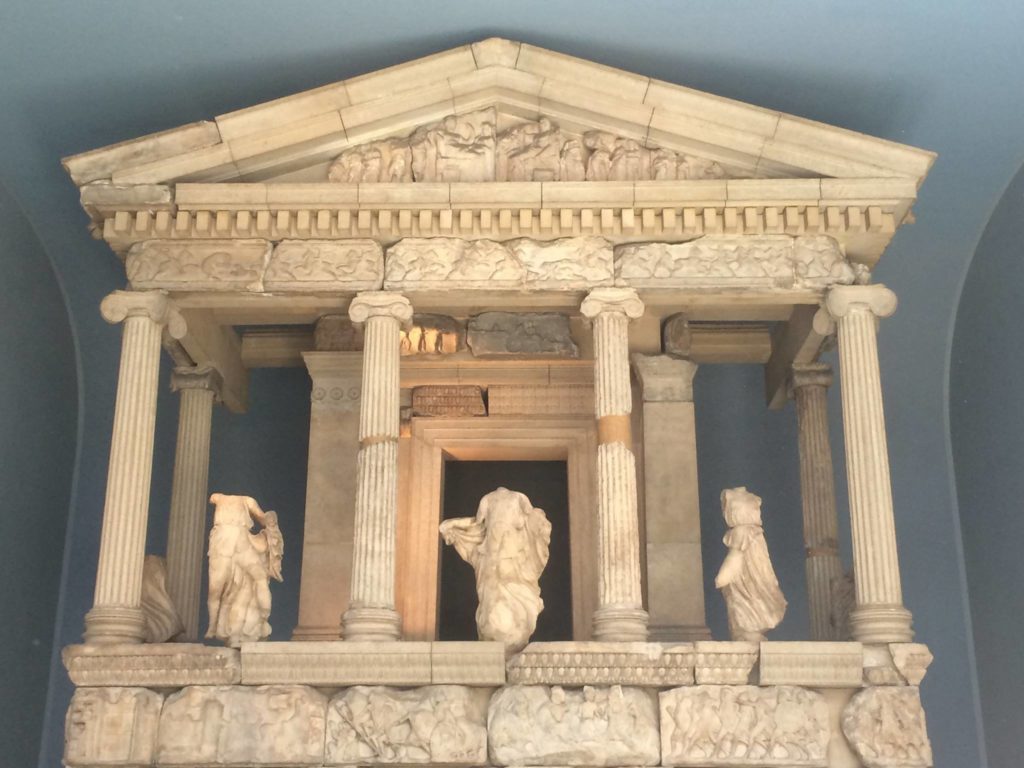


Civic Humanism
A Short History and Introduction
Civic Humanism is the philosophy that human beings flourish most fully when they actively participate in the ethical, intellectual, and civic life of their communities. It is the belief that citizenship is not merely a legal status, but a moral and cultural responsibility. At its core, Civic Humanism teaches that liberty survives only where people cultivate wisdom, virtue, education, and public responsibility together.
The roots of Civic Humanism reach back to the ancient world. In classical Athens and the Roman Republic, philosophers and statesmen explored the idea that the health of society depended upon educated and engaged citizens. Aristotle emphasized the importance of participation in public life for the development of human excellence, while Cicero linked civic duty with moral philosophy and republican government. These traditions formed the intellectual foundation upon which later generations would build.
During the Italian Renaissance, especially in Florence during the fifteenth century, these classical ideals were revived in response to political instability, authoritarian threats, and the struggle for civic independence.
Renaissance thinkers such as Leonardo Bruni, Coluccio Salutati, and Niccolò Machiavelli argued that free societies required educated citizens capable of defending liberty, governing wisely, and placing the common good above narrow selfishness. Historians later referred to this movement as “civic humanism,” emphasizing its union of humanistic learning with active participation in public affairs.
Unlike purely contemplative philosophies, Civic Humanism places strong emphasis on the vita activa—the active life. Knowledge, ethics, science, philosophy, and art are not viewed as isolated intellectual pursuits, but as tools for improving society and advancing civilization.
The educated person is called not only to understand the world, but also to help guide and protect it. Renaissance civic humanists believed that political liberty depended upon civic virtue, informed citizenship, and resistance to corruption, tyranny, and social decay.
Over time, the influence of Civic Humanism extended beyond Renaissance Italy into broader traditions of republicanism, constitutional government, public education, and democratic thought. Historians such as J.G.A. Pocock argued that elements of civic humanist philosophy influenced political developments in England and eventually contributed to the intellectual foundations of the American Revolution and modern democratic systems.
In the modern world, Civic Humanism has evolved beyond its Renaissance origins. Today, it may be understood more broadly as the application of ethical learning, scientific understanding, and cultural wisdom to public life and human civilization.
Contemporary Civic Humanism recognizes that societies face increasingly complex challenges: misinformation, polarization, technological disruption, environmental instability, authoritarianism, and declining civic trust. These conditions require not less public engagement, but more mature, informed, and ethically grounded participation.
Within Science Abbey, Civic Humanism is reinterpreted for the Age of Intelligence. It is not merely a political theory, but a civilizational framework grounded in science, ethical responsibility, contemplative discipline, education, and global cooperation. Science Abbey’s Civic Humanism affirms that human flourishing depends upon the integration of scientific literacy, emotional maturity, ethical development, democratic participation, and long-term planetary thinking.
In this modern form, Civic Humanism seeks to cultivate citizens who are not driven solely by ideology, tribalism, or consumption, but by wisdom, compassion, reason, and responsibility. It encourages individuals to move beyond passive spectatorship and become active participants in the improvement of society, the defense of truth, the advancement of knowledge, and the protection of human dignity.
Civic Humanism, in the Science Abbey sense, is therefore both ancient and modern: a continuation of humanity’s long effort to unite wisdom with civilization, liberty with responsibility, and knowledge with the common good.
Republicanism, Humanism, and the Evolution of Civic Civilization
From the Ancient Republic to Integrated Humanism
Throughout history, human civilization has repeatedly confronted the same essential question: How should human beings govern themselves and live together? From the city-states of ancient Greece to the republics of Renaissance Italy, from Enlightenment democracies to modern secular societies, thinkers have struggled to reconcile liberty with order, individuality with community, and power with ethics.
Out of this long civilizational struggle emerged several interconnected traditions: Republicanism, Classical Republicanism, Civic Humanism, Renaissance Humanism, Modern Humanism, Secular Humanism, Scientific Humanism, and, more recently, Integrated Humanism. These traditions are often confused with one another, yet each represents a distinct response to the moral, political, intellectual, and spiritual conditions of its age.
Together, they form a historical lineage of humanity’s attempt to create a freer, wiser, more ethical, and more enlightened civilization.
I. Republicanism
Government as a Public Trust
Republicanism is fundamentally a political philosophy centered on the idea that government exists for the common good rather than for the private interests of monarchs, aristocracies, or dictators. At its core, republicanism rejects arbitrary domination and affirms that political authority should derive from the people and operate under law.
The term comes from the Latin res publica — “the public thing” or “public affair.” In republican thought, society belongs not to kings, dynasties, or tribes, but to the citizenry collectively.
Republican ideals first emerged in ancient Greece and Rome. In Athens, civic participation became central to political identity, while the Roman Republic developed concepts of constitutional law, mixed government, civic duty, and resistance to tyranny. Thinkers such as Aristotle, Cicero, and Polybius argued that liberty depended upon active citizenship and moral virtue.
Republicanism historically emphasized several recurring principles:
- The rule of law over arbitrary rule
- Civic participation and public responsibility
- Opposition to tyranny and corruption
- The importance of virtue in political life
- The belief that liberty requires vigilance
Unlike modern consumer democracies, classical republican systems did not define freedom merely as private autonomy. Freedom was understood as participation in self-government and protection from domination.
Republicanism later heavily influenced the political development of Britain, the Dutch Republic, revolutionary France, and especially the United States, where republican ideals became foundational to constitutional government.
Yet republicanism has always contained internal tensions. Some republics became oligarchies. Others expanded through empire while preaching liberty. The same Rome that celebrated republican virtue also conquered vast territories through military power. Thus republicanism has always existed in tension between idealism and power politics.
II. Classical Republicanism
Virtue, Citizenship, and the Moral Republic
Classical Republicanism refers specifically to the ancient Greco-Roman tradition that linked political liberty with civic virtue.
In this worldview, the survival of the republic depended not merely upon laws or institutions, but upon the moral character of citizens themselves. Corruption, luxury, apathy, factionalism, and selfishness were viewed as existential threats to civilization.
The republic was therefore understood as a moral and educational project.
Ancient republican thinkers believed that citizens had obligations:
- to serve the common good,
- to participate in civic life,
- to cultivate discipline and wisdom,
- and to defend the republic against tyranny.
This perspective sharply contrasts with modern hyper-individualistic political culture, where citizenship is often reduced to voting, consumption, or tribal identity.
Classical republicanism valued:
- moderation,
- civic duty,
- public service,
- rational discourse,
- and shared responsibility.
For this reason, classical republicanism profoundly influenced Renaissance political thought, the Enlightenment, and modern constitutional systems.
Yet classical republicanism also had limitations. Ancient republics often excluded women, foreigners, slaves, and lower classes from meaningful participation. Civic virtue was frequently confined to elite citizens. Thus the tradition carried both democratic aspirations and historical inequalities.
III. Renaissance Humanism
The Recovery of Human Potential
Renaissance Humanism emerged in Italy between the fourteenth and sixteenth centuries as scholars rediscovered classical Greek and Roman literature, philosophy, rhetoric, and history.
Humanists sought to revive the studia humanitatis — grammar, rhetoric, poetry, ethics, and history — believing that education could cultivate more capable, ethical, and civilized human beings.
This movement represented a shift away from the heavily theological focus of medieval scholasticism toward greater interest in:
- human agency,
- worldly life,
- civic participation,
- creativity,
- and empirical observation.
Thinkers such as Petrarch, Leonardo Bruni, and Erasmus argued that education and moral cultivation could improve both individuals and society.
Renaissance Humanism was not anti-religious. Most Renaissance humanists were Christians. However, they increasingly emphasized human dignity, intellectual freedom, and secular learning alongside religious belief.
This intellectual transformation helped lay the groundwork for:
- modern science,
- liberal education,
- constitutional government,
- historical criticism,
- and eventually the Enlightenment.
Humanism thus marked the beginning of Europe’s transition from medieval hierarchy toward modern intellectual civilization.
IV. Enlightenment Humanism
Reason, Liberty, and the Improvement of Society
Enlightenment Humanism emerged during the seventeenth and eighteenth centuries as European thinkers increasingly applied reason, scientific inquiry, and critical analysis to questions of government, religion, ethics, education, and society.
Building upon the foundations of Renaissance Humanism, Enlightenment Humanism sought not merely to recover ancient wisdom, but to use reason itself as a tool for improving civilization.
This movement represented a shift away from inherited authority and unquestioned tradition toward greater confidence in:
- reason,
- scientific inquiry,
- individual liberty,
- education,
- human rights,
- and social progress.
Thinkers such as John Locke, Voltaire, Montesquieu, Denis Diderot, Jean-Jacques Rousseau, and Thomas Paine argued that human beings possessed the capacity to shape society through rational thought, education, and ethical reform.
Enlightenment Humanists challenged absolutism, censorship, religious persecution, and inherited privilege. They promoted freedom of conscience, constitutional government, scientific investigation, public education, and the expansion of civil liberties.
This intellectual transformation helped lay the groundwork for:
- constitutional democracy,
- religious tolerance,
- modern science,
- human rights,
- public education,
- and liberal political institutions.
The Enlightenment inspired many of the political and social movements that shaped the modern world, including the American and French Revolutions and the broader development of democratic society.
Yet Enlightenment Humanism also possessed limitations. Its confidence in reason sometimes overlooked the complexity of human psychology, culture, emotion, and social identity. Many Enlightenment thinkers failed to apply their principles consistently to women, colonized peoples, and other excluded populations.
Nevertheless, Enlightenment Humanism marked a decisive stage in humanity’s transition toward modern civilization. It expanded the humanist project beyond the recovery of classical learning and toward the conscious improvement of society through reason, liberty, education, and ethical progress.
V. Civic Humanism
The Union of Learning and Public Life
Civic Humanism developed primarily in Renaissance Florence and fused classical humanist learning with republican political engagement.
Where some humanists focused on literature or philosophy alone, civic humanists insisted that educated individuals had a duty to actively participate in public life.
For civic humanists, knowledge without civic responsibility was incomplete.
Thinkers such as Leonardo Bruni and Niccolò Machiavelli argued that free societies depended upon educated citizens capable of defending liberty and governing wisely.
Civic Humanism emphasized:
- the active life (vita activa),
- public engagement,
- republican liberty,
- civic virtue,
- education,
- and resistance to tyranny.
It emerged partly in response to political crises threatening Florence during the Renaissance. Civic humanists believed that corruption and passivity would eventually destroy free societies from within.
Modern historians later debated the meaning and scope of civic humanism, but its core insight remained powerful: civilization requires morally and intellectually developed citizens willing to participate in public life.
This tradition strongly influenced modern democratic culture and continues to shape debates about education, citizenship, and civic responsibility today.
VI. Modern Humanism
Human Welfare Without Dogma
Modern Humanism emerged gradually from the Enlightenment, scientific revolution, democratic reform movements, and increasing secularization of society.
Unlike Renaissance Humanism, which still largely operated within religious civilization, Modern Humanism increasingly centered humanity itself as the source of ethics, meaning, and social progress.
Modern humanists generally affirmed:
- reason,
- science,
- human rights,
- education,
- democracy,
- freedom of conscience,
- and universal human dignity.
The catastrophes of religious warfare, authoritarianism, colonialism, and ideological extremism encouraged many intellectuals to seek ethical systems grounded less in divine authority and more in human well-being and empirical understanding.
Modern Humanism helped inspire:
- secular education,
- constitutional liberalism,
- international human rights,
- humanitarian reform,
- scientific institutions,
- and democratic pluralism.
Yet modern humanism also fragmented into many competing forms:
- secular humanism,
- religious humanism,
- existential humanism,
- Marxist humanism,
- transhumanism,
- and scientific humanism among them.
VII. Secular Humanism
Ethics Without Supernaturalism
Secular Humanism developed as a specifically non-religious ethical philosophy emphasizing reason, science, human rights, and democratic values without reliance on supernatural beliefs.
Organizations such as the American Humanist Association popularized secular humanism in the twentieth century.
Secular humanists generally affirm:
- scientific inquiry,
- critical thinking,
- separation of church and state,
- secular ethics,
- freedom of belief,
- and universal human dignity.
Secular Humanism often emerged in direct opposition to religious authoritarianism, dogmatism, censorship, and anti-scientific thinking.
However, secular humanism has also faced criticism:
- from religious traditions, which sometimes view it as spiritually empty,
- from postmodern critics, who challenge its confidence in reason and universality,
- and from political critics who argue that secular institutions themselves can become ideological or tribal.
In practice, secular humanism often succeeded in criticizing irrationality and authoritarian religion, but struggled to provide emotionally compelling systems of meaning, ritual, identity, and long-term social cohesion for large populations.
VIII. Scientific Humanism
Civilization Guided by Evidence
Scientific Humanism expands humanism by placing scientific reasoning and evidence-based governance at the center of civilization itself.
Scientific humanists argue that ethical, political, educational, economic, and social systems should increasingly align with empirical reality rather than mythology, propaganda, tribalism, or inherited dogma.
Scientific Humanism emphasizes:
- evidence-based policy,
- scientific literacy,
- systems thinking,
- public health,
- cognitive maturity,
- technological responsibility,
- and long-term civilizational planning.
Unlike purely technocratic systems, however, Scientific Humanism also recognizes the necessity of ethics, psychology, philosophy, and human meaning.
It rejects both:
- anti-scientific irrationalism,
- and emotionally detached mechanistic technocracy.
Scientific Humanism seeks synthesis:
science with ethics,
reason with compassion,
technology with wisdom,
and intelligence with human flourishing.
This perspective became increasingly urgent in the twentieth and twenty-first centuries as humanity entered the nuclear age, the information age, and now the Age of Intelligence.
Artificial intelligence, biotechnology, disinformation systems, algorithmic manipulation, ecological instability, and geopolitical polarization all demonstrated that advanced technology without ethical maturity could destabilize civilization itself.
IX. Integrated Humanism
The Science Abbey Perspective
Integrated Humanism is a contemporary civilizational framework developed within Science Abbey as an attempt to synthesize the strengths of the preceding traditions while correcting their limitations.
Integrated Humanism draws from:
- republican civic responsibility,
- classical virtue ethics,
- Renaissance learning,
- civic humanism,
- secular democracy,
- scientific reasoning,
- contemplative traditions,
- systems theory,
- psychology,
- and global human rights frameworks.
It recognizes that modern civilization faces interconnected crises:
- political polarization,
- disinformation,
- declining civic trust,
- technological instability,
- environmental pressures,
- authoritarian resurgence,
- emotional dysregulation,
- and institutional fragmentation.
Integrated Humanism therefore argues that civilization must evolve beyond simplistic ideological divisions and toward a more mature synthesis of:
- science,
- ethics,
- education,
- civic responsibility,
- emotional intelligence,
- democratic governance,
- and global coordination.
Unlike many earlier humanisms, Integrated Humanism explicitly incorporates:
- cognitive science,
- systems analysis,
- information ecology,
- psychological maturity,
- and intelligence-era governance challenges.
It seeks not merely individual enlightenment, but civilizational alignment.
Within the Science Abbey framework, this vision is operationalized through institutions such as:
- the Global Civic Curriculum (GCC),
- the Neutral Analytical Vigilance Institute (NAVI),
- the Global Coordination Program (GCP),
- and the broader Civic Humanist Charter System.
Integrated Humanism does not reject spirituality, tradition, or cultural identity. Rather, it seeks to harmonize them within a reality-based, ethical, democratic, and scientifically informed civilization.
X. Conclusion
From the Republic to the Planetary Civilization
The history of republicanism and humanism is ultimately the history of humanity’s attempt to become civilized consciously rather than accidentally.
Classical Republicanism asked how free citizens might preserve liberty.
Renaissance Humanism asked how education could restore human dignity and excellence.
Civic Humanism asked how wisdom and citizenship might sustain civilization.
Modern and Secular Humanism asked how ethics and human flourishing could survive beyond dogma.
Scientific Humanism asked how civilization might align itself with empirical reality.
Integrated Humanism now asks a larger question:
How can humanity mature psychologically, ethically, scientifically, and civically enough to survive and flourish in the Age of Intelligence?
This is no longer merely a philosophical issue. It is becoming a civilizational necessity.
The Philosophers and Thinkers of Humanism and Republicanism
The Minds That Shaped Civic Civilization
Ideas do not emerge from nowhere. Every philosophy, political tradition, and moral framework arises through the work of individuals struggling to understand the human condition and improve civilization.
The traditions of Republicanism, Civic Humanism, Renaissance Humanism, Secular Humanism, Scientific Humanism, and Integrated Humanism were each shaped by thinkers responding to the crises and possibilities of their own age.
Some defended liberty against tyranny. Others sought wisdom beyond dogma. Some attempted to unite ethics with politics, while others tried to reconcile science, spirituality, and civilization itself.
Together, these thinkers form a long intellectual lineage stretching from ancient Greece to the emerging Age of Intelligence.
I. Classical Republicanism
Aristotle, Cicero, and Polybius
Aristotle
Aristotle provided one of the earliest systematic analyses of political life. In his Politics, he argued that human beings are “political animals” whose flourishing depends upon participation in civic society. He emphasized virtue, education, moderation, and constitutional balance. Aristotle believed that the health of the polis depended upon the moral development of citizens themselves.
His influence on later republican and civic humanist traditions cannot be overstated.
Cicero
Cicero became one of the central moral voices of Roman republicanism. He linked civic duty, natural law, rhetoric, and public virtue into a coherent philosophy of republican citizenship. For Cicero, government existed to serve justice and the common good, not private ambition.
Renaissance humanists later treated Cicero almost as a patron saint of republican civic culture.
Polybius
Polybius analyzed the Roman Republic as a “mixed constitution” balancing monarchy, aristocracy, and democracy. His theories of constitutional cycles and political decay heavily influenced later republican thought, including Enlightenment political philosophy and the framers of the United States Constitution.
II. Renaissance Humanism
Petrarch, Erasmus, and Pico della Mirandola
Petrarch
Often called the “Father of Humanism,” Petrarch helped revive interest in classical literature and moral philosophy. He emphasized introspection, education, eloquence, and the dignity of human intellectual life.
Although still deeply Christian, Petrarch shifted European thought toward greater concern with worldly life, human agency, and classical learning.
Desiderius Erasmus
Erasmus embodied the ethical and educational ideals of Renaissance Humanism. He advocated moderation, peace, learning, tolerance, and reform through education rather than violence.
His humanism sought moral improvement through scholarship and reasoned dialogue rather than fanaticism or coercion.
Giovanni Pico della Mirandola
Pico became famous for his Oration on the Dignity of Man, often called the “Manifesto of the Renaissance.” He argued that humanity possesses unique freedom to shape itself through knowledge, discipline, and wisdom.
Pico represented the optimistic side of Renaissance Humanism: the belief that humanity could consciously elevate itself intellectually and spiritually.
III. Civic Humanism
Leonardo Bruni and Machiavelli
Leonardo Bruni
Bruni became the central figure associated with Civic Humanism in Renaissance Florence. A scholar, translator, historian, and statesman, he argued that educated citizens had a responsibility to actively participate in public life.
Bruni fused classical learning with republican citizenship, helping establish the ideal of the scholar-citizen.
Niccolò Machiavelli
Machiavelli remains one of the most controversial political thinkers in history. Although often remembered only for The Prince, his Discourses on Livy strongly defended republican government and civic participation.
Machiavelli believed that republics survive through civic energy, institutional balance, and the willingness of citizens to defend liberty. Unlike idealists, however, he confronted political reality directly, recognizing conflict, ambition, and power as permanent elements of human society.
He stands at the crossroads between classical republicanism and modern political realism.
IV. Enlightenment and Modern Humanism
Locke, Rousseau, Voltaire, and Paine
John Locke
Locke helped shape liberal constitutionalism and modern democratic theory. He emphasized natural rights, government by consent, religious tolerance, and limitations on political authority.
Although not a “humanist” in the modern secular sense, Locke helped lay the groundwork for human-centered political ethics.
Jean-Jacques Rousseau
Rousseau argued that civilization could corrupt natural human goodness, yet also believed that legitimate political systems could express the “general will” of the people.
His writings deeply influenced republicanism, democratic theory, and modern concepts of civic identity.
Voltaire
Voltaire became a symbol of Enlightenment rationalism, religious criticism, and intellectual freedom. He opposed fanaticism, censorship, and authoritarian religion while promoting reason and tolerance.
Thomas Paine
Paine translated Enlightenment republican ideas into mass democratic language. In works such as Common Sense and Rights of Man, he championed liberty, constitutional government, and human equality.
Paine embodied the transition from elite republican philosophy to modern democratic activism.
V. Secular Humanism
Bertrand Russell, John Dewey, and Carl Sagan
Bertrand Russell
Russell combined scientific rationality with humanitarian ethics. He criticized dogmatism, militarism, authoritarianism, and irrational belief systems while defending freedom of thought and scientific inquiry.
His philosophy helped shape twentieth-century secular intellectual culture.
John Dewey
Dewey linked democracy, education, and human development into a unified philosophy. He viewed democracy not merely as a political system but as a way of life rooted in communication, learning, and social cooperation.
His educational theories heavily influenced modern civic education and democratic humanism.
Carl Sagan
Sagan embodied Scientific and Secular Humanism for the modern media age. He promoted scientific literacy, skepticism, planetary consciousness, and humility before the cosmos.
His famous warning that “extraordinary claims require extraordinary evidence” became a cultural principle of modern scientific skepticism.
VI. Scientific Humanism
Julian Huxley, E. O. Wilson, and Jacob Bronowski
Julian Huxley
Huxley explicitly promoted “scientific humanism” as a philosophy integrating evolution, ethics, education, and human progress. He believed humanity could consciously guide its own development through science and reason.
He also played a foundational role in the establishment of UNESCO.
E. O. Wilson
Wilson argued for the integration of scientific knowledge across disciplines in what he called “consilience.” He believed humanity required a unified scientific understanding of nature, society, and ethics.
His work on sociobiology and biodiversity profoundly influenced modern systems thinking.
Jacob Bronowski
Bronowski’s The Ascent of Man presented science as a deeply human moral and creative enterprise. He warned against authoritarianism, anti-intellectualism, and ideological certainty.
For Bronowski, science was not merely technical knowledge, but a civilization-building ethical discipline grounded in humility and openness.
VII. Integrated Humanism
The Emerging Synthesis
Integrated Humanism differs from earlier forms of humanism because it emerges within a globalized, technologically interconnected civilization facing planetary-scale risks and opportunities.
Rather than being identified with a single philosopher, Integrated Humanism represents a synthesis of:
- classical virtue ethics,
- republican civic responsibility,
- Renaissance learning,
- scientific reasoning,
- democratic governance,
- systems theory,
- psychology,
- contemplative traditions,
- and global human rights frameworks.
Within Science Abbey, Integrated Humanism seeks to unite:
- empirical science,
- emotional maturity,
- ethical development,
- civic education,
- information literacy,
- and long-term civilizational planning.
It is influenced not only by philosophers, but also by:
- scientists,
- historians,
- psychologists,
- intelligence analysts,
- educators,
- systems theorists,
- contemplative practitioners,
- and democratic reformers.
Integrated Humanism attempts to address a modern reality that earlier humanisms could not fully anticipate:
the Age of Intelligence.
Artificial intelligence, algorithmic influence systems, biotechnology, global disinformation, ecological instability, and psychological fragmentation now shape civilization itself. Integrated Humanism therefore asks not only how humans should live, but how intelligent civilization itself should evolve responsibly.
VIII. Conclusion
The Long Continuum of Human Civilization
These thinkers did not all agree with one another. Some defended republics; others monarchies. Some were religious; others secular. Some trusted reason completely; others warned about the dangers of power, ideology, and human irrationality.
Yet together they participated in a shared civilizational effort:
the attempt to elevate humanity above ignorance, tyranny, tribalism, and chaos.
From Aristotle to Carl Sagan, from Cicero to John Dewey, from Renaissance Florence to the emerging Age of Intelligence, the central question has remained remarkably consistent:
How can human beings become wise enough, ethical enough, and civilized enough to govern themselves responsibly?
That question remains unfinished.
The Civic Humanism of Aristotle
Virtue, Citizenship, and the Foundations of Civilization
Long before the rise of the Roman Republic, the Renaissance city-states, or modern democratic societies, the Greek philosopher Aristotle articulated one of the foundational principles of Civic Humanism: that human beings achieve their highest fulfillment not in isolation, but through participation in ethical, intellectual, and civic life.
Although Aristotle lived in the fourth century BCE—nearly two thousand years before Renaissance humanists coined the language of “civic humanism”—his philosophy provided many of the essential ideas later inherited by republican thinkers, Renaissance scholars, and modern democratic theorists. His work united ethics, education, politics, psychology, and social responsibility into a single vision of civilization centered on the cultivation of human excellence.
For this reason, Aristotle may be understood as one of the earliest and most influential philosophical ancestors of Civic Humanism.
I. The Human Being as a “Political Animal”
Perhaps Aristotle’s most famous statement on civic life appears in his work Politics, where he declares that the human being is a zoon politikon—a “political animal.”
This phrase is often misunderstood. Aristotle did not mean merely that humans engage in government or political debate. Rather, he meant that human beings are naturally social and civic creatures whose flourishing depends upon participation in organized communal life.
According to Aristotle:
- isolated individuals cannot fully develop virtue,
- ethics cannot exist outside society,
- and civilization itself depends upon cooperative human relationships.
The polis—the civic community or city-state—was therefore not merely an administrative structure. It was the environment within which human excellence became possible.
For Aristotle, politics was not separate from morality. The purpose of political life was to create the conditions under which citizens could cultivate wisdom, virtue, justice, friendship, and human flourishing.
This idea would later become central to Civic Humanism.
II. Virtue as the Foundation of Civilization
Modern political systems often focus primarily on rights, economics, institutions, or procedures. Aristotle focused first on character.
He believed that no political system could survive without virtuous citizens.
A constitution alone could not preserve justice. Laws alone could not restrain corruption indefinitely. The long-term health of the republic depended upon the habits, education, and ethical development of the people themselves.
Aristotle therefore centered his philosophy on virtue ethics.
Virtue, for Aristotle, was not abstract moral perfection. It was the disciplined cultivation of good habits:
- courage,
- moderation,
- wisdom,
- justice,
- honesty,
- self-control,
- and practical judgment.
Human flourishing required balance. Excess and deficiency both produced instability.
Thus courage existed between cowardice and recklessness. Generosity existed between greed and wastefulness. Civic life depended upon citizens capable of moderation rather than emotional extremism.
This principle has profound relevance today.
Modern societies increasingly struggle with:
- outrage culture,
- political tribalism,
- algorithmically amplified extremism,
- impulsive communication,
- and emotional manipulation.
Aristotle would likely interpret these not merely as political problems, but as failures of civic and ethical cultivation.
III. Education and the Formation of Citizens
For Aristotle, education was among the highest responsibilities of the state.
The purpose of education was not merely vocational training or economic productivity. Education existed to form mature, capable, ethical citizens.
A society that neglects civic education eventually produces instability because citizens become vulnerable to:
- manipulation,
- demagoguery,
- propaganda,
- corruption,
- and irrational passions.
Aristotle believed that citizens must be trained in:
- ethical reasoning,
- rhetoric,
- philosophy,
- civic responsibility,
- and disciplined thought.
This educational ideal later profoundly influenced:
- Roman republicanism,
- Renaissance Humanism,
- Civic Humanism,
- liberal arts education,
- and Enlightenment political philosophy.
The Renaissance humanists who revived classical learning viewed Aristotle as essential precisely because he linked education with civilization itself.
IV. Aristotle and the Common Good
A central principle of Civic Humanism is the idea of the common good—the belief that societies should be organized not merely around private advantage, but around the flourishing of the community as a whole.
Aristotle strongly defended this principle.
He argued that governments become corrupt when rulers govern for personal interest rather than public welfare.
Thus:
- monarchy degenerates into tyranny,
- aristocracy degenerates into oligarchy,
- and democracy degenerates into mob rule when detached from virtue and law.
Healthy government required balance, constitutional order, and civic responsibility.
Importantly, Aristotle did not idealize unlimited democracy in the modern sense. He worried deeply about factionalism, demagoguery, and emotional political instability. He believed that stable societies required educated citizens capable of rational judgment.
This concern remains strikingly contemporary.
Modern mass media systems often reward emotional outrage over rational discourse. Political identities increasingly function like tribes competing for dominance rather than citizens cooperating toward shared civilization.
Aristotle would likely interpret this as a symptom of declining civic virtue.
V. Friendship, Cooperation, and Social Cohesion
One of the most overlooked aspects of Aristotle’s civic philosophy is his emphasis on friendship.
In the Nicomachean Ethics, Aristotle argues that friendship is not merely private affection, but one of the foundations of civilization itself.
Societies survive when citizens possess enough mutual trust, goodwill, and shared ethical understanding to cooperate peacefully.
Without civic friendship:
- politics becomes warfare,
- institutions collapse into factional struggle,
- and public trust disintegrates.
Aristotle understood that civilization cannot survive purely through coercion or law enforcement. Social cohesion depends upon ethical culture.
Modern societies increasingly face crises of loneliness, distrust, polarization, and social fragmentation. Civic Humanism today therefore requires not only political reform, but restoration of civic trust and social maturity.
VI. Aristotle’s Limitations
Although Aristotle remains foundational to Civic Humanism, his philosophy also reflected the limitations of the ancient world.
He accepted forms of inequality now regarded as unjust:
- slavery,
- exclusion of women from political life,
- and restricted citizenship.
Like many ancient thinkers, his conception of the citizen was narrower than modern democratic ideals.
Yet the enduring power of Aristotle lies not in every historical conclusion he reached, but in the larger framework he established:
that civilization depends upon ethical development, rational inquiry, education, and civic participation.
These principles remain deeply influential even as modern societies expand human rights far beyond the boundaries of the ancient polis.
VII. Aristotle and Modern Civic Humanism
The relevance of Aristotle has arguably increased in the twenty-first century.
Modern civilization possesses immense technological power, yet often lacks corresponding civic maturity. Scientific advancement has accelerated faster than ethical development. Information systems amplify emotion faster than wisdom.
Aristotle’s philosophy reminds us that:
- intelligence without virtue becomes dangerous,
- freedom without discipline becomes unstable,
- and civilization without ethical education becomes fragile.
His thought also challenges modern hyper-individualism.
Human flourishing does not occur in isolation. It emerges through participation in meaningful communities, ethical culture, education, friendship, and civic life.
This insight forms one of the central foundations of modern Civic Humanism.
Within Science Abbey and the broader framework of Integrated Humanism, Aristotle’s legacy continues through emphasis on:
- civic education,
- ethical development,
- scientific literacy,
- emotional regulation,
- constitutional responsibility,
- and long-term civilizational flourishing.
The modern citizen must become not merely informed, but cultivated.
VIII. Conclusion
Aristotle and the Long Tradition of Civic Civilization
Aristotle did not use the phrase “Civic Humanism.” Yet much of the tradition later called Civic Humanism emerged directly from his vision of ethical citizenship and public life.
He taught that:
- civilization depends upon virtue,
- education forms citizens,
- politics is inseparable from ethics,
- and human flourishing requires participation in civic society.
These ideas helped shape:
- Roman republicanism,
- Renaissance Humanism,
- Enlightenment constitutionalism,
- modern civic education,
- and contemporary democratic theory.
In an age increasingly shaped by technological power, social fragmentation, and informational chaos, Aristotle’s central insight remains profoundly relevant:
A civilization survives not merely through wealth or power, but through the character, wisdom, and maturity of its people.
Cicero’s Humanism and the Ideal of the Civic Intellectual
Among the great figures of the ancient world, few stand more clearly at the intersection of philosophy, politics, education, and public duty than Cicero. More than a Roman orator or statesman, Cicero became one of the foundational architects of the humanist tradition that would later shape the Renaissance, Enlightenment thought, republican government, liberal education, and modern democratic culture. He represented an ideal that would echo across centuries: the educated citizen who combines intellectual cultivation with civic responsibility.
Cicero’s humanism emerged during the final turbulent decades of the Roman Republic, a period marked by corruption, violence, authoritarian ambition, and institutional collapse. Born in 106 BCE in Arpinum, outside Rome’s traditional aristocracy, Cicero rose through education, legal skill, and extraordinary rhetorical ability rather than inherited power. His life itself became a demonstration of one of the central principles of humanism: that disciplined learning and cultivated character could elevate the individual and strengthen society.
For Cicero, education was never merely vocational or technical. It was fundamentally moral and civic. The purpose of learning was not simply private advancement, but the formation of wise and responsible citizens capable of sustaining republican government. Philosophy, rhetoric, history, ethics, and law all belonged to what later humanists would call the studia humanitatis—the studies proper to free human beings engaged in public life. Through education, one cultivated judgment, self-command, eloquence, and the capacity to deliberate about the common good.
Unlike purely abstract philosophers detached from political life, Cicero insisted upon the union of contemplation and action. Wisdom that remained isolated from society was incomplete. The truly educated person had a duty to participate in civic life, defend justice, resist tyranny, and contribute to the stability of the republic. In this sense, Cicero became one of history’s clearest early models of the “civic intellectual”: a thinker who sought not withdrawal from society, but engagement with it.
This ideal was deeply unsentimental. Cicero understood politics not as a realm of purity, but as a field of conflict, ambition, compromise, and danger. His writings repeatedly emphasize that virtue requires discipline, endurance, realism, and sacrifice. Civic life demanded emotional maturity and moral resilience rather than naïve idealism. The republic could survive only if citizens cultivated habits of reason, moderation, courage, and public responsibility strong enough to resist corruption and demagoguery.
His philosophy drew heavily from Greek thought—especially Stoicism, Academic skepticism, and Aristotelian ethics—but Cicero translated these traditions into a practical Roman framework oriented toward governance and law. He argued that human beings participate in a universal moral order accessible through reason, an idea that later influenced natural law theory, Christian theology, Enlightenment philosophy, and modern concepts of universal rights. His vision of humanity rested not upon tribal identity or domination, but upon rationality, ethical obligation, and shared civic life.
Cicero’s influence upon Renaissance humanism was immense. Petrarch, Erasmus, Salutati, Bruni, and other Renaissance scholars regarded him as both a literary model and a moral guide. His letters revealed the inner life of a statesman struggling to preserve republican liberty amid political collapse. His prose style became the standard of classical Latin eloquence. More importantly, his conception of education as preparation for ethical citizenship became one of the foundations of Civic Humanism.
The Renaissance revival of Cicero was not accidental. Italian republics facing factionalism and authoritarian threats saw in him a prototype for the engaged citizen-scholar. Humanist education therefore became inseparable from public life. Knowledge was not pursued merely for contemplation, but for the defense of liberty and the cultivation of civic virtue. Through this tradition, Cicero helped shape the intellectual foundations of modern constitutionalism and democratic culture.
Yet Cicero’s life also revealed the tragedy inherent in the humanist ideal. He ultimately failed to save the Roman Republic from authoritarian transformation. After opposing Mark Antony and defending republican institutions, Cicero was executed during the proscriptions of the Second Triumvirate in 43 BCE. His severed head and hands were displayed publicly in Rome—a symbolic attempt to silence the very voice of republican civic reason he represented.
Ironically, this martyrdom strengthened his historical legacy. Cicero became a symbol not merely of eloquence, but of principled civic resistance against tyranny and political decay. Across centuries, educators, republicans, reformers, and humanists returned to his writings as reminders that civilization depends upon the difficult balance between liberty, virtue, knowledge, and public responsibility.
In the modern world, Cicero remains strikingly relevant. Contemporary societies face forms of polarization, misinformation, institutional distrust, technological disruption, and civic fragmentation that echo many of the anxieties present during the final years of the Roman Republic. His response was neither cynicism nor fanaticism, but the disciplined cultivation of educated citizenship. He believed that stable societies require individuals capable of rational dialogue, ethical reflection, and participation in shared civic life.
In this sense, Cicero may be understood as a prototype of the successful humanist: intellectually cultivated yet practical, morally serious yet politically engaged, skeptical yet committed to public duty. His humanism did not reject ambition, power, or civic struggle, but sought to subordinate them to reason, law, and the common good. The enduring lesson of Cicero is that civilization survives not merely through institutions alone, but through citizens capable of sustaining them with wisdom, character, and courage.
The Writings of Cicero
A Structured Overview for Study and Commentary
The surviving works of Cicero form one of the foundational libraries of Western civilization. They span philosophy, rhetoric, political theory, law, ethics, religion, and personal correspondence. More than almost any other Roman thinker, Cicero transmitted Greek philosophy into the Latin world while also shaping the intellectual foundations of republicanism, civic humanism, constitutionalism, and Renaissance learning.
His writings may be divided into several broad categories:
- Philosophical Works
- Political and Republican Works
- Rhetorical Works
- Speeches and Orations
- Letters and Correspondence
- Religious and Ethical Works
- Fragmentary and Lost Works
Below is a proposed study outline in Science Abbey style, suitable for a long-form educational project, commentary series, or integrated modern edition.
I. Philosophical Works
1. De Republica (“On the Republic”)
- Historical Context of the Roman Republic
- Justice and the Purpose of Government
- The Mixed Constitution
- The Ideal Statesman
- Law, Virtue, and Civic Duty
- Corruption and the Decline of Republics
- The Dream of Scipio
- Cicero and Classical Republicanism
- Influence on Renaissance and Enlightenment Thought
- Relevance to Modern Democracy
2. De Legibus (“On the Laws”)
- Natural Law and Universal Justice
- Law as Reason Aligned with Nature
- Religion and the Civic Order
- Constitutional Principles
- Citizenship and Civic Responsibility
- Legal Ethics and Governance
- Roman Law and Modern Constitutionalism
- Cicero’s Philosophy of Justice
3. De Officiis (“On Duties”)
- The Moral Foundations of Public Life
- Honor and Utility
- Virtue and Practical Ethics
- Leadership and Responsibility
- Wealth, Power, and Moral Limits
- Friendship and Public Trust
- The Ethical Citizen
- Stoicism and Roman Duty
- Cicero’s Influence on Humanism
4. Tusculanae Disputationes (“Tusculan Disputations”)
- Philosophy as Therapy
- Death and the Fear of Mortality
- Pain and Human Resilience
- Grief and Emotional Regulation
- Virtue and Happiness
- The Ideal Wise Person
- Stoic and Academic Skeptic Themes
- Ancient Psychology and Modern Mental Health
5. De Natura Deorum (“On the Nature of the Gods”)
- Roman Religion and Philosophy
- Epicurean Theology
- Stoic Theology
- Skepticism and Religious Doubt
- Divine Providence
- Nature, Cosmos, and Order
- Philosophy versus Superstition
- Cicero and Religious Tolerance
- Scientific Humanist Reflections
6. De Finibus Bonorum et Malorum (“On Ends”)
- The Highest Good
- Epicurean Ethics
- Stoic Ethics
- Academic Skepticism
- Pleasure, Virtue, and Happiness
- The Nature of Human Flourishing
- Competing Moral Systems
- Cicero’s Ethical Synthesis
7. De Amicitia (“On Friendship”)
- Friendship and Human Nature
- Trust and Loyalty
- Virtue as the Basis of Friendship
- Political Friendship and Society
- Friendship in Public Life
- Wisdom, Affection, and Character
- Friendship in the Modern World
8. De Senectute (“On Old Age”)
- Aging in Ancient Rome
- Wisdom and Experience
- Physical Decline and Mental Growth
- Purpose in Later Life
- Civic Contribution in Old Age
- Mortality and Acceptance
- Lessons for Modern Aging Societies
II. Political and Republican Works
9. Philippics
- The Crisis after Caesar
- Mark Antony and the Threat of Tyranny
- Republican Resistance
- Liberty and Political Courage
- Rhetoric as Political Weapon
- The Fall of the Roman Republic
- Cicero’s Final Stand
- Lessons on Democratic Collapse
10. On the Commonwealth and Statesmanshi
- Civic Virtue and Leadership
- Corruption and Political Decay
- Public Service and Honor
- Education of Statesmen
- Moral Character and Governance
- Republican Citizenship
III. Rhetorical Works
11. De Oratore (“On the Orator”)
- The Role of the Orator in Society
- Rhetoric and Truth
- Persuasion and Public Life
- Ethics of Speech
- Education and Eloquence
- Political Communication
- Rhetoric and Democracy
- Media, Propaganda, and Modern Persuasion
12. Brutus
- History of Roman Oratory
- Famous Roman Speakers
- Eloquence and Character
- Public Speaking and Civic Life
- Cicero’s Self-Assessment
- Legacy of Classical Rhetoric
13. Orator
- The Ideal Speaker
- Style and Persuasion
- Emotional Influence
- Philosophy and Communication
- The Moral Limits of Persuasion
- Public Speech in Democratic Culture
IV. Speeches and Orations
14. Catiline Orations
- The Catiline Conspiracy
- Republican Crisis Management
- Fear, Security, and Liberty
- Political Extremism in Rome
- Emergency Powers and Ethics
- Cicero’s Leadership under Pressure
15. Pro Archia
- Poetry and Civilization
- Literature and Civic Culture
- Education and Human Flourishing
- The Arts and Public Life
- Humanism before Humanism
16. Pro Milone
- Violence and Political Disorder
- Law and Self-Defense
- Mob Politics in Rome
- Justice and Political Expediency
- Public Emotion and Legal Systems
V. Letters and Correspondence
17. Letters to Atticus
- Friendship and Political Trust
- Daily Life in the Roman Republic
- Crisis, Anxiety, and Reflection
- Personal Philosophy
- Cicero’s Psychological Portrait
- The Human Side of Statesmanship
18. Letters to Friends
- Roman Networks and Patronage
- Political Alliances
- Friendship and Diplomacy
- Family and Social Life
- Republican Society in Transition
VI. Religious and Ethical Works
19. De Divinatione (“On Divination”)
- Omens and Superstition
- Skepticism and Belief
- Rational Inquiry in Ancient Rome
- Religion and Statecraft
- Human Psychology and Pattern-Seeking
20. De Fato (“On Fate”)
- Fate and Free Will
- Stoicism and Determinism
- Human Agency
- Responsibility and Choice
- Ancient Debates on Consciousness
VII. Conclusion
Cicero as the Prototype of Civic Humanism
Cicero stands at the intersection of republicanism, rhetoric, philosophy, law, and civic morality. His writings shaped:
- Renaissance Humanism,
- Civic Humanism,
- Enlightenment constitutionalism,
- modern legal theory,
- and democratic political culture.
More than a philosopher alone, Cicero represented the ideal of the educated citizen actively engaged in the defense of civilization itself.
For this reason, his works remain essential not merely for historians, but for anyone attempting to understand liberty, ethics, public life, leadership, law, communication, and the long struggle of humanity to govern itself wisely.
Civic Humanism in the Middle Ages and Renaissance
The Reawakening of Citizenship, Learning, and Civilization
Civic Humanism is often associated most strongly with the Renaissance city-states of Italy, especially Florence during the fifteenth century. Yet the roots of Civic Humanism reach both deeper and broader than the Renaissance alone. Its development emerged gradually from the long interaction between:
- classical philosophy,
- Roman republicanism,
- medieval civic culture,
- Christian ethics,
- and the revival of ancient learning that transformed Europe during the Renaissance.
At its core, Civic Humanism is the belief that human beings flourish most fully when they actively participate in the ethical, intellectual, and civic life of society. It joins learning with public responsibility and insists that education, morality, and citizenship are inseparable.
This philosophy did not appear suddenly. It evolved over centuries as European civilization struggled to reconcile:
- faith and reason,
- authority and liberty,
- contemplation and action,
- individual ambition and the common good.
The story of Civic Humanism in the Middle Ages and Renaissance is therefore the story of Europe’s gradual rediscovery of the citizen.
I. The Legacy of the Ancient World
The foundations of Civic Humanism were laid in ancient Greece and Rome.
Greek philosophers such as Aristotle taught that human beings are “political animals” whose flourishing depends upon participation in civic society. Politics was not merely administration or power—it was the ethical organization of communal life.
Roman thinkers such as Cicero expanded these ideas into a philosophy of republican citizenship grounded in:
- civic virtue,
- public service,
- constitutional law,
- rhetoric,
- and devotion to the common good.
The Roman Republic became a powerful symbol of civic liberty and political responsibility.
Yet with the collapse of the Western Roman Empire, Europe entered centuries of fragmentation, instability, feudal hierarchy, and religious domination. Classical republican traditions did not disappear entirely, but they became partially submerged beneath medieval structures centered on monarchy, feudal obligation, and ecclesiastical authority.
Still, the ancient inheritance survived within monasteries, libraries, universities, and scattered intellectual traditions.
The seeds of Civic Humanism remained alive.
II. Civic Life in the Medieval World
Medieval Europe contained many important foundations for later Civic Humanism.
Although medieval civilization was deeply religious, and rightly remembered as the ‘Dark Ages’ as suppressive of “pagan” inquiry and knowledge, it also developed:
- towns and communes,
- legal institutions,
- universities,
- guild systems,
- municipal governance,
- and traditions of civic cooperation.
Especially in northern and central Italy, independent communes and merchant republics emerged during the later medieval period. Cities such as:
- Florence,
- Venice,
- Genoa,
- Pisa,
- and Siena
developed forms of urban political culture emphasizing civic participation, trade, law, and public identity.
These cities became incubators for Renaissance Civic Humanism.
Medieval scholars also preserved and transmitted classical texts. Thinkers such as Thomas Aquinas engaged deeply with Aristotle, integrating classical philosophy into Christian intellectual frameworks.
While medieval thought generally emphasized salvation and divine order above civic republicanism, it nonetheless maintained important ideas later central to Civic Humanism:
- natural law,
- ethical government,
- public responsibility,
- and the moral duties of rulers.
III. The Rise of the Italian City-States
By the late Middle Ages, the Italian city-states had become among the most economically dynamic and politically complex societies in Europe.
Trade, banking, diplomacy, and urban culture flourished.
These republics required educated administrators, diplomats, merchants, and legal thinkers capable of navigating increasingly sophisticated civic life.
This transformed the role of education.
Learning was no longer confined solely to monasteries or theological schools. Civic and practical knowledge became increasingly important for public life.
As urban republics competed politically and culturally, a new intellectual movement emerged:
Humanism.
IV. Renaissance Humanism and the Rediscovery of the Citizen
Renaissance Humanism began as a revival of classical learning.
Scholars such as Petrarch rediscovered ancient Greek and Roman texts and promoted the studia humanitatis:
- grammar,
- rhetoric,
- history,
- poetry,
- and moral philosophy.
Humanists believed education should cultivate eloquent, ethical, and capable individuals rather than merely train theologians.
Importantly, Renaissance Humanism shifted attention toward worldly life and human agency.
This did not necessarily mean rejection of religion. Most Renaissance humanists remained deeply Christian. Yet they increasingly emphasized:
- human dignity,
- civic action,
- public ethics,
- and practical wisdom.
The ideal human being was no longer solely the contemplative monk withdrawn from society.
It was increasingly the educated citizen actively engaged in civilization.
This marked the emergence of Civic Humanism.
V. Florence and the Birth of Civic Humanism
Civic Humanism reached its clearest expression in Renaissance Florence.
Florence was a republic governed by complex political institutions, wealthy merchant families, guild systems, and active civic culture. Its citizens fiercely defended their independence against external domination and internal tyranny.
Thinkers such as:
- Leonardo Bruni,
- Coluccio Salutati,
- and later Niccolò Machiavelli
combined classical learning with republican political life.
For these civic humanists:
- education served the republic,
- rhetoric shaped public affairs,
- and civic participation became a moral responsibility.
They admired ancient Rome not merely for its military power, but for its civic energy and republican virtue.
The active citizen became the ideal.
This represented a major transformation in European thought.
VI. The Vita Activa — The Active Life
One of the defining ideas of Renaissance Civic Humanism was the vita activa—the active civic life.
Medieval religious culture often emphasized contemplation, monastic withdrawal, and preparation for the afterlife.
Renaissance Civic Humanists did not entirely reject contemplation, but they increasingly argued that ethical participation in public life was itself noble and virtuous.
The educated person should:
- serve society,
- participate in governance,
- defend liberty,
- and contribute to civilization.
Knowledge carried public responsibility.
This principle remains central to Civic Humanism today.
VII. Civic Virtue and Republican Liberty
Renaissance Civic Humanists believed republics survive only when citizens possess civic virtue.
Virtue meant:
- discipline,
- courage,
- moderation,
- education,
- public responsibility,
- and loyalty to the common good.
Corruption, luxury, factionalism, and selfish ambition threatened republican liberty.
This concern strongly reflected the influence of Roman republican thinkers such as Cicero.
Florentine civic humanists feared tyranny deeply—whether from foreign monarchs, internal oligarchies, or demagogic instability.
They believed liberty required constant civic vigilance.
This republican anxiety would later profoundly influence:
- Enlightenment political thought,
- constitutional government,
- and the founders of the United States.
VIII. Machiavelli and Civic Realism
Among Renaissance Civic Humanists, Niccolò Machiavelli introduced a more realistic and psychologically complex perspective.
Unlike idealistic thinkers, Machiavelli recognized:
- conflict,
- ambition,
- fear,
- and corruption
as permanent features of political life.
Yet he remained deeply committed to republican liberty.
Machiavelli believed free societies required:
- strong institutions,
- active citizens,
- civic courage,
- and political realism.
He feared passive populations and corrupt elites alike.
His work bridged classical Civic Humanism and modern political science.
IX. The Spread of Civic Humanism
The ideas of Renaissance Civic Humanism spread across Europe through:
- universities,
- printing,
- diplomacy,
- scholarship,
- and political movements.
Humanist education influenced:
- constitutional theory,
- republican movements,
- liberal arts education,
- and Enlightenment philosophy.
Later thinkers such as:
- John Locke,
- Montesquieu,
- and Thomas Jefferson
all inherited elements of the Civic Humanist tradition.
The American founders especially drew heavily from:
- Roman republicanism,
- Renaissance civic ideals,
- and Enlightenment constitutionalism.
X. The Legacy of Medieval and Renaissance Civic Humanism
The Middle Ages and Renaissance together shaped many of the foundations of modern democratic civilization.
From the medieval world came:
- universities,
- legal traditions,
- municipal institutions,
- and ethical theories of governance.
From the Renaissance came:
- humanist education,
- republican civic culture,
- classical revival,
- and the ideal of the active citizen.
Together they helped produce the modern concept that:
citizens possess both rights and responsibilities within civilization.
This remains one of the defining principles of Civic Humanism.
XI. Civic Humanism in the Age of Intelligence
Today humanity enters a new civilizational era shaped by:
- artificial intelligence,
- algorithmic governance,
- mass information systems,
- psychological manipulation,
- and global technological interdependence.
The questions first raised during the Renaissance remain urgently relevant:
How should educated citizens participate in public life?
How can republics resist corruption and manipulation?
How can civilization preserve liberty amid concentrated power?
What responsibilities accompany knowledge?
Within Science Abbey and Integrated Humanism, Civic Humanism is expanded for the modern age through:
- scientific literacy,
- systems thinking,
- emotional regulation,
- civic education,
- information ethics,
- and global responsibility.
The citizen of the future must become not only politically informed, but psychologically and technologically literate.
XII. Conclusion
The Long Reawakening of the Citizen
Civic Humanism in the Middle Ages and Renaissance represented one of the great turning points in the history of civilization.
It marked Europe’s gradual rediscovery of:
- the citizen,
- the republic,
- public responsibility,
- and the ethical purpose of education.
It taught that civilization survives not merely through power or wealth, but through the cultivation of:
- wisdom,
- virtue,
- learning,
- and civic participation.
These principles remain unfinished.
For every generation must decide anew whether knowledge will serve:
- tyranny or liberty,
- manipulation or wisdom,
- private ambition or the common good.
That choice remains the enduring challenge of Civic Humanism itself.
The Civic Humanism of Thomas Hobbes
Order, Fear, and the Fragile Foundations of Civilization
Among the great political philosophers of the modern world, few stand in sharper tension with classical Civic Humanism than Thomas Hobbes.
Where earlier civic humanists celebrated republican participation, civic virtue, and the active citizen, Hobbes focused on something more fundamental and more terrifying:
the problem of social collapse.
He asked a question many idealistic political philosophies preferred to avoid:
What happens when civilization itself breaks down?
What remains when law disappears, trust collapses, institutions fail, and fear governs human behavior?
Hobbes’s answer, most famously articulated in Leviathan, profoundly reshaped modern political thought. He argued that stable civilization depends first not upon virtue, wisdom, or civic participation, but upon security, order, and sovereign authority.
At first glance, Hobbes appears almost anti-humanist—a defender of centralized power rather than civic liberty. Yet his work remains deeply important to Civic Humanism precisely because he confronted one of civilization’s most enduring realities:
Without social order, liberty itself becomes impossible.
Hobbes therefore represents a darker but essential dimension of Civic Humanism:
the recognition that civilization is fragile, human beings are psychologically volatile, and political order must account for fear, conflict, and instability rather than idealized human virtue alone.
I. Hobbes and the Crisis of Civil War
Thomas Hobbes lived during one of the most violent periods in English history.
The seventeenth century saw:
- civil war,
- religious conflict,
- political executions,
- revolutionary upheaval,
- competing claims of authority,
- and widespread social instability.
Hobbes witnessed firsthand the collapse of political order during the English Civil War.
Unlike philosophers writing during relatively stable periods, Hobbes confronted a civilization in which:
- institutions had fractured,
- factions had radicalized,
- and violence had become normalized.
This experience shaped his philosophy profoundly.
Where Renaissance Civic Humanists often focused on the cultivation of civic virtue, Hobbes focused on the prevention of chaos.
For him, the primary political question was not:
“How do we perfect society?”
but rather:
“How do we prevent civilization from destroying itself?”
II. Human Nature and the State of Nature
Hobbes’s most famous idea is the “state of nature.”
He argued that without organized political authority, human beings exist in a condition of insecurity, competition, and fear.
In this condition:
- there is no stable law,
- no reliable justice,
- no lasting security,
- and no trustworthy social order.
His famous description of life in such circumstances as “solitary, poor, nasty, brutish, and short” remains one of the defining statements of modern political realism.
Importantly, Hobbes did not necessarily claim humans are evil by nature.
Rather, he believed human beings are:
- vulnerable,
- self-protective,
- ambitious,
- fearful,
- and psychologically reactive.
Even ordinary competition and distrust can escalate into widespread conflict when stable authority collapses.
This insight remains profoundly relevant.
Modern societies continue to witness how:
- polarization,
- tribal identity,
- misinformation,
- fear,
- and institutional breakdown
can rapidly destabilize civic trust.
Hobbes understood that civilization rests upon psychological conditions as much as political structures.
III. The Social Contract and Civic Order
Hobbes proposed that civilization emerges through a social contract.
Individuals surrender certain freedoms to a sovereign authority in exchange for:
- protection,
- security,
- and social stability.
Without this agreement, society fragments into violence and distrust.
Unlike later liberal thinkers such as John Locke, Hobbes gave enormous importance to centralized authority.
He feared that divided sovereignty or weak government could produce civil collapse.
For Hobbes, order came before liberty.
This sharply contrasts with classical Civic Humanism, which emphasized:
- civic participation,
- republican virtue,
- and active citizenship.
Yet Hobbes’s perspective reveals an important truth often neglected by idealistic civic theories:
Civilization requires stability.
A society consumed by violence and faction cannot sustain liberty, education, science, or ethical culture for long.
Thus Hobbes may be understood as articulating the defensive foundations upon which Civic Humanism itself depends.
IV. Fear, Security, and Political Psychology
One of Hobbes’s most modern contributions was his understanding of political psychology.
Long before modern psychology or neuroscience, Hobbes recognized that fear is among the most powerful forces shaping human behavior.
Fear:
- destabilizes reason,
- amplifies tribalism,
- encourages authoritarianism,
- and intensifies conflict.
Societies overwhelmed by insecurity often sacrifice liberty in exchange for promises of order.
This insight has repeatedly appeared throughout modern history:
- during revolutions,
- economic crises,
- wars,
- terrorism,
- pandemics,
- and information-driven panic cycles.
Hobbes understood that civic stability depends not merely upon laws, but upon collective psychological confidence in institutions and social order.
This makes his philosophy surprisingly relevant in the modern age of:
- mass media,
- digital outrage,
- information warfare,
- and algorithmically amplified fear systems.
V. Hobbes and the Limits of Civic Virtue
Classical Civic Humanists such as Cicero and Niccolò Machiavelli emphasized civic virtue as the foundation of republican life.
Hobbes remained skeptical that virtue alone could sustain political order.
He believed political systems must be designed for real human beings—not idealized citizens.
Human beings are:
- emotional,
- competitive,
- fearful,
- status-seeking,
- and often irrational.
Thus stable government requires institutions capable of restraining destructive tendencies rather than assuming moral perfection.
This realism strongly influenced:
- modern political science,
- constitutional design,
- international relations theory,
- and statecraft.
Even modern democratic systems often reflect Hobbesian assumptions:
- centralized legal authority,
- enforcement systems,
- security institutions,
- and constitutional mechanisms to prevent disorder.
VI. Hobbes and Modern Technological Civilization
Hobbes’s relevance has increased dramatically in the modern world.
Contemporary civilization increasingly faces conditions that resemble Hobbesian instability:
- fragmented information environments,
- distrust in institutions,
- tribal political ecosystems,
- ideological radicalization,
- and digitally accelerated social conflict.
Modern technology amplifies many of the very psychological forces Hobbes feared:
- fear,
- suspicion,
- outrage,
- and factional competition.
Artificial intelligence and mass information systems now possess unprecedented capacity to manipulate:
- perception,
- emotion,
- attention,
- and public trust.
Hobbes would likely interpret many modern societies as existing dangerously close to informational states of nature—conditions in which shared reality itself becomes unstable.
This creates profound challenges for modern Civic Humanism.
A society cannot sustain rational democratic culture when:
- truth becomes fragmented,
- institutions lose legitimacy,
- and emotional tribalism overwhelms civic cooperation.
VII. Hobbes’s Limitations
Despite his insights, Hobbes also carried major limitations.
His emphasis on centralized authority risks legitimizing:
- authoritarianism,
- excessive state power,
- suppression of dissent,
- and political passivity.
Unlike classical Civic Humanists, Hobbes placed comparatively little emphasis on:
- participatory citizenship,
- civic virtue,
- educational cultivation,
- or democratic moral development.
His model of political stability can become overly mechanical and security-oriented.
Critics argue that societies governed primarily through fear and authority may preserve order temporarily while gradually undermining:
- liberty,
- creativity,
- civic trust,
- and human flourishing.
This tension remains central to modern political life.
VIII. Hobbes and Integrated Humanism
Within Science Abbey and Integrated Humanism, Hobbes serves as an essential realist corrective.
Integrated Humanism recognizes many classical Civic Humanist ideals:
- education,
- virtue,
- civic participation,
- democratic responsibility,
- and ethical civilization.
Yet it also accepts Hobbes’s central insight:
human beings remain psychologically vulnerable to fear, tribalism, manipulation, and destabilization.
Modern civilization therefore requires not only idealistic democratic values, but:
- institutional resilience,
- information integrity,
- systems analysis,
- civic psychology,
- security structures,
- and social stabilization mechanisms.
The Age of Intelligence intensifies these challenges dramatically.
Civilization must now defend itself not only from armies and tyrants, but from:
- AI-driven manipulation,
- cognitive warfare,
- mass disinformation,
- and psychologically destabilizing technological systems.
Hobbes reminds modern Civic Humanism that stable civilization cannot be taken for granted.
IX. Conclusion
Thomas Hobbes and the Fear Beneath Civilization
Thomas Hobbes stands as one of the great realists of political philosophy.
Where many thinkers imagined ideal republics or morally perfected societies, Hobbes confronted humanity under conditions of fear, conflict, and collapse.
He understood:
- that civilization is fragile,
- that order is psychologically necessary,
- and that liberty cannot survive amid total instability.
His philosophy may appear distant from traditional Civic Humanism, yet it addresses one of its deepest underlying concerns:
How can civilization endure despite the volatility of human nature?
Hobbes’s answer was imperfect, often severe, and at times dangerously authoritarian.
Yet his warning remains indispensable:
A society that loses social trust, institutional legitimacy, and shared civic order risks descending into fear-driven fragmentation from which liberty itself may not survive.
The Civic Humanism of John Locke
Liberty, Reason, and the Moral Foundations of Constitutional Society
Among the great architects of modern political thought, few figures have exerted greater influence than John Locke. His ideas helped shape constitutional government, liberal democracy, natural rights theory, religious tolerance, and modern concepts of citizenship. The American Revolution, the Enlightenment, and much of modern constitutionalism bear the unmistakable imprint of his philosophy.
Yet Locke is often interpreted too narrowly—as merely the philosopher of individual rights, private property, or liberal self-interest.
In reality, Locke’s political philosophy contains a deeply civic dimension. Although he did not belong to the Renaissance tradition of Civic Humanism in the Florentine sense, his work expanded and transformed many of its central principles for the modern constitutional age.
Like earlier civic humanists, Locke believed:
- that governments exist for the common good,
- that citizens possess moral responsibilities,
- that education shapes civilization,
- and that liberty requires ethical and rational self-government.
But Locke adapted these ideas to a new world emerging from religious warfare, scientific revolution, commercial society, and the decline of feudal monarchy.
Where the ancient republicans emphasized civic virtue above all else, Locke focused on the protection of natural rights within a constitutional framework governed by law and reason.
In doing so, he became one of the foundational philosophers of modern civic society.
I. Locke and the Crisis of Political Authority
Locke lived during one of the most turbulent periods in English history.
Seventeenth-century England experienced:
- civil war,
- struggles between monarchy and parliament,
- religious conflict,
- political executions,
- revolutions,
- and deep uncertainty about the nature of legitimate authority.
The collapse of old feudal and religious certainties forced political thinkers to confront urgent questions:
Where does political authority come from?
What limits should exist on government?
What rights do individuals possess?
What justifies resistance to tyranny?
Locke’s political philosophy emerged as an answer to these crises.
His Two Treatises of Government rejected the doctrine of divine-right monarchy and argued instead that legitimate government derives from the consent of the governed.
This was revolutionary.
Political authority no longer rested primarily upon hereditary hierarchy or sacred kingship, but upon a rational civic agreement among free individuals.
II. Natural Rights and Human Dignity
At the center of Locke’s philosophy lies the concept of natural rights.
According to Locke, all human beings possess certain rights by nature:
- life,
- liberty,
- and property.
Governments do not create these rights. They exist prior to government itself.
This idea profoundly transformed Western political thought.
In ancient republics, citizenship and rights were often limited to specific classes or social groups. Locke universalized political dignity far beyond the ancient polis.
His philosophy helped establish the modern concept of the individual citizen as morally significant independent of aristocratic rank or hereditary privilege.
This became one of the foundations of:
- constitutional democracy,
- liberal government,
- human rights theory,
- and modern civic equality.
Yet Locke did not believe rights existed merely to protect selfish individualism.
For Locke, liberty required moral responsibility and rational restraint. Freedom did not mean chaos or impulsive desire. Human beings remained accountable to natural law and ethical obligations toward others.
This moral dimension links Locke strongly to the broader tradition of Civic Humanism.
III. Government as a Public Trust
Locke viewed government not as the master of society, but as a trustee.
Political power existed solely to protect the rights and welfare of the people.
When governments become destructive of these purposes—through tyranny, corruption, or arbitrary rule—they lose legitimacy.
Citizens therefore possess the right to resist unjust authority.
This principle became foundational to:
- constitutional republicanism,
- democratic revolution,
- and modern concepts of civic sovereignty.
Unlike absolute monarchy, Locke’s political system depended upon:
- lawful government,
- constitutional limits,
- accountability,
- and public consent.
The state existed for the people, not the reverse.
This idea deeply influenced:
- the American founders,
- Enlightenment political theory,
- and modern democratic governance.
The famous language of the American Revolution and the United States Declaration of Independence reflects Locke’s philosophy almost directly.
IV. Reason and Civic Society
Locke belonged to the early modern intellectual world shaped by the Scientific Revolution.
He believed human beings possess the capacity for rational thought and peaceful cooperation.
Unlike thinkers who grounded political authority in fear or divine command, Locke argued that societies could organize themselves through reason, law, and mutual agreement.
This confidence in rational civic order became central to Enlightenment political culture.
For Locke:
- laws should be understandable,
- governments should be accountable,
- and citizens should participate within a framework of constitutional order.
He rejected both:
- arbitrary tyranny,
- and irrational mob rule.
Stable liberty required educated, rational citizens capable of self-government.
This concern strongly parallels Civic Humanist traditions emphasizing civic maturity and public responsibility.
V. Education and the Formation of Character
Locke’s educational philosophy remains one of the most important yet often overlooked dimensions of his civic thought.
In Some Thoughts Concerning Education, Locke argued that civilization depends heavily upon how children are raised and educated.
He emphasized:
- discipline,
- reason,
- self-control,
- curiosity,
- practical learning,
- and moral formation.
Education existed not merely to produce scholars, but to cultivate responsible individuals capable of participating in civilized society.
This educational vision strongly anticipates modern civic education.
Locke believed societies deteriorate when citizens lack:
- judgment,
- rational discipline,
- ethical understanding,
- and self-governance.
Today, many modern democracies struggle with:
- misinformation,
- declining civic literacy,
- ideological tribalism,
- emotional impulsiveness,
- and algorithmic manipulation.
Locke would likely interpret these as failures not only of politics, but of education and civic formation itself.
VI. Religious Tolerance and Civil Peace
One of Locke’s greatest contributions to modern civilization was his defense of religious tolerance.
Europe had been devastated by centuries of sectarian violence and religious warfare. Locke argued that governments should not coerce private belief because authentic faith cannot emerge through force.
His Letter Concerning Toleration helped establish the modern principle of separation between political authority and religious conscience.
This position profoundly influenced:
- secular constitutionalism,
- pluralistic democracy,
- freedom of conscience,
- and modern civil society.
Importantly, Locke did not advocate moral nihilism or hostility toward religion itself. Rather, he sought peaceful coexistence within a rational civic order.
This balance between freedom and stability remains one of the central challenges of modern democratic civilization.
VII. Locke’s Limitations
Like many Enlightenment thinkers, Locke also reflected contradictions and limitations of his historical era.
Although he articulated universal rights principles, his society still tolerated:
- colonial expansion,
- economic inequality,
- restricted political participation,
- and forms of social exclusion.
Modern critics have also argued that excessive emphasis on property rights and individualism contributed over time to hyper-individualistic cultures disconnected from civic responsibility.
Indeed, one of the major tensions in modern democratic society lies precisely here:
How can liberty and individual rights be balanced with civic duty and social cohesion?
This tension remains unresolved.
VIII. Locke and Modern Civic Humanism
Despite these limitations, Locke remains one of the great architects of modern Civic Humanism.
He transformed earlier republican ideals into a constitutional framework appropriate for modern pluralistic societies.
Where ancient Civic Humanism emphasized:
- civic virtue,
- public participation,
- and republican identity,
Locke added:
- individual rights,
- constitutional protections,
- religious tolerance,
- and lawful limitation of power.
Modern democratic civilization largely rests upon this synthesis.
Within Science Abbey and Integrated Humanism, Locke’s legacy remains highly relevant.
His philosophy reminds modern civilization that:
- liberty requires rational citizens,
- governments exist for public welfare,
- education shapes civilization,
- and political legitimacy depends upon accountability and consent.
Yet the modern world also reveals that rights alone are insufficient.
Societies also require:
- civic maturity,
- emotional regulation,
- ethical culture,
- information literacy,
- and shared commitment to the common good.
Integrated Humanism therefore extends Locke’s constitutional liberalism into the Age of Intelligence by integrating:
- scientific literacy,
- systems thinking,
- psychological development,
- and civic responsibility alongside rights and liberty.
IX. Conclusion
Locke and the Moral Architecture of Modern Liberty
John Locke helped transform the political philosophy of the modern world.
He rejected arbitrary authority and defended:
- constitutional government,
- natural rights,
- lawful liberty,
- rational citizenship,
- religious tolerance,
- and the moral legitimacy of self-government.
His philosophy bridged ancient republican ideals and modern democratic civilization.
Yet Locke’s deeper contribution was not merely political.
He helped establish the idea that civilization itself should rest upon:
- reason rather than superstition,
- law rather than arbitrary power,
- consent rather than domination,
- and education rather than ignorance.
In this sense, Locke belongs firmly within the long tradition of Civic Humanism.
For he understood a truth that remains essential today:
A free society can survive only when citizens possess the wisdom, discipline, and moral responsibility necessary for self-government.
The Civic Humanism of Voltaire
Reason, Tolerance, and the Defense of Civilization Against Fanaticism
Among the great figures of the Enlightenment, Voltaire stands as one of the most influential defenders of reason, intellectual freedom, and civilized society against the forces of fanaticism, ignorance, and authoritarianism.
Sharp-witted, controversial, relentless, and often provocative, Voltaire became one of the defining public intellectuals of modern history. Through essays, philosophical works, satire, letters, plays, and political commentary, he helped transform European civilization by attacking dogma and defending freedom of thought.
Although Voltaire is not usually categorized directly within the Renaissance tradition of Civic Humanism, his philosophy strongly advanced several of its central principles:
- the moral importance of education,
- the civic value of reason,
- resistance to tyranny,
- ethical public discourse,
- and the responsibility of intellectuals to defend civilization itself.
Voltaire believed that ignorance and fanaticism were among humanity’s greatest dangers. He saw clearly that societies collapse not only through military conquest or economic decline, but through irrationality, censorship, tribal hatred, and the corruption of truth.
For this reason, Voltaire’s humanism was deeply civic in character.
He did not retreat from society into isolated contemplation. He fought publicly and relentlessly in defense of intellectual liberty and humane civilization.
I. Voltaire and the Crisis of European Civilization
Voltaire lived during a period of profound transformation and instability in Europe.
The seventeenth and eighteenth centuries had witnessed:
- devastating religious wars,
- authoritarian monarchies,
- institutional censorship,
- judicial abuses,
- scientific revolutions,
- colonial expansion,
- and the rise of Enlightenment thought.
Europe was simultaneously becoming more intellectually advanced and politically volatile.
Voltaire emerged as a fierce critic of:
- religious extremism,
- political absolutism,
- superstition,
- cruelty,
- censorship,
- and irrational authority.
He witnessed how dogmatic certainty could justify persecution, violence, and injustice.
This shaped his lifelong philosophical mission:
to defend reason, tolerance, and civilized discourse against fanaticism.
II. Reason as a Civic Virtue
For Voltaire, reason was not merely an abstract intellectual tool.
It was a civic necessity.
A civilized society required citizens capable of:
- critical thinking,
- skepticism,
- evidence-based judgment,
- and rational dialogue.
Without these capacities, populations become vulnerable to:
- demagogues,
- propaganda,
- conspiracy,
- religious extremism,
- and mob irrationality.
Voltaire therefore viewed the cultivation of reason as essential to political and social stability.
This concern strongly parallels Civic Humanist traditions dating back to:
- Aristotle,
- Cicero,
- and the Renaissance civic humanists of Florence.
Like them, Voltaire believed civilization depends upon educated citizens.
Yet Voltaire adapted this tradition to the Enlightenment age.
Where earlier civic humanists emphasized classical virtue and republican participation, Voltaire emphasized:
- intellectual freedom,
- scientific reasoning,
- freedom of expression,
- and protection against ideological tyranny.
III. Tolerance and the Moral Republic
One of Voltaire’s greatest contributions to modern civilization was his defense of religious tolerance.
Europe had suffered centuries of sectarian conflict. Catholics persecuted Protestants; Protestants persecuted Catholics; states enforced ideological conformity through violence and censorship.
Voltaire viewed this as civilizational madness.
He believed that no society could remain peaceful or rational while citizens murdered one another over metaphysical certainty.
His famous cry—“Écrasez l’infâme!” (“Crush the infamous thing!”)—was directed not at religion itself, but at fanaticism, cruelty, and institutionalized irrationality.
Voltaire argued that pluralism and tolerance were essential for civilized coexistence.
Importantly, he did not advocate moral chaos or nihilism. He believed societies still required ethics, law, and civic order. But these should emerge through reason and humanity rather than dogmatic coercion.
This principle became foundational to:
- secular constitutionalism,
- liberal democracy,
- freedom of conscience,
- and modern civic society.
IV. The Public Intellectual as Civic Actor
Voltaire helped create the modern role of the public intellectual.
Unlike purely academic philosophers, he intervened directly in public controversies:
- exposing judicial corruption,
- criticizing abuses of power,
- defending victims of persecution,
- and shaping public opinion across Europe.
Perhaps the most famous example was the Calas Affair, in which Voltaire campaigned against the wrongful execution of Jean Calas, a Protestant falsely accused of murdering his own son.
Voltaire used writing not merely for private philosophy, but as a civic weapon against injustice.
In this sense, his work strongly embodies Civic Humanism:
the belief that knowledge carries public responsibility.
The intellectual must not merely observe civilization, but help defend and improve it.
V. Voltaire and Scientific Civilization
Voltaire was deeply influenced by the Scientific Revolution and admired figures such as Isaac Newton.
He helped popularize Newtonian science in continental Europe and promoted scientific inquiry as part of a broader rational civilization.
Voltaire recognized that science was transforming humanity’s understanding of nature, society, and authority itself.
Yet he also understood that scientific advancement alone was insufficient.
Civilization required:
- ethics,
- tolerance,
- freedom of inquiry,
- and intellectual honesty.
Without these, scientific knowledge itself could become distorted by power, ideology, or fanaticism.
This insight remains profoundly relevant today.
Modern societies possess immense scientific and technological capabilities, yet continue to struggle with:
- misinformation,
- ideological polarization,
- anti-scientific movements,
- propaganda,
- and manipulated information systems.
Voltaire would likely recognize many modern information ecosystems as dangerous amplifiers of irrationality.
VI. Satire, Humor, and the Defense of Truth
Unlike many philosophers, Voltaire understood the political power of humor.
His satirical works—especially Candide—used wit, irony, and absurdity to expose:
- hypocrisy,
- blind optimism,
- fanaticism,
- cruelty,
- and ideological arrogance.
Humor became a form of civic resistance.
This was not frivolous entertainment. It was intellectual strategy.
Voltaire recognized that authoritarian systems often depend upon:
- fear,
- rigid dogma,
- and suppression of independent thought.
Satire disrupts these mechanisms by exposing contradiction and absurdity.
In this sense, Voltaire anticipated the modern role of satire in democratic culture and public criticism.
VII. Voltaire’s Limitations
Like many Enlightenment thinkers, Voltaire also reflected contradictions of his era.
He could be elitist, dismissive, and culturally biased. Some of his writings contain views now regarded as deeply problematic. He also placed great confidence in enlightened intellectual elites and sometimes distrusted mass democracy.
Unlike later democratic humanists, Voltaire did not fully embrace political equality in the modern sense.
His model of civilization often depended upon educated rational leadership guiding society away from irrationality.
These limitations remind us that Enlightenment Humanism itself remained incomplete.
VIII. Voltaire and Modern Civic Humanism
Despite these flaws, Voltaire remains one of the foundational figures of modern Civic Humanism.
He helped establish several principles now central to democratic civilization:
- freedom of thought,
- freedom of expression,
- tolerance,
- scientific inquiry,
- rational criticism,
- secular governance,
- and public accountability.
More importantly, he understood that civilization itself depends upon the defense of truth against organized irrationality.
This insight has become even more urgent in the twenty-first century.
Modern societies face:
- algorithmic manipulation,
- mass disinformation,
- conspiratorial thinking,
- ideological extremism,
- and digitally amplified tribalism.
Voltaire would likely view these not merely as political problems, but as civilizational threats.
Within Science Abbey and Integrated Humanism, Voltaire’s legacy continues through emphasis on:
- scientific literacy,
- critical thinking,
- freedom of inquiry,
- information integrity,
- and civic maturity.
Yet modern Civic Humanism must go beyond Enlightenment rationalism alone.
The Age of Intelligence also requires:
- psychological understanding,
- emotional regulation,
- systems thinking,
- and resilience against manipulation at planetary scale.
Integrated Humanism therefore extends Voltaire’s defense of reason into the informational realities of the modern world.
IX. Conclusion
Voltaire and the Defense of Civilization
Voltaire was not merely a critic of religion or a clever satirist.
He was a defender of civilization against fanaticism.
He believed that societies survive only when citizens are free to:
- think,
- question,
- reason,
- debate,
- and challenge authority without fear.
He recognized that ignorance and extremism are not temporary accidents, but permanent dangers within human society.
Thus the defense of civilization requires continual vigilance.
Voltaire’s Civic Humanism rests upon a profound insight:
A society that abandons reason, tolerance, and intellectual freedom eventually becomes vulnerable to fear, manipulation, and tyranny.
In an age of global information warfare, ideological fragmentation, and technological acceleration, that warning has lost none of its force.
The Civic Humanism of Thomas Paine
Liberty, Common Sense, and the Democratic Citizen
Among the great voices of the Enlightenment and the democratic age, few spoke more directly to ordinary people than Thomas Paine.
Paine was not an aristocrat, a university philosopher, or a detached scholar writing for elite intellectual circles. He was a revolutionary public writer who transformed political philosophy into mass democratic language. Through works such as Common Sense, Rights of Man, and The Age of Reason, he helped ignite political movements that reshaped the modern world.
More than perhaps any Enlightenment thinker, Paine embodied the transition from classical republicanism and Renaissance Civic Humanism into modern democratic civic culture.
He believed that:
- liberty belonged to ordinary people,
- government existed for the common good,
- citizens possessed moral and political responsibilities,
- and civilization advanced when reason overcame inherited tyranny.
Paine’s Civic Humanism was practical, democratic, emotionally powerful, and revolutionary.
He transformed the educated civic ideals of earlier humanist traditions into a language capable of mobilizing entire populations.
I. Paine and the Democratic Revolution
Thomas Paine lived during the age of democratic upheaval.
The eighteenth century witnessed:
- the rise of Enlightenment philosophy,
- growing resistance to monarchy,
- expansion of print culture,
- increasing demands for political representation,
- and revolutionary movements in America and France.
Traditional systems of hereditary authority were being challenged by new ideas about:
- natural rights,
- constitutional government,
- citizenship,
- and human equality.
Paine emerged as one of the most influential public intellectuals of this revolutionary era.
Unlike philosophers who wrote primarily for elites, Paine addressed common citizens directly. He believed political understanding should not remain confined to aristocrats or scholars.
This alone marked a major development in Civic Humanism.
Earlier republican traditions often assumed that political wisdom belonged mainly to educated elites. Paine democratized civic philosophy itself.
II. Common Sense and the Civic Citizen
Paine’s most famous work, Common Sense, became one of the most influential political texts in modern history.
Published during the early stages of the American Revolution, the pamphlet argued that the American colonies should seek complete independence from British monarchy.
What made Common Sense revolutionary was not only its political argument, but its civic tone.
Paine spoke to ordinary people as rational citizens capable of understanding political principles themselves.
He rejected the idea that government required mystical authority, hereditary nobility, or divine-right monarchy. Political legitimacy rested upon the people.
This reflected a core principle of Civic Humanism:
citizens are not passive subjects, but active participants in civilization.
Paine believed that ordinary citizens possessed both the right and the responsibility to govern themselves.
III. Government as a Human Institution
Like John Locke, Paine viewed government as a human creation rather than a sacred institution.
Government existed to serve practical human needs:
- security,
- justice,
- liberty,
- and public welfare.
When governments become corrupt or oppressive, citizens possess the right to reform or replace them.
Paine sharply criticized hereditary monarchy because he believed no person possesses a natural right to rule others merely by birth.
This critique was not simply political—it was moral and civic.
For Paine, societies should be organized around:
- merit,
- reason,
- civic equality,
- and public accountability.
This democratic expansion of civic dignity became one of his greatest contributions to modern Civic Humanism.
IV. Liberty and the Common Good
Paine strongly defended individual liberty, but unlike modern hyper-individualistic ideologies, he did not separate liberty from civic responsibility.
Freedom existed within society, not outside it.
Citizens therefore possessed obligations:
- to defend liberty,
- to participate in public life,
- to support justice,
- and to contribute to the improvement of civilization.
Paine believed the republic depended upon informed and engaged citizens.
He distrusted:
- concentrated power,
- corruption,
- inherited privilege,
- and political passivity.
His philosophy therefore combined:
- republican civic energy,
- Enlightenment rationalism,
- and democratic participation.
This synthesis strongly aligns with Civic Humanist traditions emphasizing active citizenship and the common good.
V. Human Equality and Democratic Humanism
Paine advanced one of the most radical ideas of the Enlightenment:
that political dignity belongs universally to humanity itself.
In Rights of Man, Paine defended:
- democratic government,
- social welfare,
- representative institutions,
- and universal rights.
He argued that civilization should exist to improve human life broadly, not merely protect aristocratic privilege.
This represented an important evolution within the humanist tradition.
Classical republican societies often restricted citizenship narrowly. Paine pushed Civic Humanism toward mass democratic inclusion.
His writings helped establish the moral foundation for:
- democratic reform movements,
- anti-monarchical revolutions,
- modern constitutionalism,
- and universal political rights.
Paine believed civilization progresses when political systems recognize the intrinsic dignity of ordinary human beings.
VI. Religion, Reason, and Civic Morality
Paine’s The Age of Reason became one of the Enlightenment’s most controversial works.
He criticized organized religion, priestly authority, superstition, and dogmatic institutions. Yet Paine was not simply anti-religious.
He believed in a rational creator and moral order grounded in nature rather than institutional theology.
Like Voltaire, Paine feared the political dangers of religious fanaticism and intellectual repression.
He believed:
- reason,
- free inquiry,
- and freedom of conscience
were essential for civilized society.
Importantly, Paine did not argue for moral nihilism. He believed ethics could emerge from:
- reason,
- empathy,
- justice,
- and shared humanity.
This helped shape later secular and democratic humanist traditions.
VII. Paine and Revolutionary Civic Energy
One of Paine’s defining characteristics was moral urgency.
Unlike more cautious philosophers, Paine believed civilization could and should improve dramatically through courageous political action.
He saw history not as fixed hierarchy, but as a human project open to reform.
This revolutionary optimism energized democratic movements around the world.
Yet Paine also understood that republics remain fragile.
He recognized:
- the dangers of corruption,
- concentration of power,
- manipulation of populations,
- and political apathy.
Like earlier civic humanists, he believed liberty survives only when citizens remain vigilant and publicly engaged.
VIII. Paine’s Limitations
Like many Enlightenment figures, Paine also reflected tensions and limitations of his historical moment.
Although he defended universal rights, his era remained marked by:
- colonialism,
- inequality,
- restricted participation,
- and incomplete democratic inclusion.
His revolutionary optimism sometimes underestimated:
- tribalism,
- irrationality,
- institutional complexity,
- and the psychological fragility of democratic societies.
Modern political systems reveal that liberty requires more than constitutional ideals alone.
Stable civilization also depends upon:
- civic maturity,
- information integrity,
- emotional regulation,
- institutional resilience,
- and social trust.
IX. Paine and Modern Civic Humanism
Despite these limitations, Paine remains one of the most important figures in the evolution of modern Civic Humanism.
He transformed civic philosophy from an elite intellectual tradition into a democratic civic movement.
His work helped establish several enduring principles:
- citizenship belongs to the people,
- government exists for public welfare,
- liberty requires participation,
- and reason should guide political life.
Today these principles remain under pressure.
Modern democracies face:
- mass disinformation,
- polarization,
- declining civic literacy,
- algorithmic manipulation,
- and widespread distrust in institutions.
Paine would likely recognize these conditions as dangers to republican civilization itself.
Within Science Abbey and Integrated Humanism, Paine’s legacy continues through emphasis on:
- civic education,
- democratic participation,
- critical thinking,
- constitutional responsibility,
- and public engagement.
Yet the Age of Intelligence introduces new challenges Paine could not fully anticipate:
- AI-driven persuasion,
- global information warfare,
- digital tribalism,
- and technologically amplified psychological manipulation.
Modern Civic Humanism therefore requires not only democratic ideals, but advanced civic intelligence.
Integrated Humanism seeks to extend Paine’s democratic humanism into this new civilizational reality.
X. Conclusion
Thomas Paine and the Democratic Republic of Humanity
Thomas Paine helped redefine the relationship between the citizen and civilization.
He believed ordinary human beings possessed the capacity—and the right—to govern themselves through reason, liberty, and public participation.
He rejected hereditary domination and defended:
- civic equality,
- democratic government,
- constitutional liberty,
- and the moral dignity of the citizen.
More importantly, Paine transformed political philosophy into public civic action.
He reminded civilization that republics do not belong to kings, parties, or elites.
They belong to the people.
Yet Paine also understood an enduring truth of Civic Humanism:
Liberty survives only when citizens possess the courage, education, and civic responsibility necessary to defend it.
The Civic Humanism of the Founders of the United States of America
Republic, Virtue, Liberty, and the Experiment of Self-Government
The founders of the United States of America did not invent republican government, constitutional law, or civic philosophy from nothing. They inherited a long intellectual tradition stretching back through the Enlightenment, Renaissance Humanism, Roman republicanism, and the civic philosophies of ancient Greece.
The American founding emerged from this deep civilizational lineage.
At the center of that lineage stood the principles of Civic Humanism:
- that free societies depend upon educated citizens,
- that liberty requires virtue,
- that public participation is a civic responsibility,
- and that civilization survives only when citizens place the common good above corruption, tyranny, and factional selfishness.
The founders of the United States differed sharply on many issues. Some favored stronger centralized government; others feared concentrated power. Some were more democratic; others more aristocratic. Some were deeply religious; others strongly secular. Yet despite these differences, many of them shared a broad Civic Humanist worldview shaped by:
- Classical Republicanism,
- Enlightenment philosophy,
- Roman civic virtue,
- and Renaissance civic culture.
They understood the American republic not merely as a political system, but as a moral and civic experiment.
The success of the republic, they believed, would depend ultimately upon the character, education, and civic responsibility of the people themselves.
I. The Intellectual Origins of the American Founding
The founders were profoundly influenced by earlier thinkers including:
- Aristotle,
- Cicero,
- Niccolò Machiavelli,
- John Locke,
- Montesquieu,
- and Thomas Paine.
The Roman Republic held particular symbolic importance.
The founders admired Roman ideals of:
- civic virtue,
- constitutional balance,
- public service,
- resistance to tyranny,
- and devotion to the republic.
Roman history also served as a warning.
The collapse of the Roman Republic into dictatorship deeply influenced American political thought. The founders feared that corruption, demagoguery, concentration of power, and civic decline could destroy republics from within.
Thus the American Constitution was designed not merely to establish government, but to restrain the dangers that historically destroy free societies.
II. George Washington and Republican Virtue
Among the founders, George Washington became the symbolic embodiment of republican civic virtue.
Like the Roman statesman Cincinnatus, Washington was admired because he voluntarily surrendered power rather than seeking personal rule.
After the American Revolution, many expected Washington could become a monarch or permanent ruler. Instead, he returned temporarily to private life and later stepped down voluntarily after serving as president.
This act became one of the defining civic moments of modern republicanism.
Washington represented several key Civic Humanist principles:
- duty above ambition,
- public service,
- restraint in leadership,
- and loyalty to constitutional order rather than personal power.
His Farewell Address warned repeatedly against:
- factionalism,
- political extremism,
- foreign manipulation,
- and the erosion of civic unity.
Washington understood that republics remain psychologically fragile.
III. Thomas Jefferson and the Educated Citizen
Thomas Jefferson strongly embodied the Enlightenment side of Civic Humanism.
Deeply influenced by Locke and classical republican ideals, Jefferson believed:
- liberty depended upon educated citizens,
- governments derive legitimacy from the people,
- and knowledge was essential to republican survival.
Jefferson viewed education as one of the central pillars of democratic civilization.
An ignorant population, he believed, could not sustain self-government for long.
This concern remains remarkably modern.
Jefferson feared:
- concentrated economic power,
- manipulative elites,
- public ignorance,
- and political dependency.
Although deeply committed to liberty, Jefferson also understood the civic dimension of freedom. The republic required active, informed participation rather than passive obedience.
At the same time, Jefferson’s legacy remains deeply contradictory. He articulated universal principles of human equality while participating in slavery and existing within a society profoundly shaped by racial inequality.
This contradiction reflects one of the great tensions within the American founding itself:
the gap between universal ideals and historical realities.
IV. John Adams and the Fear of Corruption
Among the founders, John Adams perhaps most clearly understood the fragility of republics.
Adams studied classical history obsessively and believed republics were constantly threatened by:
- corruption,
- luxury,
- factionalism,
- ambition,
- and civic decay.
Like earlier Civic Humanists, Adams believed constitutional systems alone were insufficient.
A republic required:
- moral culture,
- educated citizens,
- civic discipline,
- and ethical leadership.
He argued repeatedly that liberty could survive only among a morally responsible people.
Adams distrusted unchecked democracy because he feared emotional volatility and demagoguery. Yet he also strongly opposed monarchy and concentrated aristocratic power.
His solution was constitutional balance:
- checks and balances,
- separation of powers,
- lawful institutions,
- and distributed authority.
Much of the structure of the American system reflects these Civic Humanist concerns about corruption and concentration of power.
V. James Madison and the Architecture of the Republic
James Madison became the principal architect of the United States Constitution.
Madison understood a fundamental problem:
human beings are imperfect.
Political systems must therefore be designed not for ideal citizens, but for real human beings vulnerable to:
- ambition,
- tribalism,
- self-interest,
- and factional conflict.
This insight strongly resembles the realism of Niccolò Machiavelli.
In The Federalist Papers, Madison argued that constitutional structure itself could help restrain destructive political tendencies.
Checks and balances, divided powers, federalism, and representative government were intended to prevent any single faction from dominating completely.
Madison did not assume virtue alone would save the republic.
Institutions mattered.
Yet even Madison understood that institutions eventually fail if civic culture collapses entirely.
VI. Benjamin Franklin and the Practical Humanist
Benjamin Franklin embodied perhaps the most practical and civic-oriented form of Enlightenment Humanism among the founders.
Scientist, inventor, diplomat, printer, organizer, and civic reformer, Franklin believed civilization advances through:
- education,
- practical knowledge,
- cooperation,
- public institutions,
- and civic improvement.
Franklin helped establish:
- libraries,
- educational institutions,
- scientific societies,
- and civic organizations.
He viewed civic participation as a practical responsibility rather than merely an ideological abstraction.
Franklin also exemplified the Enlightenment belief that human beings could consciously improve society through reason and organized effort.
His philosophy strongly anticipated modern Scientific Humanism.
VII. Civic Humanism and the American Constitution
The United States Constitution itself reflects many Civic Humanist assumptions.
It assumes:
- citizens must participate actively,
- concentrated power is dangerous,
- public debate matters,
- liberty requires law,
- and republics remain vulnerable to corruption.
The founders attempted to create a system balancing:
- liberty with order,
- democracy with constitutional restraint,
- popular sovereignty with institutional stability.
Importantly, the Constitution was never intended to function automatically.
The founders repeatedly warned that constitutional systems depend ultimately upon civic culture.
A population lacking:
- education,
- ethical responsibility,
- civic participation,
- and respect for truth
could eventually destabilize even the best-designed republic.
VIII. The Limits and Contradictions of the Founding
The Civic Humanism of the founders also contained profound contradictions.
Many founders defended liberty while tolerating:
- slavery,
- exclusion of women from political participation,
- restricted suffrage,
- and indigenous displacement.
The American republic proclaimed universal principles while often applying them selectively.
These contradictions remain central to American historical debate today.
Yet the founding also established a framework through which later generations could expand civic equality and human rights more broadly.
The same constitutional and humanist principles later fueled:
- abolitionism,
- women’s suffrage,
- civil rights movements,
- democratic reform,
- and modern human rights struggles.
The American founding therefore represents both:
- an incomplete realization of Civic Humanist ideals,
- and one of the most influential civic experiments in modern history.
IX. The Founders and Modern Civic Humanism
The concerns of the founders remain strikingly contemporary.
They feared:
- factional polarization,
- disinformation,
- corruption,
- concentration of power,
- civic ignorance,
- and emotional political instability.
Modern democratic societies now confront these dangers on unprecedented technological scales.
Today republics face:
- algorithmic manipulation,
- information warfare,
- mass propaganda systems,
- digital tribalism,
- declining civic trust,
- and emotionally engineered political ecosystems.
The founders could not have imagined artificial intelligence or social media algorithms, but they clearly understood the deeper psychological fragility of republican civilization.
Within Science Abbey and Integrated Humanism, the founders’ Civic Humanism remains highly relevant.
Their emphasis on:
- civic education,
- constitutional balance,
- public virtue,
- liberty,
- and informed citizenship
continues to form an essential foundation for democratic civilization.
Yet the Age of Intelligence now requires expanding Civic Humanism further through:
- scientific literacy,
- media literacy,
- emotional regulation,
- systems thinking,
- and global civic awareness.
Modern republics require not only constitutional structures, but psychologically mature citizens capable of navigating technologically amplified information environments.
X. Conclusion
The Republic as a Moral Experiment
The founders of the United States viewed the republic as an extraordinary experiment in human self-government.
They believed liberty could survive only when citizens possessed:
- education,
- civic virtue,
- rational judgment,
- public responsibility,
- and commitment to constitutional order.
They understood that republics are fragile.
Laws alone cannot save a civilization whose civic culture collapses.
The enduring insight of the founders’ Civic Humanism is therefore not merely political, but civilizational:
A free society ultimately depends upon the character, wisdom, and maturity of its citizens.
The Civic Humanism of Bertrand Russell
Reason, Freedom, and the Moral Responsibility of Intelligence
Among the major intellectual figures of the twentieth century, few embodied the union of philosophy, science, ethics, and civic responsibility more completely than Bertrand Russell.
Mathematician, philosopher, logician, historian, anti-war activist, educator, and public intellectual, Russell stood at the intersection of modern science and modern civilization. He helped revolutionize logic and analytic philosophy while also dedicating much of his life to defending freedom of thought, rational inquiry, peace, and humane civilization against authoritarianism, fanaticism, and mass irrationality.
Although Russell is not typically categorized within the older traditions of Renaissance Civic Humanism, his life and work strongly embodied many of its core principles:
- the ethical duty of educated citizens,
- the defense of reason against dogma,
- the importance of civic responsibility,
- and the belief that knowledge must serve human flourishing rather than power alone.
Russell’s Civic Humanism emerged not from ancient republics or Renaissance city-states, but from the crises of industrial modernity:
- world war,
- ideological extremism,
- technological acceleration,
- mass propaganda,
- and the existential dangers of the nuclear age.
He recognized earlier than most that intelligence without wisdom could become catastrophic.
For this reason, Russell remains one of the most important Civic Humanist thinkers of the modern scientific age.
I. Russell and the Crisis of Modern Civilization
Bertrand Russell lived through one of the most turbulent periods in human history.
He witnessed:
- the decline of European empires,
- the rise of industrial warfare,
- the First and Second World Wars,
- fascism,
- Stalinism,
- nuclear weapons,
- and the emergence of global technological civilization.
Unlike many academic philosophers who remained detached from public affairs, Russell intervened repeatedly in political and moral crises.
He opposed:
- militarism,
- authoritarianism,
- ideological dogmatism,
- censorship,
- colonial abuses,
- and irrational nationalism.
He understood that modern civilization faced unprecedented dangers because scientific and technological power had advanced faster than ethical maturity.
This concern became central to his philosophy.
II. Reason as a Civic Duty
At the heart of Russell’s worldview stood a profound commitment to reason.
For Russell, rational inquiry was not merely an intellectual preference. It was a moral and civic responsibility.
He believed civilization survives only when individuals are capable of:
- critical thinking,
- intellectual honesty,
- skepticism,
- evidence-based judgment,
- and resistance to emotional manipulation.
Russell deeply distrusted:
- blind certainty,
- ideological fanaticism,
- tribal thinking,
- and authoritarian systems claiming absolute truth.
His skepticism was not cynical nihilism. Rather, it reflected intellectual humility:
the understanding that human beings are fallible and must continually test beliefs against evidence and reason.
This attitude strongly aligns with Civic Humanist traditions emphasizing educated and thoughtful citizenship.
Russell understood that democratic societies become unstable when populations lose the capacity for rational public discourse.
III. Freedom of Thought and Civilization
One of Russell’s greatest contributions to Civic Humanism was his defense of intellectual freedom.
He believed free inquiry was essential not only for science, but for civilization itself.
Societies that suppress dissent or punish independent thought eventually become:
- intellectually stagnant,
- politically authoritarian,
- and morally dangerous.
Russell repeatedly defended freedom of speech even when facing public hostility, imprisonment, or censorship himself.
During the First World War, he openly criticized militarism and nationalist hysteria, leading to his imprisonment by the British government.
Later, during the Cold War, he opposed nuclear escalation and warned humanity about the existential risks created by modern technological warfare.
Russell understood that civilization cannot remain healthy when fear overrides rational discussion.
This principle remains critically important in the modern information age.
IV. Science and Human Responsibility
Unlike anti-scientific critics of modernity, Russell deeply admired science.
As a mathematician and philosopher of logic, he helped lay foundations for modern analytic philosophy and formal reasoning. Alongside Alfred North Whitehead, he co-authored Principia Mathematica, one of the most influential works in modern logic.
Yet Russell also recognized that science alone cannot provide civilization with moral direction.
Scientific knowledge increases power.
But power without ethical wisdom becomes dangerous.
Russell feared societies in which:
- technological systems outpaced moral understanding,
- propaganda manipulated populations scientifically,
- and political leaders exploited mass psychology using modern communication systems.
In many ways, he anticipated the ethical dilemmas of the twenty-first century:
- artificial intelligence,
- information warfare,
- algorithmic persuasion,
- surveillance systems,
- and technologically amplified extremism.
Russell’s philosophy therefore represents a form of Scientific Civic Humanism:
the attempt to unite scientific intelligence with ethical responsibility.
V. Education and the Formation of the Rational Citizen
Like earlier Civic Humanists, Russell believed education was essential for the survival of civilized society.
He strongly criticized educational systems based purely on:
- obedience,
- nationalism,
- dogma,
- and mechanical conformity.
Instead, he advocated education that cultivated:
- curiosity,
- independent thought,
- scientific literacy,
- emotional maturity,
- and intellectual courage.
Russell believed democratic societies require citizens capable of thinking critically rather than merely repeating ideological narratives.
Without such education, populations become vulnerable to:
- demagogues,
- propaganda,
- conspiracy thinking,
- and authoritarian movements.
This concern has become even more urgent in the digital age.
Modern information systems often reward emotional reactivity over careful reasoning. Russell would likely interpret much of contemporary media culture as psychologically destabilizing to democratic civilization.
VI. Russell and Global Humanism
Unlike many earlier republican thinkers whose focus remained national or local, Russell increasingly adopted a planetary perspective.
After the development of nuclear weapons, he concluded that humanity’s survival itself required global ethical cooperation.
Russell helped organize anti-nuclear initiatives and collaborated with scientists including Albert Einstein on the famous Russell–Einstein Manifesto.
The manifesto warned humanity that technological power had reached a point where civilization itself could be destroyed unless political wisdom evolved correspondingly.
This marked an important development in modern Civic Humanism:
the expansion of civic responsibility from the city or nation toward humanity as a whole.
Russell recognized that modern civilization had become globally interconnected.
Thus ethics, science, governance, and survival itself increasingly required planetary thinking.
VII. Russell’s Limitations
Like all major thinkers, Russell also reflected limitations and contradictions.
At times he placed enormous confidence in rationality while underestimating:
- emotional psychology,
- tribal identity,
- cultural attachment,
- and the irrational dimensions of political behavior.
Twentieth-century history repeatedly demonstrated that human beings are not governed by reason alone.
Russell also sometimes appeared overly optimistic about the ability of education and rational discourse to overcome ideological extremism.
Modern information ecosystems reveal how easily rational public discourse can be destabilized by emotional manipulation and mass psychological systems.
These limitations remain important lessons for modern Civic Humanism.
VIII. Russell and Integrated Humanism
Despite these limitations, Russell remains one of the foundational figures of modern Scientific Civic Humanism.
His philosophy strongly anticipated many concerns central to Science Abbey and Integrated Humanism:
- scientific literacy,
- intellectual humility,
- information integrity,
- civic responsibility,
- global cooperation,
- ethical technology,
- and rational democratic culture.
Yet the modern Age of Intelligence requires extending Russell’s framework further.
Today civilization confronts not only scientific and political challenges, but also:
- algorithmic psychological manipulation,
- AI-generated disinformation,
- emotional polarization systems,
- cognitive overload,
- and digitally accelerated tribalism.
Modern Civic Humanism therefore requires integrating:
- psychology,
- systems theory,
- neuroscience,
- media literacy,
- and emotional regulation
alongside rational inquiry.
Integrated Humanism builds upon Russell’s Scientific Humanism while recognizing that intelligence alone is insufficient.
Civilization also requires maturity.
IX. Conclusion
Bertrand Russell and the Ethics of Intelligence
Bertrand Russell understood one of the central realities of modern civilization:
Humanity had become technologically powerful before becoming ethically wise.
He believed civilization could survive only if reason, education, scientific understanding, and civic responsibility overcame fanaticism, tribalism, authoritarianism, and mass irrationality.
Russell defended:
- freedom of thought,
- scientific inquiry,
- intellectual honesty,
- peace,
- democratic culture,
- and global human responsibility.
Yet his deepest insight may have been this:
The advancement of intelligence does not automatically produce civilization.
Civilization survives only when intelligence is guided by wisdom, ethics, and humane responsibility.
In the Age of Intelligence, that warning has become more relevant than ever.
The Civic Humanism of Aldous Huxley
Consciousness, Civilization, and the Psychological Crisis of Modern Society
Among the major intellectual figures of the twentieth century, few explored the relationship between consciousness, civilization, technology, and human freedom more deeply than Aldous Huxley.
Best known for Brave New World, Huxley was far more than a novelist. He was a philosopher of civilization, a critic of mass society, a student of mysticism and psychology, and one of the earliest thinkers to recognize the emerging dangers of technologically managed culture.
Although Huxley is rarely described directly as a Civic Humanist, his work profoundly addressed one of the central questions of Civic Humanism:
How can human beings remain psychologically, ethically, and spiritually free within increasingly complex and manipulative civilizations?
Unlike earlier civic humanists who focused primarily on constitutional structures or public institutions, Huxley turned attention toward the internal dimensions of civilization:
- consciousness,
- perception,
- conditioning,
- propaganda,
- psychological manipulation,
- education,
- and the erosion of authentic individuality.
He understood that modern tyranny would not necessarily emerge through overt violence alone.
It could emerge through comfort, distraction, engineered desire, emotional conditioning, and mass psychological management.
For this reason, Huxley’s Civic Humanism remains extraordinarily relevant in the Age of Intelligence.
I. Huxley and the Crisis of Modernity
Aldous Huxley lived through a period of enormous civilizational transformation.
The early twentieth century witnessed:
- industrial expansion,
- mass media,
- totalitarian movements,
- scientific acceleration,
- world war,
- consumer culture,
- and the rise of modern psychological propaganda.
Huxley observed that technological civilization was reshaping not only economies and governments, but human consciousness itself.
Unlike earlier authoritarian systems based primarily on fear and force, modern societies increasingly possessed the ability to manipulate populations through:
- entertainment,
- advertising,
- emotional conditioning,
- pharmaceuticals,
- social conformity,
- and mass communication systems.
This insight became central to his philosophy.
Huxley feared that civilization might gradually sacrifice:
- freedom,
- individuality,
- wisdom,
- and genuine human development
in exchange for comfort, efficiency, and stability.
II. Brave New World and the Managed Society
Huxley’s most famous work, Brave New World, remains one of the most important civic warnings of modern civilization.
Unlike the brutal dictatorship portrayed in Nineteen Eighty-Four by George Orwell, Huxley imagined a softer form of control.
In Brave New World, populations are not oppressed primarily through terror.
They are pacified through:
- pleasure,
- distraction,
- engineered entertainment,
- consumerism,
- psychological conditioning,
- and pharmacological sedation.
Citizens lose freedom not because they are violently enslaved, but because they become incapable of desiring genuine freedom at all.
This represented a profound development in modern Civic Humanism.
Huxley recognized that civilization can decay psychologically before it collapses politically.
A society that abandons critical thought, inner development, and civic maturity becomes vulnerable to subtle forms of domination.
III. Psychological Freedom and Civic Responsibility
Earlier Civic Humanists emphasized:
- civic virtue,
- education,
- public participation,
- and resistance to tyranny.
Huxley expanded these concerns into the psychological dimension.
He believed modern citizens must defend not only political liberty, but also:
- attentional freedom,
- intellectual independence,
- emotional autonomy,
- and psychological integrity.
This concern has become astonishingly modern.
Today populations are increasingly shaped by:
- algorithmic influence systems,
- social media conditioning,
- emotional outrage cycles,
- digital addiction architectures,
- and information ecosystems designed to capture attention rather than cultivate wisdom.
Huxley anticipated this transformation decades before the rise of the internet.
He understood that mass societies could become psychologically programmable.
Thus modern Civic Humanism must include not only constitutional awareness, but psychological literacy.
IV. Education and Human Development
Huxley strongly criticized educational systems that trained individuals merely for mechanical conformity or economic utility.
He believed genuine education should cultivate:
- self-awareness,
- independent thought,
- ethical reflection,
- creativity,
- and inner maturity.
Without such education, societies produce populations highly vulnerable to:
- propaganda,
- ideological extremism,
- consumer manipulation,
- and authoritarian control.
This concern parallels earlier thinkers such as:
- John Dewey,
- Bertrand Russell,
- and Carl Sagan.
Yet Huxley went further by emphasizing the importance of consciousness itself.
He believed civilization depends upon the quality of human awareness.
A distracted, conditioned, emotionally reactive population cannot sustain genuine democratic culture for long.
V. Science, Technology, and Human Wisdom
Unlike anti-modern reactionaries, Huxley did not reject science or technology themselves.
Rather, he feared technological systems detached from ethical and psychological wisdom.
Science increases human power.
But power without self-understanding becomes dangerous.
Huxley recognized that modern civilization increasingly possessed the ability to engineer:
- behavior,
- emotions,
- desires,
- perceptions,
- and social reality itself.
This concern anticipated:
- behavioral psychology,
- surveillance capitalism,
- AI-driven persuasion,
- neurotechnology,
- and algorithmic social engineering.
Huxley’s philosophy therefore became a warning about technologically amplified manipulation.
He understood that future civilizations might lose freedom gradually while believing themselves fully entertained and satisfied.
VI. Spirituality, Mysticism, and Human Consciousness
One of the most distinctive dimensions of Huxley’s humanism was his engagement with contemplative traditions and mystical philosophy.
Unlike purely secular rationalists, Huxley believed human beings possess profound capacities for:
- introspection,
- transcendence,
- expanded consciousness,
- and spiritual insight.
In works such as The Perennial Philosophy, he explored common themes across:
- Buddhism,
- Hinduism,
- Christian mysticism,
- Daoism,
- and other contemplative traditions.
Importantly, Huxley did not advocate irrational dogmatism.
Rather, he sought forms of spirituality compatible with:
- philosophical inquiry,
- psychology,
- and experiential understanding.
This dimension of his thought strongly resonates with modern attempts to integrate:
- contemplative practice,
- scientific understanding,
- and ethical civilization.
VII. Huxley and Modern Democratic Fragility
Huxley recognized that modern democracies contain deep vulnerabilities.
Mass societies can become:
- emotionally manipulated,
- intellectually fragmented,
- addicted to distraction,
- and psychologically conditioned by media systems.
Citizens may gradually surrender civic responsibility in exchange for convenience, entertainment, and emotional stimulation.
This insight now appears extraordinarily prophetic.
Modern information ecosystems increasingly reward:
- impulsiveness,
- outrage,
- tribal identity,
- short attention spans,
- and emotional polarization.
Huxley would likely interpret many aspects of digital culture as advanced forms of mass conditioning.
His work therefore remains one of the most important Civic Humanist warnings of the modern era.
VIII. Huxley and Integrated Humanism
Within Science Abbey and Integrated Humanism, Huxley occupies an especially important place.
His philosophy anticipated many concerns now central to the Age of Intelligence:
- psychological manipulation,
- informational overload,
- technological conditioning,
- emotional engineering,
- and the erosion of independent thought.
Integrated Humanism extends Huxley’s concerns by integrating:
- psychology,
- neuroscience,
- contemplative practice,
- civic education,
- systems thinking,
- scientific literacy,
- and ethical governance.
Modern civilization requires not only external political freedom, but internal cognitive freedom.
Citizens must learn:
- how manipulation operates,
- how attention is captured,
- how emotions are exploited,
- and how technological systems shape consciousness itself.
Without this awareness, democratic civilization becomes psychologically unstable.
IX. Conclusion
Aldous Huxley and the Inner Republic
Aldous Huxley helped reveal a new dimension of Civic Humanism:
the psychological foundations of freedom.
He understood that civilization can lose liberty not only through overt tyranny, but through:
- distraction,
- conditioning,
- emotional sedation,
- and the gradual abandonment of self-awareness.
He warned that technologically advanced societies may become capable of engineering conformity while preserving the illusion of freedom.
Yet Huxley also believed human beings possess the capacity for:
- wisdom,
- self-understanding,
- ethical awareness,
- and conscious evolution.
His Civic Humanism therefore calls humanity toward a deeper form of civilization:
one that protects not only political institutions, but consciousness itself.
In the Age of Intelligence, this warning may prove indispensable.
The Civic Humanism of Carl Sagan
Science, Humility, and the Planetary Civilization
Among the major public intellectuals of the twentieth century, few did more to unite science, ethics, civic responsibility, and planetary consciousness than Carl Sagan.
Astronomer, cosmologist, educator, writer, and communicator, Sagan became one of the modern world’s most recognizable voices for scientific literacy and humanistic civilization. Through books such as Cosmos, The Demon-Haunted World, and his public advocacy for reason and peace, Sagan helped millions view humanity not merely as divided nations or competing ideologies, but as a single species sharing a fragile planet within a vast cosmic universe.
Although Sagan was not a political philosopher in the traditional sense, his worldview embodied a deeply modern form of Civic Humanism.
He believed:
- civilization depends upon scientific understanding,
- democratic societies require informed citizens,
- ethical responsibility must guide technological power,
- and humanity must overcome tribalism if it hopes to survive.
More than perhaps any major scientific figure of the modern era, Sagan transformed science itself into a civic and moral project.
I. Science and the Human Condition
Carl Sagan emerged during a century defined by both scientific triumph and civilizational danger.
Humanity had:
- landed on the Moon,
- unlocked nuclear power,
- mapped the cosmos,
- developed global communication systems,
- and dramatically expanded scientific knowledge.
Yet humanity had also:
- fought world wars,
- constructed nuclear arsenals,
- destabilized ecosystems,
- and created mass systems of propaganda and misinformation.
Sagan recognized this contradiction clearly.
Scientific advancement alone did not guarantee civilization.
Knowledge increased power.
But power without wisdom could become catastrophic.
This became one of the central themes of Sagan’s Civic Humanism.
He believed science should not exist merely as technical expertise isolated within laboratories. Scientific understanding must become part of public civic culture itself.
II. Scientific Literacy as Civic Responsibility
One of Sagan’s greatest concerns was scientific illiteracy.
He feared that democratic societies increasingly depended upon technologies and systems that ordinary citizens did not understand.
This created profound civic vulnerability.
A scientifically uninformed population could easily become susceptible to:
- manipulation,
- pseudoscience,
- conspiracy theories,
- authoritarian propaganda,
- and irrational fear.
In The Demon-Haunted World, Sagan warned that societies unable to distinguish evidence from fantasy eventually lose the capacity for rational self-government.
This concern strongly aligns with the long tradition of Civic Humanism:
the belief that civilization depends upon educated citizens capable of informed participation in public life.
Like earlier Civic Humanists, Sagan understood that ignorance is not merely a private problem.
It becomes a civilizational danger.
III. The Scientific Method as Civic Virtue
For Sagan, the scientific method represented more than a technical process.
It embodied ethical and civic virtues essential for healthy civilization:
- intellectual humility,
- skepticism,
- openness to evidence,
- willingness to revise beliefs,
- and resistance to dogma.
These qualities were not only scientific—they were democratic.
Sagan believed free societies require citizens capable of:
- questioning authority,
- evaluating evidence,
- recognizing uncertainty,
- and resisting emotional manipulation.
This is remarkably similar to the concerns of earlier thinkers such as:
- Voltaire,
- Bertrand Russell,
- and John Dewey.
Sagan extended this tradition into the scientific and technological age.
He understood that modern civilization increasingly depends upon collective reasoning capacities.
Without them, democratic culture deteriorates into confusion, manipulation, and tribal irrationality.
IV. Cosmic Perspective and Human Unity
Perhaps Sagan’s most distinctive contribution to Civic Humanism was his cosmic perspective.
Through astronomy and planetary science, he encouraged humanity to view itself from outside its ordinary political and tribal boundaries.
His famous reflections on the Pale Blue Dot photograph became one of the defining philosophical statements of modern scientific civilization.
Seen from the depths of space, Earth appears as:
- fragile,
- tiny,
- interconnected,
- and shared by all humanity.
National rivalries, ideological conflicts, and tribal divisions suddenly appear historically contingent and tragically small against the scale of cosmic reality.
This perspective did not diminish humanity’s significance.
Rather, it deepened moral responsibility.
Sagan argued that precisely because Earth is rare and fragile, civilization bears an extraordinary obligation:
to preserve life, knowledge, and human flourishing.
This planetary perspective became a form of modern Civic Humanism expanded beyond the city-state or nation toward humanity as a whole.
V. Sagan and the Ethics of Technology
Sagan strongly understood the dangers of technological civilization.
He warned repeatedly that humanity possessed enormous technological power without corresponding psychological or ethical maturity.
Nuclear weapons especially shaped his worldview.
Sagan became a major advocate for:
- nuclear de-escalation,
- scientific responsibility,
- and global cooperation.
He feared that tribal political systems armed with advanced technologies could destroy civilization itself.
This concern anticipated many modern dilemmas:
- artificial intelligence,
- biotechnology,
- information warfare,
- ecological destabilization,
- and autonomous systems.
Sagan recognized that survival in advanced civilization requires more than intelligence.
It requires wisdom.
VI. Democracy, Media, and Manipulation
Although Sagan strongly supported democracy, he also worried deeply about the vulnerability of mass societies to manipulation.
He recognized several dangers:
- media sensationalism,
- anti-intellectualism,
- commercial exploitation of ignorance,
- political propaganda,
- and emotional irrationality.
He feared democratic populations becoming detached from:
- evidence,
- science,
- history,
- and critical thinking.
In many ways, Sagan anticipated the informational crises of the twenty-first century:
- viral misinformation,
- conspiratorial ecosystems,
- algorithmic outrage systems,
- and digitally amplified tribalism.
His warning was clear:
A civilization unable to maintain rational public discourse becomes unstable regardless of its technological sophistication.
VII. Sagan and Humanistic Meaning
Unlike some purely mechanistic scientists, Sagan did not reduce humanity to cold technical systems.
His work consistently emphasized:
- wonder,
- awe,
- beauty,
- curiosity,
- humility,
- and moral imagination.
He believed science could deepen human meaning rather than destroy it.
The cosmos itself became, for Sagan, a source of existential reflection and ethical responsibility.
This distinguished his Scientific Humanism from purely reductionistic technocracy.
Sagan recognized that human beings require:
- meaning,
- emotional connection,
- moral purpose,
- and civilizational narratives.
He therefore communicated science not merely as data, but as a human story.
VIII. Sagan’s Limitations
Like many Enlightenment-oriented thinkers, Sagan sometimes placed strong confidence in rationality and scientific education while underestimating:
- tribal identity,
- emotional politics,
- ideological psychology,
- and the persistence of irrational belief systems.
Modern information ecosystems demonstrate that misinformation spreads not merely because people lack facts, but because:
- identity,
- emotion,
- fear,
- and tribal belonging
often override rational evaluation.
Scientific literacy alone does not automatically produce civic maturity.
This remains one of the central challenges of modern Civic Humanism.
IX. Sagan and Integrated Humanism
Despite these limitations, Carl Sagan remains one of the foundational figures of modern Scientific Civic Humanism.
His philosophy strongly anticipated many themes central to Science Abbey and Integrated Humanism:
- scientific literacy,
- global consciousness,
- planetary ethics,
- information integrity,
- democratic responsibility,
- and the ethical governance of technological civilization.
Yet the Age of Intelligence now requires extending Sagan’s framework further.
Modern civilization faces not only scientific ignorance, but:
- AI-generated persuasion,
- psychological manipulation systems,
- digital addiction architectures,
- mass cognitive fragmentation,
- and global algorithmic influence networks.
Thus Integrated Humanism builds upon Sagan’s Scientific Humanism by integrating:
- psychology,
- systems science,
- emotional regulation,
- civic education,
- media literacy,
- and long-term civilizational planning.
The challenge is no longer merely understanding the cosmos.
It is learning how to govern intelligent civilization responsibly within it.
X. Conclusion
Carl Sagan and the Planetary Republic of Humanity
Carl Sagan helped humanity see itself differently.
He reminded civilization that:
- science is not the enemy of meaning,
- reason is not the enemy of wonder,
- and humanity shares a common destiny upon a fragile world suspended within a vast universe.
He believed democratic civilization depends upon:
- educated citizens,
- scientific understanding,
- intellectual humility,
- ethical responsibility,
- and resistance to dogma and manipulation.
Most importantly, Sagan understood that humanity’s greatest danger was not ignorance alone, but the combination of immense technological power with insufficient civic and moral maturity.
His Civic Humanism therefore rests upon a profound insight:
The future of civilization depends upon whether humanity can become wise enough to responsibly govern the powers it has created.
Confucianism, Daoism, and Buddhist Monasticism as Traditions of Civic Humanism
From Ancient China and India to the Modern Global Civilization
Civic Humanism is often discussed primarily in relation to ancient Greece, Rome, Renaissance Florence, and the development of Western republican thought. Yet many of its central concerns—ethical cultivation, education, social harmony, disciplined citizenship, moral leadership, and the relationship between personal development and civilization—also emerged powerfully within the philosophical and monastic traditions of Asia.
Although Confucianism, Daoism, and Buddhist monasticism developed in very different historical and cultural settings, each explored one of humanity’s oldest questions:
How should human beings cultivate themselves in order to live wisely and contribute to a harmonious society?
These traditions did not always frame their answers in explicitly democratic or republican language. Yet each developed profound systems of:
- ethical self-cultivation,
- disciplined education,
- communal responsibility,
- contemplative practice,
- moral governance,
- and civilizational harmony.
In this sense, they may all be understood as important forms of Civic Humanism—especially when interpreted through a modern global and integrated perspective.
I. Civic Humanism Beyond the West
At its deepest level, Civic Humanism is not merely a Western political philosophy.
It is the broader civilizational principle that:
- personal cultivation and social order are interconnected,
- ethical development matters for public life,
- education shapes civilization,
- and societies flourish when individuals develop wisdom, discipline, and responsibility.
This principle appears repeatedly across cultures.
Ancient China explored it through:
- Confucian ethics,
- Daoist harmony,
- and Buddhist monastic discipline.
India explored it through:
- Buddhist sangha organization,
- ethical nonviolence,
- and meditative cultivation.
East Asian monastic systems later integrated these traditions into highly organized educational, ethical, and contemplative communities.
Thus Asian traditions often approached Civic Humanism not primarily through constitutional republicanism, but through:
- moral cultivation,
- educational systems,
- social harmony,
- and disciplined communal life.
II. Confucianism and Civic Humanism
Ethics, Education, and the Moral Society
Among Asian traditions, Confucianism most directly resembles classical Civic Humanism.
Founded upon the teachings of Confucius and later developed by thinkers such as Mencius and Xunzi, Confucianism emphasized:
- ethical cultivation,
- education,
- civic duty,
- ritual propriety,
- social harmony,
- and moral governance.
Like Aristotle and Cicero, Confucius believed civilization depends upon the moral character of its people and leaders.
For Confucianism:
- good government begins with ethical leadership,
- social order begins with self-cultivation,
- and education exists to form virtuous human beings.
The ideal Confucian person—the junzi or “noble person”—resembles the Civic Humanist ideal of the cultivated citizen:
educated,
disciplined,
ethical,
moderate,
and publicly responsible.
Confucianism also deeply valued:
- scholarship,
- historical study,
- moral reasoning,
- and public service.
For centuries, Confucian educational systems trained civil administrators across East Asia through rigorous study and examination systems.
In this sense, Confucianism became one of the world’s great civilizations of educational civic ethics.
III. Daoism and the Civic Critique of Civilization
Harmony, Simplicity, and Natural Order
If Confucianism resembles the civic-administrative side of Civic Humanism, Daoism represents its contemplative and ecological counterbalance.
Associated with figures such as Laozi and Zhuangzi, Daoism questioned excessive rigidity, artificial hierarchy, social ambition, and compulsive control.
Daoism emphasized:
- harmony with nature,
- simplicity,
- humility,
- spontaneity,
- inner cultivation,
- and psychological freedom.
Where Confucianism focused on organizing civilization ethically, Daoism warned against civilizations becoming:
- overly rigid,
- excessively materialistic,
- psychologically unhealthy,
- or detached from natural balance.
Daoist philosophy often criticized:
- ego-driven ambition,
- performative morality,
- political manipulation,
- and coercive authority.
This critique strongly parallels later concerns found in:
- Aldous Huxley,
- contemplative traditions,
- ecological philosophy,
- and modern critiques of hyper-industrial civilization.
Daoism therefore contributed a vital insight to Civic Humanism:
A civilization that loses harmony with nature and inner balance eventually destabilizes itself psychologically and socially.
IV. Theravada Buddhism and Ethical Civilization
Discipline, Compassion, and the Monastic Sangha
Buddhism introduced another major civilizational approach to human flourishing.
Founded by Gautama Buddha in ancient India, Buddhism focused on:
- suffering,
- impermanence,
- ethical conduct,
- meditation,
- wisdom,
- and liberation from destructive mental states.
The early Buddhist sangha—the monastic community—became one of history’s most influential ethical and educational institutions.
Theravada Buddhism especially emphasized:
- disciplined monastic life,
- mindfulness,
- ethical restraint,
- compassion,
- and psychological understanding.
Unlike republican political traditions, Buddhist monasticism focused less on statecraft and more on:
- transforming consciousness,
- reducing suffering,
- and cultivating ethical communities.
Yet Buddhist monasteries also served major civic functions:
- education,
- literacy,
- mediation,
- healthcare,
- moral instruction,
- and social stability.
In many Asian societies, monasteries became centers of communal ethical life.
Thus Theravada Buddhism contributed an inward and psychological dimension to Civic Humanism:
civilization depends upon mastery of the mind itself.
V. Mahayana Buddhism and Universal Compassion
The Bodhisattva and the Ethical Civilization
Mahayana Buddhism expanded Buddhist ethics toward broader social and civilizational responsibility.
Central to Mahayana thought is the ideal of the Bodhisattva:
one who seeks enlightenment not merely for personal liberation, but for the welfare of all beings.
This transformed Buddhist practice into a profoundly civic and compassionate ideal.
The Bodhisattva embodies:
- wisdom,
- compassion,
- service,
- patience,
- and universal ethical concern.
In this sense, Mahayana Buddhism strongly parallels Civic Humanist ideals of:
- responsibility beyond the self,
- ethical participation in society,
- and devotion to collective flourishing.
Mahayana traditions also developed large monastic universities and intellectual systems exploring:
- philosophy,
- psychology,
- ethics,
- logic,
- and metaphysics.
Monastic institutions became centers of learning comparable in some ways to medieval universities.
VI. Chinese Chan Buddhism
Meditation, Simplicity, and Direct Experience
When Buddhism entered China, it encountered both Confucianism and Daoism.
Out of this synthesis emerged Chinese Chan Buddhism.
Chan integrated:
- Buddhist meditation,
- Daoist naturalism,
- and Confucian social discipline.
Chan emphasized:
- direct experience,
- mindfulness,
- simplicity,
- disciplined practice,
- and liberation from conceptual attachment.
Importantly, Chan monasteries became highly organized communal systems emphasizing:
- labor,
- meditation,
- education,
- ethics,
- and social cooperation.
The famous Chan principle:
“A day without work is a day without food”
reflected a deeply civic ethic of responsibility and contribution.
Chan rejected passive escapism.
Practice was integrated into daily life, labor, and community itself.
This strongly parallels Civic Humanist ideas that wisdom must be embodied socially rather than remaining purely theoretical.
VII. Japanese Zen and Civic Discipline
Simplicity, Awareness, and Social Responsibility
Japanese Zen inherited and transformed Chan traditions through schools such as:
- Soto Zen,
- and Rinzai Zen.
Figures such as Dōgen emphasized:
- disciplined meditation,
- mindful daily activity,
- ethical conduct,
- simplicity,
- and continuous self-cultivation.
Zen monasticism became highly structured and civic in character.
Monasteries functioned not merely as spiritual retreats, but as communities organized around:
- discipline,
- mutual responsibility,
- education,
- ritual,
- craftsmanship,
- agriculture,
- and social order.
Zen especially emphasized:
- attentional awareness,
- direct experience,
- and freedom from egoic attachment.
This psychological dimension strongly complements modern Civic Humanism.
A society filled with distracted, reactive, emotionally unstable individuals cannot sustain healthy civilization.
Zen practice therefore contributes a critical insight:
Civic maturity requires inner cultivation.
VIII. The Shared Civic Humanist Themes
Despite their differences, Confucianism, Daoism, and Buddhist monasticism all contributed essential themes to a broader global Civic Humanism.
These include:
- ethical self-cultivation,
- disciplined education,
- moral leadership,
- contemplative awareness,
- social harmony,
- moderation,
- compassion,
- communal responsibility,
- and the integration of personal development with civilization itself.
Unlike many modern societies focused primarily on:
- consumption,
- competition,
- and material productivity,
these traditions emphasized the cultivation of human character.
They understood that civilization is fundamentally psychological and ethical.
IX. Civic Humanism in the Age of Intelligence
Today humanity faces civilizational challenges unprecedented in scale:
- artificial intelligence,
- mass information systems,
- psychological manipulation,
- ecological instability,
- technological acceleration,
- and global polarization.
The ancient traditions of Asia offer important correctives to modern imbalance.
Confucianism reminds civilization of:
- ethical leadership,
- civic education,
- and social responsibility.
Daoism reminds civilization of:
- psychological balance,
- ecological harmony,
- and restraint.
Buddhist traditions remind civilization of:
- mindfulness,
- compassion,
- attentional discipline,
- and freedom from destructive mental conditioning.
Within Science Abbey and Integrated Humanism, these traditions become part of a global Civic Humanist synthesis combining:
- scientific understanding,
- civic responsibility,
- contemplative practice,
- ethical education,
- psychological maturity,
- and planetary civilization.
X. Conclusion
The Global Tradition of Civic Civilization
Confucianism, Daoism, and Buddhist monasticism demonstrate that Civic Humanism is not solely a Western inheritance.
Across civilizations, humanity repeatedly discovered similar truths:
- that education matters,
- that ethical cultivation matters,
- that wisdom matters,
- and that civilization depends upon the development of human character.
The forms differed:
the Confucian scholar,
the Daoist sage,
the Buddhist monk,
the Chan laborer,
the Zen practitioner,
the republican citizen.
Yet all participated in the same larger civilizational project:
The cultivation of human beings capable of contributing wisely, ethically, and harmoniously to society.
In the Age of Intelligence, this global inheritance may become more necessary than ever before.
Conclusion
Civic Humanism and the Future of Civilization
Across more than two thousand years of human history, civilizations have risen, flourished, fractured, and transformed under the same enduring pressures: power and corruption, liberty and order, knowledge and ignorance, wisdom and fanaticism.
From the republics of ancient Greece and Rome to the monasteries of Asia, from the city-states of Renaissance Italy to the constitutional democracies of the modern world, humanity has repeatedly searched for a way to cultivate not merely stronger governments, but better human beings.
This search is the deeper story of Civic Humanism.
At its heart, Civic Humanism is the belief that civilization depends upon the moral, intellectual, and psychological development of its citizens. Laws alone cannot preserve liberty. Wealth alone cannot sustain civilization. Technology alone cannot create wisdom. Every society ultimately becomes a reflection of the character, maturity, and consciousness of its people.
The thinkers and traditions explored throughout this work approached this truth from different directions.
Aristotle taught that human beings flourish through participation in civic life and the cultivation of virtue. Cicero united republican duty with moral philosophy and public service. Renaissance civic humanists revived the ideal of the educated citizen devoted to the common good. Machiavelli confronted the harsh realities of power, corruption, and political instability. Locke defended constitutional liberty and rational self-government. Voltaire fought fanaticism and defended reason and tolerance. Thomas Paine transformed civic philosophy into democratic public action.
The founders of the United States attempted to build a constitutional republic grounded in civic responsibility and liberty under law. Bertrand Russell warned of the dangers of irrationality and technological power without ethical maturity. Aldous Huxley foresaw the rise of psychologically manipulated societies pacified through distraction and engineered desire. Carl Sagan expanded Civic Humanism into a planetary and scientific perspective, reminding humanity of its fragile place within the cosmos.
Meanwhile, outside the Western tradition, Confucianism, Daoism, and Buddhist monasticism explored parallel questions concerning ethical cultivation, social harmony, contemplative awareness, and the relationship between personal discipline and civilization itself. Together, these traditions demonstrate that Civic Humanism is not the inheritance of one culture alone, but part of humanity’s broader civilizational search for wisdom and humane order.
Yet today, humanity enters a new historical threshold unlike any before it.
The Age of Intelligence is transforming civilization at unprecedented speed. Artificial intelligence, algorithmic media systems, biotechnology, mass surveillance, cognitive warfare, ecological instability, and global information networks are reshaping not only politics and economics, but consciousness itself. Human beings now possess powers once imagined only in myth, yet often remain psychologically vulnerable to fear, tribalism, manipulation, distraction, and ideological extremism.
The ancient problem of civilization therefore returns in a new form:
Can humanity become wise enough to govern the powers it has created?
This question cannot be answered through technology alone. It cannot be solved purely through economic growth, political slogans, or ideological tribalism. It requires a deeper civilizational transformation grounded in:
- education,
- ethical maturity,
- scientific literacy,
- contemplative awareness,
- civic responsibility,
- and long-term planetary thinking.
This is the modern purpose of Civic Humanism.
Within Science Abbey and the framework of Integrated Humanism, Civic Humanism becomes a synthesis of:
- scientific understanding,
- democratic ethics,
- psychological development,
- contemplative discipline,
- systems thinking,
- and global civic civilization.
The goal is not merely the creation of informed voters or efficient technocrats, but the cultivation of mature human beings capable of sustaining advanced civilization responsibly.
The citizen of the future must therefore become:
- scientifically literate,
- emotionally regulated,
- ethically grounded,
- psychologically resilient,
- civically engaged,
- and globally conscious.
For the survival of civilization now depends not only upon political institutions, but upon humanity’s capacity to resist manipulation, preserve truth, cooperate across divisions, and guide technological power with wisdom.
Civic Humanism ultimately reminds us that civilization is not a machine that runs automatically. It is a living moral and cultural project renewed by each generation. Republics, democracies, educational systems, scientific institutions, and human rights traditions survive only when enough individuals choose responsibility over apathy, wisdom over ignorance, and the common good over narrow selfishness.
The future remains uncertain. Human civilization may descend further into fragmentation, manipulation, tribal conflict, and ecological instability. Yet it may also advance toward a more mature form of global civilization guided by science, ethics, wisdom, and democratic cooperation.
The outcome depends upon the cultivation of the human being.
And thus the ancient task of Civic Humanism remains unfinished.
About the Author
D. B. Smith is the founder of Science Abbey, an international initiative for philosophical, spiritual, and scientific integration. His work focuses on democratic ethics, secular humanism, and global civic development. He has previously written on political philosophy, religious reform, and scientific spirituality.