
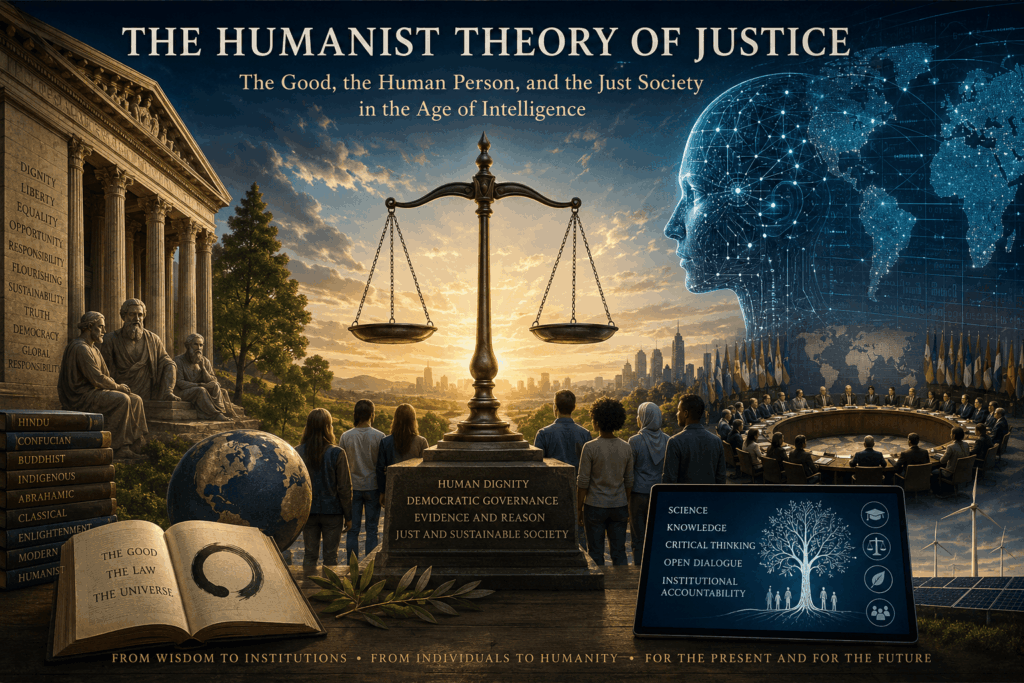
The Humanist Theory of Justice
Explore the Humanist Theory of Justice, integrating philosophy, science, humanism, democracy, ethics, Rawls, Sandel, and the Science of Wholeness.
Reason, Compassion, and the Future of the Sacred.
Explore Integrated Humanism: a secular, science-based philosophy uniting truth, ethics, and awe to guide humanity toward a just and compassionate future.
Explore the Humanist Theory of Justice, integrating philosophy, science, humanism, democracy, ethics, Rawls, Sandel, and the Science of Wholeness.

This article examines the historical development of democracy, republican government, liberty, and the American Dream through the perspective of Integrated Humanism and Civic Humanism.
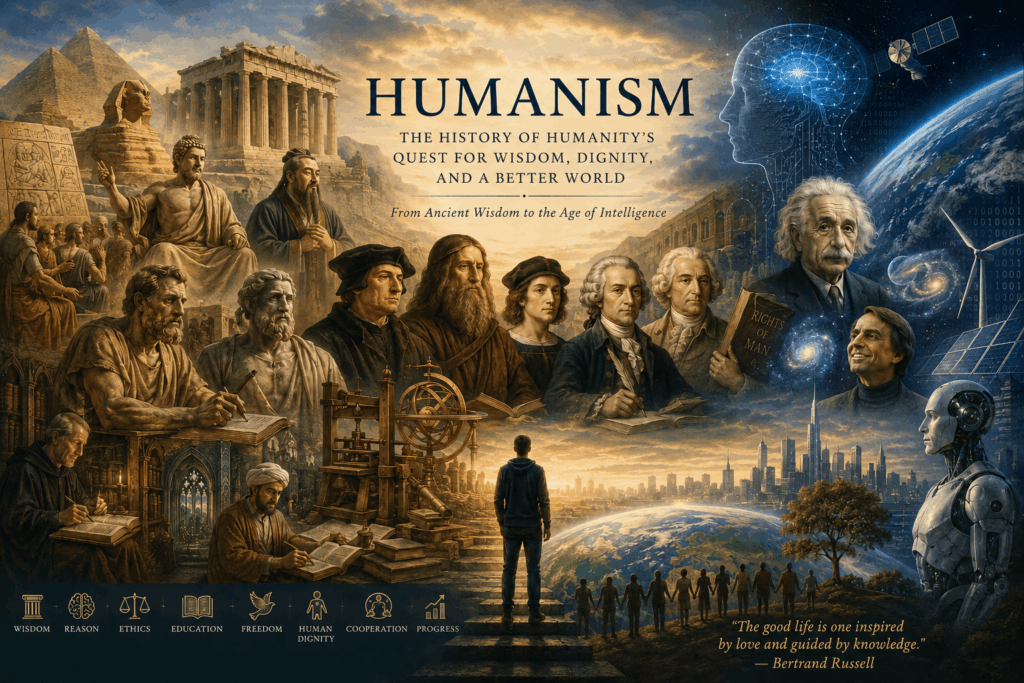
A history of humanism from the ancient world to the Age of Intelligence, exploring how philosophy, religion, science, democracy, and human rights shaped humanity’s ongoing pursuit of wisdom, dignity, and human flourishing.

Explore the origins of Renaissance Humanism, the revival of classical learning, Civic Humanism, art, science, and the rise of modern civilization through the thinkers and ideals that transformed Europe and shaped the modern world.

At its core, Civic Humanism teaches that liberty survives only where people cultivate wisdom, virtue, education, and public responsibility together.

Explore the science, history, and power of charters across civilizations, governments, corporations, religions, and global institutions. This comprehensive Science Abbey analysis examines how charters shape authority, legitimacy, governance, and the future of civilization in the Age of Intelligence.
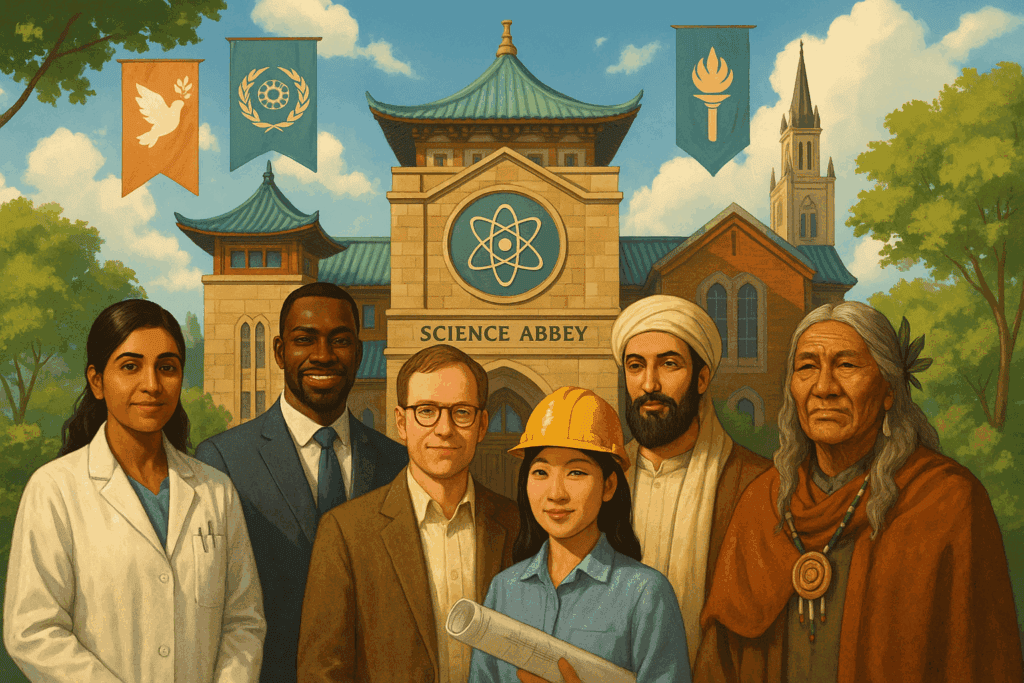
A clear, science-based framework for equality and social justice in Integrated Humanism—covering gender, race, disability, and global human rights with evidence, ethics, and practical policy insights.

Neutral Analytical Vigilance Institute (NAVI) | Science Abbey Global Intelligence Initiative | Policy Brief — For Government, Civil Society, and International Institutions
A comprehensive guide to semiotics across world religions, culture, government, science, business, and digital media—leading to a vision for humanity’s symbolic future.

Explore The Science of Community—how human connection evolved from tribe to global society, and how reason and compassion can guide a more unified world.

This article proposes a series of reforms grounded in an Integrated Humanist perspective—one that values inclusion, reason, transparency, and the fundamental worth of every individual.

A Scientific Humanist Report on the State, Causes, and Solutions of Human Rights in the Modern World.