
老子
道德經
Laozi and Daodejing: The Way and Its Virtue
A Science Abbey Translation
Table of Contents
Page 1: Translation — Daodejing: The Way and Its Virtue
(Below)
Page 2: Introduction — Laozi and the Daoist Tradition
Ancient China
Who Was Laozi?
Philosophical Daoism
Religious Daoism
Daoist Monasticism
Daoist Alchemy
Qigong, Neigong, and Neijia
Legacy
Daoism, Chan, and Zen
The Daojing and Dejing
The Received Text and Ancient Manuscripts
The Text
A Note on This Translation
Page 3: Backmatter
Conclusion — Returning to the Way
References
Further Reading from Science Abbey
Daodejing: The Way and Its Virtue
1. Dao — The Way
As for the Way,
The Way that can be spoken of
Is not the constant, eternal Way.
As for names,
The name that can be named
Is not a constant, eternal name.
The nameless is at the beginning
Of all things in the universe and on the earth.
Once named,
It is the origin or “Mother”
Of these myriad things.
Constantly without desires,
One realizes the mystery
And perceives its subtlety.
Constantly with desires,
One sees only those manifestations
Which one desires and seeks.
The Eternal and its manifestations
Together emerge from one Source.
These are two,
And yet they are One.
NOTES
Dao 道: Dao means “way” or “path.” The first four lines can be interpreted to define the Dao: before names exist, the Dao is the self-existent, undifferentiated One; and once things are created, differentiated and may be named, the Dao is the ultimate origin of all things.
Wuji 無極: “…emerge from one Source.” That is, wuji (Wu Chi) means literally “without ridgepole.” Originally it meant “boundless; infinite” in the Warring States Period (476-221 BCE) Daoist classics Daode jing and Zhuangzi. It came to mean the “primordial universe” prior to the Taiji (Tai Chi) “Supreme Ultimate,” “limitless; infinite.” Wuji is a compound of wu 無, meaning without; no; not having; not being; nothing, nothingness: and ji 極, a ridgepole; Earth’s poles; highest or utmost point; an extreme; to exhaust.
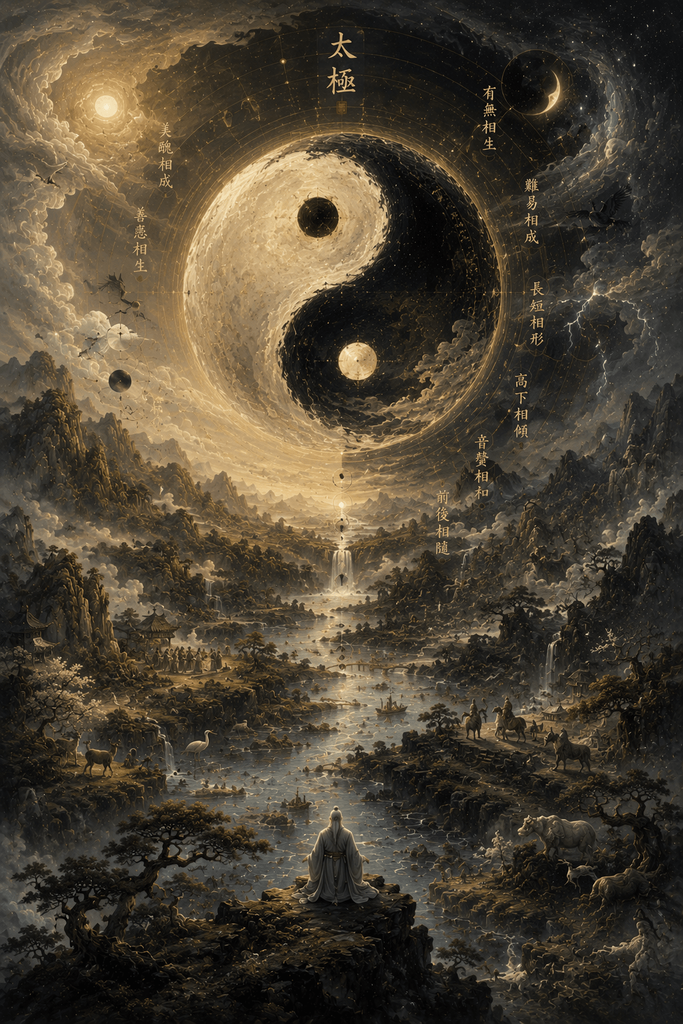
2. Taiji
When the beautiful is known as beautiful,
Then other things become ugly.
When the good is known,
Then the bad arises.
Being and nonbeing are created together;
Difficult and easy complement each other;
Long and short define each other;
High and low distinguish each other;
Tones of distinct voices harmonize together;
Front and back follow each other.
These are all constants.
Therefore the Sage dwells in wuwei
And follows the wordless teaching.
All things in the universe arise,
But he does not create them.
They are produced,
But he does not own them.
He acts on their behalf,
But he does not make them dependent.
He accomplishes his tasks,
But he does not dwell on them.
It is because he does not dwell on them
That his works do not leave him.
NOTES
Taiji 太極: “…and yet they are One.” Taiji (literally “great ridgepole”) is a Chinese cosmological term for the “Supreme Ultimate” state of undifferentiated absolute and infinite potentiality, contrasted with the wuji. The image is of the light of the sun against one side of a roof supported by a ridgepole, the horizontal beam on the roof, which creates a shadow on the other side of the roof. This is a symbol of symmetry and balance, best expressed as the opposites Yin and Yang.
Yin and Yang: “These are two…” Yin: Non-being, non-existence, nothingness, nothing, void, emptiness, space, hollow, hole, vacuum, abyss, darkness, shadow, plains, negative charge, soft, earth, moon, mother, feminine, mercy, compassion. Yang: Being, existence, universe, everything, fullness, things, full, force, energy, power, strength, light, mountains, positive charge, heaven, sun, father, masculine.
Wuwei 無為: Usually translated “non-action,” but can also mean “effortlessness.” Doing things naturally rather than artificially, forced, or trying. It is action that does not follow desire or grow from thought. It is spontaneous activity arising directly from the undifferentiated Source. The sage remains still and silent and keeps to the center and his actions occur of themselves.
In the Book of Liezi, the third seminal Daoist text along with the Laozi and the Zhuangzi, wuwei is used as another term for the inert, unchanging Dao. Wuwei is the cardinal principle of the Daoist monk. Wuwei in this sense is non-action. Non-action is not, for living agents, the nothingness of true wuwei, but activity that arises from a calm and still mind and attitude. It is natural living without the disturbances of thoughts and emotions. Spontaneous action proceeds from wuwei.
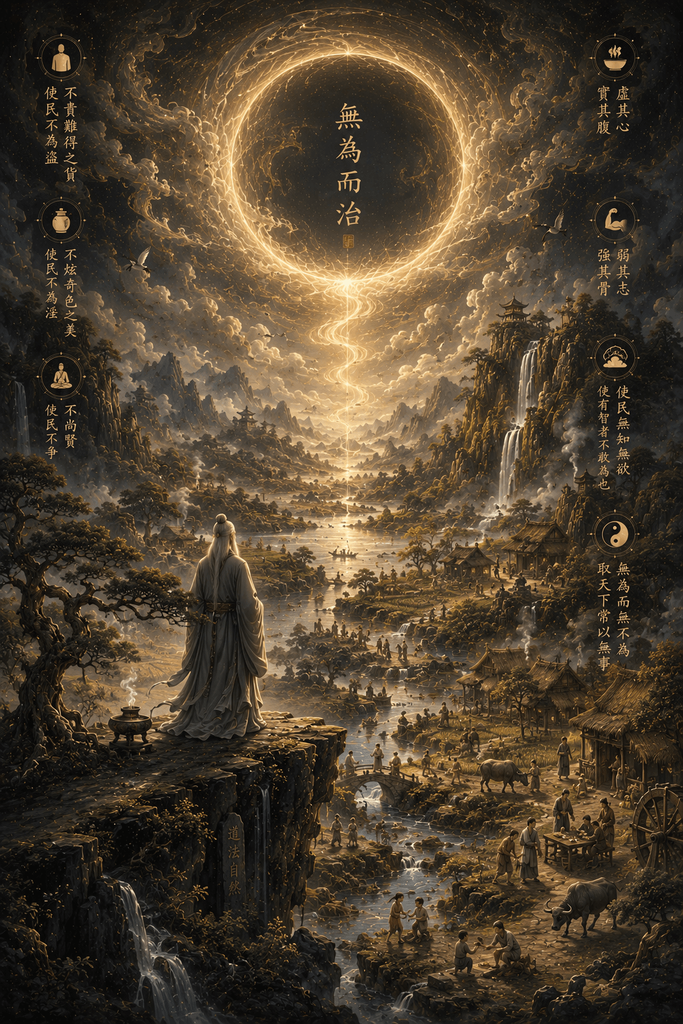
3. Wuwei and the Government of the Daoist Sage
By not praising the worthy,
One prevents contention among the people.
By not valuing goods difficult to obtain,
One prevents people from acting like thieves.
By not putting the beautiful on display,
One prevents people from coveting.
The Sage leads and governs
By emptying their minds
And filling their bellies.
He weakens their ambition
And strengthens their bones.
He causes the people
To be without knowledge and desire,
And creates confusion
In people who think they know.
When people act with wuwei,
Nothing will be in disorder.
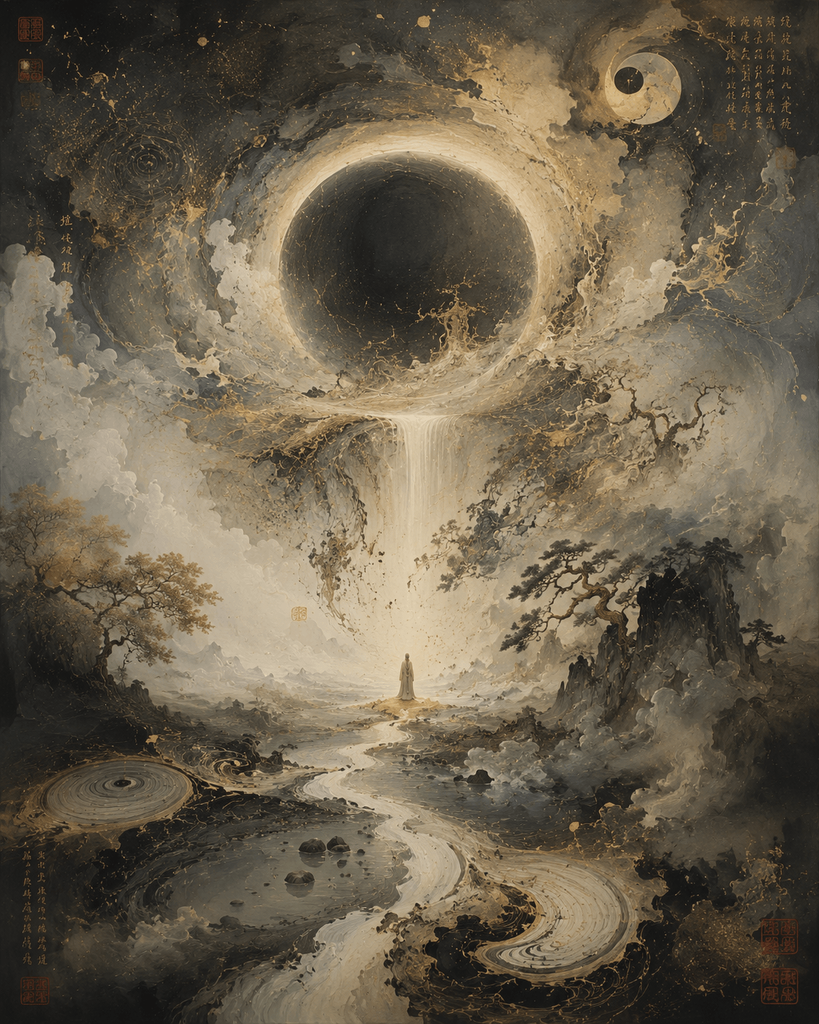
4. The Origin
The Way is empty,
And one who uses it
Seems not to be full.
Deep and still like an abyss!
It is the Source of all things.
It files down the sharp edges;
Unties the tangled knots;
Softens the glare;
And settles the dust.
Hidden, it exists eternally.
I do not know whose child it is.
It seems it must have existed
Even before the supreme deity.
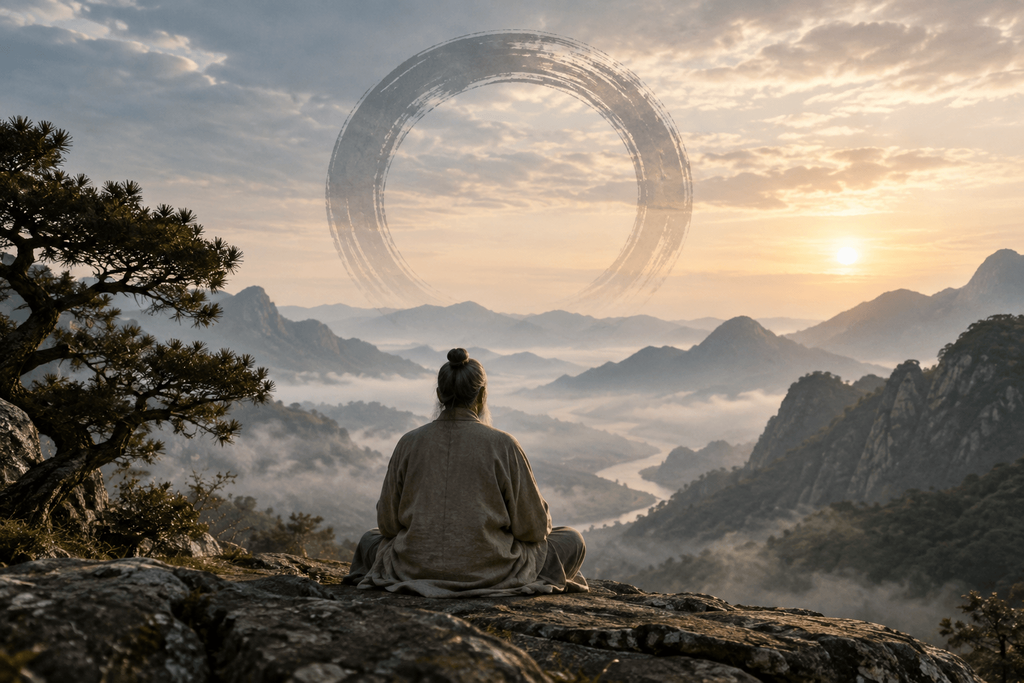
5. The Center
Heaven and earth are not humane;
They regard all things as straw dogs.
The Sage is not humane;
He regards all people as straw dogs.
Is the space between heaven and earth
Not like a bellows?
Empty, it is never depleted.
When it is used,
More always comes out of it.
Much learning and much talking
Causes frequent exhaustion.
That is not as good
As keeping to the center.
NOTES
Straw dogs were used as sacrificial talismans in magic ceremonies.
The universe is indifferent to suffering and the plight of living beings. Therefore, uniting with the Dao as microcosm unites with macrocosm, the sage cultivates an objectivity and is able to transcend the transitory world of mortal existence. Neither the universe nor the sage is concerned with the ups and downs of human affairs.
The center is the Dao, the true self, beyond thoughts and desires, beyond knowledge and emotion. It is awareness without an object. Life- force is exhausted by the rigors of intellectualism and loquaciousness just as it is depleted by strong emotional forces such as excessive desire, anger, pleasure or pain.
6. The Valley Spirit
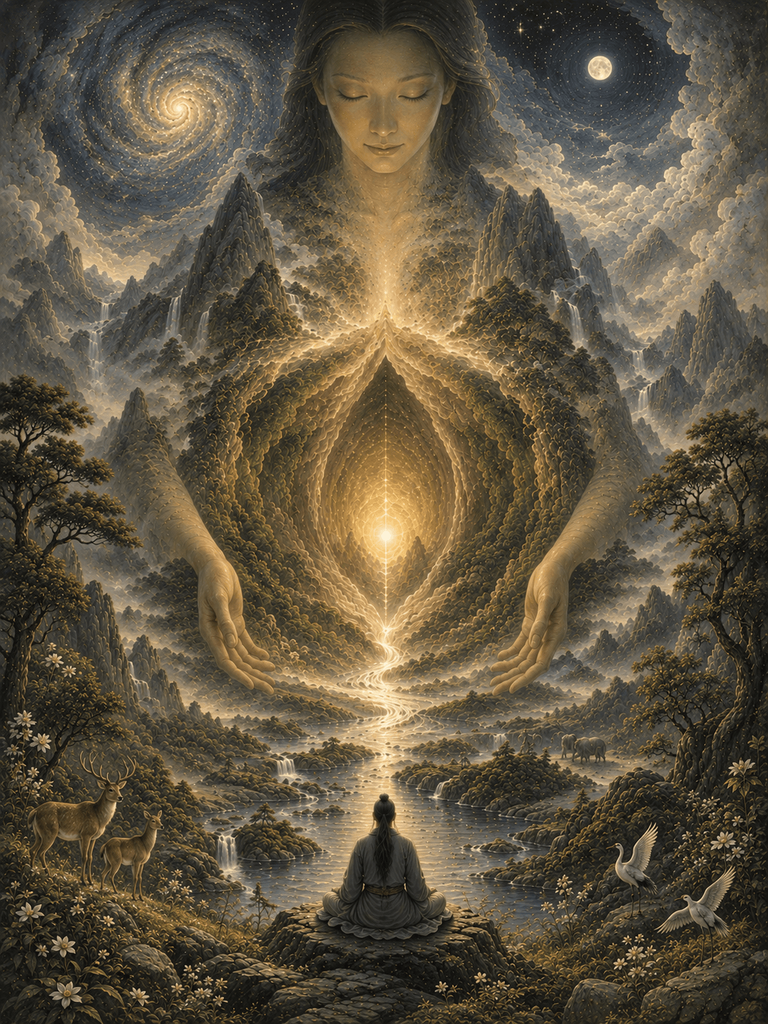
The valley spirit never dies.
It is called
The Mysterious Female.
The gateway of the Mysterious Female
Is called the root of heaven and earth.
Still and immortal,
Look within to use it;
Its power is never exhausted.
NOTES
The valley is empty, a void; the spirit of the valley is the unlimited energy of the cosmos, the life-force that gives birth to and nourishes all life, the mysterious, primal, creative generation of nature.
The Gateway of the Mysterious Female is the vulva, or gateway, of the cosmic womb or origin, the origin from which all things are born.
7. Selflessness and True Self
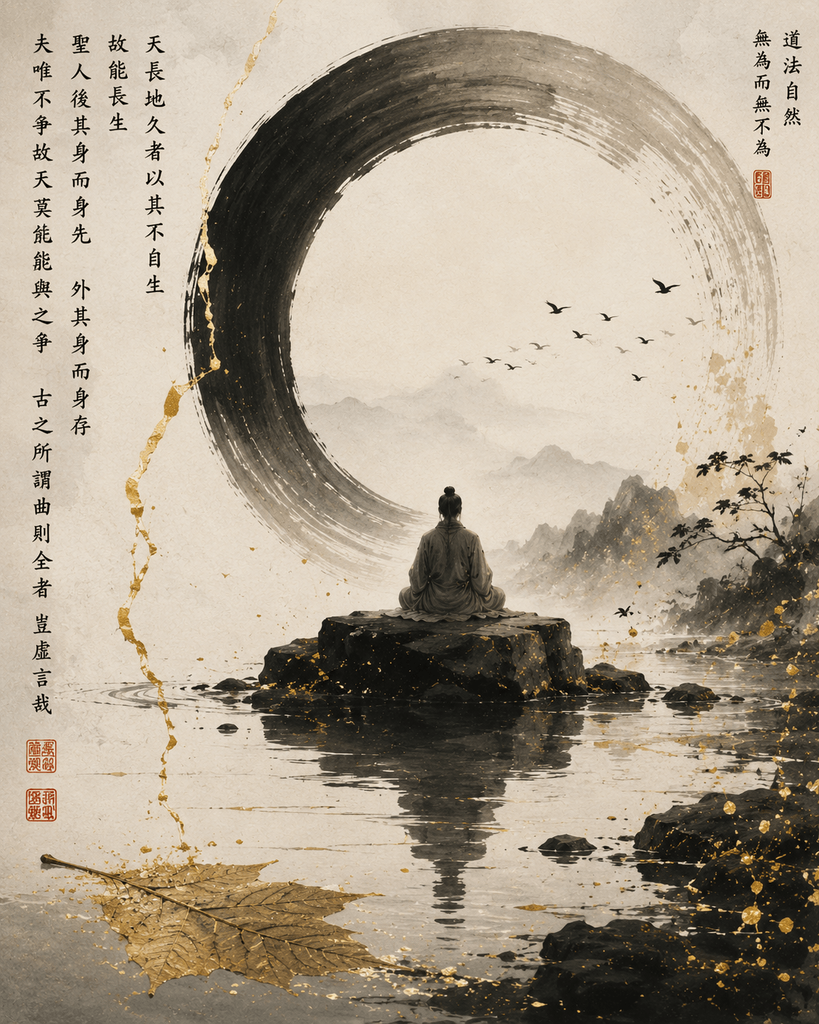
The universe is eternal
And earth is long enduring.
The reason why the universe is eternal
And earth is long enduring
Is because they do not live for themselves.
Therefore they can long endure.
Therefore the Sage places himself in the background,
Yet finds himself in the foreground.
He forgets self-interest,
Yet finds himself preserved.
Is it not because he is selfless
That he realizes his true self?
NOTES
There is an old Chinese saying that “Heaven covers and Earth supports” the 10,000 things (all things in the universe). Heaven and Earth do not exist as mortal beings possessed of a self and cannot, therefore, live for themselves. Thus it may be understood that Heaven and Earth live for all things, not for themselves.
The sage’s selflessness allows him to identify with the Dao as a whole. He finds that his mortal being or “self” is a transitory reality. It is a temporal illusion from the view of the Eternal. The eternal One is his true self as it is the true self of all things. This realization is true fulfillment.
Forgetting his self-interest not only prepares the Daoist’s mind for enlightenment or realization of true self, it also lets him act on behalf of the world. Acting thus draws support from others who do likewise, and a thriving community is formed that works together toward the common purposes of survival and well-being.
The Daoist’s first duty is to himself. Very few people can learn the truth even when it is presented right before their very eyes in clear language. Proper meditation is the only remedy for the conditioning of the world, and depending on the destiny of the individual, the process of reversal may be immediate or may take a lifetime.
“…he realizes his true self” can be interpreted in a material sense, as in realizing one’s self- interest. It may also be interpreted in the mystical or metaphysical sense of realizing one’s true nature, or identification with the Dao.
8. The Good
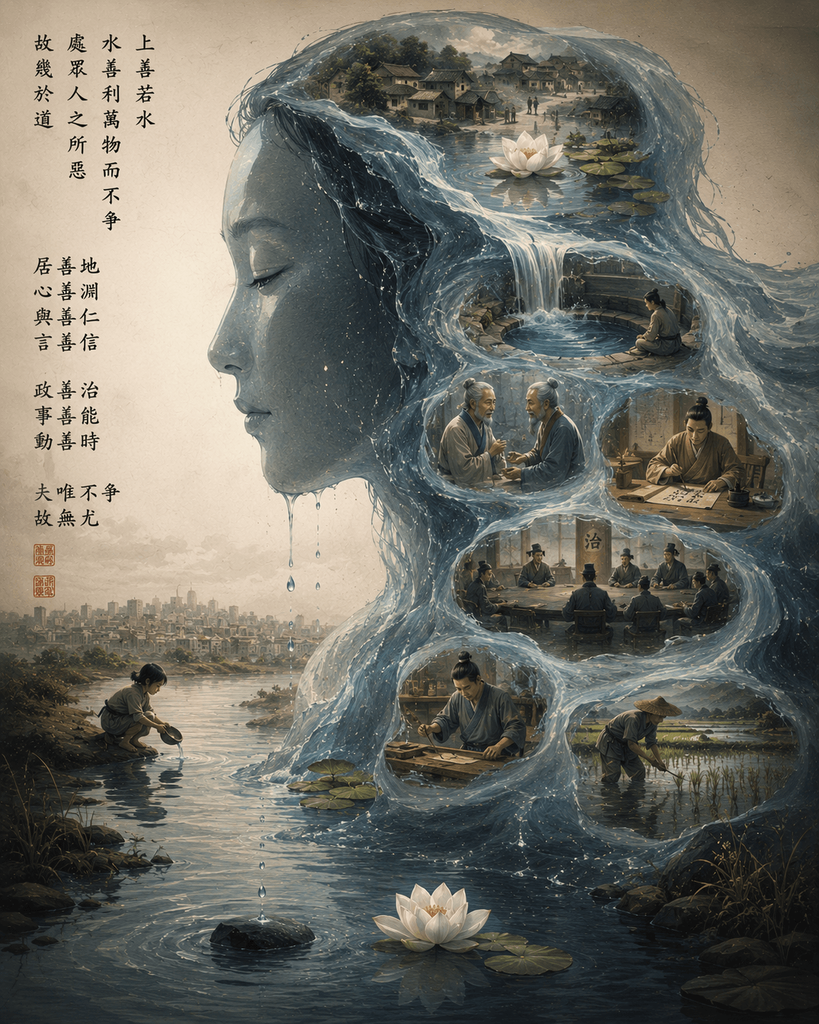
The highest good is like water.
Water benefits all things
And does not compete with them.
It dwells in places
The masses of people despise;
Therefore it is close to the Way.
In a dwelling
The good thing is the ground.
In the mind
The good thing is depth.
In friendship
The good thing is benevolence.
In speaking,
The good thing is sincerity.
In government
The good thing is order.
In business
The good thing is ability.
In actions
The good thing is timeliness.
It is because he does not compete
That one is without blame.
9. The Golden Mean
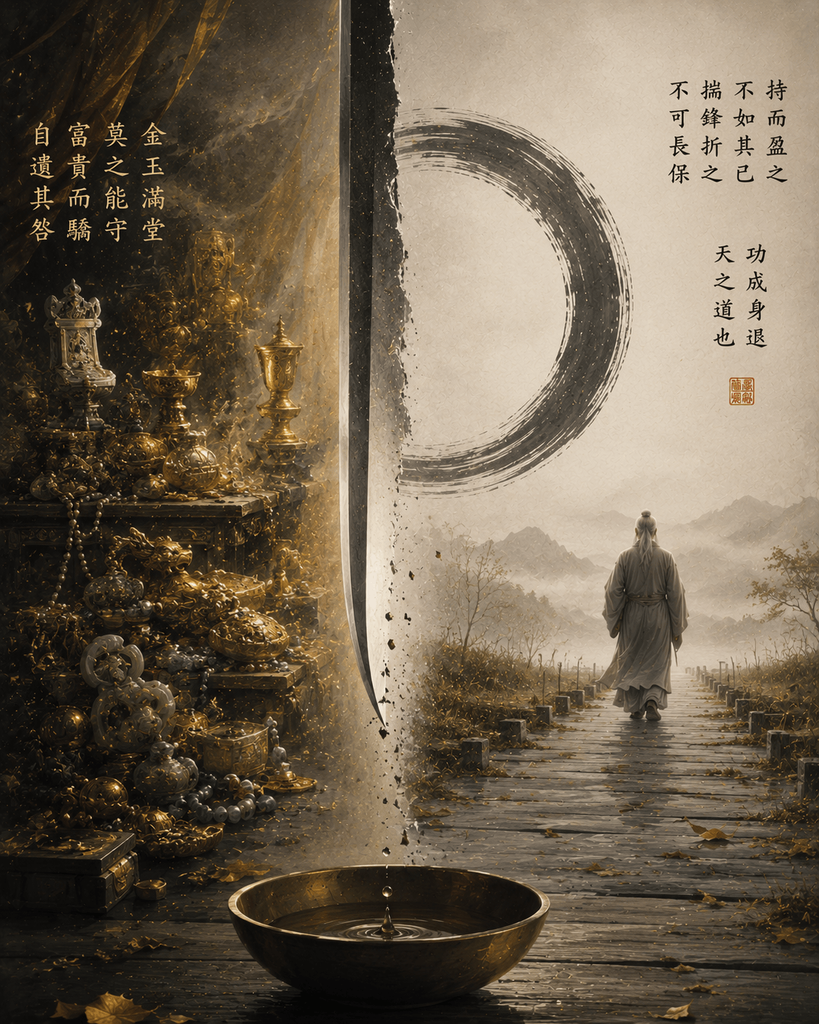
To hold to the end
Is not as good as stopping in time.
Pound out and sharpen a blade
To too fine a point,
And the edge cannot be preserved for long.
When gold and jade fill your hall,
You will never be able to protect them.
Pride and arrogance
With wealth and rank
Bring about one’s downfall.
When you have accomplished your work,
You retire:
This is the Way of Heaven.
NOTES
The imagery here is of a vessel being filled to its brim or a bow being stretched to its limit.
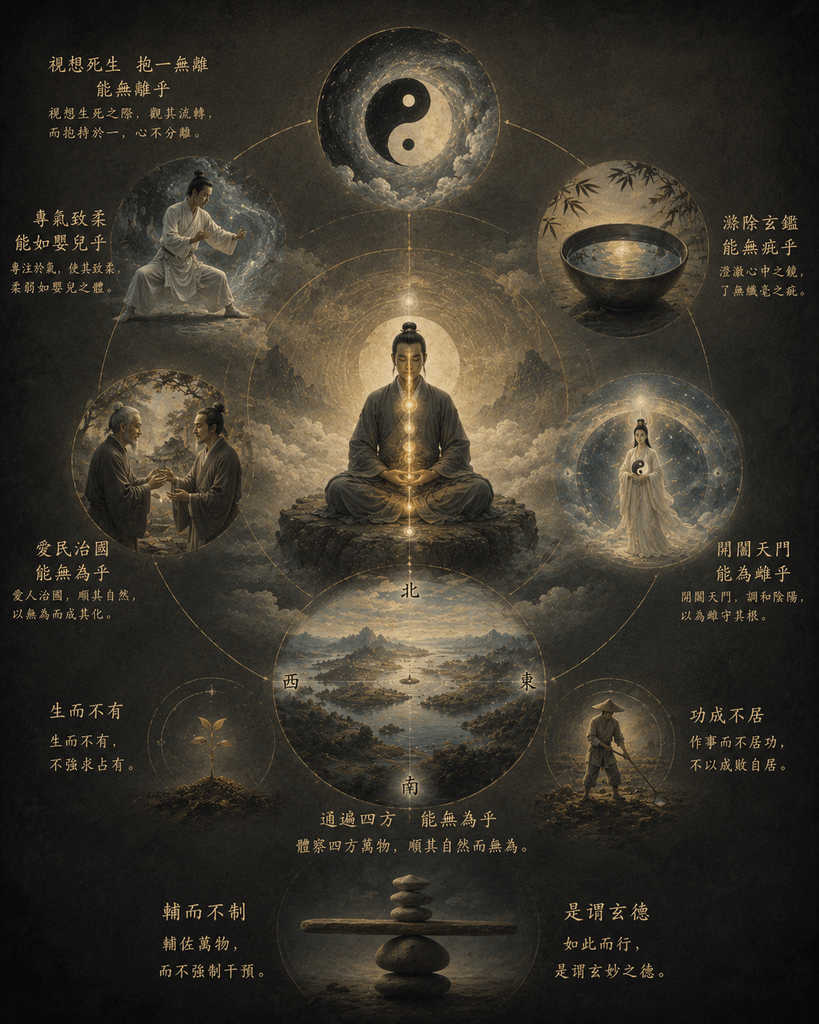
10. Daoist Cultivation: Meditation, Qigong, and Alchemy
Visualizing the mortal soul
And embracing the One,
Can you be undivided?
Concentrating your qi to become soft,
Can you become like a newborn infant?
Purifying and making clear
Your profound mirror,
Can you leave no blemish?
Loving people and cultivating the state,
Can you do it with wuwei?
Opening and closing the gates of Heaven,
Can you play the part
Of the Feminine Principle?
Comprehending all within the Four Directions,
Can you do it with wuwei?
Produce and nourish.
Produce,
But do not try to possess;
Work,
But do not depend on the reward;
Support,
But do not control.
This is called profound virtue.
NOTES
Literally translated, “In carrying the p’o (with the mind…)” The ancient Chinese theorized two souls, the p’o, or bodily soul which returned to earth after death, and the hun, or spiritual soul which returned to the heavens.
The hun is supposed to leave the body during sleep, as well. In the Book of Liezi the Yellow Emperor said: “If my spirit will return through the gates from whence it came, and my bones will return to the source from which they arose, then where does the self continue to exist?”
The Yin and Yang in man is his p’o and hun. Dispersion of these forces means death. This line in the Daode jing refers to keeping them united. Visualizing the p’o, identifying with it and the One simultaneously, undivided, one unites the mortal and the eternal, or earth and heaven, to become whole.
Qi (Chi): The traditional form 氣 is “steam (气) rising from rice (米) as it cooks.” The literal translation is “gas,” “air,” or “breath.” Qi is an active principle known as life-force, which animates all living things. Compare the Latin spiritus “breathing;” the Common Greek πνεῦμα, meaning “air,” “breath,” or “spirit;” the French élan vital; and the yogic prana.
“…profound mirror”: The image here is of a bowl of water wherein a reflection may be perceived.
“Can you do it with wuwei?” That is, without using knowledge or actively intervening in affairs.
LaFargue in Tao of Tao Te Ching suggests that “Heaven’s Gate” may mean a ‘spirit journey,’ a sense of being “mentally transported through spiritual realms.”
“Gates of Heaven” and “Feminine Priniciple”: These lines indicate receptiveness to Heaven, or illumination, as it comes and goes.
“Mysterious De”: Literally, “virtue” or “power,” De is the physical manifestation or embodiment of the Dao.
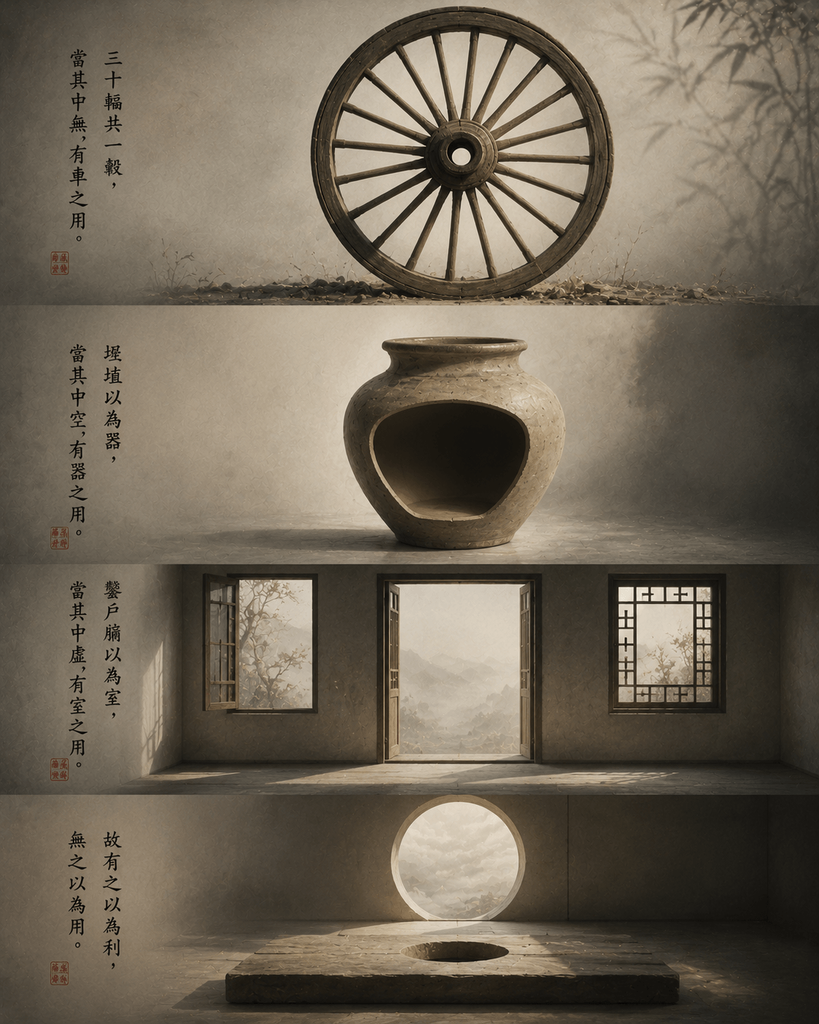
11. Being and Emptiness
Thirty spokes converge upon one hub;
It is the hole in the centre,
Where nothing exists,
That makes the carriage wheel useful.
We bake molded clay
To make a vessel;
It is the hollow void within the vessel
That makes the vessel useful.
We carve out doors and windows
To make a room;
It is the empty spaces
That make the room useful.
Therefore,
We have the benefit of being,
And find usefulness in non-being.
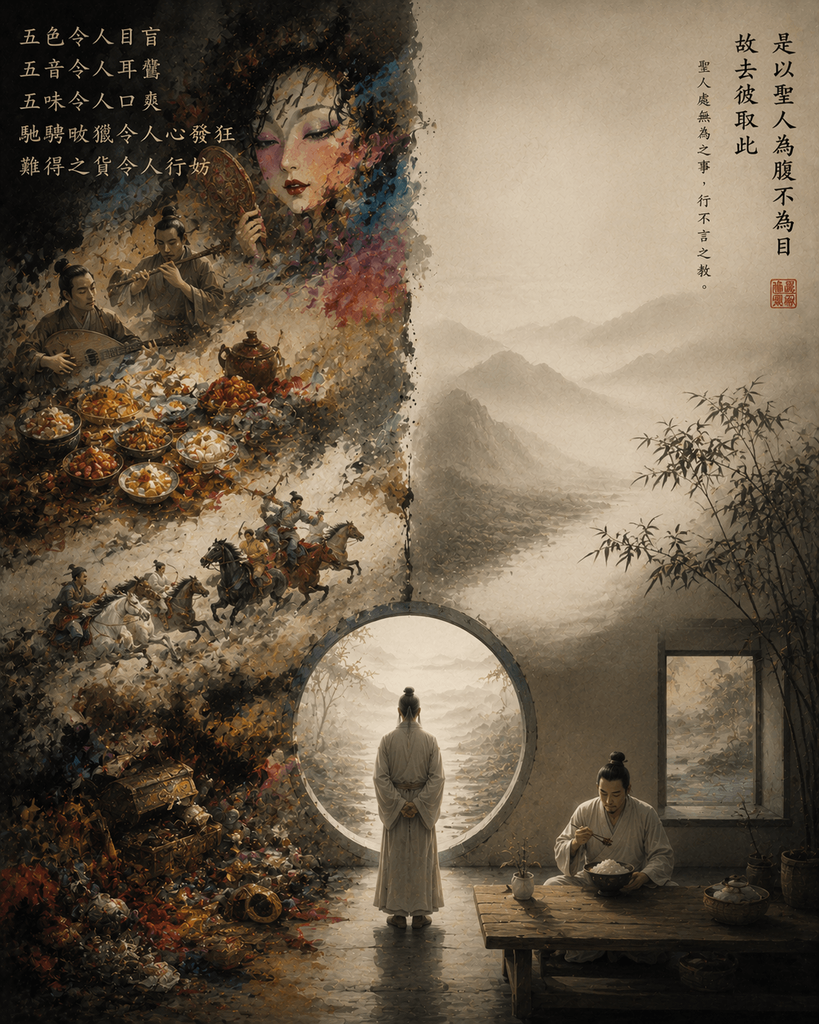
12. Accepting the Essential, Rejecting Distractions
The five colors darken the eyes,
The five tones deaden the ears,
The five flavors dull the tongue.
Racing horses and hunting
Madden the mind.
Goods that are difficult to obtain
Corrupt the conduct.
Therefore, privately and in government,
The Sage provides for the belly
And not the eyes.
Thus he rejects that
And accepts this.
NOTES
This chapter is a comment not just on excess and its deleterious effects on the senses and awareness, but also a general comment on Daoist taste and style. The Daoist abhors the confusion wrought by lavish or gaudy colors, over-elaborate sounds and rich flavors as much as he rejects much thinking and excessive talking. He prefers the plain and natural earth tones, simple music, a healthy diet of fresh foods, and a calm and humble existence, in order to remain close to reality.
Such ostentatious displays as fancy robes, rare and expensive treasures, ornate architecture and interior design, and elaborate organ or choir music turns the attention to outward things. The listener is either distracted by the performance or, at best, merely enraptured by the power or beauty of such religious paraphernalia. The Daoist rejects this and accepts a plain and natural environment instead, so one can forget the objects of desire and turn inward to peace and quiet, where one may return to the Dao, the source of being, life, and consciousness.
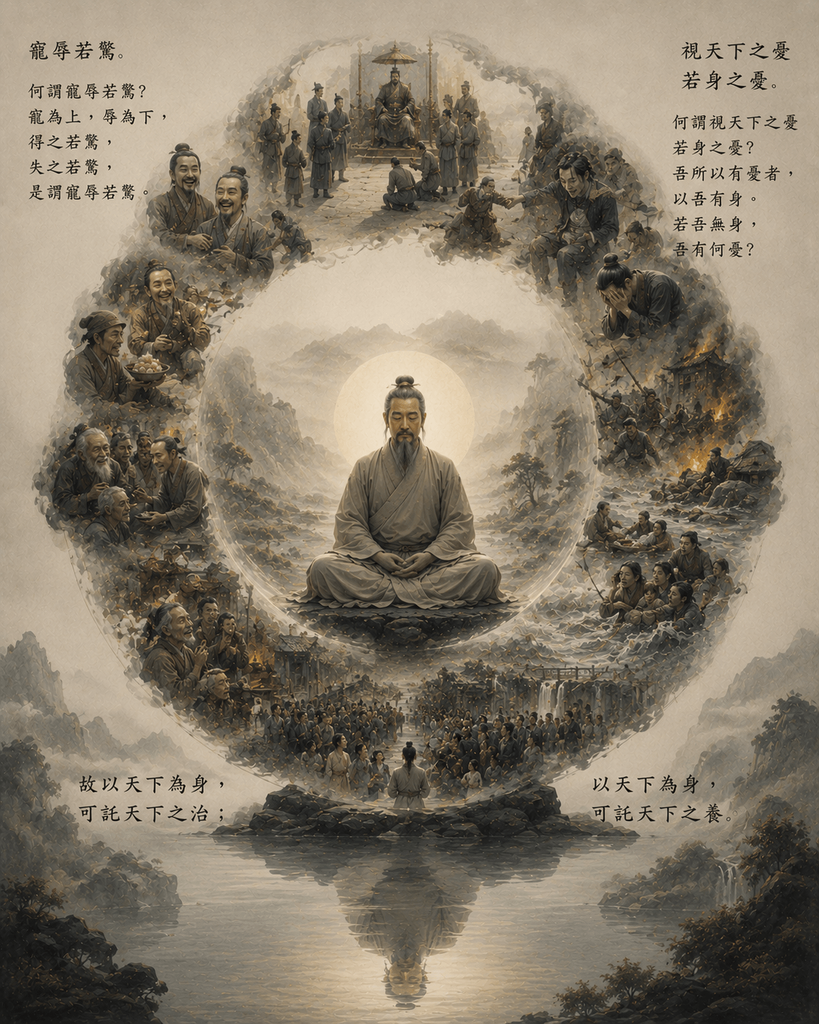
13. The Self
Regard favor and disgrace
With equal concern.
Regard the world’s distress
As your own bodily distress.
What does it mean
To “regard favor and disgrace with equal concern?”
Favor is superior,
Disgrace is inferior,
Yet gaining favor and losing favor
Both cause their concerns.
This is what is meant by
“Regard favor and disgrace with equal concern.”
What does it mean
To “regard the world’s distress
As your own bodily distress?”
The reason why I have distress
Is that I have a body.
If I had no body,
What distress would I have?
Therefore, to one who values the world
As his own body,
May be entrusted
The government of the world.
And to one who loves the world
As his own body,
May be entrusted
The care of the world.
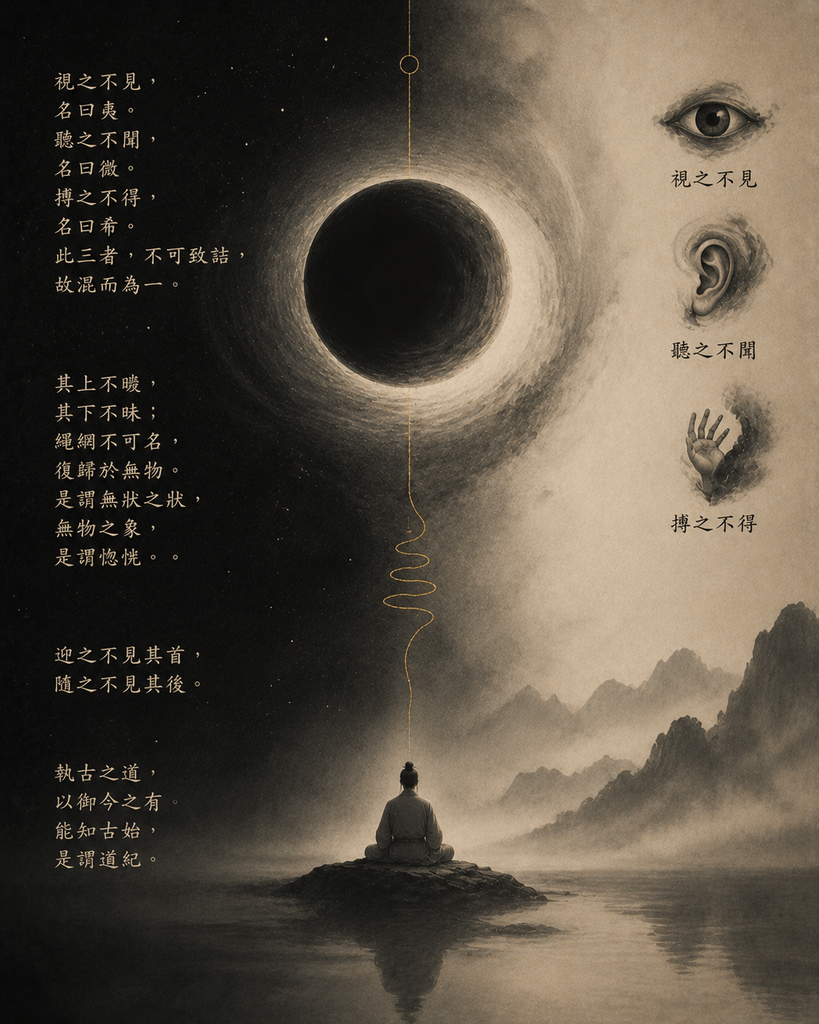
14. The No-thing and the One
We look at it
And do not see it.
We call this
“The invisible.”
We listen to it
But do not hear it.
We call this
“The inaudible.”
We grasp at it
But do not hold it.
We call this
“The intangible.”
These three cannot be analyzed
To ultimate limits;
Therefore they merge into one.
One—
There is nothing higher
And more encompassing;
There is nothing smaller below it.
Boundless!
Formless!
It cannot be named.
It returns to the No-thing.
This is called
The formless form,
The image of nothingness.
It is called
The indefinable and the unimaginable—
The Mystery.
Face it
And you will not see its anterior.
Follow it
And you will not see its end.
Hold on to the ancient Way
To manage the things of the present
And to know the primordial beginning.
This is called
The thread that runs through the Way.
NOTES
It perpetually returns to repose in the No-thing, as Bruce Lee instructed, “Repose in the No-thing.”
15. The Daoist Master
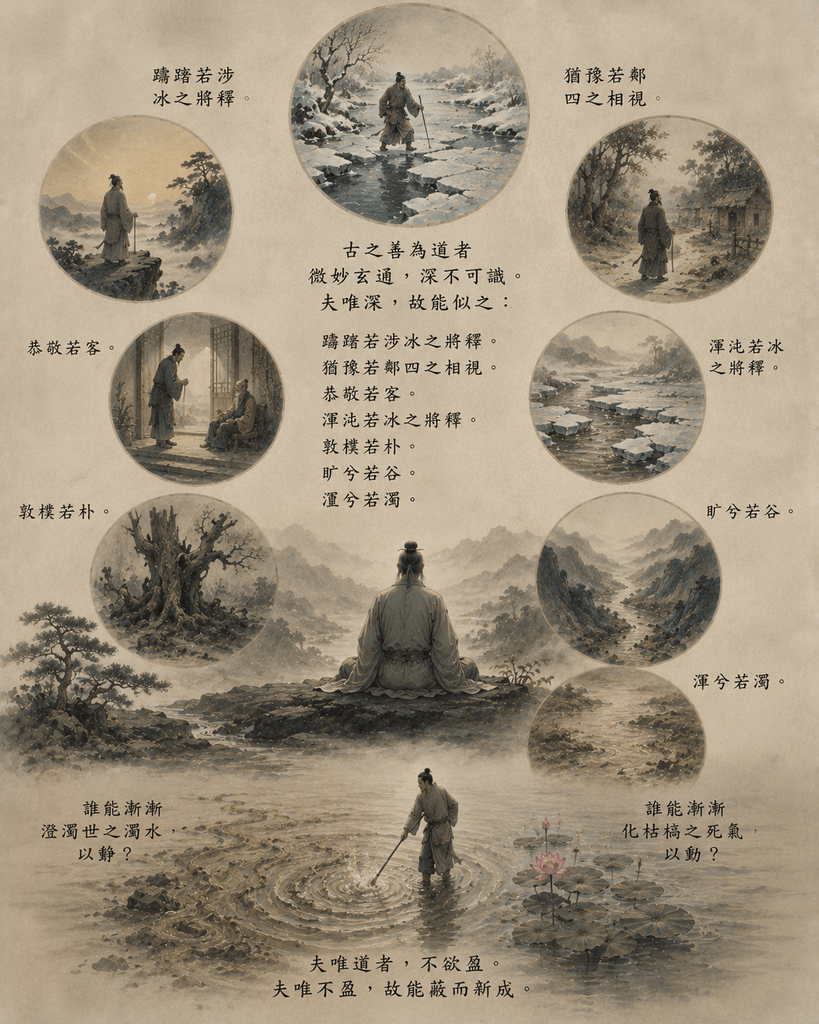
The ancient Masters of the Way
Were subtle, profound, mysterious,
And penetratingly wise,
Too deep to be understood.
Now, because they were too deep
To be understood,
I can only feebly describe them
By appearance, thus:
Hesitant and cautious,
Like someone crossing
An icy stream in winter.
Undecided and alert,
As though wary of one’s neighbors
On all four sides.
Reserved and courteous,
Like a guest.
Unfixed and unformed,
Like melting ice.
Genuine and simple,
Like uncarved wood.
Open and receptive,
Like a valley.
Merging and muddled,
Like muddy water.
Who can gradually make
The muddy water of the world clear
With tranquility?
Who can gradually bring
The inert to life
With activity?
Those who embrace the Dao
Do not desire to be full.
It is only because
They are never full
That they therefore can wear out
With no need to be renewed.
NOTES
“Ancient Masters of the Way”: Shih: master, sage; a scribe, knight or ruler.
In symbolic alchemy, “the inert” is symbolized by Salt and its opposite “activity” is symbolized by Sulfur. The third of the ‘Three Primes” is the central principle Quicksilver or Mercury, the life-force.
16. Immortality
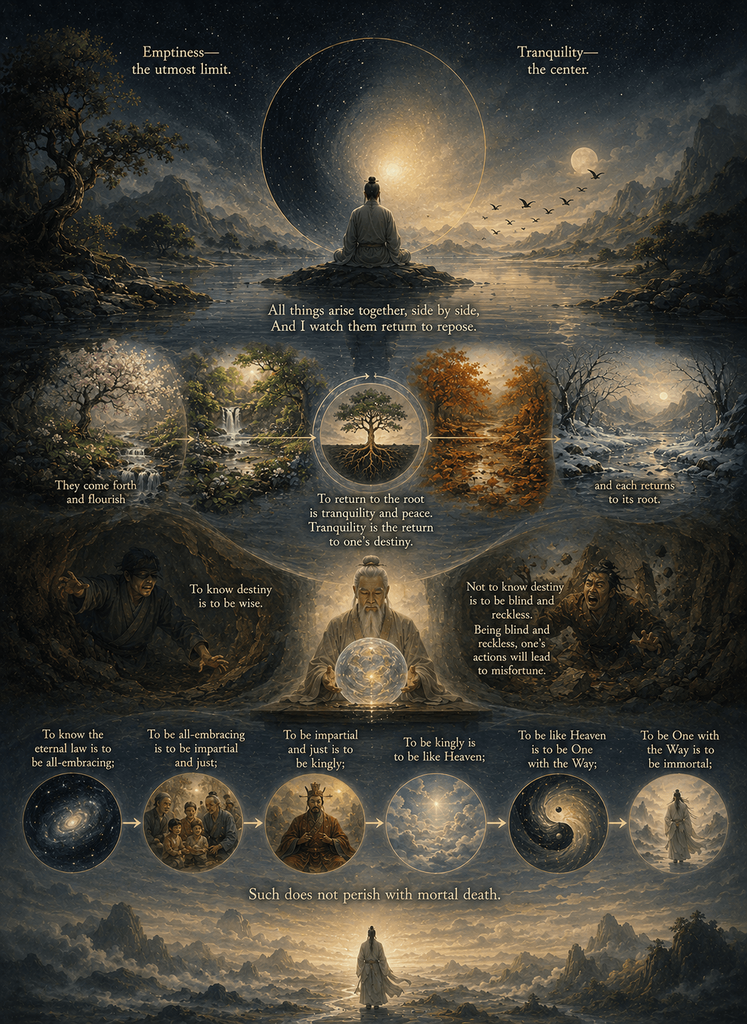
Emptiness—
The utmost limit:
Tranquility—
The center.
All things arise together,
Side by side,
And I watch them
Return to repose.
They come forth and flourish,
And each returns to its root.
To return to the root
Is tranquility and peace.
Tranquility is the return
To one’s destiny.
To know destiny
Is to be wise.
Not to know destiny
Is to be blind and reckless.
Being blind and reckless,
One’s actions will lead
To misfortune.
To know the eternal law
Is to be all-embracing;
To be all-embracing
Is to be impartial and just;
To be impartial and just
Is to be kingly;
To be kingly
Is to be like Heaven;
To be like Heaven
Is to be One with the Way;
To be One with the Way
Is to be immortal;
Such does not perish
With mortal death.
NOTES
The first two lines are a direct instruction on meditation.
“Destiny” may be translated as “eternal law.”
17. Embracing Original Nature I
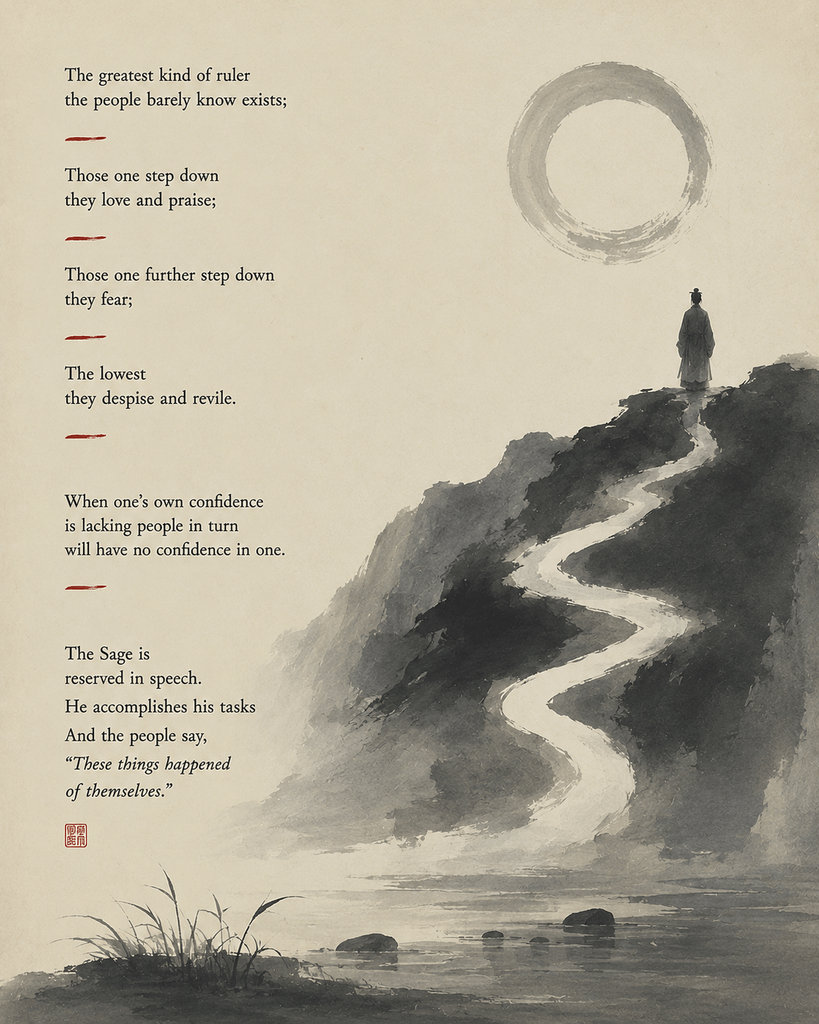
The greatest kind of ruler
The people barely know exists;
Those one step down
They love and praise;
Those one further step down
They fear;
The lowest
They despise and revile.
When one’s own confidence is lacking,
People in turn
Will have no confidence in one.
The Sage is reserved in speech.
He accomplishes his tasks,
And the people say,
“These things happened
Of themselves.”
18. Embracing Original Nature II
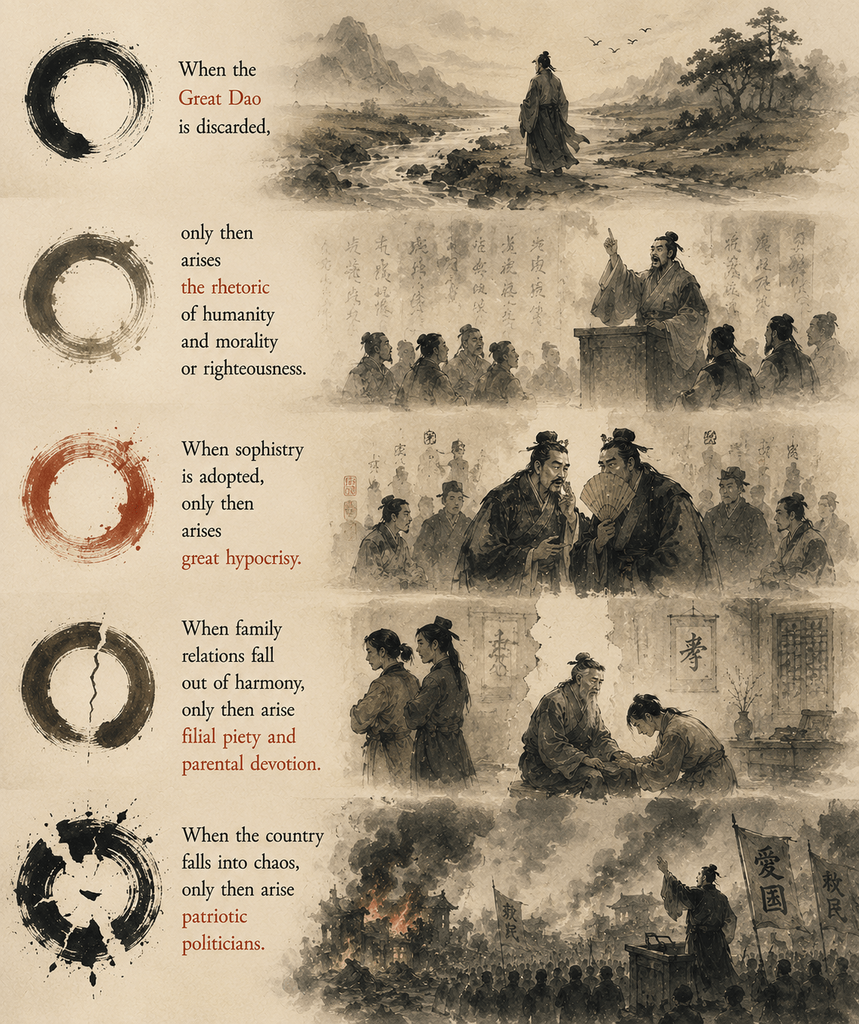
When the Great Dao is discarded,
Only then arises the rhetoric
Of humanity and morality or righteousness.
When sophistry is adopted,
Only then arises
Great hypocrisy.
When family relations
Fall out of harmony,
Only then arise
Filial piety
And parental devotion.
When the country falls into chaos,
Only then arise
Patriotic politicians.
19. Embracing Original Nature III
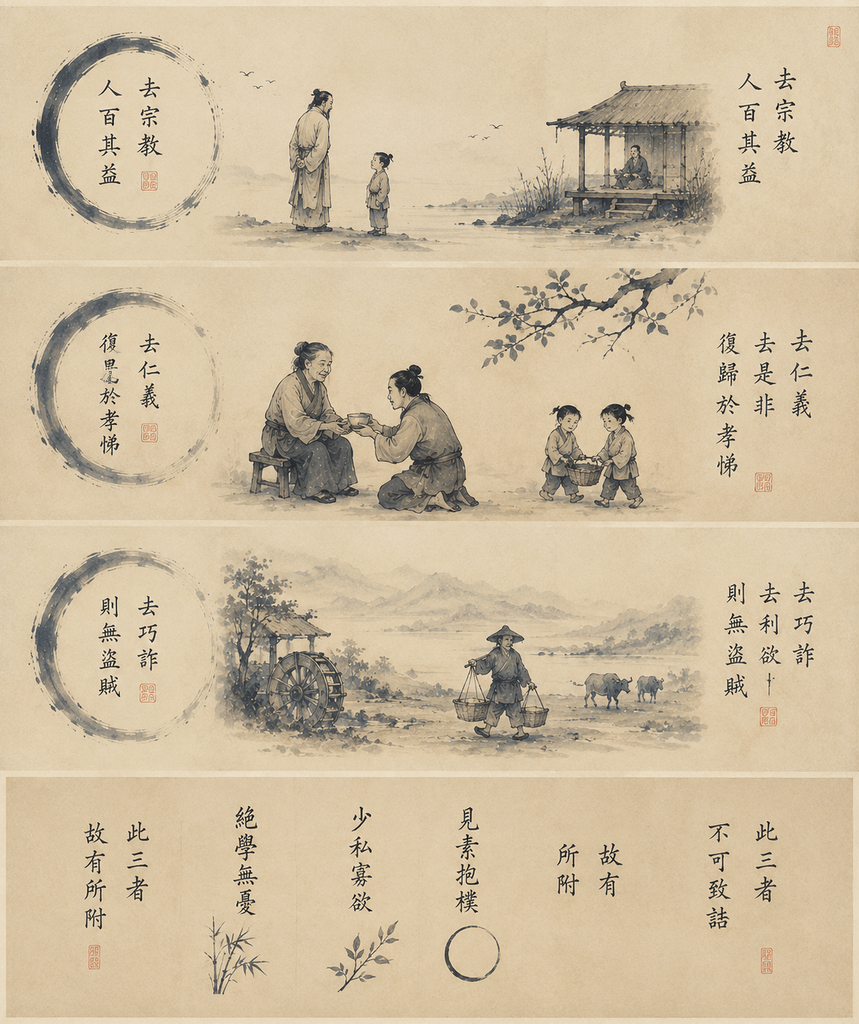
Eliminate religiosity,
Discard knowledge,
And the people
Will benefit a hundredfold.
Eliminate humanity,
Discard morality and righteousness,
And the people will return
To filial piety
And parental devotion.
Eliminate artifice,
Discard profit,
And then there will be
No robbers and thieves.
These three sayings
Are not sufficient in themselves.
They are complete only
With the following attached:
Manifest simplicity
And embrace original nature;
Lessen self-interest
And diminish desires;
Eliminate learning,
And thus, have no anxiety.
20. The Way of the Multitudes
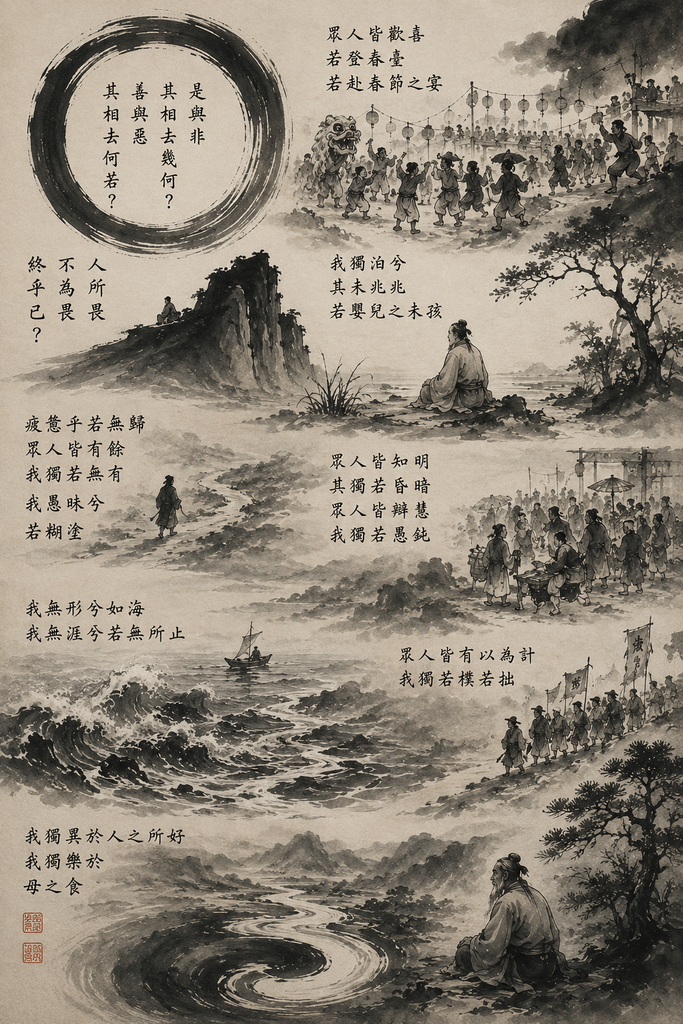
‘Yes’ and ‘no,’
How great is the difference between them?
Good and evil,
What is the distinction between them?
What people fear
Must not be feared;
What nonsense!
It will never end.
The multitudes all are joyous,
As though ascending a terrace
And feasting at the Spring festival.
I alone am tranquil,
Quiet and expressionless,
Like an infant
Who has not yet smiled.
Tired, exhausted and alone,
As though I have no home,
No place to return.
The multitudes all
Have a surplus.
I alone
Have nothing.
Mine is the mind of a fool,
Empty and perplexed!
The multitudes
Are knowing and bright;
I alone
Am dim and obscure.
The multitudes
Are discriminating and sharp;
I alone
Am muddled and dull.
Formless am I!
Like the ocean;
Aimless! Drifting,
So it seems there is no place to rest.
The multitudes all
Have their purposes.
I alone am unsophisticated
And stubborn like a rustic.
I alone differ from others
In my desires—
For I value drawing sustenance
From the Mother.
NOTES
The Tai- Lao sacrifice is a yearly festival held in the spring.
21. The Father of All Things
The nature of great virtue
Is to follow only the Way.
The nature of the Way
Is to be formless and elusive.
Elusive! Formless!
Yet, forms are within.
Formless! Elusive!
Yet, substances are within.
Dark and obscure!
Yet, vital essence is within.
Verily, this vital essence is real;
It is proof in itself.
From the present
Back to antiquity,
Its name
Has not been lost.
By this we may follow
The father of all things.
How do I know
The father of all things?
By this.
22. Wholeness
Yielding,
You will be preserved whole;
Bend,
And you will remain upright;
Be empty,
And you will be fulfilled;
Wearing yourself out,
You will be renewed;
Having little,
You will attain much;
Having much,
You will be confused.
Therefore, the Sage embraces the One
And becomes a model for the world.
He does not show off,
Therefore he becomes luminous.
He does not promote himself,
Therefore he receives acknowledgment from others.
He does not boast of himself,
Therefore he receives credit.
He does not praise his own deeds,
Therefore his reputation long endures.
It is only because
He does not compete
That, therefore,
No one can compete with him.
The ancients said,
“Yielding, you will be preserved whole.”
Were these just empty words?
It is true:
One will return to wholeness.
23. Quietism and Cultivation
To speak little
Is the natural way.
A violent wind
Does not last the whole morning;
Heavy rains
Do not last the whole day.
Who creates these things?
Heaven and Earth.
If Heaven and Earth
Cannot make such things last long,
How much truer
Is this for man?
Therefore, he who is devoted to the Way
Is One with the Way.
He who is devoted to Virtue (De)
Is one with Virtue.
He who abandons the Way
Is lost.
The Way gives power (De)
To the one committed to attainment (De);
While the Way disregards
The one committed to losing.
He who has little confidence
Earns little confidence.
24. Humility
One who stands on tiptoe
Is not standing firm;
One who strains one’s strides
Does not walk forward well;
One who shows off
Does not become luminous;
One who promotes oneself
Does not receive acknowledgment from others;
One who boasts of oneself
Does not receive credit;
One who praises one’s own deeds
Does not long endure.
According to the Way,
These things are called
“Leftover food
And extraneous growths.”
They are hateful to all;
Thus, the one with the Way
Does not abide with them.
NOTES
Leftover food and extraneous growths:” two metaphors of wasteful activity.
25. The Great
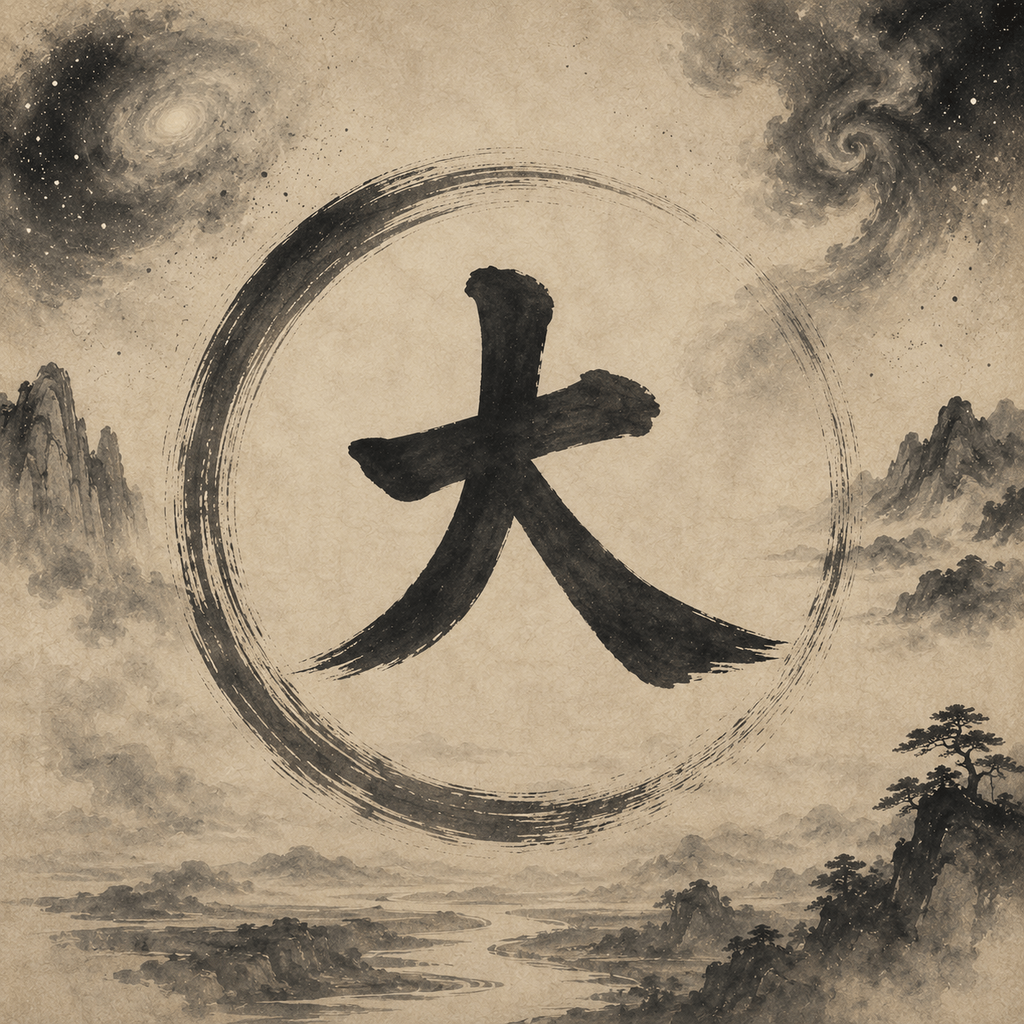
There was something perfect and undefined,
Existing before Heaven and Earth,
Silent and still,
Standing alone and unchanging.
It may be regarded
As the Mother of the World.
I do not know its name,
So I call it “Dao.”
If I were forced to give it a name,
I would name it “the Great.”
To be “the Great”
Means “to go.”
“To go” implies
Expanding far out,
And expanding far out
Implies a return.
Dao is great.
Heaven is great.
Earth is great.
And the person,
Particularly the ruler,
Is also great.
In the realms of the universe and the state
There are four greats,
And the person, the ruler,
Is one of them.
A person models itself on Earth;
Earth models itself on Heaven;
Heaven models itself on Dao;
And Dao models itself
On being itself naturally.
26. Gravity
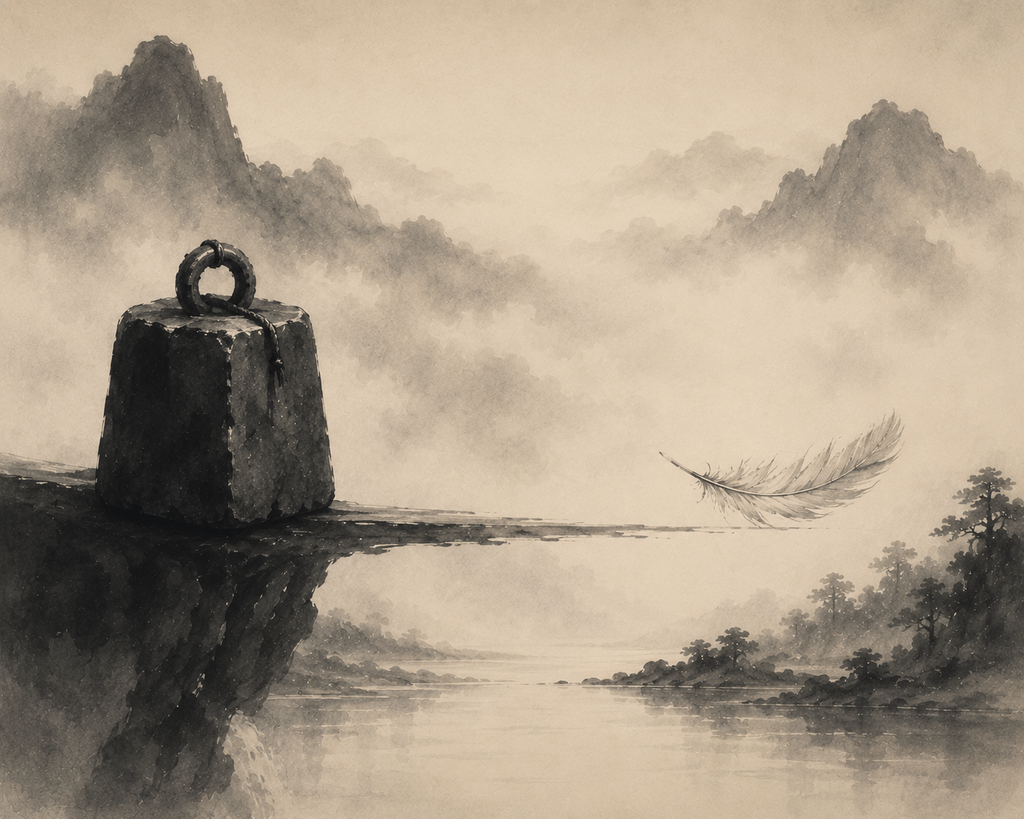
The heavy
Is the root of the light.
Calm is the master
Of restlessness, distractedness
And disorderliness.
Therefore, the gentleman sage
Who travels all day
Never strays far from his luggage.
Even with magnificent scenes about him,
He remains serious and detached.
Only when he is resting safely
Within a hostel
Does he relax his vigilance.
So, how could a lord
Of ten thousand chariots
Be carefree and lighthearted,
Out in the world?
To regard things too lightly
Is to lose the basic.
To behave restlessly, distractedly,
Or in disorder
Is to lose self-control.
27. Illumination
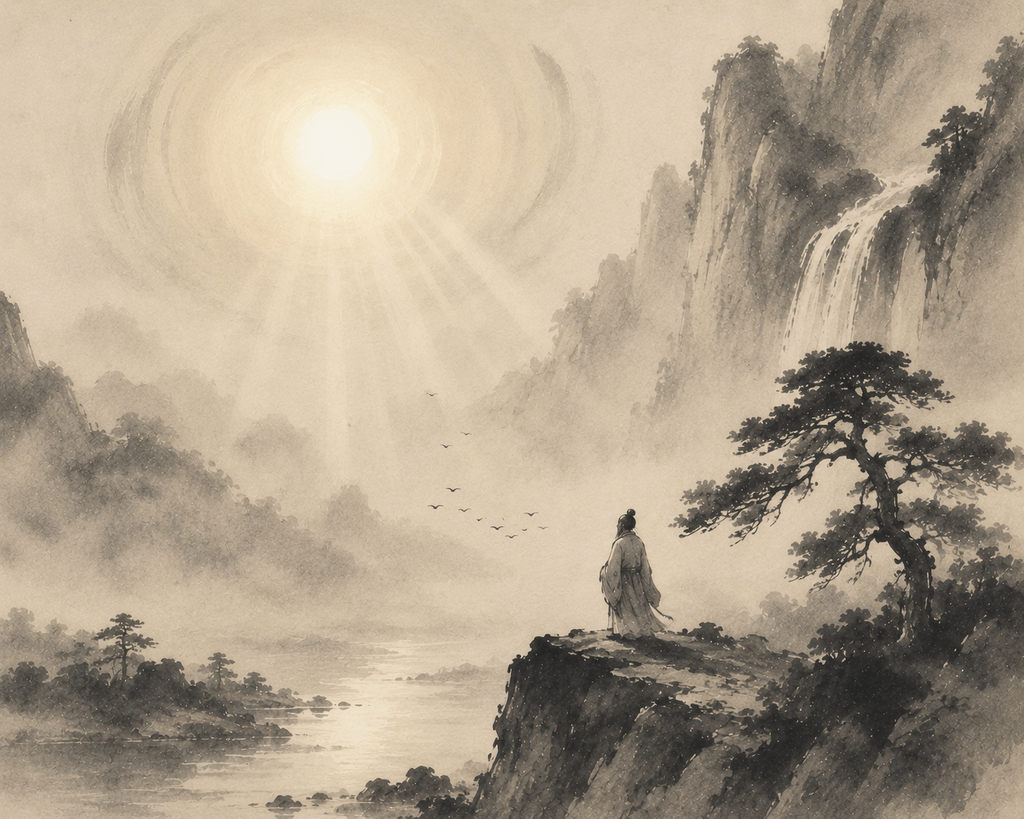
The good traveler
Leaves no tracks or trace behind.
The good speaker
Makes no flaws to be reproached.
The good counter
Uses no tally sheets or counters.
The good closer
Uses no bolts or bars,
Yet the door cannot be opened.
The good binder
Uses no rope or knot,
Yet the binding cannot be undone.
Therefore, the Sage
Is always good at saving people,
Forsaking no one.
He is always good
At saving things,
Wasting nothing.
This is called
Illumination upon illumination.
Therefore, good men
Are the teachers of bad men,
And bad men
Are the raw material for the good.
One who does not value the teacher
Or cherish the raw material,
Though they may be learned,
Is greatly deluded.
This is an essential secret.
NOTES
The first stanza consists of double metaphors for the sage who: a.) finds tranquility in living frugally, putting all things and people to their best use, stopping the senses and stilling the mind, and b.) teaches without the entrapments of organized religion.
“Illumination upon illumination”: This line might be translated as “This is called double illumination.”
28. Purity
Know the male,
Yet keep to the female,
And be the valley
For everyone.
Being the valley for everyone,
Your timeless virtue
Will not leave you.
When your timeless virtue
Does not leave you,
You will return
To the state of the newborn infant.
Know the light,
Yet keep to the darkness,
And be the model
For everyone.
Being the model for everyone,
Your timeless virtue
Will never falter.
When your timeless virtue
Never falters,
You will return
To the state of the unlimited.
Know the glory,
Yet keep to the humble,
And be the valley
For everyone.
Being the valley for everyone,
Your timeless virtue
Is complete.
When your timeless virtue
Is complete,
You will return
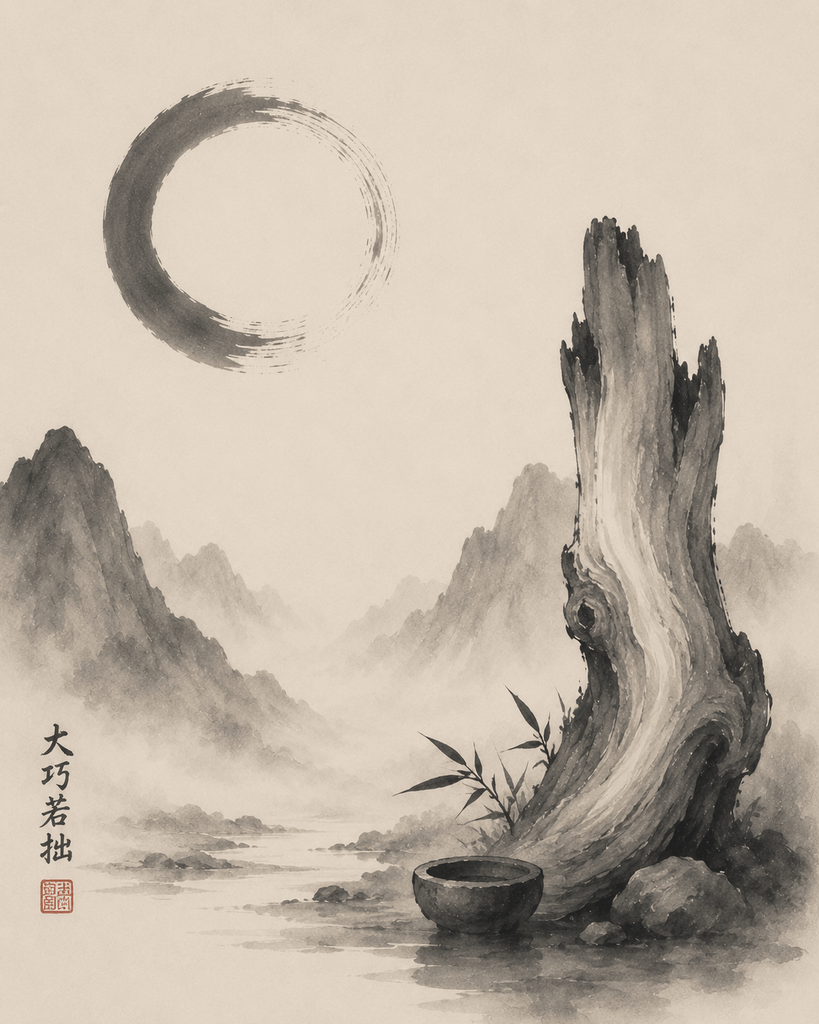
To the state of uncarved wood.
When uncarved wood is cut up,
It is made into vessels;
When the Sage is used,
He is made into the Head of Officials.
Truly, great carving
Avoids corrupting original purity.
NOTES
The “valley” of the first stanza is literally, “ravine,” a very small valley usually created by a stream of water. The “valley” of the second stanza is literally “valley.”
“Corrupting”: Literally, “splitting up,” which implies injury to the original purity of the wood, or metaphorically, in this case, of the sage. “Original purity” is not translated from the text, but it is inserted here as it belongs by implication.
29. Sacred Vessel
As for those who desire
To take over the world
And regulate it,
I observe
That they cannot succeed.
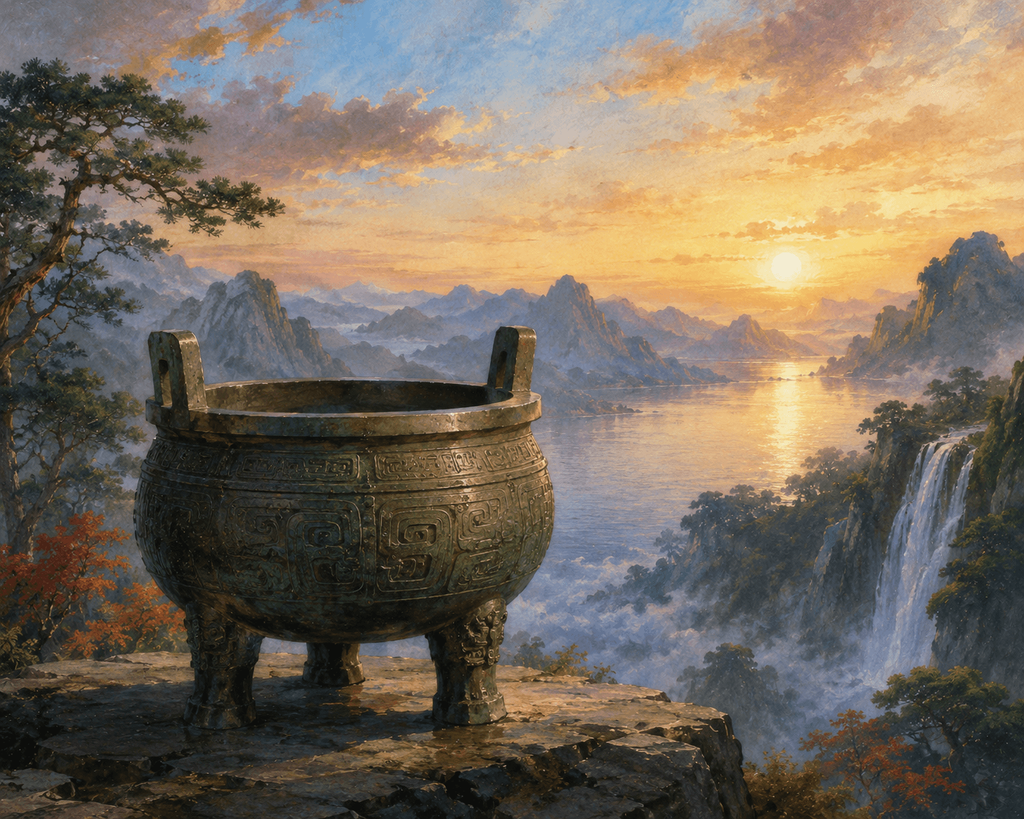
The world is a sacred vessel
Which cannot be tampered with.
Those who tamper with it
Harm it;
Those who grasp at it
Lose it.
As for things,
Sometimes they lead,
Sometimes they follow;
Sometimes they are hot,
Sometimes they blow cold;
Sometimes they are strong,
Sometimes they are weak;
Sometimes they rise up,
Sometimes they fall down.
Therefore the Sage
Avoids extremes,
Excesses and extravagances.
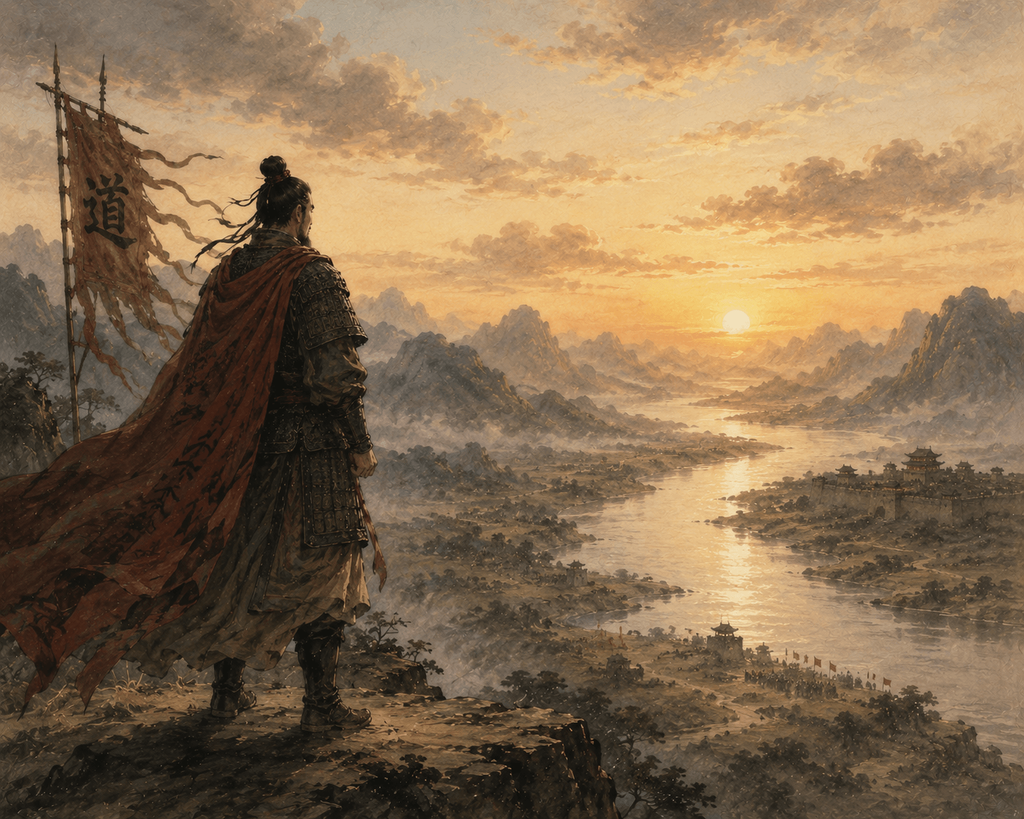
30. The Good General
One who assists their ruler
With the Way
Does not use force of arms
To conquer the world.
The use of force
Tends to rebound.
In the places
Where armies are stationed,
Briars and thorns will grow.
Great wars
Are always followed
By scarcity and famine.
The good general
Achieves his purpose
And stops.
He does not take advantage
Of the opportunity
To seize power for himself.
He accomplishes his purpose
But does not become proud;
He accomplishes his purpose
But does not praise his own deeds;
He accomplishes his purpose
But does not brag;
He accomplishes his purpose,
But only because it is unavoidable,
So he does not dwell on it.
This is called
Accomplishing one’s purpose
Without violence.
After things reach their prime,
They grow old;
This is not the Way.
What is not the Way
Will soon perish.
31. Killing
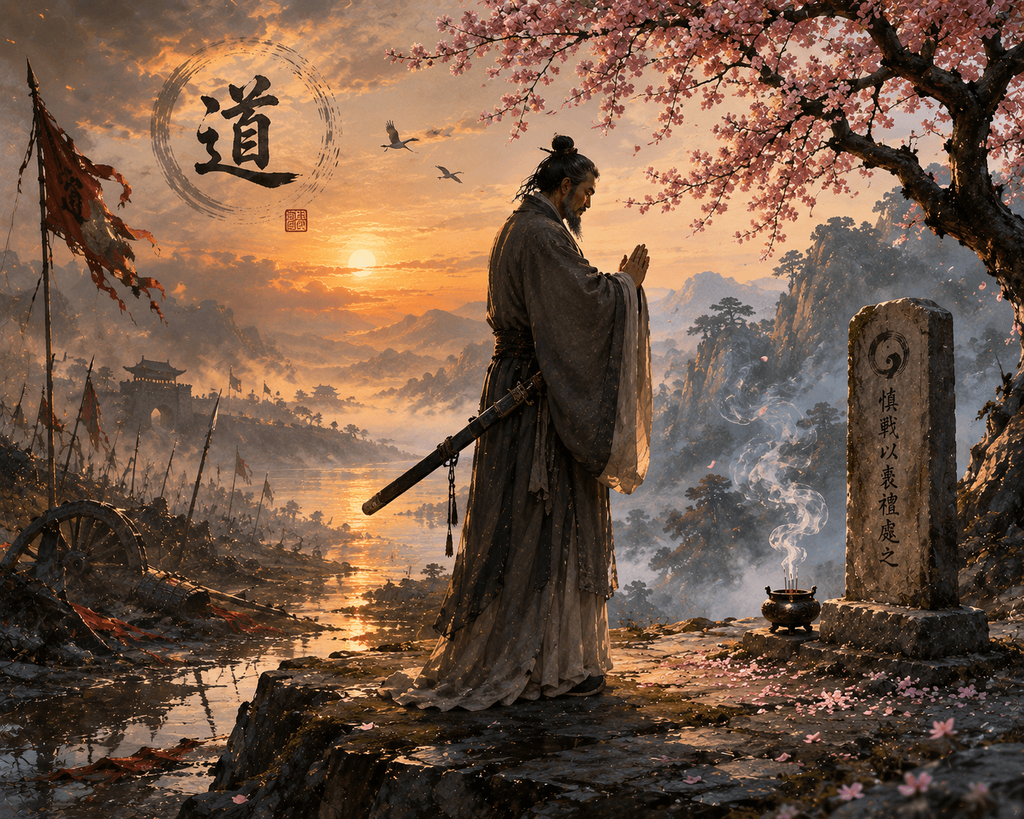
Weapons are instruments of ill omen.
They are hateful to all;
Thus, the one with the Way
Does not abide with them.
When the gentleman is at home,
He regards the left hand
The position of honor.
When at war,
The right hand
Is the position of honor.
Weapons are instruments
Of ill omen.
Therefore, weapons are not
The instruments of the gentleman.
He uses them
Only when it is unavoidable,
With calm and constraint.
Used to defeat others,
They are not to be regarded
As beautiful.
To find beauty in them
Is to delight
In the killing of men.
One who delights
In the killing of men
Cannot accomplish one’s will
In the world of men.
Therefore, on auspicious occasions
The position of honor
Is on the left,
But in mourning,
The position of honor
Is at the right.
Therefore, the lieutenant general
Stands on the left,
The supreme general
Stands on the right.
This means they arrange themselves
In war as they would
At a funeral.
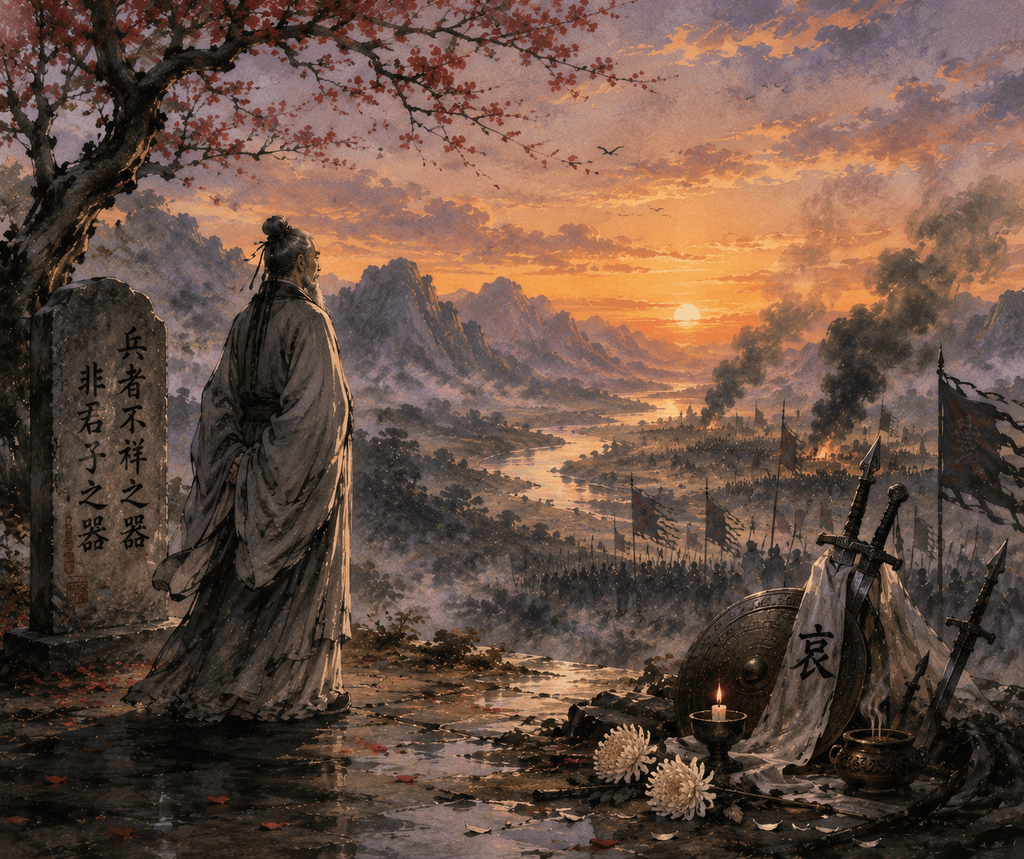
At the killing of a multitude
We mourn with sorrow and grief.
A victory in battle
We treat in ceremony
As a funeral.
32. Knowing to Stop
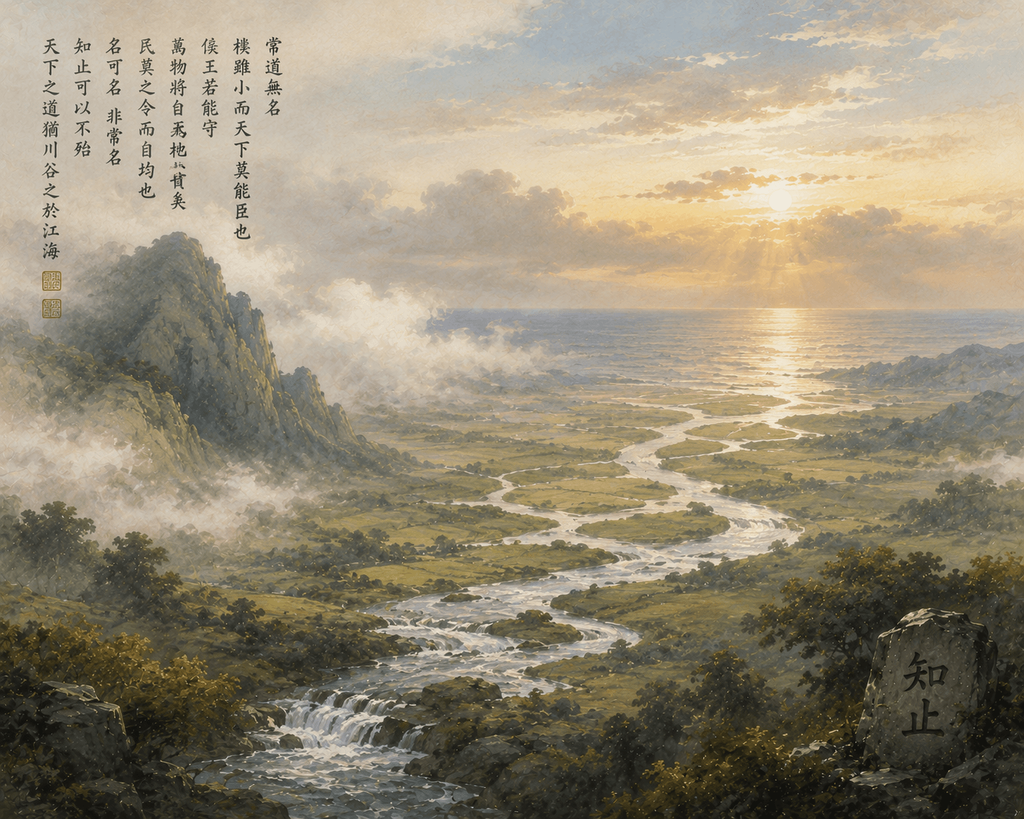
The constant Way
Has no name.
Though, like uncarved wood,
Its simplicity makes it seem insignificant,
None in the world
Can master it.
If nobles and kings
Could keep to it,
All would naturally
Submit to them.
Heaven and Earth unite
To send down sweet dew:
Naturally, it falls equally
On all things,
With no one ordering it
To do so.
As soon as rules and regulations
Are carved out of it,
Names arise.
When names appear,
You should know
It is time to stop.
By knowing when to stop,
You can preserve yourself
From danger.
The Way in the world
May be likened
To valley streams and rivers
Running into the sea.
33. Knowing Oneself
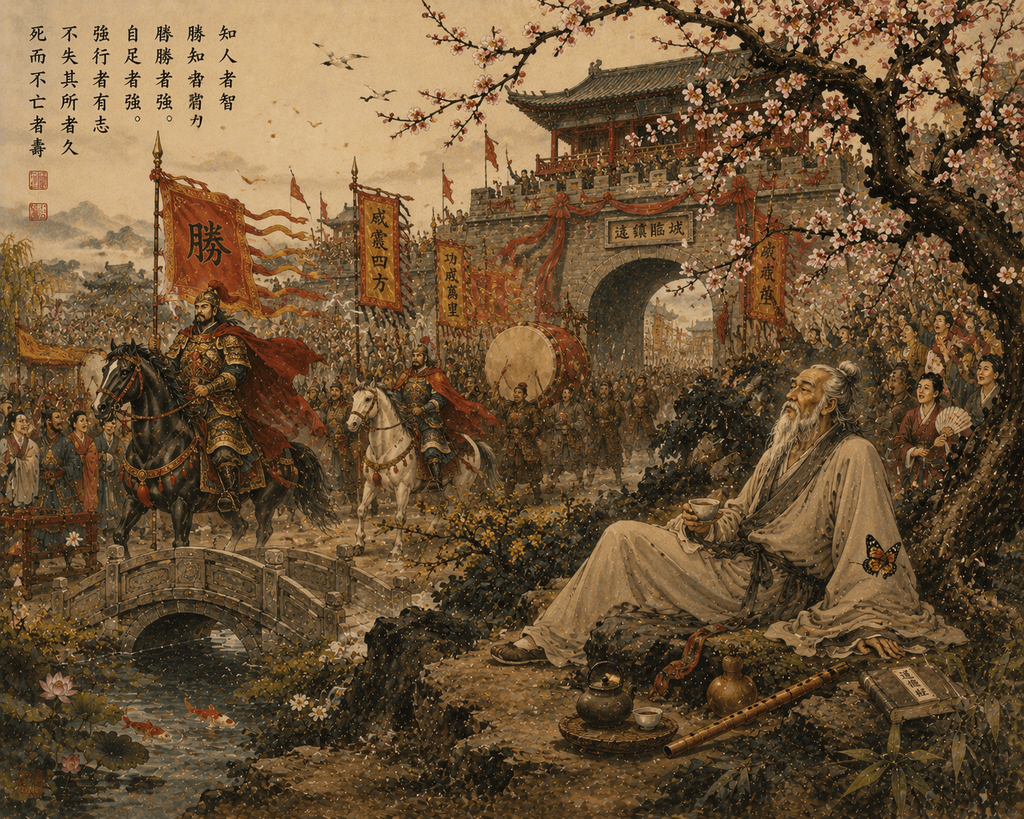
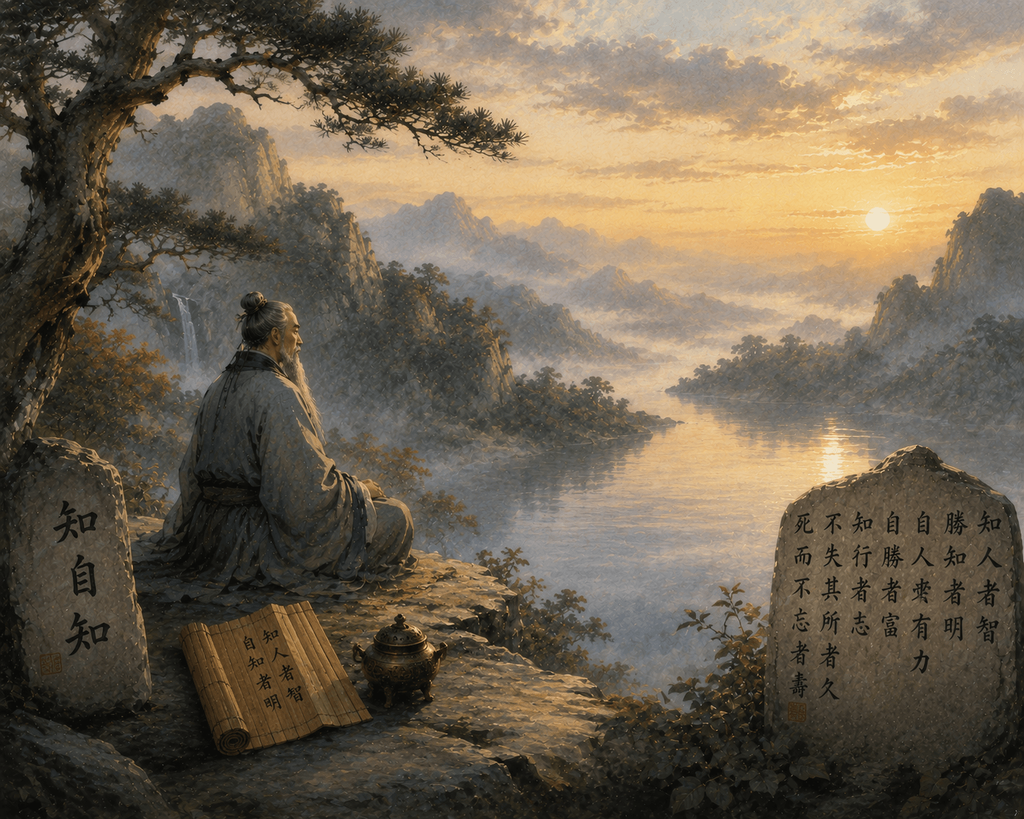
To understand others
Is to be knowledgeable;
To understand oneself
Is to be wise.
To master others
Is to be powerful;
To master oneself
Is to be truly strong.
To know when one has enough
Is to be wealthy.
To endure
Is to have a strong will.
To not lose one’s true place
Is to last long.
To die
And yet not to be forgotten…
That is true long life.
34. Aimless
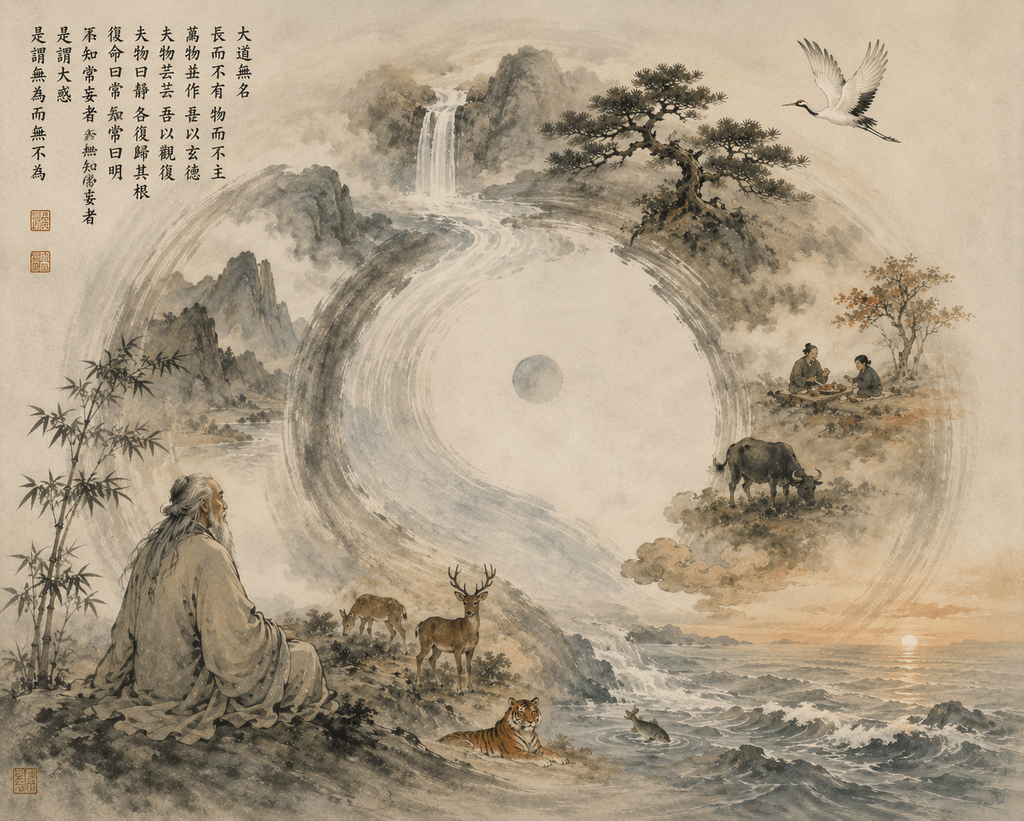
The Great Way
Flows eternally.
It can go
Left or right.
All depend on it for life,
And it denies none.
It accomplishes its tasks
And takes no credit.
It feeds and clothes all,
But does not rule them.
Without desires,
Aimless,
It may be labeled
As insignificant.
All things return to it,
But it does not rule them;
It may be labeled
As great.
Likewise, the Sage
Has no desire to be great,
And therefore greatness
May be achieved.
35. Bland
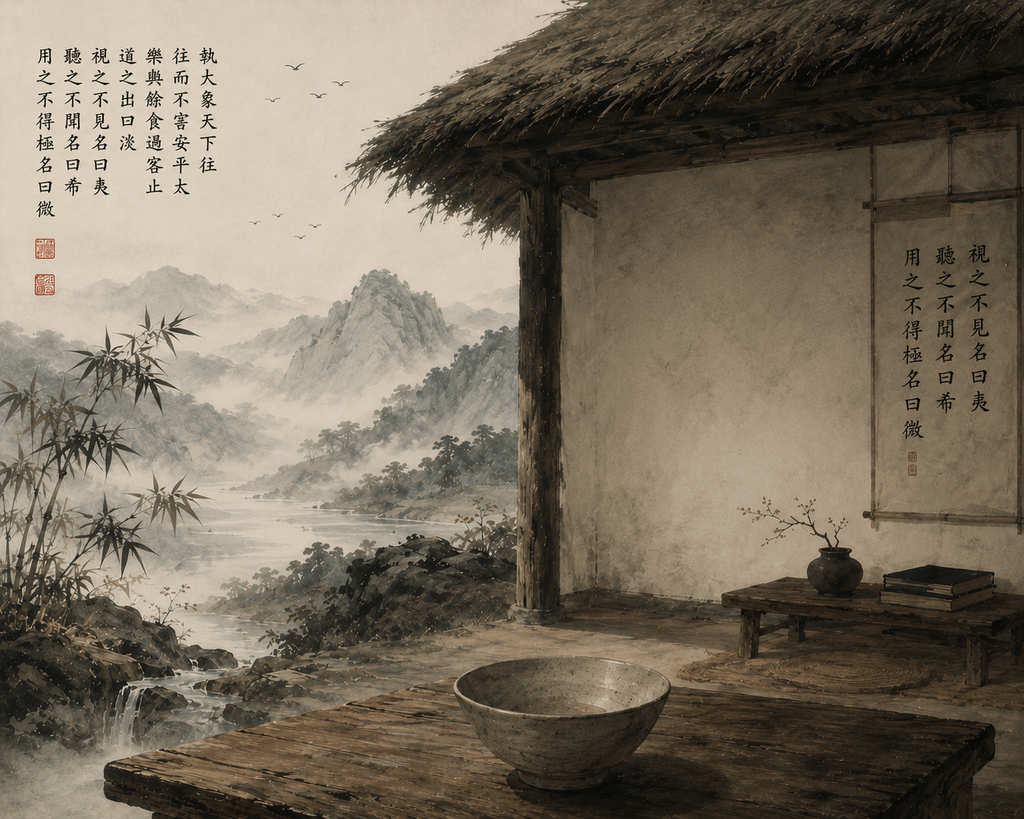
Hold on to the Great Symbol
And the world will come.
The world will come
And suffer no harm,
But rather, find
Health, peace and tranquility.
For music and delicacies
Passers-by will stop,
But the words of the Dao
Are bland and tasteless.
Looked at,
It is only invisible.
Listened to,
It is only silent.
Used,
It is inexhaustible.
NOTES
A note on Daoist style:
Daoist art does not crystallize into the stylized efforts of Zen Buddhism. Daoist art is less formal and rigid. The Daoist type of flower is the subdued chrysanthemum, and includes peonies, iris, winter plum, lotus and varieties of flowering shrubs. Favorite Daoist trees include cedars, pines, bamboo, maple, and several kinds of fruit trees. Daoist birds are the phoenix, heron, stork and crane, mandarin duck, and pigeon. Daoist animals are the dragon, unicorn, tiger, fox, horse, deer, badger, frog, prawn, fish, and butterfly. Daoists traditionally enjoy the lute, flute, poetry and sword play.
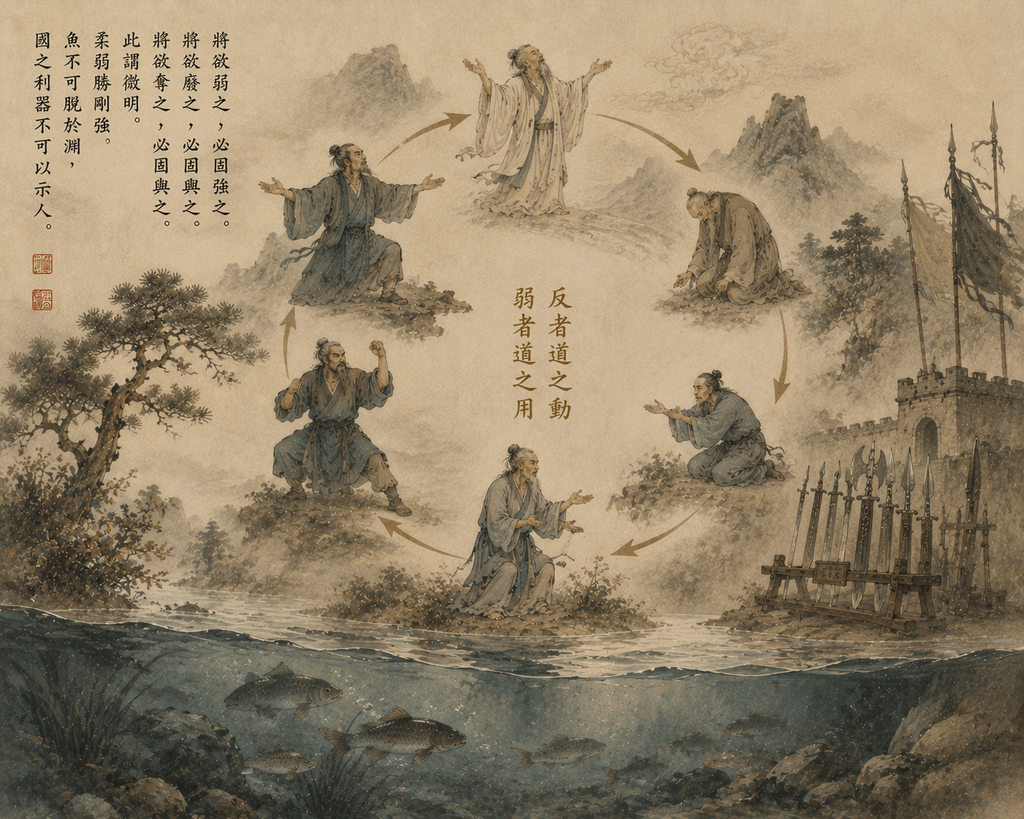
36. Subtle Insight
What is to be diminished
Must first be expanded.
What is to be weakened
Must first be strengthened.
What is to be cast down
Must first be exalted.
What is to be deprived
Must first be endowed.
This is called
Subtle insight.
The soft and weak
Conquers the hard and strong.
Fish should not be taken out
From deep water;
A country’s sharp weapons
Should not be displayed in public.
NOTES
This chapter is usually interpreted as a set of instructions for ruining a man. It has also been interpreted as a metaphorical statement, its meaning being somewhat along the same lines as that of Chapter Two, i.e., the coproduction of opposites. However, the present chapter recognizes causal relationships whereas Chapter Two, significantly, does not.
As a martial strategy the message is that one must appear to align oneself with one’s opponent before one can do the most damage to his career or reputation. One must give small gifts or make small investments in the competition before one can gain their trust and put oneself in a position to take advantage. The final stanza is to be read both literally and metaphorically, as pertaining to one who is soft and weak keeping their “weapons” or competitive strategies secret.
The chapter may also simply be describing the Daoist doctrine of Dao as the source of life, where Dao is the deep water of life-force (qi) and sharp weapons are instruments of ill omen or death. The soft and weak, or young and green, are close to the source of life and thus full of life-force, whereas the strong and hard are growing old and nearer to death.
One should study the strategies of Chuko Liang in The Romance of the Three Kingdoms. He was a Daoist sage and legendary founder of Wudang Shan martial and magical Daoism.
37. Peace
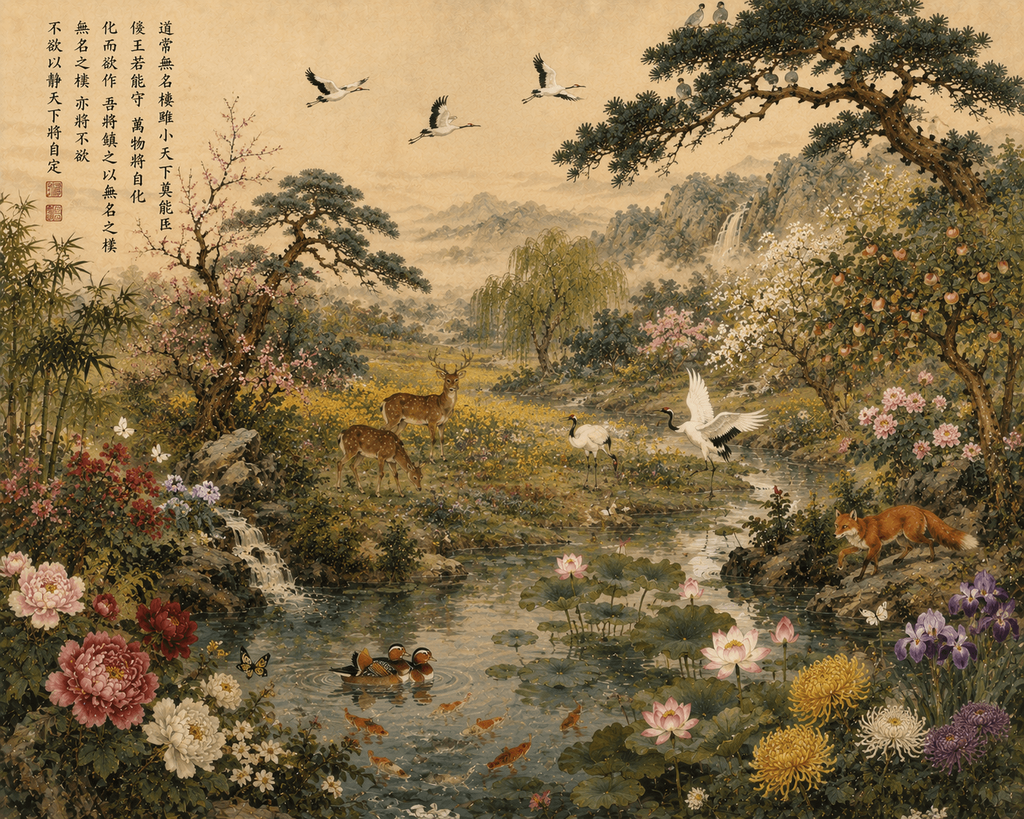
The nameless Way
Always manifests wuwei,
Yet nothing
Is left undone.
If nobles and kings
Could keep to it,
Everything would reform
On its own.
Once reformed,
When desires stir,
I would subdue them
With the simplicity
Of the nameless.
The simplicity of the nameless
Is without desire.
Desireless,
Aimless,
It is tranquil,
And Heaven and Earth
Are at peace.