
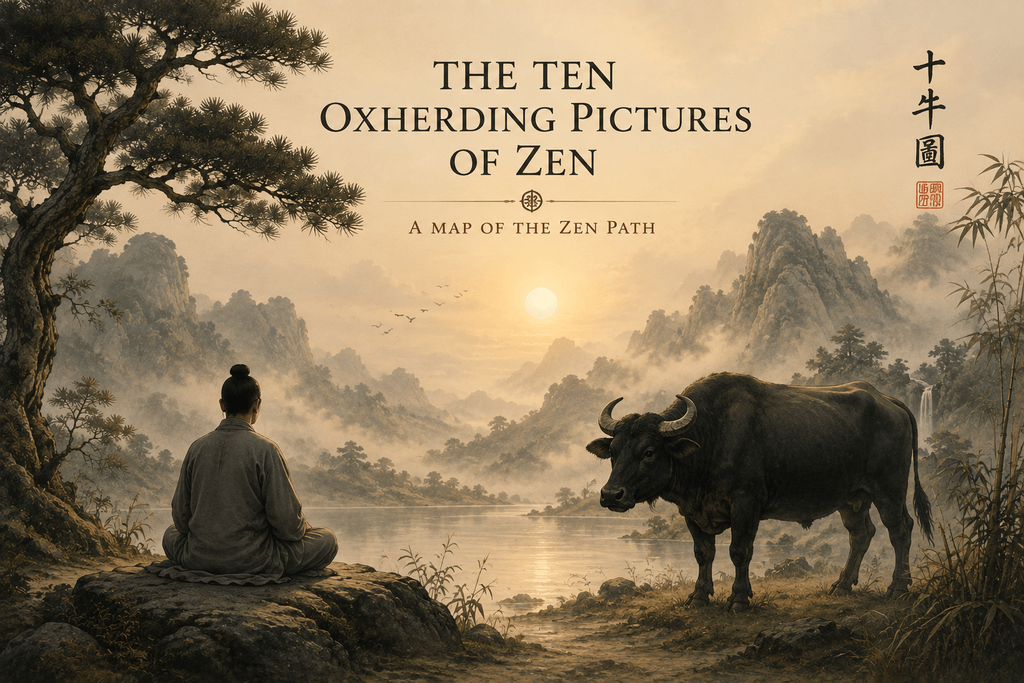
The Ten Oxherding Pictures of Zen
A Map of the Zen Path
The Ten Oxherding Pictures, or Ten Bulls, are one of the most enduring visual expressions of the Zen path. Developed in medieval China from earlier Buddhist oxherding traditions, the best-known version is associated with the twelfth-century Chan master Kuoan Shiyuan (廓庵師遠). Each picture is accompanied traditionally by a verse and commentary describing a stage in the practitioner’s investigation of mind and reality.
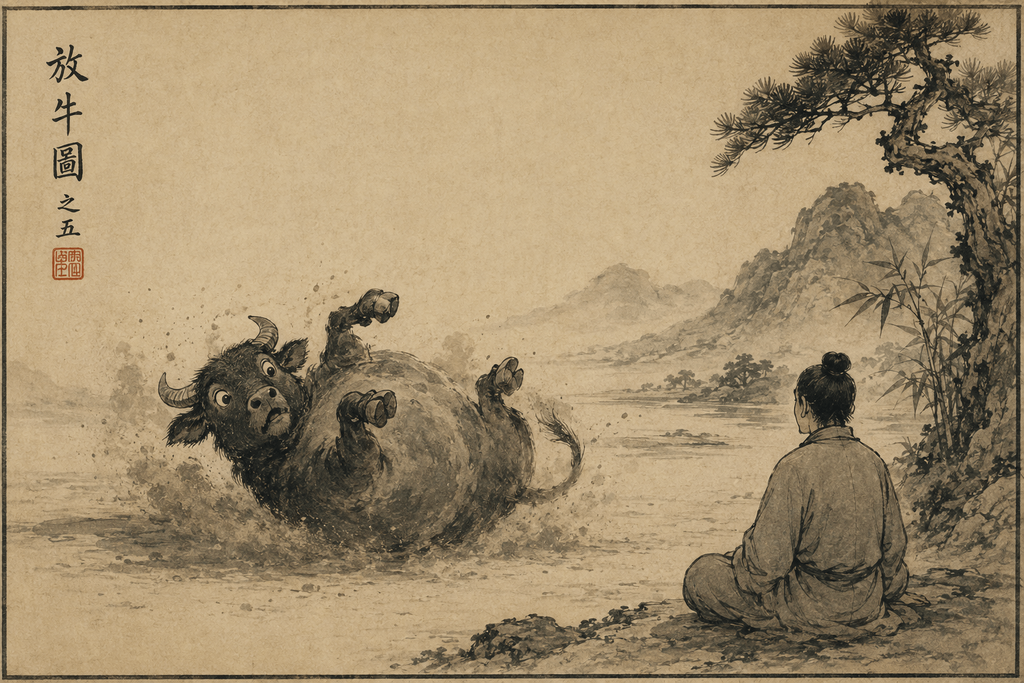
The ox represents what is sought but has never truly been absent: one’s original nature, or Buddha-nature. The oxherder represents the practitioner. At first, the seeker wanders through confusion looking for something believed to be lost. Footprints appear, the ox is glimpsed, caught, and gradually tamed. Eventually the struggle between seeker and sought disappears altogether.
The sequence does not end with private enlightenment. After both ox and self have been forgotten, the practitioner encounters the natural world simply as it is and finally returns to ordinary human society. The tenth picture, Entering the Marketplace with Helping Hands, portrays awakening expressed through everyday life, compassion, fellowship, and service to others.
The ten pictures can therefore be read as a map of contemplative development: searching, discovering, seeing, practicing, cultivating, harmonizing, relinquishing, emptying, returning, and serving. Yet Zen does not regard these as rigid stages through which everyone must advance in exactly the same order. They are images through which the transformations of practice become easier to recognize.
For Science Abbey, the Oxherding Pictures are particularly valuable because they portray contemplation not as an escape from the world but as a movement through self-investigation and beyond attachment to the illusion of a separate self. The journey begins with a person searching for truth and ends with that person returning to the human community, where insight finds its fullest expression in ordinary life.
The Ten Stages of the Journey
- Searching: Looking for the lost ox, representing the initial human search for meaning.
- Footprints: Finding traces of the ox through teachings and intellect.
- Seeing the Ox: Catching a first direct glimpse of the true nature.
- Catching and Taming: Struggling with and subduing ego, thoughts, and old habits.
- Riding Home: Moving in natural harmony with the mind and reality.
- Transcending Both: Reaching a state where ego, seeker, and object vanish into emptiness.
- Returning to the Source: Realizing that the truth was never truly lost.
- Entering the Marketplace: Coming back to ordinary daily life with compassion and wisdom
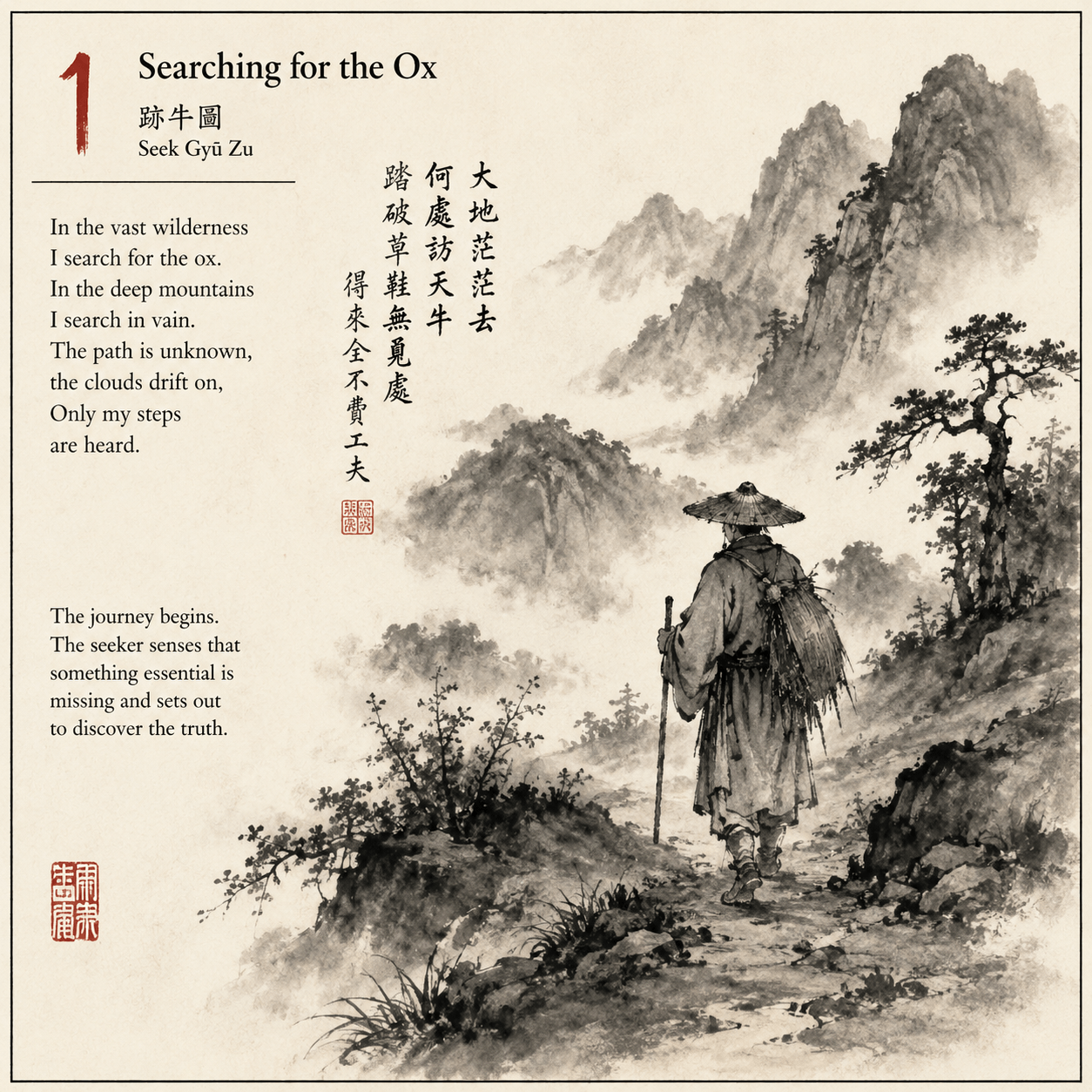
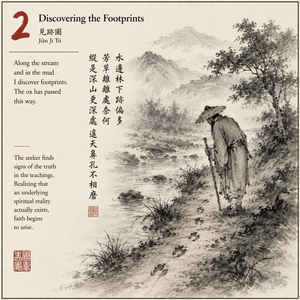
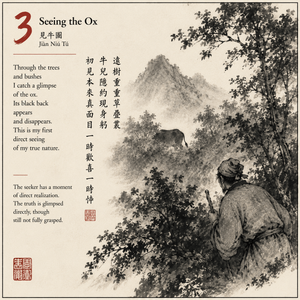
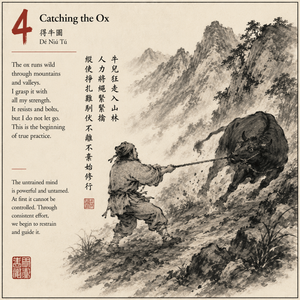
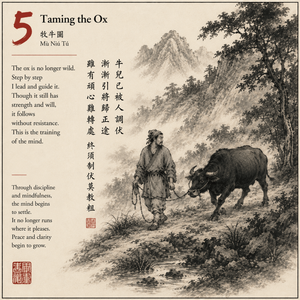
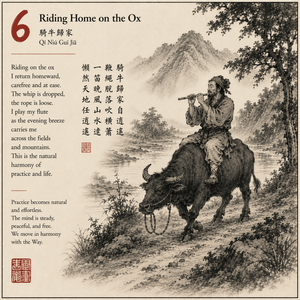
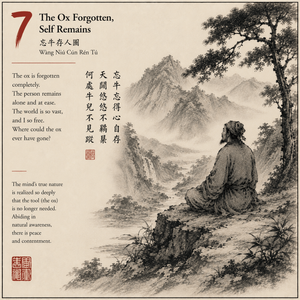
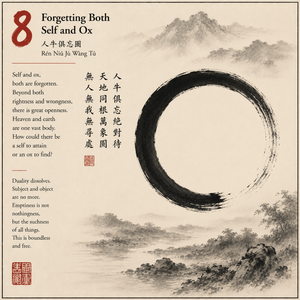
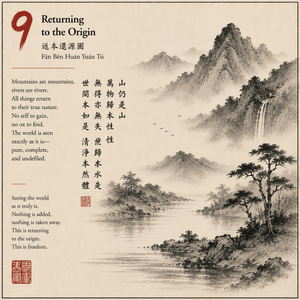
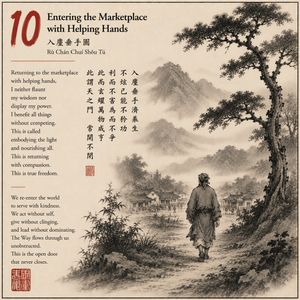
The Ten Oxherding Pictures portray the Zen path as a journey that ultimately leads back to where it began. The practitioner searches for the ox, discovers its traces, encounters it directly, struggles with it, and gradually learns to move in harmony with it. Eventually even the distinction between the seeker and what is sought disappears.
Yet the journey does not end in emptiness or withdrawal. Mountains are again mountains, rivers flow, trees grow, and ordinary life continues. The practitioner returns to the marketplace and participates fully in the human world, no longer searching for awakening as something separate from life itself.
This final return expresses an essential insight of Zen. Practice is not ultimately an escape from ordinary existence, but a transformation of how ordinary existence is experienced. Wisdom finds its completion in everyday conduct—in awareness, compassion, humor, work, relationships, and service to others.
The ox was never truly lost. The journey was learning to see what had always been here.