

Table of Contents
- Introduction
Defines museology as a scholarly and professional field, outlines its scope, and sets the objectives of the guide for advanced students and practitioners. - Scope of Museum Sciences
Describes the breadth of museology, its interdisciplinary foundations, and the diverse institutional contexts in which museum professionals operate. - Types of Institutions
Examines the range of museum and heritage settings, from traditional museums to living and digital museums, noting overlaps and hybrid models. - Core Functions of Curators and Museum Professionals
Explores the interconnected responsibilities of curation, conservation, public engagement, administration, and collections management. - Historical Evolution of Museology
Traces the development of museums from early cabinets of curiosity through the Enlightenment, anthropological influence, professionalization, and the shift to audience-centered practice. - Critical Perspectives and Ethical Reckoning
Analyzes the colonial legacies of museums, current decolonization and Indigenization efforts, and the move toward collaborative, socially responsible practice. - Significance of Museums & Heritage Institutions
Discusses museums’ roles in preserving heritage, educating the public, shaping identity, fostering dialogue, and contributing to economic and community life. - Contemporary Museology – Model Curricula
Reviews exemplary museum studies programs, highlighting the integration of theory, practice, ethics, and specialization in professional training. - Methodological Approaches in Modern Museology
Details the key methods—scientific, interpretive, technological, and critical—used in contemporary museum practice to ensure relevance and impact. - Conclusion
Synthesizes the field’s theoretical and practical dimensions, underscoring the balance between preservation, engagement, and adaptability in professional practice.
Appendix: The President’s House – A Case Study in the Living Museum
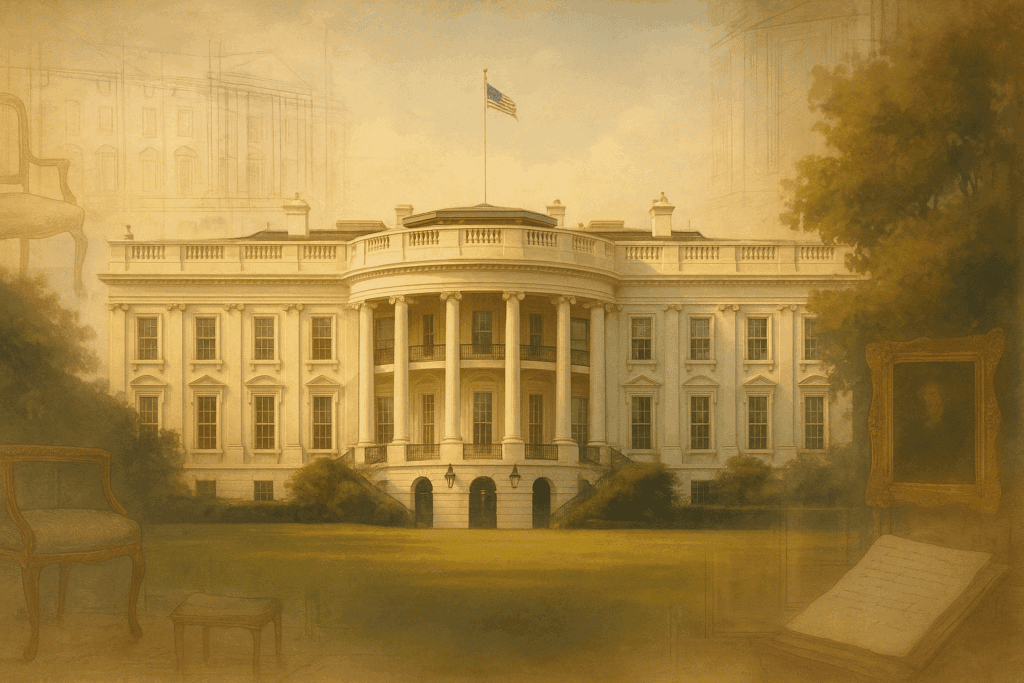
Applies museological theory and methodology to the unique context of the White House, exploring its dual role as an active residence and accredited historic house museum. Based on the author’s 2004 visit to the White House and interview with the curator, William Allman.
Bibliography
Lists primary and secondary sources, including scholarly works, institutional publications, and interviews, supporting the research and case study.
1. Introduction
Museology—also known as museum studies—is the scholarly and professional field dedicated to the study of museums, their histories, functions, and evolving roles in society. It is at once theoretical and applied, spanning disciplines as diverse as history, anthropology, conservation science, education, design, management, and digital technology. Its scope encompasses not only the traditional museum but also cultural centres, heritage sites, historic landmarks, memorials, art galleries, and even the emerging realms of digital and virtual curation.
At the heart of museology lies the recognition that museums are not neutral repositories of objects. They are cultural institutions deeply embedded in the social, political, and economic contexts of their time. They collect, interpret, and display material culture in ways that shape public understanding of history, science, art, and identity. They also bear ethical responsibilities: to preserve the integrity of their collections, to represent diverse perspectives with accuracy and respect, and to engage audiences as active participants in cultural life.
In the twenty-first century, the field has expanded beyond the care and display of objects to encompass critical inquiry into power, representation, and social impact. This includes confronting the colonial legacies of museum collections, pursuing repatriation and restorative justice, and designing spaces for dialogue across cultural and political divides. Such developments place museology at the intersection of scholarship, public service, and activism.
This article aims to provide advanced students and professionals with an in-depth guide to the field. We will explore its theoretical foundations, historical evolution, ethical debates, and professional practices. We will survey modern methodologies, model curricula from leading institutions, and the sciences that underpin the work of museums today. The discussion will culminate in a case study—the White House as a “living museum”—to illustrate how museological principles can be applied to a national heritage site that is both historic and in active use.
2. Scope of Museum Sciences
Museum sciences—collectively referred to as museology—are concerned with the theory, history, and practice of institutions that collect, preserve, interpret, and present material culture for the benefit of society. While the term “museum” traditionally conjures images of marble halls filled with art or natural history specimens, contemporary museology recognizes a far broader landscape.
Beyond the Traditional Museum
Modern curators and museum professionals operate in an array of settings, including but not limited to:
- Traditional museums — art, natural history, science, ethnography, and specialized collections.
- Heritage sites and historic landmarks — preserved locations of cultural, political, or architectural significance.
- Cultural centres — institutions fostering community identity through exhibitions, performances, and educational programming.
- Memorials and commemorative sites — spaces of remembrance, reflection, and historical interpretation.
- Art galleries — both public and private, encompassing contemporary art spaces and commercial galleries.
- Living museums — immersive, often interactive environments where history is reenacted or traditional practices are demonstrated.
- Digital museums and virtual archives — entirely online platforms that curate collections for a global audience.
Interdisciplinary Foundations
Museology draws on multiple academic and professional disciplines, making it inherently interdisciplinary:
- Humanities — history, art history, archaeology, anthropology, cultural studies, philosophy, and ethics.
- Sciences — conservation science, materials analysis, climatology for collections care, and digital preservation technologies.
- Social sciences — sociology, psychology, education, communications, and visitor studies.
- Management and policy — organizational theory, public administration, legal studies, and cultural policy.
- Design and technology — exhibition design, architectural planning, digital media, and user experience design.
Expanding Public Roles
Today, museum sciences encompass not only the care of collections but also the design of inclusive narratives, facilitation of public discourse, and provision of lifelong learning opportunities. Institutions are increasingly measured not by the size of their collections but by the depth of their engagement with diverse audiences, their adaptability to new technologies, and their contributions to cultural diplomacy and social justice.
By situating museums within this expanded scope, museology positions itself as both a custodian of heritage and a dynamic participant in contemporary cultural life.
Here’s the draft for Section 3: Types of Institutions in a way that follows naturally from the scope section and adds depth for an advanced academic and professional readership.
3. Types of Institutions
While “museum” remains the central term in museology, the diversity of institutions encompassed by the field reflects the varied ways human societies choose to preserve and interpret their heritage. Each type of institution operates under distinct mandates, audiences, and regulatory frameworks, yet all share core museological principles of curation, preservation, and interpretation.
Traditional Museums
Institutions that collect, preserve, and exhibit tangible heritage—artworks, artifacts, specimens—across categories such as:
- Art museums — e.g., the Metropolitan Museum of Art, Louvre, Uffizi.
- Natural history museums — e.g., Smithsonian National Museum of Natural History, Natural History Museum London.
- Science and technology museums — e.g., Deutsches Museum, Science Museum London.
- Specialized collections — dedicated to a single theme, material, or figure (e.g., the Picasso Museum).
Historic House Museums
Private residences converted into public museums to preserve architecture, furnishings, and historical narratives in situ. These sites often blend preservation with storytelling, offering an intimate view of specific eras or personalities (e.g., Mount Vernon, The Jane Austen House).
Heritage Sites and Historic Landmarks
These include archaeological sites, battlefields, sacred spaces, and architecturally significant structures recognized for their cultural, historical, or national importance. They may be inscribed as UNESCO World Heritage Sites, protected under national heritage laws, or managed by NGOs.
Cultural Centres
Community-oriented institutions that serve as hubs for arts, heritage, and intercultural exchange. They often combine exhibition spaces with performance venues, classrooms, and workshops, positioning themselves as living, participatory environments.
Memorials and Commemorative Sites
Spaces designed to preserve collective memory and offer a place for reflection and education, often related to conflict, tragedy, or human rights milestones (e.g., Hiroshima Peace Memorial, United States Holocaust Memorial Museum).
Art Galleries
While sharing exhibition functions with museums, galleries often operate on a commercial model or as platforms for contemporary artists. Public and university galleries may serve a purely educational mission.
Living Museums
Immersive environments—often open-air—where historical settings and activities are recreated using costumed interpreters, traditional crafts, and working technologies. Examples include Colonial Williamsburg and Skansen in Sweden.
Digital and Virtual Museums
Entirely online institutions or hybrid platforms that use high-resolution imaging, virtual tours, and databases to make collections globally accessible. They raise new museological questions about authenticity, access, and audience engagement.
Analytical Note:
These categories are not mutually exclusive. Many institutions operate at the intersection of these types—e.g., a historic house that functions as a heritage site, art gallery, and digital archive. For professionals, understanding these overlaps is critical to developing coherent institutional strategies and engaging with diverse funding and governance models.
4. Core Functions of Curators and Museum Professionals
Museums and related institutions rely on a spectrum of professional competencies. The curator—though central—is one role among many in a complex organizational ecosystem that includes conservators, educators, archivists, registrars, exhibition designers, and administrators. At advanced and professional levels, understanding the interconnectedness of these functions is essential for effective leadership and institutional stewardship.
Curating
Curating is both an intellectual and creative act, involving:
- Acquisition — identifying and securing objects or collections that align with the institution’s mission and collection policy.
- Selection and Contextualization — determining which items are exhibited, how they are grouped, and what narratives they support.
- Interpretive Framing — crafting the thematic, historical, or conceptual framework through which audiences engage with objects.
- Exhibition Development — collaborating with designers, educators, and conservators to realize the interpretive vision.
At the highest level, curators act as cultural mediators, balancing scholarly rigor with public accessibility, and often addressing sensitive issues of representation and ethics.
Preservation and Conservation
Conservation encompasses both preventive measures—such as environmental control, integrated pest management, and disaster preparedness—and interventive treatments for stabilization or restoration.
- Conservation Science integrates chemistry, materials science, and imaging technologies to analyze and preserve objects.
- Ethics are central: interventions must be reversible where possible, documented thoroughly, and justified according to professional standards.
Public Programming and Education
Museums are not static repositories but active sites of learning and engagement. Public programming includes:
- Interpretive Programs — guided tours, lectures, and thematic workshops.
- Formal Education — curriculum-linked school visits, academic partnerships, and internships.
- Informal Learning — community events, maker spaces, and interactive exhibits.
The educator’s role is to design inclusive, multi-sensory experiences that reach diverse audiences, including those historically marginalized or excluded from cultural institutions.
Organizational and Administrative Structures
Museums function within distinct governance models—national, municipal, university-affiliated, private nonprofit, or commercial—and are subject to varied regulatory frameworks. Key elements include:
- Governance and Policy — alignment with mission statements, strategic planning, and adherence to codes of ethics (e.g., ICOM Code of Ethics for Museums).
- Funding and Development — public grants, private philanthropy, earned income, sponsorship.
- Compliance — legal obligations related to collection ownership, cultural property, accessibility, labor, and health and safety.
Collections Management
Collections management ensures that objects are properly documented, cared for, and made accessible for research and exhibition.
- Cataloguing and Metadata — maintaining accurate, searchable records (increasingly integrated into public-facing digital databases).
- Provenance Research — investigating the ownership history of objects, particularly with respect to wartime looting and colonial acquisition.
- Loans and Traveling Exhibitions — negotiating agreements, insurance, packing, and transport in compliance with international standards.
- Repatriation Protocols — returning cultural property to rightful communities or nations in line with ethical commitments and legal mandates.
Professional Insight:
In contemporary museology, the boundaries between these functions are porous. For example, a curator engaged in a collaborative exhibition with an Indigenous community must integrate curatorial, educational, administrative, and collections management skills while adhering to both institutional policy and community protocols.
5. Historical Evolution of Museology
The roots of museology lie in the enduring human impulse to collect, classify, and interpret the material traces of our past. While the professional discipline in its present form is relatively recent, its origins can be traced to early modern Europe’s cabinets of curiosity—Wunderkammern—private assemblages of rare natural and cultural objects that were as much symbols of erudition and prestige as they were collections for study. These early cabinets lacked the interpretive frameworks and public mission of modern museums, but they foreshadowed the fusion of scholarship, preservation, and display that would define the field.
The Enlightenment, with its faith in reason, classification, and public education, marked a decisive shift. Institutions such as the British Museum, founded in 1753, and the Louvre, opened to the public in 1793, established the museum as a civic space dedicated to the systematic arrangement of knowledge. For the first time, the general public could encounter objects previously reserved for private or elite audiences, and the idea of the museum as a cultural commons began to take hold.
By the nineteenth century, anthropology emerged as a formative influence on museology, shaping how collections were organized and interpreted. Anthropological museums like the Pitt Rivers Museum at Oxford sought to arrange artifacts according to evolutionary or typological schemes, reflecting the scientific ambitions and cultural assumptions of the era. While these institutions advanced scholarly understanding, they also carried the imprint of colonial ideologies, framing non-Western cultures through the lens of European authority.
The twentieth century brought professionalization. The founding of the International Council of Museums (ICOM) in 1946 signaled a new era of ethical standards, international collaboration, and the recognition of museology as an academic discipline. Specialized fields such as conservation science, museum education, and exhibition design developed, each with its own methodologies and professional associations. At the same time, the theoretical dimension of museology deepened, with scholars interrogating the museum’s role as a cultural mediator and questioning its claims to neutrality.
In the latter half of the century, the field shifted from an object-centered to an audience-centered orientation. Curators and educators sought to make museums more interactive, inclusive, and accessible, broadening narratives to include multiple perspectives and embracing the concept of the museum as a forum rather than a temple. In the twenty-first century, museology has been transformed by digital technologies, global collaboration, and an intensified focus on social responsibility.
Today, it is defined by its capacity to balance the preservation of heritage with the demands of contemporary relevance, navigating the complex intersections of history, politics, and community engagement.
6. Critical Perspectives and Ethical Reckoning
Museology’s evolution has brought with it a reckoning with its own history, particularly the legacies of imperialism and colonialism that shaped many of the world’s most renowned collections. Throughout the eighteenth and nineteenth centuries, objects were acquired—often through conquest, coercion, or unequal exchange—and relocated from their cultures of origin to the capitals of imperial powers. In many cases, the narratives constructed around these collections exoticized non-Western peoples, reinforcing hierarchies of civilization that placed the West at the center and “the other” at the margins.
Addressing this inheritance has become one of the defining challenges of contemporary museology. Decolonization in this context is not only about restitution, though the return of looted or culturally significant artifacts is a crucial element. It also involves reframing the interpretive voice of the museum, dismantling narratives that privilege a singular perspective, and making space for multiple, often marginalized, histories. Provenance research has become a fundamental tool in this process, shedding light on the circumstances under which objects were acquired and informing decisions about restitution or long-term loans to source communities.
Closely linked to decolonization is the concept of Indigenization, which seeks to center Indigenous knowledge systems, curatorial practices, and cultural protocols within institutional structures. This might mean co-curating exhibitions with Indigenous communities, respecting restrictions on the display of sacred objects, or redesigning spaces to reflect cultural priorities. Indigenization moves beyond the correction of past wrongs to a more profound rebalancing of authority, positioning source communities as equal partners in stewardship.
Collaboration and consultation are now widely recognized as essential to ethical museum practice. Institutions increasingly formalize these relationships through memoranda of understanding, shared governance models, and capacity-building initiatives that support cultural preservation in the communities whose heritage they hold. In this way, museums are shifting from being custodians of collections to becoming facilitators of cultural dialogue and exchange.
The ethical transformation of museology also involves embracing the museum’s potential as a space of justice and healing. Exhibitions can confront histories of slavery, genocide, and displacement; programs can foster dialogue between groups with contested histories; and museums can act as safe spaces for communities to reclaim narratives and articulate visions for the future.
For the advanced practitioner, critical museology is not a specialization but an essential lens—one that integrates ethical accountability into every aspect of museum work, from acquisition policies and exhibition planning to audience engagement and institutional governance.
7. Significance of Museums & Heritage Institutions
Museums and related heritage institutions hold a singular place in the cultural and intellectual life of civilization. They are more than mere repositories of objects; they are active participants in the preservation of history, the formation of identity, and the fostering of global understanding. Their influence extends far beyond their physical walls, shaping classroom learning, public discourse, and even the tone of international relations.
One of their most fundamental roles is the preservation of both tangible and intangible heritage. Tangible heritage includes artworks, artifacts, manuscripts, specimens, and historic architecture—material evidence of human creativity and experience. Intangible heritage encompasses the traditions, languages, oral histories, craftsmanship, and rituals that give context and meaning to physical culture. Without the dedicated work of museums, much of this fragile inheritance would be at risk of disappearance, whether through neglect, environmental change, or the upheavals of conflict.
Museums are equally vital as educational institutions. They extend the reach of formal education, offering curriculum-linked experiences that bring students into direct contact with the material record of the past. For adults, they provide a wealth of lifelong learning opportunities—lectures, courses, exhibitions, and increasingly, digital resources. As civic educators, they cultivate historical literacy, cultural empathy, and critical thinking, qualities that are indispensable to informed and engaged citizenship.
In many cases, museums serve as cultural flagships, projecting a nation’s values, achievements, and narratives to both domestic and international audiences. National museums articulate shared identity and continuity, while heritage sites become destinations for collective remembrance and reflection. In the diplomatic realm, cultural institutions contribute to a nation’s “soft power,” building bridges of understanding that transcend political boundaries.
Museums also function as spaces for dialogue and debate, particularly in democratic societies. When curated with intellectual rigor and a commitment to inclusivity, they become platforms for examining contested histories, current social issues, and the complexity of cultural identities. In this capacity, they can foster empathy across divides and serve as trusted arbiters in a time when facts themselves are often contested.
Finally, museums have a profound economic and community impact. They draw tourism, create employment, and support related sectors such as hospitality, retail, and the creative industries. Many also serve as anchors for their local communities, offering volunteer opportunities, cultural programming, and a shared space that fosters civic pride.
To appreciate the significance of museums from a professional standpoint is to see them as integrated systems—educational, economic, political, and ethical—whose influence radiates outward into nearly every sphere of society. Their value is not only intrinsic, bound up with the preservation of cultural heritage, but also instrumental in sustaining the informed, reflective, and culturally literate communities upon which the health of any civilization depends.
8. Contemporary Museology – Model Curricula
The study of museology at the advanced level demands both intellectual breadth and professional depth. Today’s leading museum studies programs blend theoretical frameworks, historical and critical perspectives, and rigorous professional training. They prepare graduates to navigate the museum as both a scholarly institution and a civic actor, capable of responding to the demands of preservation, interpretation, and public engagement in a rapidly changing cultural landscape.
The University of Leicester’s School of Museum Studies, long regarded as one of the world’s most influential centers for museological education, exemplifies this balance. Its postgraduate programs—offered both on campus and through distance learning—are structured around core themes such as the evolving role of museums in society, the creative design of exhibitions, the care and management of objects and collections, and strategies for audience engagement.
Modules encourage critical reflection on the relationship between museums and social change, while also providing practical tools for managing collections, designing interpretive experiences, and integrating digital technologies into public programming. The program culminates in a substantial research project or professional report, enabling students to synthesize scholarly inquiry with sector-facing application.
Similarly, the George Washington University’s Museum Studies program offers a model of specialization and flexibility. Based in Washington, D.C., it leverages proximity to some of the most prominent cultural institutions in the world, integrating internships and fieldwork into its curriculum. Students choose among tracks in Museum Management, Collections Management, Exhibitions and Visitor Experience, and Public Engagement.
Across these specializations, they explore museum ethics and values, financial and strategic planning, curatorial research, preventive conservation, and the integration of emerging technologies. The program also foregrounds critical themes such as diversity, equity, and inclusion, and offers courses that examine the intersection of race, gender, and sexuality with the museum’s interpretive and institutional practices.
Both Leicester and GWU emphasize the museum’s role as a dynamic social space rather than a static repository. Their curricula combine deep engagement with museological theory—including postcolonial critique, audience research, and community collaboration—with the development of practical skills in administration, fundraising, exhibition planning, and collections care. This dual orientation reflects a growing consensus in the field: that successful museum professionals must be as comfortable in the boardroom and community meeting as they are in the archive or conservation lab.
Beyond these two leaders, other institutions such as the University of Chicago and the University of the Arts London contribute distinctive emphases to the global pedagogical landscape. Some focus on integrating museology with heritage studies, cultural policy, or digital curation; others prioritize experimental exhibition design or interdisciplinary research. The resulting diversity of approaches reflects the field’s richness and adaptability, and underscores the value of cross-institutional study for aspiring museum leaders.
A review of these model curricula reveals a common intellectual architecture: a grounding in museological history and ethics; immersion in the sciences and technologies of conservation and display; mastery of interpretive strategies; and the cultivation of leadership and management skills. At their best, such programs do not merely train practitioners—they shape reflective, adaptive, and ethically grounded professionals capable of stewarding cultural heritage in ways that are both socially responsible and responsive to the evolving needs of the communities they serve.
9. Methodological Approaches in Modern Museology
While curricula provide the intellectual framework and technical training for future professionals, it is through methodological application that museology takes shape in practice. Modern methodologies in the field reflect the discipline’s hybrid nature—at once a humanistic inquiry, a social science, and a branch of applied science. They integrate analytical theory with technical processes, balancing scholarly rigor with the pragmatic demands of preservation, interpretation, and public service.
One foundational method is conservation science, which draws on chemistry, materials science, and environmental monitoring to ensure the stability of collections. Through the careful analysis of materials, conservators can identify deterioration processes, prescribe preventive measures, and execute treatments that extend an object’s lifespan. Increasingly, these interventions are documented and disseminated through digital platforms, enabling knowledge-sharing across institutions and continents.
Equally central is the practice of interpretive design—the conceptual and aesthetic structuring of exhibitions to create meaningful encounters between objects and audiences. This requires more than curatorial vision; it involves visitor studies, semiotics, accessibility standards, and often collaboration with educators, designers, and community representatives. Here, methodology becomes a negotiation between scholarly content and audience engagement, ensuring that exhibitions are both intellectually sound and emotionally resonant.
Audience research itself has emerged as a distinct methodological field within museology. Employing tools from sociology, psychology, and education, it investigates visitor motivations, learning styles, and cultural expectations. Findings from such studies inform everything from gallery layout to program development, making them indispensable to institutions committed to inclusivity and responsiveness.
Digital technologies have also transformed methodological practice. High-resolution imaging, 3D scanning, augmented and virtual reality, and interactive databases have not only expanded public access to collections but also opened new avenues for scholarly analysis. Digital humanities approaches allow researchers to map provenance networks, visualize cultural exchanges, and model historical contexts in ways that would have been unimaginable a generation ago.
Methodology in contemporary museology is equally shaped by critical theory. Postcolonial critique, feminist analysis, and Indigenous epistemologies offer frameworks for reinterpreting collections, reframing narratives, and rethinking institutional authority. These perspectives encourage museums to shift from monologic storytelling to dialogic exchange, engaging stakeholders as collaborators in the interpretive process.
Finally, evaluation and impact assessment have become integral to museum methodology. Beyond counting visitor numbers, institutions are developing tools to measure cultural value, social cohesion, and the quality of public engagement. These assessments inform strategic planning and demonstrate accountability to funders, policymakers, and the communities museums serve.
Together, these methodologies form the operational core of modern museology. They translate the principles outlined in academic programs into day-to-day practice, ensuring that museums remain not only preservers of the past but also innovators in the cultural life of the present.
10. Conclusion
Museology today stands at the crossroads of scholarship, public service, and cultural diplomacy. It is no longer a field concerned solely with the careful arrangement of objects in glass cases, but a dynamic discipline that must grapple with ethical accountability, technological transformation, and the shifting expectations of a global public. Museums and heritage institutions are now judged as much by their ability to foster dialogue, represent diverse voices, and act as agents of social cohesion as by the quality or rarity of their collections.
The professional pathways into this field have evolved accordingly. Leading museum studies programs, such as those at the University of Leicester and George Washington University, prepare graduates to move fluidly between theoretical reflection and practical implementation, between the preservation of heritage and the invention of new interpretive strategies. Modern methodologies—from conservation science and digital curation to participatory exhibition design and impact assessment—equip professionals to navigate a sector in constant negotiation between its historical legacies and its contemporary responsibilities.
Yet museology is not an abstract or purely academic exercise. Its principles and practices are tested daily in living institutions, where political realities, public scrutiny, and cultural significance converge. Some of the most instructive examples are those where a site functions simultaneously as a national symbol, a working institution, and a locus of heritage preservation. The White House is one such example: a building that is at once a seat of political power, a stage for diplomacy, and a curated space filled with historical artifacts, art, and ceremonial traditions.
In the following appendix, The President’s House: A Case Study in the Living Museum, we will apply the theoretical and methodological frameworks outlined in this guide to examine how the White House operates within museological parameters while navigating the unique challenges of being both a home and an active center of government. This case study will offer a practical lens through which advanced students and professionals can assess how museology functions in high-profile, high-stakes contexts, where preservation, interpretation, and contemporary use must coexist in a delicate balance.
Appendix: The President’s House – A Case Study in the Living Museum
The White House presents one of the most unusual challenges in historic preservation and museum practice. As an official residence, seat of executive power, and a public-facing symbol of the nation, it is required to serve practical, ceremonial, and interpretive purposes simultaneously.
Unlike most accredited museums, the White House cannot place its collection entirely behind glass or roped barriers. Instead, the curatorial staff must reconcile the imperatives of daily use with the responsibilities of conservation and public education, creating a distinctive example of what museologists term a “living museum.”
Historical Development of the White House as a Museum
The evolution of the White House’s museum function is inseparable from the history of the presidency itself. Following the American Revolution and the ratification of the Constitution, the site was selected by President George Washington in consultation with Pierre Charles L’Enfant. The winning design by Irish-born architect James Hoban was executed by immigrant craftsmen, with the cornerstone laid in 1792.
From its first occupancy by John and Abigail Adams in 1800, the building has been both home and state venue. President Thomas Jefferson’s open houses and public tours established an early precedent for public access, a tradition interrupted only during wartime. The War of 1812 brought fire and reconstruction, after which Presidents Monroe and John Quincy Adams furnished the rooms in a style befitting early nineteenth-century neoclassicism.
Public engagement, however, was not always orderly. Andrew Jackson’s inauguration in 1829 famously saw uncontrolled crowds surge into the mansion. Over the decades, presidential families redecorated according to personal taste, with little regard for long-term preservation. It was not until the twentieth century that a formalized approach to the White House’s heritage emerged. Theodore Roosevelt’s 1901 renovations introduced the official “White House” name and modernized the structure, while Harry S. Truman’s postwar reconstruction reinforced its fabric from within.
The decisive transformation into an accredited museum began with Jacqueline Kennedy in 1961. Personally involved in the project, she located historic furnishings, founded the Fine Arts Committee of the White House, and oversaw the development of a permanent collection reflecting different historical periods of the presidency. She also established the White House Historical Association to produce publications and fund acquisitions. In 1964, the Committee for the Preservation of the White House was created by executive order to carry this work forward.
Governance, Collection, and Conservation
Today, the White House Museum operates under the oversight of the Committee for the Preservation of the White House, with the First Lady serving as honorary chair. It is supported by the National Park Service and the White House Historical Association.
The Office of the Curator—established in 1961 and staffed by a small professional team—maintains historical records, manages conservation, and interprets the collection for the public. As the only continuous staff across administrations, curators provide institutional memory and act as the guardians of presidential material culture.
The collection comprises approximately 37,000 objects, ranging from furniture and decorative arts to fine art and state china. Remarkably, many of these objects remain in active use, in accordance with the philosophy articulated by current curator William Allman: guests are permitted to sit on chairs, walk on rugs, and dine from china, provided that the objects are fully documented, inventoried annually, and conserved as necessary. Unlike most museums, the White House does not deaccession; all historically significant items remain in the collection or are stored on-site or off-site.
Conservation adheres to museum standards for temperature, humidity, and light control, with secure storage facilities and a dedicated conservation laboratory. However, the demands of hospitality mean that the protective ropes come down when tours end at midday, allowing the rooms to serve their residential and ceremonial functions.
Interpretation and Public Engagement
Interpretation at the White House is shaped by its dual identity as a working residence and national museum. Period styles are evoked, but the rooms remain adaptable to the needs of contemporary occupants and events. Tours, educational programs, and publications such as The White House: An Historic Guide introduce the public to its history, architecture, and art. Seasonal events, from the Easter Egg Roll to holiday decorations, provide additional opportunities for engagement.
Since 9/11, public access has been significantly restricted, with daily visitors reduced from thousands to a few hundred. The White House Visitor Center, managed by the National Park Service and opened in 1995, mitigates this limitation with exhibitions, multimedia presentations, and a museum shop. Its 13,000 square feet of displays contextualize the White House within the broader sweep of American history and presidential life.
Museological Significance
From a museological perspective, the White House is a laboratory for the negotiation between preservation and function. It tests the boundaries of collections management, conservation ethics, and interpretive strategy in an environment where historical authenticity must coexist with political and domestic realities. Decisions about acquisition, storage, and display are informed by both the protocols of accredited museums and the demands of a living institution that cannot be frozen in time.
The White House’s success as a living museum lies in its ability to integrate the principles of heritage stewardship—provenance research, preventive conservation, interpretive integrity—with the practical needs of governance and residence. For advanced students and professionals in museology, it offers a case study in reconciling the theoretical ideals of the discipline with the pragmatic constraints of a singular, high-profile site.
Bibliography
Allman, William. Personal interview. 20 May 2004.
Monkman, Betty C. 2000. The White House: Its Historic Furnishings and First Families. 1st ed. New York: Abbeville Press.
Seale, William. 1986. The President’s House. Vol. I. 1st ed. Washington, D.C.: White House Historical Association.
The American President. 2004. “The American President.” Accessed June 2, 2004. http://www.americanpresident.org.
The White House. 2004a. “Ask the White House.” Accessed June 2, 2004. http://www.whitehouse.gov/ask/20030605.html.
The White House. 2004b. “White House Facts.” Accessed June 2, 2004. http://www.whitehouse.gov/history/facts.html.
The White House Historical Association. 2004. “The White House Historical Association.” Accessed June 2, 2004. http://www.whitehousehistory.org/06/06.html.
United States National Park Service. 2004. “President’s Park (White House Visitor Center).” Accessed June 2, 2004. http://www.nps.gov/whho/WHVC/.
AUTHOR
D. B. Smith is an American historian, curator, and Zen practitioner whose work bridges Eastern and Western contemplative traditions. Formerly Librarian and Curator at the George Washington Masonic National Memorial, he is the founder of Science Abbey, an independent platform dedicated to exploring the future of humanist philosophy, democracy, and transdisciplinary learning.