

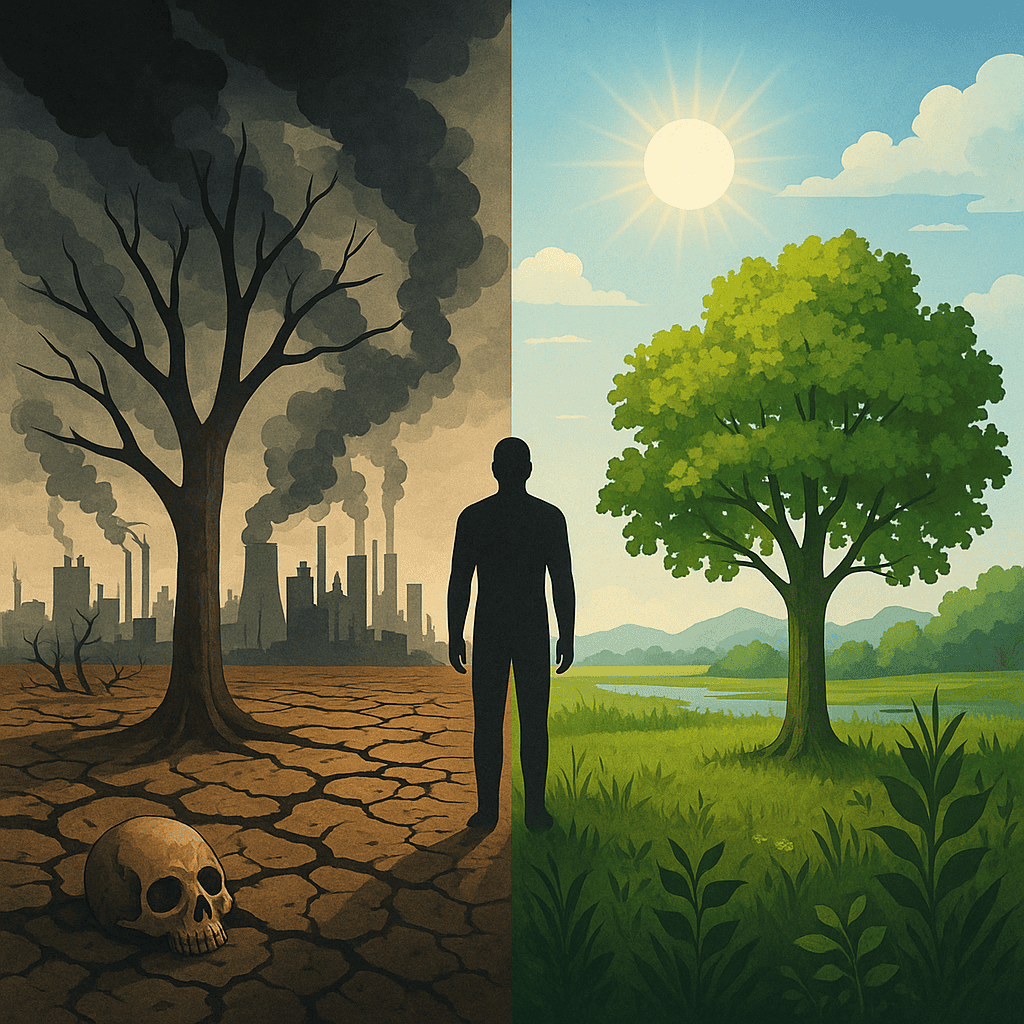
Table of Contents
- Introduction – The Fragile Planet
Climate change as a civilizational turning point and moral challenge - I. The Science of Earth
Earth as a dynamic system of energy, cycles, and biological balance - II. Climate Change, Global Warming, and the Future of Life on Earth
Understanding the causes, impacts, and trajectory of climate disruption - III. The Climatology
How we measure, model, and predict a changing planet - IV. The Biology
The collapse of biodiversity and the fate of the living world - V. The Anthropology
How human cultures shape—and are shaped by—the climate - VI. The Economics
Rethinking value, growth, and justice in a carbon-constrained world - VII. The Politics
Governance, global responsibility, and the rise of Integrated Humanism - VIII. The Futurism – Speculative Ethics and the Fate of the Earth
Exploring possible futures of ecology, urbanization, and moral choice - IX. Conclusion – The Moral Climate
Toward planetary stewardship through science, ethics, and shared responsibility
Introduction – The Fragile Planet
In the vast silence of space, Earth is a rare anomaly—a self-sustaining cradle of life, suspended in a delicate balance of sunlight, atmosphere, and biological diversity. For nearly 4.5 billion years, our planet has endured violent shifts in climate, tectonic upheavals, and cataclysmic collisions. And yet, it has also given rise to oceans brimming with life, to forests breathing oxygen into the air, and to civilizations tracing the stars.
But in the brief sliver of time that marks the rise of human society, we have become a force of planetary consequence. In the space of a few centuries, industrial civilization has restructured the surface of the Earth, altered the chemistry of the atmosphere, and initiated the sixth mass extinction in the history of life. We have entered what many scientists now call the Anthropocene—a geological epoch defined not by the slow movements of continents, but by the disruptive impact of our species.
Climate change is the defining crisis of this epoch. It is not a distant problem for future generations; it is an unfolding reality that reshapes our seasons, our weather, our coastlines, and our futures. Global warming is more than rising temperatures—it is the slow unraveling of the conditions that have made human flourishing possible. Melting glaciers, shifting rainfall patterns, and acidifying oceans are signals of systemic stress, cascading through the planetary web.
Yet this is not merely a scientific or environmental issue. Climate change is economic, political, biological, and deeply ethical. It forces us to confront uncomfortable truths about inequality, responsibility, and the limits of our knowledge. It invites us to rethink the very notion of progress, to ask not only what we can do, but who we want to be as a species in crisis.
This article explores climate change from multiple angles—scientific, biological, anthropological, economic, political, and speculative. Each lens offers insight into how we arrived here, what is at stake, and what kind of future may still be within reach. From the precision of climatology to the speculative ethics of a post-natural world, we trace the contours of a global transformation already underway.
The Earth is not simply heating. It is reacting. The question before us is not whether change is coming, but how we will meet it—intelligently, collectively, and morally—or whether we will succumb to paralysis and denial.
Let us begin with the foundation: the science of the Earth itself.
I. The Science of Earth and Climate
To understand climate change, we must first understand Earth as a complex, self-regulating system—a dynamic equilibrium of air, water, land, and life. Earth’s climate is not a static backdrop for human activity; it is an active, evolving system that sustains and responds to life in constant flux. From the swirling jet streams of the upper atmosphere to the quiet respiration of forests, every part of the biosphere is interconnected through cycles of energy and matter.
The Planet as a System
At its core, Earth’s climate is governed by the balance between incoming solar radiation and outgoing heat. Greenhouse gases—chief among them carbon dioxide (CO₂), methane, and nitrous oxide—act like a thermal blanket, trapping heat in the atmosphere and regulating surface temperatures. Without this natural greenhouse effect, the planet would be a frozen wasteland. But human activity, especially the burning of fossil fuels and widespread deforestation, has intensified this effect far beyond its natural range.
Our modern civilization depends on energy, and over 75% of global emissions come from burning coal, oil, and gas. These activities inject over 36 billion metric tons of CO₂ into the atmosphere annually—far more than the Earth’s ecosystems can absorb unaided.
The Role of Trees and the Carbon Cycle
Trees are one of Earth’s most powerful carbon regulators. Through photosynthesis, they absorb CO₂ and convert it into biomass—branches, leaves, and roots—while releasing oxygen back into the air. This biological miracle is the foundation of the carbon cycle, a system that keeps atmospheric CO₂ concentrations in check.
According to the Penn State Earth and Environmental Systems Institute, the average American emits approximately 2.57 pounds of CO₂ per hour, or over 62 pounds per day. To offset that daily output, roughly 1,000 mature trees per person would be needed—far more than most individuals could plant or maintain. A single mature tree can absorb about 48 pounds of CO₂ per year, but its sequestration ability depends on species, soil, climate, and age.
The MIT Climate Portal reinforces this scale challenge. To offset just one year of global emissions—currently about 40 gigatons of CO₂—we would need to plant and sustain over 1 trillion new trees, and protect them for decades. While ambitious reforestation efforts like the Trillion Tree Campaign are valuable, they cannot replace urgent reductions in fossil fuel use. Trees can buy us time, but they cannot solve the problem alone.
As Reconnect With Nature explains, forests do more than sequester carbon. They cool the planet by releasing water vapor, provide shade that lowers urban temperatures, and prevent soil erosion and water loss. Healthy forests act as climate buffers, reducing the impact of heatwaves, floods, and droughts. But these very forests are under threat—from logging, fire, pests, and warming itself.
Feedback Loops and Climate Instability
Earth’s systems are deeply interwoven, and climate feedback loops can amplify small changes into large-scale disruptions. Melting polar ice reduces the Earth’s albedo (reflectivity), causing more heat absorption. Thawing permafrost releases methane, a greenhouse gas many times more potent than CO₂. Warmer oceans absorb less carbon and drive stronger storms, which in turn devastate ecosystems that help regulate the climate.
These feedbacks threaten to push the planet toward tipping points—thresholds beyond which damage becomes self-reinforcing and irreversible. If rainforest dieback accelerates or ocean currents collapse, recovery may take millennia—if it is possible at all.
The Holocene Window
For the past 12,000 years, Earth’s climate has been unusually stable—a warm interglacial period known as the Holocene. It is during this window that agriculture, cities, trade, and science flourished. All of recorded human history fits within this brief span of balance. Our civilizations depend on predictable seasons, fresh water, and reliable coastlines. Climate change threatens not just ecosystems, but the foundation of human order.
In short, the Earth is not merely a background stage—it is the main character in the story of life. And we, who once adapted to it, now alter it faster than evolution can keep pace. The scientific evidence is clear: the Earth is warming, and we are the primary cause. The future will be determined by how quickly we understand—and act upon—this truth.
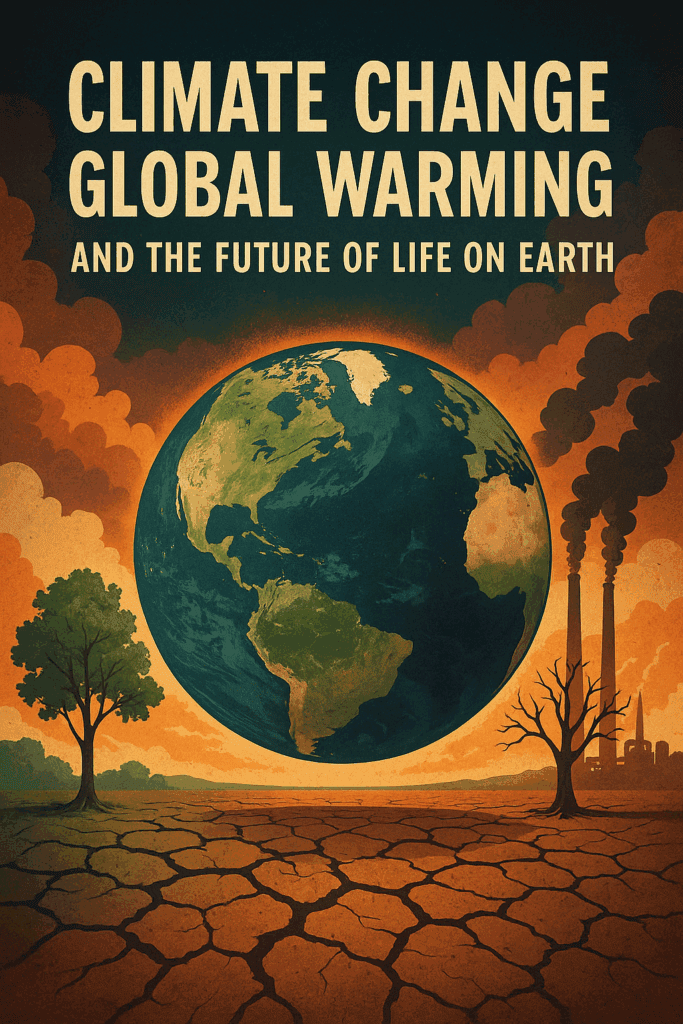
II. Climate Change, Global Warming, and the Future of Life on Earth
Climate change is not a distant threat—it is a present and accelerating crisis. Every year now ranks among the hottest ever recorded. Glaciers are melting, seas are rising, and ecosystems are unraveling. The term climate change refers to long-term shifts in temperature, weather patterns, and ecological rhythms, while global warming refers more specifically to the average increase in Earth’s surface temperature, driven primarily by greenhouse gas emissions. Both represent symptoms of a deeper planetary imbalance, one brought about by the choices of a single species—our own.
The Greenhouse Effect and the Human Fingerprint
The Earth naturally retains some heat from the sun thanks to greenhouse gases like carbon dioxide (CO₂), methane (CH₄), and water vapor. This “greenhouse effect” is what makes life possible. But since the dawn of the industrial era, human activities—particularly the burning of fossil fuels, deforestation, and industrial agriculture—have added unprecedented amounts of these gases to the atmosphere.
CO₂ concentrations have risen from 280 parts per million (ppm) before the Industrial Revolution to over 420 ppm today, a level not seen in millions of years. Methane, though less abundant, is over 80 times more potent than CO₂ in trapping heat over a 20-year period. These changes have created a measurable “human fingerprint” in the climate record: warming oceans, intensifying hurricanes, longer droughts, shifting jet streams, and disrupted ecosystems across the globe.
Global Effects and Local Disasters
Climate change expresses itself differently in every region. Some areas face rising sea levels that engulf coastlines and small island nations. Others face increasing drought and water scarcity, devastating agriculture and sparking conflict. In places like the Arctic, warming is occurring at more than twice the global average, triggering feedback loops with global consequences.
Heatwaves, wildfires, and supercharged storms are now more frequent and more deadly. The 2021 heat dome over the Pacific Northwest, the wildfires in Australia and California, and the catastrophic floods in Pakistan and Germany are not isolated anomalies—they are the new face of a changing planet.
The Loss of Predictability
Perhaps the greatest threat posed by global warming is not any single disaster, but the breakdown of predictability. Civilizations have always relied on regular seasonal cycles—planting and harvest times, monsoons, river flows, and rainfall. As these cycles destabilize, so do the systems that depend on them: food, water, housing, and energy. Modern supply chains are global and interdependent; disruption in one region reverberates around the world.
This systemic vulnerability was made starkly visible during the COVID-19 pandemic, but climate change represents a deeper and more enduring disruption. It is a force multiplier—exacerbating poverty, migration, food insecurity, and geopolitical tension.
Facing the Future: Warming Scenarios
The Intergovernmental Panel on Climate Change (IPCC) has developed a range of future scenarios, based on different levels of greenhouse gas emissions and policy responses. These range from low-emissions pathways that limit global warming to 1.5°C above pre-industrial levels, to high-emissions scenarios where warming exceeds 4°C or more by the end of the century.
Every additional degree of warming brings exponentially greater risks: loss of biodiversity, crop failure, infrastructure collapse, and massive displacement. At 2°C of warming, hundreds of millions may be pushed into poverty. At 3°C, entire regions could become uninhabitable. At 4°C, the world as we know it may cease to function.
Climate as Destiny—or Design
The future is not yet written. While many changes are now locked in due to past emissions, the worst outcomes can still be avoided—but only through urgent, collective, and sustained action. Mitigation means cutting emissions through energy transition, carbon sequestration, reforestation, and behavioral change. Adaptation means redesigning infrastructure, agriculture, and cities to endure the changes already in motion.
Yet climate change is not merely a scientific or technological challenge. It is also philosophical. What kind of species will we choose to be? Will we continue to act as the short-sighted exploiters of a finite planet—or can we become its conscious stewards?
This crisis is not just a collapse. It is also an invitation: to rethink our priorities, to restructure our economies, to reimagine our relationships with nature and each other. The Earth will continue, with or without us. Whether it continues to sustain life—and especially human life—is a matter of design, not destiny.
III. The Climatology
Climatology is the science of Earth’s climate—its patterns, drivers, and long-term changes. Where weather studies short-term conditions, climatology investigates the deep rhythms and trends of the atmosphere, oceans, and biosphere across decades, centuries, and even millennia. It is through climatology that we know our planet is changing—and that human activity is the central driver of that change.
How We Know What We Know
The story of modern climatology is a triumph of empirical observation, mathematical modeling, and interdisciplinary synthesis. Our understanding of global warming rests on a vast architecture of data, collected through multiple methods:
- Direct atmospheric measurements, such as the Mauna Loa Observatory’s iconic CO₂ readings, which show an unbroken upward trend since 1958.
- Satellite data, which allow scientists to track surface temperatures, ice cover, sea-level rise, and greenhouse gas concentrations with planetary precision.
- Ice cores drilled from Antarctica and Greenland, which preserve atmospheric snapshots stretching back over 800,000 years, revealing ancient temperature fluctuations and carbon cycles.
- Tree rings, ocean sediments, and coral reefs, which act as natural archives of past climate conditions and help establish baselines for today’s changes.
The convergence of these diverse sources gives climatology its strength. Different lines of evidence, gathered independently, all point to the same conclusion: Earth’s climate is warming rapidly, and human emissions of greenhouse gases are the primary cause.
Climate Models: Simulating the Future
Climate models are the heart of modern climatology. These are complex computer simulations that integrate physics, chemistry, biology, and atmospheric dynamics to project how the climate will evolve under different scenarios. The most sophisticated models—used by the IPCC and research institutions around the world—divide the Earth into three-dimensional grids, tracking how energy and matter move through them over time.
While no model is perfect, they are remarkably good at reproducing observed trends when run retrospectively, using historical emissions and conditions. This hindcasting builds confidence in their forecasting. The consistency of their results across a wide range of approaches and institutions provides one of the strongest arguments for the reality and urgency of climate change.
These models show that if emissions continue unabated, global average temperatures could rise by 2°C to 4°C or more by 2100—levels that would profoundly reshape ecosystems, coastlines, and human societies. If we act decisively, warming could be limited to 1.5°C to 2°C, though even this will require rapid, coordinated global transformation.
Geoengineering: The Last Resort?
As the window for emissions reduction narrows, some scientists and policy thinkers have begun exploring geoengineering—the deliberate manipulation of Earth’s systems to counteract warming. These proposals include:
- Solar Radiation Management, such as injecting aerosols into the stratosphere to reflect sunlight
- Carbon Dioxide Removal, including massive tree planting, direct air capture, and enhanced weathering of rocks
While some of these techniques are already feasible on small scales, large-scale deployment carries immense risks. The climate is not a simple machine with a reset button—it is a chaotic, nonlinear system. Geoengineering could have unintended side effects, such as changing rainfall patterns, weakening the ozone layer, or creating geopolitical conflicts over who controls the thermostat of the Earth.
Most scientists agree: geoengineering may serve as a temporary supplement, but it cannot replace emissions reductions or ecological restoration. It is the “Plan Z” of climate action—an emergency lever, not a long-term solution.
Climate Denial and Scientific Disinformation
Despite overwhelming evidence, climate science has faced decades of misinformation and politicization. Fossil fuel interests have funded campaigns to sow doubt, distort findings, and delay action. This “climate denial” movement has exploited scientific uncertainty—not as a path to deeper understanding, but as a tool for paralysis.
Scientific consensus does not mean unanimity on every detail, but broad agreement on the core facts. Over 97% of actively publishing climate scientists affirm that climate change is real, primarily human-caused, and an urgent threat. The denial of these facts is no longer a scientific debate—it is a sociopolitical one, driven by ideology, profit, and fear.
A Science of Conscience
Climatology is not just a technical field—it is a moral enterprise. Its findings do not merely describe the world; they warn us. They ask us to change.
The challenge ahead is not only to continue improving models and data, but to ensure that knowledge is translated into wisdom and policy. As with any great scientific revolution, the power of climatology lies not just in what it reveals—but in what we choose to do with what we now know.
IV. The Biology
Life on Earth evolved in close synchrony with the planet’s climate systems. From the photosynthesizing cyanobacteria that helped oxygenate the atmosphere billions of years ago, to the rise of flowering plants, coral reefs, insects, mammals, and human beings, biology and climate have always been co-evolving partners in the story of Earth. Climate change is not simply an environmental problem—it is a biological emergency.
The Sixth Mass Extinction
The Earth has experienced five known mass extinctions in its long history, each triggered by catastrophic changes—volcanic activity, asteroid impacts, or sudden shifts in climate. Scientists now warn that we are entering a sixth mass extinction, this time driven not by natural cataclysms, but by human activity. Habitat destruction, pollution, overfishing, invasive species, and above all, climate change, are rapidly driving species to extinction at rates 100 to 1,000 times above the natural background rate.
From charismatic megafauna to invisible soil microbes, life forms are vanishing before they can even be documented. The World Wildlife Fund’s Living Planet Index reports an average decline of 69% in vertebrate populations since 1970. Amphibians, birds, bees, and countless insect species are disappearing in what has been described as an ecological “silent spring” on a planetary scale.
Warming and the Web of Life
Temperature plays a central role in biological processes. Even slight increases can throw entire ecosystems into disequilibrium. Coral reefs, which support about 25% of all marine life, bleach and die when ocean temperatures rise just 1°C above average for prolonged periods. As oceans warm and acidify due to CO₂ absorption, shell-forming organisms like plankton, mollusks, and corals struggle to survive—threatening food chains from the bottom up.
On land, warming alters migration patterns, flowering seasons, and predator-prey dynamics. Species may adapt, move, or die—but adaptation is limited by time, mobility, and genetic diversity. Many organisms cannot shift their ranges quickly enough to match the pace of change, especially those confined to mountain ranges, islands, or specialized habitats.
Biodiversity and Human Survival
Biological diversity is not a luxury—it is the foundation of ecosystem resilience and human well-being. Plants, fungi, and microorganisms regulate the air, purify water, fertilize soil, and pollinate crops. Every meal we eat, every breath we take, depends on countless interactions among species—most of which we barely understand.
Climate change is compounding other pressures on biodiversity. For instance, tropical rainforests like the Amazon are approaching a tipping point where increased drought, fires, and deforestation could transform vast areas into savannah, releasing gigatons of CO₂ and destroying habitats for millions of species.
Losing biodiversity does not just mean losing beautiful animals or obscure species—it means losing medicines not yet discovered, crops not yet cultivated, and ecological functions not yet replicated. A biologically impoverished world is also more vulnerable to disease outbreaks, food shortages, and ecological collapse.
Winners and Losers in a Warmer World
While many species are in decline, some will benefit from climate change. Invasive species, generalist predators, and disease vectors like mosquitoes may expand their ranges. Warmer temperatures could fuel the spread of malaria, dengue fever, and other illnesses to higher altitudes and latitudes. Agricultural pests and pathogens are expected to thrive in disrupted ecosystems.
But such “winners” do not compensate for the overall losses. They often destabilize food webs, harm human health, and reduce the functionality of ecosystems. The biological winners of climate change may be weeds, parasites, and plagues.
Hope Through Restoration
Despite the dire trends, restoration is possible. Rewilding landscapes, protecting biodiversity corridors, and restoring wetlands and forests can strengthen ecosystem resilience and even draw carbon out of the atmosphere. Biological systems have an astonishing ability to heal—if given space, time, and protection.
The biology of climate change is not just a story of collapse. It is a call to remember that we are embedded in the living world—not separate from it. Our survival depends on the survival of others. The thread of life is intricate and ancient, and it frays at our peril.
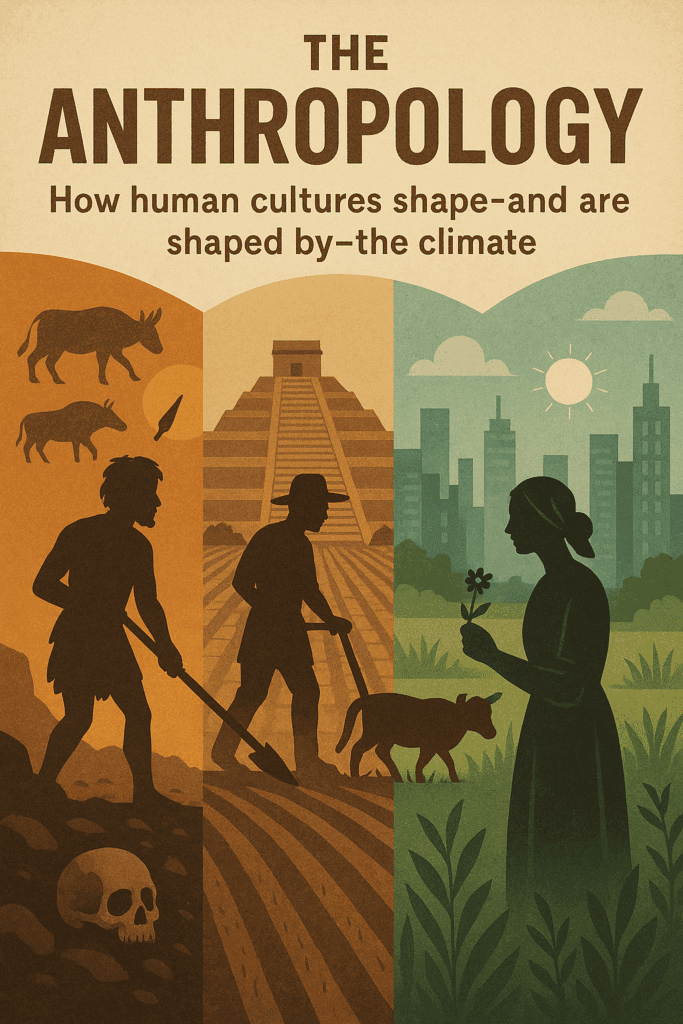
V. The Anthropology
The story of climate change is not only written in chemistry and biology—it is also etched into the long, adaptive history of humanity itself. Anthropology, the study of human culture and evolution, reveals how climate has shaped societies, and how in turn, societies are now reshaping the climate. Understanding this reciprocal relationship helps us see climate change not just as a scientific or technological issue, but as a deeply human one—rooted in culture, economy, belief, and behavior.
Climate and Early Human Adaptation
Throughout prehistory, humans were at the mercy of climate. Ice ages, droughts, and floods shaped the migration routes, diets, and survival strategies of early Homo sapiens. The development of language, fire, and tools allowed our ancestors to adapt to a range of environments—but always within the broader boundaries of Earth’s climate stability.
The Neolithic Revolution, roughly 12,000 years ago, coincided with the onset of the Holocene—a warm, stable period ideal for agriculture. This climatic stability allowed human populations to grow, cities to rise, and civilizations to form. The domestication of crops and animals created sedentary life, social hierarchies, and eventually, nation-states. In a very real sense, climate made civilization possible.
Culture, Myth, and the Natural World
For much of human history, nature was sacred. Indigenous and ancient cultures across the globe revered rivers, forests, animals, and seasons as living forces, woven into cosmologies of balance and reciprocity. Festivals, taboos, and oral traditions encoded ecological wisdom. Human survival depended on respecting the rhythms of the land and sky.
But as agriculture intensified and empires expanded, the relationship shifted. Nature came to be seen less as kin and more as resource—something to be controlled, measured, and exploited. This shift accelerated with the Scientific and Industrial Revolutions, which treated the Earth as a passive machine rather than a living system. It is here, anthropologically, that we begin to see the root of the modern ecological crisis: a cultural rift between humanity and nature.
The Anthropocene: From Adaptation to Domination
In the 20th and 21st centuries, this shift became planetary in scope. The Anthropocene—a proposed new geological epoch—recognizes that humans have become a geophysical force, altering the Earth’s climate, biology, and geology through mining, industry, agriculture, and energy use.
But this power has not been evenly distributed. A small fraction of the global population—primarily in wealthy industrialized nations—has been responsible for the majority of greenhouse gas emissions. Meanwhile, the worst impacts of climate change fall disproportionately on those who contributed the least: Indigenous peoples, small island nations, and low-income communities around the world.
This is not simply an ecological injustice—it is an anthropological one. Climate change reveals global asymmetries of wealth, history, and responsibility. It challenges us to reexamine our values, our systems of governance, and the stories we tell about what it means to be human.
Culture as Solution
Culture, however, is not only a cause of the crisis—it may also be the key to its resolution. Anthropologists working with Indigenous communities find traditions of ecological stewardship that have sustained biodiversity for millennia. Ancient methods of water conservation, agroforestry, rotational grazing, and communal resource management offer models for living sustainably in difficult climates.
Moreover, the global climate movement is, in part, a cultural shift. Art, literature, film, religion, and philosophy are all grappling with what it means to live in a time of planetary danger. New narratives are emerging—of regeneration, solidarity, and humility in the face of nature’s complexity.
Human beings are storytellers. The future of the climate may depend not just on policies or technologies, but on the stories we choose to live by. Will we continue the myth of endless growth and separation from nature? Or can we reimagine our place in the world—as caretakers rather than conquerors?
Conclusion: The Human Climate
Anthropology reminds us that culture is not static. Human societies can evolve, adapt, and transform with astonishing speed—especially when confronted with crisis. The climate is changing, yes. But so too can we.
The next sections will explore how our economic systems and political structures must evolve to match this cultural transformation—if we are to meet the challenge of climate change with the wisdom of our shared humanity.
VI. The Economics
Climate change is often framed as an environmental crisis—but at its heart, it is an economic one. The climate crisis is the result of a centuries-long economic model rooted in extraction, exploitation, and externalization. It is a market failure on a planetary scale: the cost of burning fossil fuels, clearing forests, and polluting the atmosphere has not been paid by those who profit, but by ecosystems, vulnerable populations, and future generations.
Yet within this crisis lies an opportunity. Rethinking economics—not just tweaking it—may be essential to securing a livable planet.
The Fossil Fuel Foundation
Since the Industrial Revolution, the global economy has been powered by fossil fuels—coal, oil, and gas. These fuels enabled an extraordinary expansion of productivity, wealth, and population. But they also locked human development into a trajectory of carbon dependence. Today, over 75% of global greenhouse gas emissions come from energy production and use.
The fossil fuel industry remains one of the most powerful economic and political forces on Earth, receiving over $7 trillion in annual subsidies and tax breaks, according to the IMF. These subsidies artificially lower the cost of carbon-intensive energy, creating a distorted market where polluting is profitable and clean energy often struggles to compete—despite falling prices.
Without a fundamental shift in how we price, produce, and consume energy, the global economy will continue to accelerate environmental collapse.
The True Cost of Carbon
One of the central concepts in climate economics is externalities—costs not reflected in the price of goods or services. A gallon of gasoline, for instance, may cost a few dollars at the pump, but the true cost includes air pollution, health impacts, climate damages, and biodiversity loss.
To correct this market failure, economists propose carbon pricing: placing a monetary value on carbon emissions through taxes, cap-and-trade systems, or emissions trading. When designed well, carbon pricing can internalize environmental costs and incentivize low-carbon innovation. But global implementation has been uneven, often undermined by political resistance and loopholes.
The reality is that we are subsidizing our own destruction—paying to accelerate the crisis rather than prevent it.
Green Growth or Degrowth?
Mainstream responses to climate change often focus on green growth: decoupling economic expansion from carbon emissions through renewable energy, electric vehicles, and clean technologies. This transition is essential and underway—but it may not be enough.
Critics argue that perpetual growth on a finite planet is inherently unsustainable, regardless of how clean the energy may be. They advocate for degrowth: a deliberate downscaling of production and consumption in wealthy nations, aimed at achieving ecological balance, social equity, and well-being over GDP.
Degrowth does not mean poverty or austerity—it means redesigning the economy around sufficiency rather than accumulation. It asks: how much is enough? What does prosperity look like in a world with limits?
Climate Justice and Global Inequality
Economic inequality is both a cause and a consequence of climate change. The richest 10% of the world’s population account for over half of global emissions, while the poorest 50% contribute less than 10%—yet suffer the greatest impacts. Climate-induced floods, famines, and displacement hit hardest in the Global South, where resources for adaptation are limited.
Climate justice demands that those most responsible for emissions contribute the most to mitigation and adaptation. This includes climate finance, technology transfers, and debt relief for vulnerable nations. It also involves addressing historical injustices: the colonial exploitation of land, labor, and resources that laid the foundation for industrial wealth.
If the energy transition is not equitable, it will not be stable.
The Circular and Regenerative Economy
An emerging vision for a post-carbon world is the circular economy, which aims to eliminate waste and regenerate natural systems. In a circular model, products are designed for reuse, recycling, and biodegradability. Materials are kept in circulation as long as possible, reducing resource extraction and pollution.
Closely related is the regenerative economy, which goes beyond sustainability to actively restore degraded ecosystems. This includes agroecology, forest regeneration, and community-based conservation.
These models challenge the traditional view of the economy as a linear pipeline—from extraction to production to disposal—and replace it with a living system that mirrors the cycles of nature.
Conclusion: Redefining Wealth
At its root, the economic dimension of climate change is a question of values. What do we count as wealth? Is it the accumulation of material goods, or our collective quality of life? Do we measure success by quarterly profits—or by long-term planetary health?
Economics must evolve to reflect ecological reality. It must shift from endless growth to conscious stewardship; from exploitation to reciprocity; from inequality to solidarity.
The climate crisis is not the death knell of the economy—it is the signal that a new economy must be born.
VII. The Politics
Climate change is the ultimate political challenge. It transcends borders, outpaces election cycles, and exposes the limits of our current systems of governance. At its heart lies a contradiction: the global nature of the problem demands cooperation, but our political institutions are built on national interests, short-term agendas, and fragmented ideologies. Climate change demands long-term thinking in a short-term world.
Global Agreements, Local Failures
The United Nations Framework Convention on Climate Change (UNFCCC) has guided international climate diplomacy for decades. Landmark agreements like the Kyoto Protocol (1997) and the Paris Agreement (2015) have helped frame global goals—most notably the aim to limit warming to well below 2°C, with efforts to reach 1.5°C. These accords marked a moral and scientific consensus.
But agreement on paper is not the same as action in reality. Most countries are failing to meet their own emissions reduction targets. Enforcement mechanisms are weak. Powerful interests—from fossil fuel lobbies to nationalist leaders—routinely stall or reverse progress. In the absence of binding global governance, climate policy remains largely voluntary, uneven, and insufficient.
National Sovereignty vs. Planetary Responsibility
Climate change intensifies the tension between sovereignty and solidarity. Every nation faces different risks, capacities, and pressures. Wealthy countries often prioritize domestic growth over global responsibility. Poorer nations, already facing climate devastation, demand justice and support. Meanwhile, climate refugees—already numbering in the tens of millions—find no place in international law.
The political consequences are rising: border militarization, resource wars, economic instability, and the erosion of democratic norms. In this fragmented landscape, what kind of political philosophy can guide a unified and just response?
The Role of Integrated Humanism
This is where Integrated Humanism offers a new paradigm. As developed and promoted by thinkers and communities such as Science Abbey, Integrated Humanism fuses science, secular ethics, and global citizenship into a holistic framework for planetary stewardship. It recognizes that no ideology, religion, or political tradition alone is sufficient for the scale of the climate crisis. What is needed is an integration of reason, compassion, and coordinated global action.
Integrated Humanism affirms:
- That science should guide public policy, especially on matters of existential risk.
- That human rights and dignity must extend to all peoples, including future generations.
- That democracy must evolve to include planetary governance, informed by data, ethics, and ecological limits.
- That education and culture are as essential to the climate transition as infrastructure and innovation.
It is a call to move beyond partisan gridlock and ideological inertia, toward a politics of planetary maturity.
Science Abbey and Civic Transformation
Science Abbey—as a secular, scientific, and philosophical fellowship—is one of the emerging institutions striving to reimagine public engagement around climate change. It brings together scientists, educators, activists, and artists to craft a new civic language grounded in evidence, cooperation, and shared responsibility.
By promoting civic science literacy, ethical environmentalism, and meditative systems thinking, Science Abbey cultivates what it calls the “Planetary Mind”—a public awakening to the reality of ecological interdependence and moral agency. Its work is part of a broader political movement to foster wise governance in an age of complexity and crisis.
Activism and Civil Society
Beyond high-level diplomacy, civil society movements have become major political actors. From Fridays for Future and Extinction Rebellion to Indigenous land defenders and local community organizers, climate activism is reshaping public discourse, pressuring governments, and creating new political possibilities.
Yet these movements often face state repression, legal obstacles, or media marginalization. The challenge is not just to protest the old, but to prototype the new—to develop parallel institutions, regenerative economies, and participatory governance models that reflect ecological principles.
From Emergency to Governance
The scale of the climate crisis requires not just better policies, but a new philosophy of governance—one that transcends nationalist self-interest and embraces planetary coordination. This may include:
- An empowered global climate authority with enforceable standards
- Ecological constitutionalism, where nature is granted legal rights
- Participatory climate budgeting, giving citizens a voice in decarbonization priorities
- Science-based policymaking, insulated from political interference
Such ideas may seem idealistic—but the alternative is collapse under outdated systems. As the climate destabilizes, political systems that fail to respond will lose legitimacy. The time to build the next era of governance is now.
Conclusion: Politics for a Living Planet
Politics has long been the arena of power, interest, and ideology. In the climate era, it must become the arena of wisdom, compassion, and survival.
We do not lack knowledge. We lack the political courage to act on what we know. But new frameworks—like Integrated Humanism—and new communities—like Science Abbey—are sowing the seeds of planetary renewal.
The future will be governed, one way or another. The question is whether it will be governed wisely, justly, and sustainably—or whether it will descend into chaos. Climate politics is the politics of the 21st century. And it will determine whether humanity lives in balance—or not at all.
VIII. The Futurism – Speculative Ethics and the Fate of the Earth
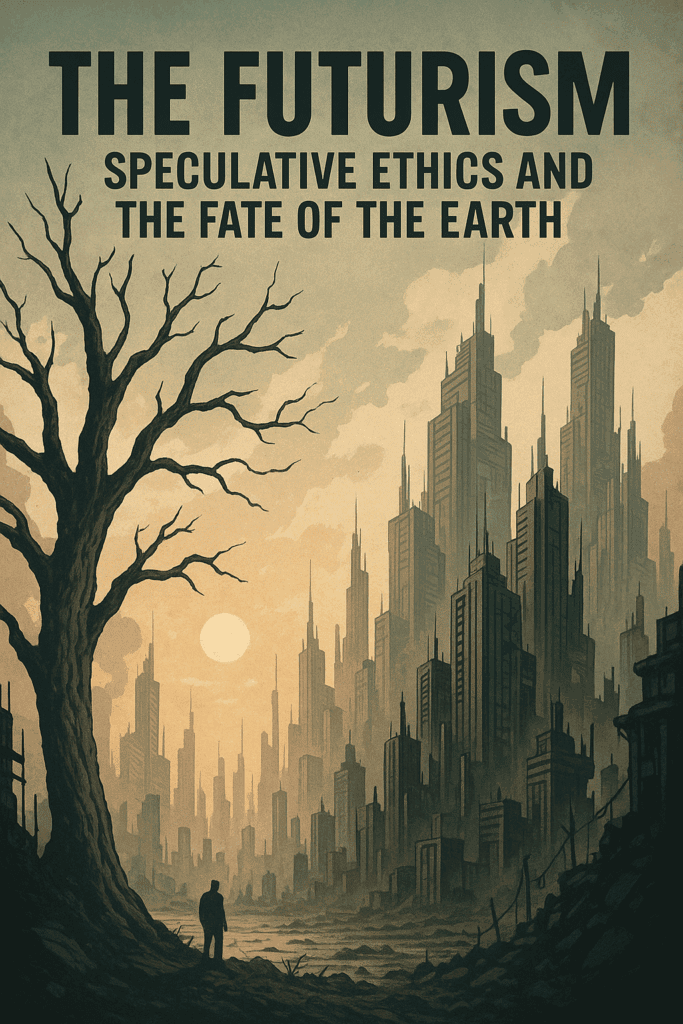
Futurism, or future studies, is not prophecy—it is a method of exploring possible, probable, and preferable futures. In the context of climate change, it challenges us to think beyond the limits of the present, to stretch our imagination toward scenarios of collapse, adaptation, and transformation. Some of these futures are hopeful; others are haunting. All are necessary to consider.
Beneath the rising tides and heatwaves lies a deeper question: what kind of world are we trying to save, and for whom?
1. The Brutality of Nature and the Case Against Wilderness
To begin on unsettling ground: what if saving nature is not inherently good?
The wild Earth is not a peaceful paradise. In the oceans, starfish pin their prey and suck life from them over hours. In forests and deserts, animals live in states of constant fear, hunger, parasitism, and violent death. Even herbivores face disease, competition, and suffering without reprieve. The natural world is a vast theater of predation, pain, and evolutionary struggle. From an ethical perspective, especially one concerned with minimizing suffering, this poses a profound dilemma.
Some speculative philosophers propose that if suffering is the metric of moral progress, then the disappearance of wild nature may reduce overall harm. Imagine a future in which there are no predatory ecosystems—only technological environments where life is controlled, curated, and pain-minimized. No more predation. No more parasitism. Only synthetic or selectively bred species in highly controlled habitats.
This is not a future anyone dreams of—but it is a future that invites moral debate. What is more valuable: wild freedom or managed mercy? Diversity or dignity? Life, or relief from life’s inescapable pain?
2. The Total Urbanization Hypothesis
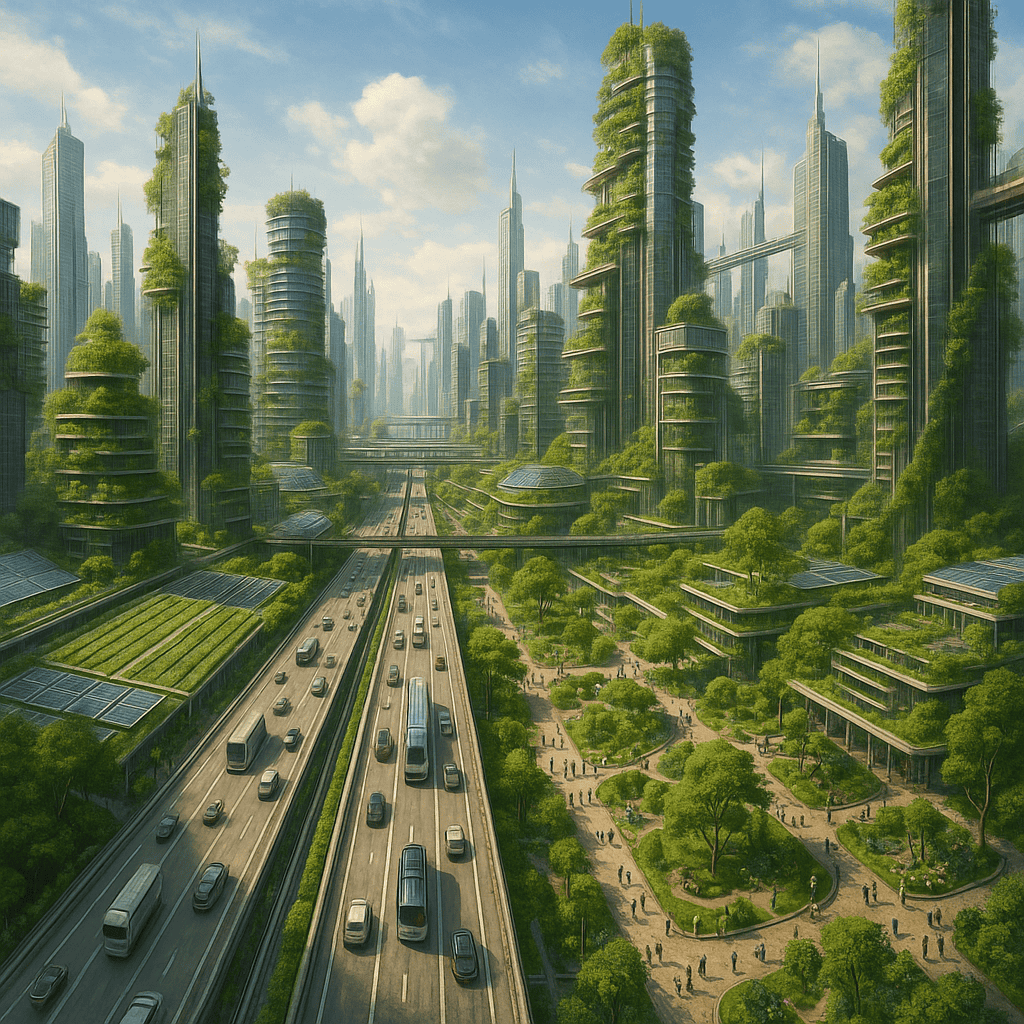
Suppose humanity continues to expand, until every biome has been transformed. Rainforests become carbon farms. Deserts are irrigated and solar-arrayed. The last great mammals fade into memory, preserved only in gene banks and holograms. The planet becomes one interconnected, semi-automated global city, dotted with vertical gardens, synthetic meat labs, and climate-controlled zones. Nature is confined to parks, museums, or orbital seed vaults.
This future is not far-fetched. Urbanization is accelerating. Synthetic biology is booming. Already, we breed billions of livestock in artificial conditions. Could this total domestication be our final frontier?
And if so, is it dystopia—or destiny?
Some argue this path maximizes human flourishing: longer lives, less disease, controlled environments, aesthetic beauty without biological chaos. Others see it as the death of the sacred—a sterile parody of Earth, where meaning dies alongside wildness.
3. The Persistence of Human Suffering
Even in the most engineered world, suffering remains. Today, over 30 million people live in modern slavery. Over 800 million go hungry, while many more endure war, displacement, oppression, poverty, physical or mental illness, and loneliness or other chronic forms of distress. Climate change is set to worsen these conditions—exacerbating inequality, disrupting food systems, and generating new zones of conflict.
No amount of technological control over nature will solve these problems if our social systems remain unjust. A future with fewer wild animals but more human exploitation is not a moral victory. It is a retreat into selective ethics.
Thus, the challenge of climate futurism is not just environmental—it is humanitarian. It demands that we imagine futures where justice, not just survival, is the priority.
4. Atmospheric Minimums and Terraforming Earth
Despite all dystopias, one biological fact remains constant: humans need a breathable atmosphere.
Our atmosphere is a product of billions of years of photosynthesis, geological cycling, and biological feedback. If we destroy too much green life—forests, wetlands, plankton—we will collapse the very system that sustains our air. Scientists estimate that Earth’s biosphere produces about half of its oxygen from the ocean and the rest from land plants. There is no substitute yet.
To preserve a livable planet, we must maintain the minimal biomass necessary to regulate temperature, generate oxygen, absorb carbon, and filter water. If not through preserved ecosystems, then through high-tech synthetic equivalents: algae towers, carbon scrubbers, artificial biomes. This would amount to terraforming Earth after having de-terraformed it.
Do we truly want to live on a life-support machine—or can we preserve the living system we already have?
5. Toward Planetary Intelligence
What if the goal is not simply to survive, but to awaken?
Futurism rooted in Integrated Humanism—as envisioned by communities like Science Abbey—asks not merely how we adapt materially, but how we evolve mentally, spiritually, and ethically. It sees the climate crisis not only as a threat, but as a test of human maturity.
Will we become a civilization capable of coordinating across borders, beliefs, and time? Can we cultivate a planetary consciousness that values long-term resilience over short-term profit?
Science Abbey imagines a future in which the ecology of mind evolves alongside the ecology of Earth—a world of ethical science, participatory governance, restored ecosystems, and contemplative citizenship. It is not utopia, but an aspiration grounded in reason, compassion, and systemic understanding.
6. Choosing Our Future
In the end, the future is not something we predict—it is something we shape.
We may choose a world of managed wilderness and robotic caretakers. Or a rewilded planet where humans live lightly among the ruins of industrial ambition. Or something radically different—a world animated by humility, wisdom, and awe.
But if we do not choose at all, the future will be shaped by default—by momentum, inertia, and crisis.
The ethical question is no longer can we? It is: should we?
What do we preserve? What do we let go? What kind of life is worth living—and worth leaving behind?
IX. Conclusion – The Moral Climate
Climate change is not only a crisis of carbon and temperature—it is a crisis of meaning, morality, and maturity. It confronts us with the uncomfortable truth that we have become powerful enough to shape the future of life on Earth, but not yet wise enough to wield that power responsibly. The science is clear. The path forward is known. What remains is a matter of will—a matter of values, courage, and collective conscience.
This is the moral climate we now inhabit.
From Knowledge to Responsibility
We know more about the Earth today than any civilization before us. We can measure the temperature of the deep ocean, track atmospheric gases from space, and simulate global futures with mathematical precision. Yet all this knowledge has not yet translated into effective, compassionate, and coordinated action.
Why?
Because knowledge alone does not compel us. It must be joined with ethical imagination—a vision of justice, interconnection, and reverence for life that transcends self-interest. Without this moral foundation, even our most advanced tools become weapons of short-term gain and long-term ruin.
A New Compass for Civilization
Addressing climate change requires far more than decarbonizing energy or electrifying vehicles. It demands a civilizational pivot—a redefinition of success, progress, and prosperity. We must move from extraction to regeneration, from competition to cooperation, from anthropocentrism to planetary consciousness.
Here, the values of Integrated Humanism—as articulated and embodied by communities like Science Abbey—offer a guiding compass. They affirm that:
- Science is not cold fact, but enlightened method—our most honest tool for understanding reality.
- Humanism is not indulgence, but care—for one another, for future generations, and for all living systems.
- Democracy is not just voting, but collective wisdom—an evolving system for stewarding shared destiny.
- And spirituality, in a secular age, can mean wonder, humility, and deep attentiveness to the sacred interdependence of all life.
This moral compass does not belong to one nation, religion, or ideology. It belongs to humanity as a whole, as we stand at the crossroads of ecological collapse and planetary renewal.
From Crisis to Consecration
Every age has its sacred task. Ours is not to build monuments or conquer territories—it is to stabilize the biosphere, restore what we’ve broken, and evolve the systems of thought, economy, and governance that led us here.
This is not the work of one generation alone. It will take centuries of patient stewardship. But it begins now—with us.
We are no longer passengers on Earth. We are pilots of the future. We have within us the capacity to become the conscience of the planet, to transition from a civilization of extraction to a civilization of care.
Whether we succeed will depend not on technology alone, but on our ability to feel the weight of what is at stake, to grieve what is being lost, and to act from a place of deep ethical clarity.
Let us then rise to the occasion—not merely as citizens of nations, but as stewards of Earth, as guardians of life, and as participants in the unfolding moral arc of this living world.
The moral climate is ours to shape. The future remains unwritten.