
Table of Contents
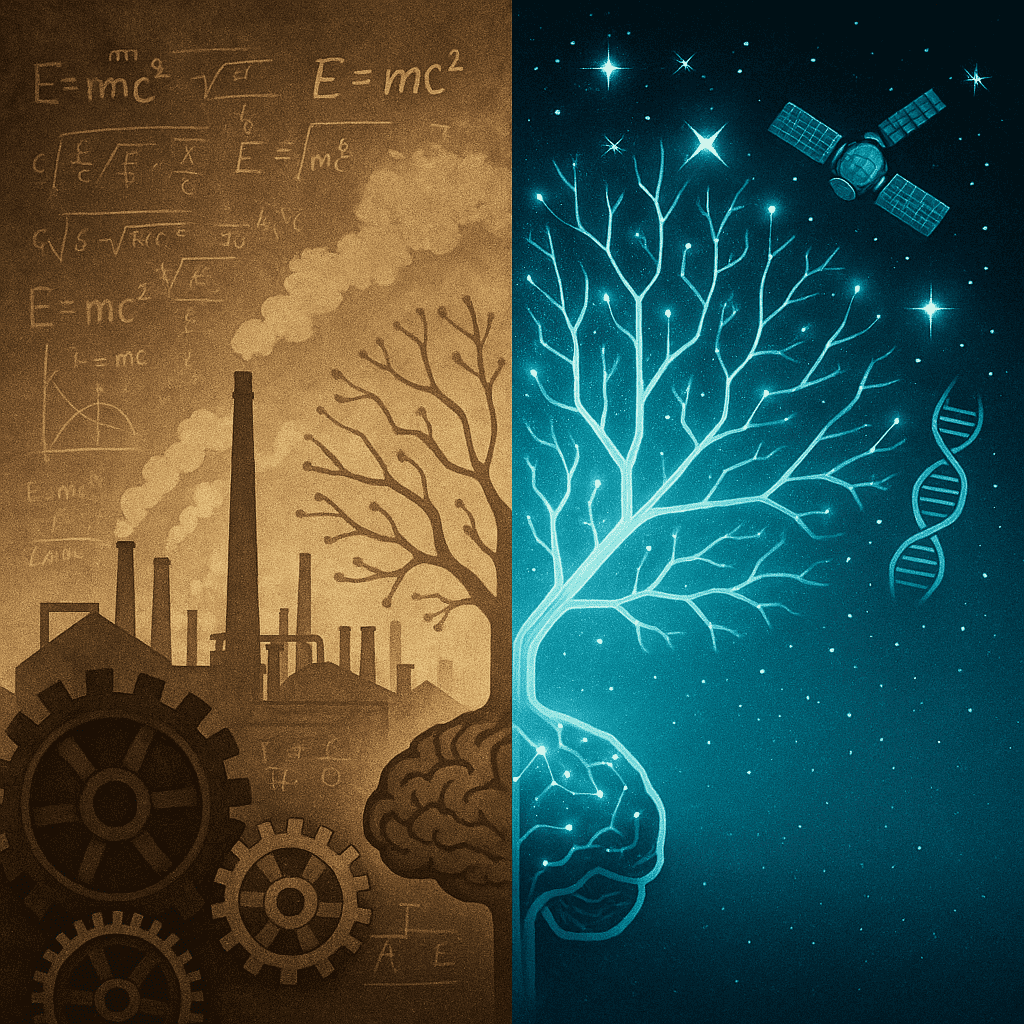
Introduction: The End of the Machine Age
Why Modern Science Must Evolve—Not Only Technologically, but Spiritually
I. Revolution, Revelation, and the Remaking of the World
A New Science for a New Humanity
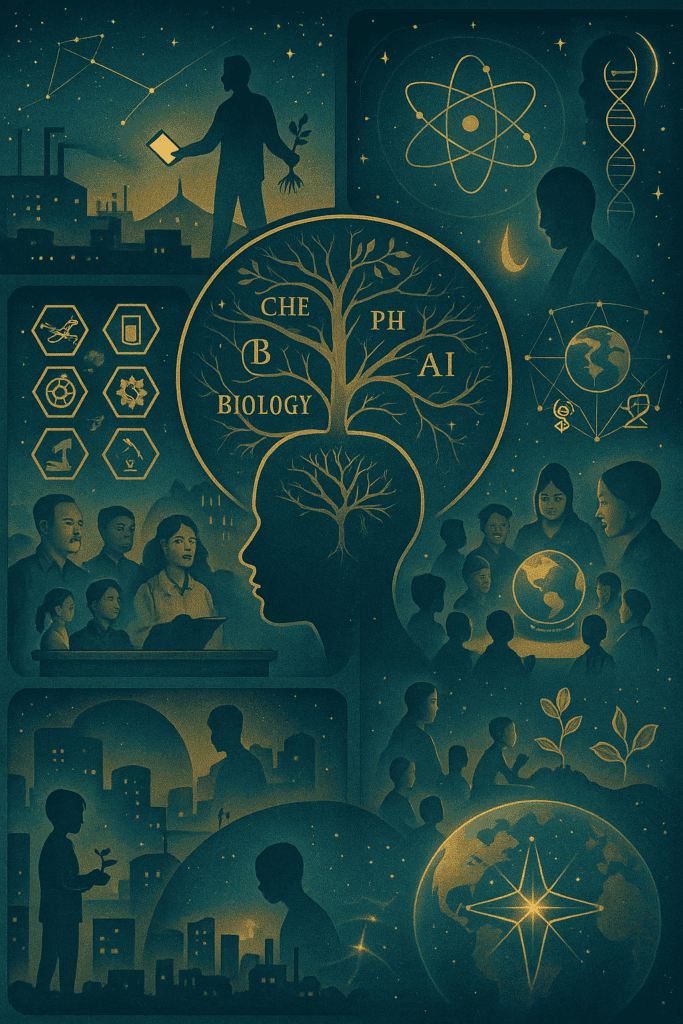
II. The Great Tree of Knowledge
Mapping the Branches of Contemporary Science
III. Breakthroughs of the Present Moment
The Frontiers of Knowledge and Technology in the 2020s
IV. The Shadows of Progress
When Knowledge Outpaces Wisdom
V. Science and the Spiritual Crisis
Rediscovering Meaning in an Age of Calculation
VI. Political Power and the War on Truth
The Collapse of Trust and the Weaponization of Knowledge
VII. Education for the Planetary Mind
Rethinking Science Learning for a Shared Future
VIII. Scientific Humanism and the Future of Knowledge
Integrating Ethics, Empathy, and Discovery
IX. Conclusion: The Intelligent Age
From Knowledge to Wisdom, from Power to Purpose
Introduction: The End of the Machine Age
Why Modern Science Must Evolve—Not Only Technologically, but Spiritually
For centuries, science has been one of humanity’s most transformative forces. It has expanded the map of the cosmos, revealed the hidden architecture of life, and empowered us to reshape the natural world. It has lifted billions from poverty, cured diseases, and connected minds across continents.
Yet something profound is shifting.
The modern scientific worldview—rooted in mechanical logic, industrial structures, and reductionist thinking—is reaching its limits. We now face crises of such complexity and scale that no single discipline, institution, or technology can resolve them. Climate collapse, algorithmic inequality, existential AI risks, and biospheric destabilization have made one thing clear: we are no longer just discovering the world. We are remaking it.
And in the process, we are remaking ourselves.
This article is about science today—not the science of Galileo or Newton, nor even the science of Einstein or Watson and Crick. It is about science in the Anthropocene, science in the digital era, science on the edge of planetary transformation. It is about how the very nature of knowledge, inquiry, and authority is being redefined in real time.
It is about how science must evolve.
We will explore not only the new frontiers of knowledge—from quantum biology to artificial intelligence—but also the ethical, spiritual, and educational revolutions that must accompany them. We will examine the obstacles science now faces: political corruption, spiritual vacuum, social inequality, and the erosion of public trust. And we will look toward a new synthesis—scientific humanism—that may restore both the power and the soul of science in our time.
Because science alone will not save us.
But neither will we be saved without it.
The next age of science must be more than modern.
It must be intelligent.
Revolution, Revelation, and the Remaking of the World
Modern science was not born in a single moment, but in a series of revolutions—each one a radical reimagining of reality.
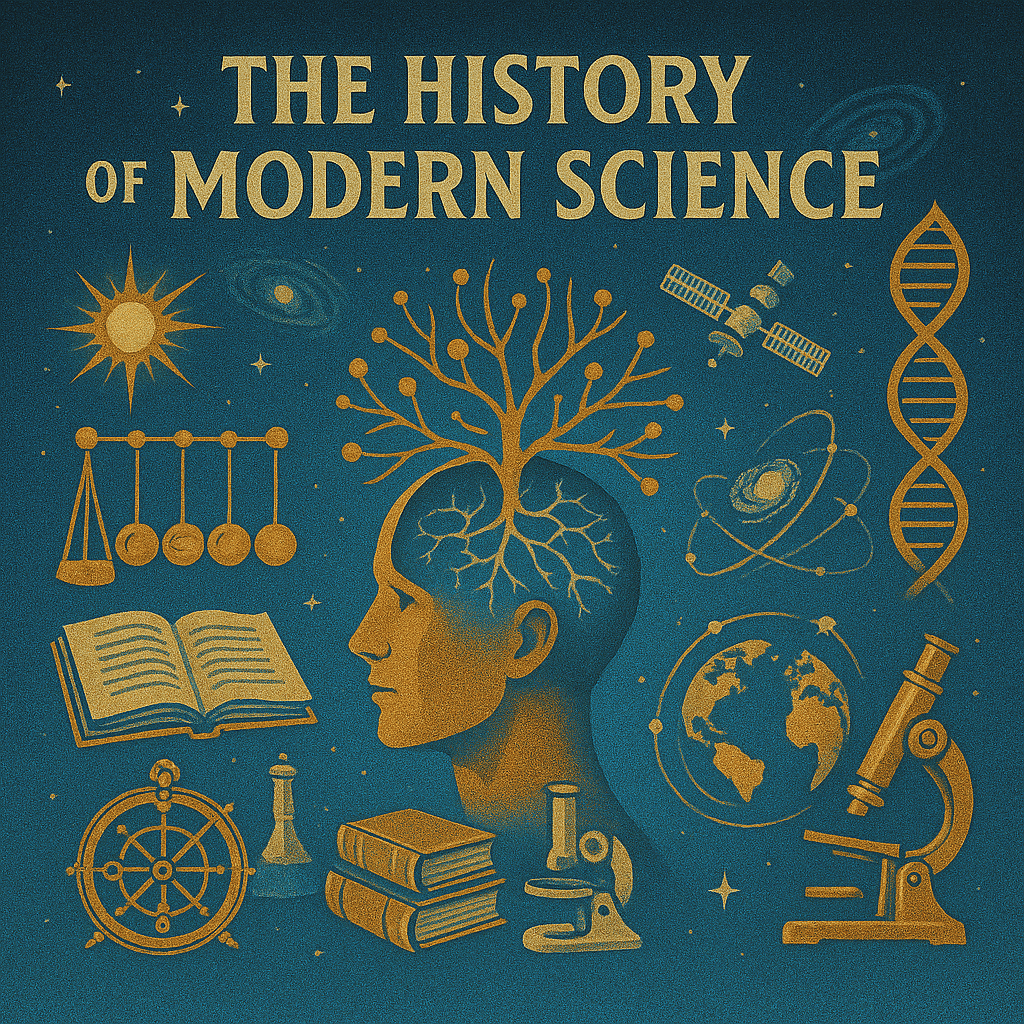
From the sharpening of telescopes to the splitting of atoms, from the stargazers of the Renaissance to the particle physicists of the 21st century, the scientific enterprise has evolved not only in power but in purpose. What we call “modern science” today is the product of centuries of upheaval—three distinct waves of transformation that rewrote the rules of knowledge itself.
Revolutionaries: Instruments of a New Vision
The true birth of modern science came in the 17th century, when human curiosity became armed with tools of astonishing precision. The telescope, microscope, clock, and barometer allowed natural philosophers to probe nature at scales and speeds previously unimaginable. The heavens were no longer mystical spheres but physical systems. The body was no longer sacred opacity but a machine of bone, blood, and breath.
This shift marked a profound transformation—not just in what we knew, but in how we knew it. The new method was not argument from authority or deduction from metaphysics. It was observation, measurement, experimentation.
Thus began the Scientific Revolution.
The First Modernity: The Scientific Revolution (16th–17th Century)
The Scientific Revolution of the 16th and 17th centuries was the first great break with the classical worldview. It began, symbolically, with the publication of Nicolaus Copernicus’s De revolutionibus orbium coelestium in 1543. The Earth, once thought to be the unmoving center of the cosmos, was cast adrift around the sun. Copernicus’s ideas were confirmed and refined by Kepler’s laws, Galileo’s telescope, and Newton’s mathematics.
This period birthed entire disciplines:
- Mathematics became the language of natural law.
- Physics revealed the predictable motion of bodies.
- Astronomy mapped the mechanics of the cosmos.
- Biology moved from guesswork to classification.
- Chemistry shed its alchemical skin and began to measure.
Science, in this first modernity, was a way of knowing the mind of God through the book of nature. It was mechanistic, rational, and optimistic.
The Second Modernity: The Chemical Revolution and the Rise of Modern Disciplines (c. 1800)
Around 1800, a second scientific modernity emerged—a new revolution in method, scale, and specialization. In chemistry, the 18th century had already witnessed the overthrow of Aristotelian elements and phlogiston theory. Antoine Lavoisier introduced mass measurement, modern nomenclature, and the oxygen theory of combustion.
This Chemical Revolution marked the moment when quantification became the heart of science. Chemistry, biology, and medicine rapidly professionalized. Laboratories were institutionalized. Data replaced doctrine.
But the most important change was conceptual: science was no longer a hobby of gentlemen-philosophers. It became a profession, a bureaucracy, and increasingly, a servant of industry and empire.
The Third Modernity: Relativity, Quantum Theory, and the Collapse of Certainty (1900–1930s)
The early 20th century saw a third rupture—the end of certainty. In quick succession:
- Albert Einstein’s relativity theory dissolved absolute time and space.
- Quantum mechanics, pioneered by Planck, Heisenberg, Bohr, and Schrödinger, revealed a probabilistic, indeterminate subatomic world.
- Godel’s Incompleteness Theorems challenged the completeness of formal systems.
- Freud’s psychology and Durkheim’s sociology suggested that the human subject was not even fully transparent to itself.
The Enlightenment dream of a mechanical universe governed by deterministic laws gave way to a universe of uncertainty, paradox, and invisible forces. Science could no longer promise ultimate clarity—it could only refine probability, model complexity, and embrace humility.
The Fourth Age: Big Science and Institutional Power (Post–World War II)
Following World War II, science entered a new phase, shaped less by individual genius and more by industrial, governmental, and military power. This was the era of “Big Science”:
- Massive funding from national governments and defense sectors.
- Large-scale collaborations like the Manhattan Project, NASA, CERN, and the Human Genome Project.
- The rise of the university as a research factory, and the laboratory as the new cathedral of modernity.
Science was now inseparable from technology, capital, and geopolitics. It became the foundation of the military-industrial complex, the driver of economic productivity, and the arbiter of policy in fields as diverse as agriculture, medicine, and climate.
Yet this fourth age also sparked a crisis of meaning.
As philosopher Steven Shapin observed, the most radical rupture in scientific self-understanding didn’t occur with Newton or Einstein—it came around 1900, when science ceased to be the direct pursuit of metaphysical truth, and became instead a practical, institutional endeavor. The scientist was no longer a sage, but a specialist; not a seer, but a technician.
A New Science for a New Humanity
We now live in an age of unprecedented knowledge and unprecedented uncertainty. Science has given us vaccines, smartphones, and artificial intelligence—but also nuclear warheads, algorithmic inequality, and ecological devastation.
We stand not just at the end of a revolution, but on the brink of a new beginning—one where science must rediscover its ethical compass, its humanism, and its humility.
The next phase of science must not be merely modern. It must be post-industrial, post-mechanical, and post-authoritarian. It must be democratic, open, ecological, and morally awake.
This new age of modern science is not only about what we can know.
It is about how we live with what we know.
The Great Tree of Knowledge
Mapping the Branches of Contemporary Science
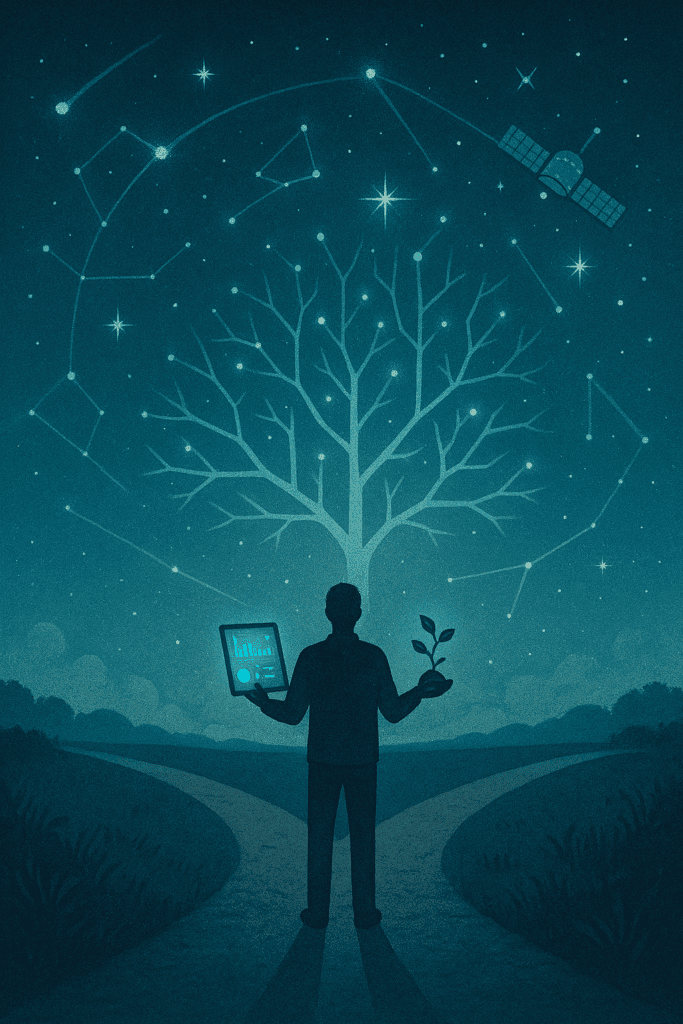
Science, once divided into a handful of classical domains—physics, chemistry, and biology—has now blossomed into a vast, interdependent tree of disciplines. Its roots lie in the human desire to understand, predict, and transform the world. But in the 21st century, the branches of science are no longer isolated trunks. They twist, cross, and fuse like a living forest canopy—dense with interconnection, innovation, and complexity.
The Classical Branches: Foundations of the Modern World
Physics, the science of matter, energy, and the structure of the universe, remains the bedrock of the natural sciences. Chemistry—the study of substances, reactions, and transformations—bridges physics and biology. Biology, once purely descriptive, has become a molecular, computational, and systems-driven science.
These three disciplines remain essential, but no longer sufficient. Their classical form was reductionist: breaking wholes into parts to understand their mechanisms. Today, this foundation supports new structures that are holistic, integrative, and multi-scale.
The Sciences of Complexity
In the late 20th and early 21st centuries, the emergence of complex systems theory, cybernetics, network science, and information theory introduced a revolutionary perspective: that life, society, and ecosystems cannot be understood solely by analyzing their parts. Instead, they must be seen as wholes—adaptive, emergent, and self-organizing.
- Systems biology investigates cellular pathways and feedback loops, modeling the body as a dynamic system.
- Ecology now draws on nonlinear dynamics and chaos theory to understand fragile planetary balances.
- Epidemiology has become computational, integrating behavior, mobility, and networks.
- Economics and sociology are being reshaped by complexity science and agent-based modeling.
We are entering an era of second-order science—science not only of things, but of relationships, feedbacks, and systemic change.
Interdisciplinary Frontiers
Much of the most exciting science today lies at the boundaries between traditional fields:
- Neuroscience, for example, combines biology, psychology, computer science, and physics to explore consciousness, cognition, and the brain.
- Climate science merges atmospheric physics, geology, oceanography, and anthropology.
- Artificial intelligence emerges at the nexus of computer science, neuroscience, linguistics, and ethics.
- Quantum biology investigates the strange role of quantum effects in biological systems.
These borderlands are no longer marginal—they are becoming the new centers of discovery.
Meta-Science: Science Reflecting on Itself
As the sciences grow in complexity and power, a new reflexive dimension has emerged: meta-science—the study of science itself.
- Philosophy of science examines the assumptions, limitations, and logic of scientific inquiry.
- Science and technology studies (STS) investigate how social, political, and economic forces shape scientific knowledge.
- Data ethics and algorithmic accountability are reshaping how we think about objectivity, bias, and responsibility in an age of automation.
In this reflective turn, science begins to take responsibility not only for what it discovers, but for how and why it discovers.
Breakthroughs of the Present Moment
The Frontiers of Knowledge and Technology in the 2020s
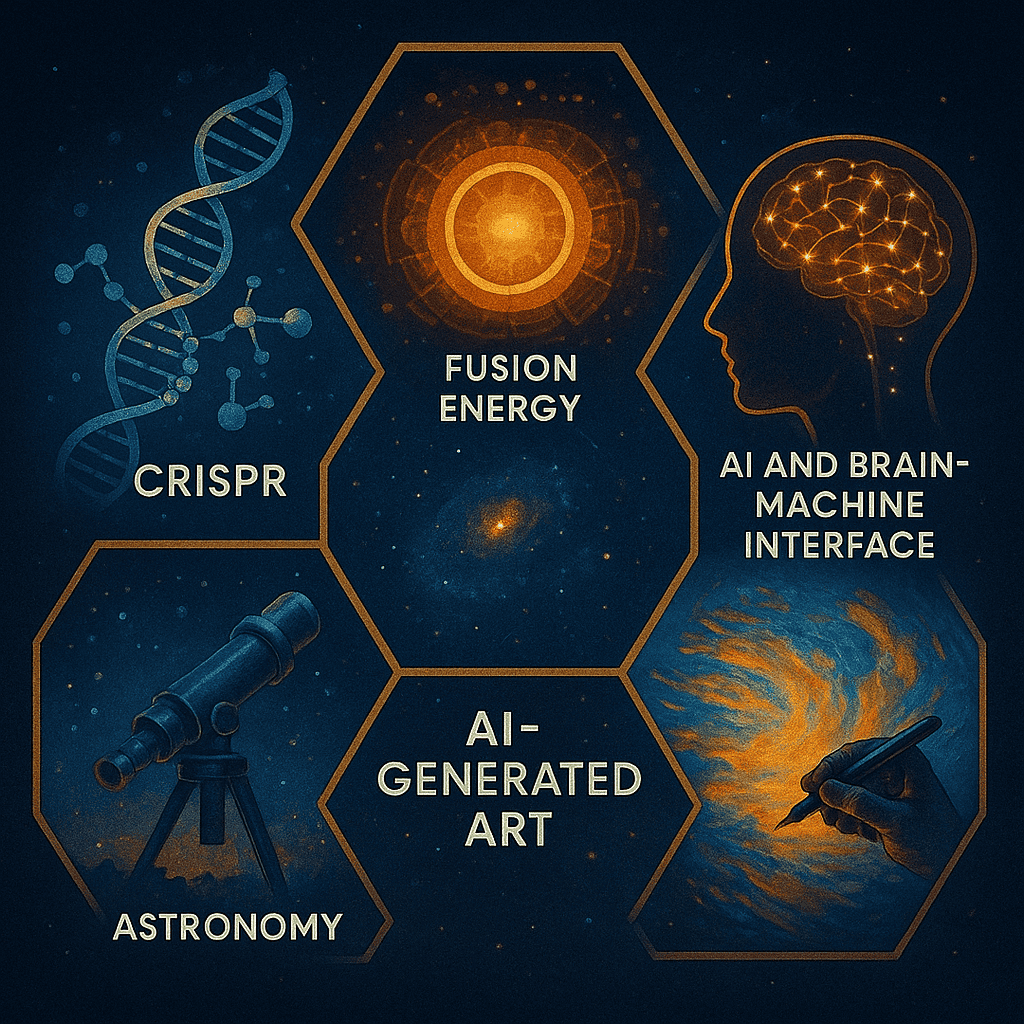
If the 20th century was defined by the atom, the gene, and the transistor, the 21st century is being defined by code, complexity, and consciousness. We live in a time of simultaneous crisis and creativity. The pace of discovery is breathtaking—but so is the magnitude of our global challenges. Science is not merely advancing; it is transforming what it means to be human, to be intelligent, and to be alive.
1. Artificial Intelligence and the Rise of Large Language Models
In the last decade, artificial intelligence has moved from narrow applications to general-purpose tools that shape communication, creativity, and cognition. The development of transformer-based language models, such as GPT, has enabled machines to generate coherent text, code, art, and dialogue. These models are trained not to understand in the human sense, but to predict, associate, and generate patterns from massive datasets.
AI is now embedded in healthcare, logistics, education, military systems, and artistic production. The line between machine learning and human learning is blurring, raising urgent questions about labor, authorship, identity, and consciousness.
2. Genetic Engineering and the CRISPR Revolution
The discovery of CRISPR-Cas9 and other gene-editing technologies has revolutionized the life sciences. What was once science fiction—editing the human genome, eradicating diseases, reprogramming cells—is now laboratory routine. From curing sickle-cell anemia to engineering crops for climate resilience, we are beginning to write the code of life itself.
Yet the ethical terrain is precarious. Germline editing, designer embryos, and biohacking present deep moral questions: What are the limits of human intervention? Who decides? What constitutes responsible innovation?
3. Renewable Energy and Fusion’s Tipping Point
In the face of climate collapse, renewable energy is no longer optional—it is urgent. Solar and wind technologies are rapidly becoming the cheapest forms of energy in many regions. Meanwhile, nuclear fusion, long considered a distant dream, has recently achieved key milestones. Private and public fusion labs are edging closer to net energy gain—a holy grail of physics.
If realized at scale, clean fusion could fundamentally alter geopolitics, economics, and the future of civilization. The race is not just technical. It is cultural and political: Can we align innovation with global coordination and ecological wisdom?
4. Neuroscience and the Mapping of the Mind
Projects like the Human Connectome Project, along with new tools like optogenetics, brain-computer interfaces (BCIs), and real-time neural imaging, are allowing us to explore the brain in unprecedented detail.
Memory implants, mind-controlled prosthetics, and neural augmentation are beginning to transition from research to application. The merging of brains and machines is no longer speculative—it is a living field of experimentation.
The central question is not only what the brain is, but what the mind might become.
5. Earth and Space Sciences: Seeing Ourselves from Afar
Satellites, space telescopes, and Earth-monitoring systems have given us new eyes. Missions like James Webb Space Telescope and Gaia are rewriting the story of the cosmos—revealing the atmospheres of exoplanets, the birth of galaxies, and the likely abundance of life-supporting worlds.
At the same time, Earth itself is under increasing scrutiny. Remote sensing, machine learning, and climate modeling offer a planetary dashboard, tracking deforestation, temperature rise, and ocean currents in real time. The Earth is no longer invisible to itself.
6. Quantum Breakthroughs: Entanglement and Computation
Quantum science is maturing. Quantum teleportation, entangled photons, and quantum supremacy have moved from theory to laboratory reality. Quantum computing promises to revolutionize encryption, drug discovery, and material science.
But this is not just a new toolset—it is a new worldview. Quantum logic challenges classical assumptions about causality, locality, and even the nature of reality. We are learning not just how the world works, but how strange it really is.
The Shadows of Progress
When Knowledge Outpaces Wisdom
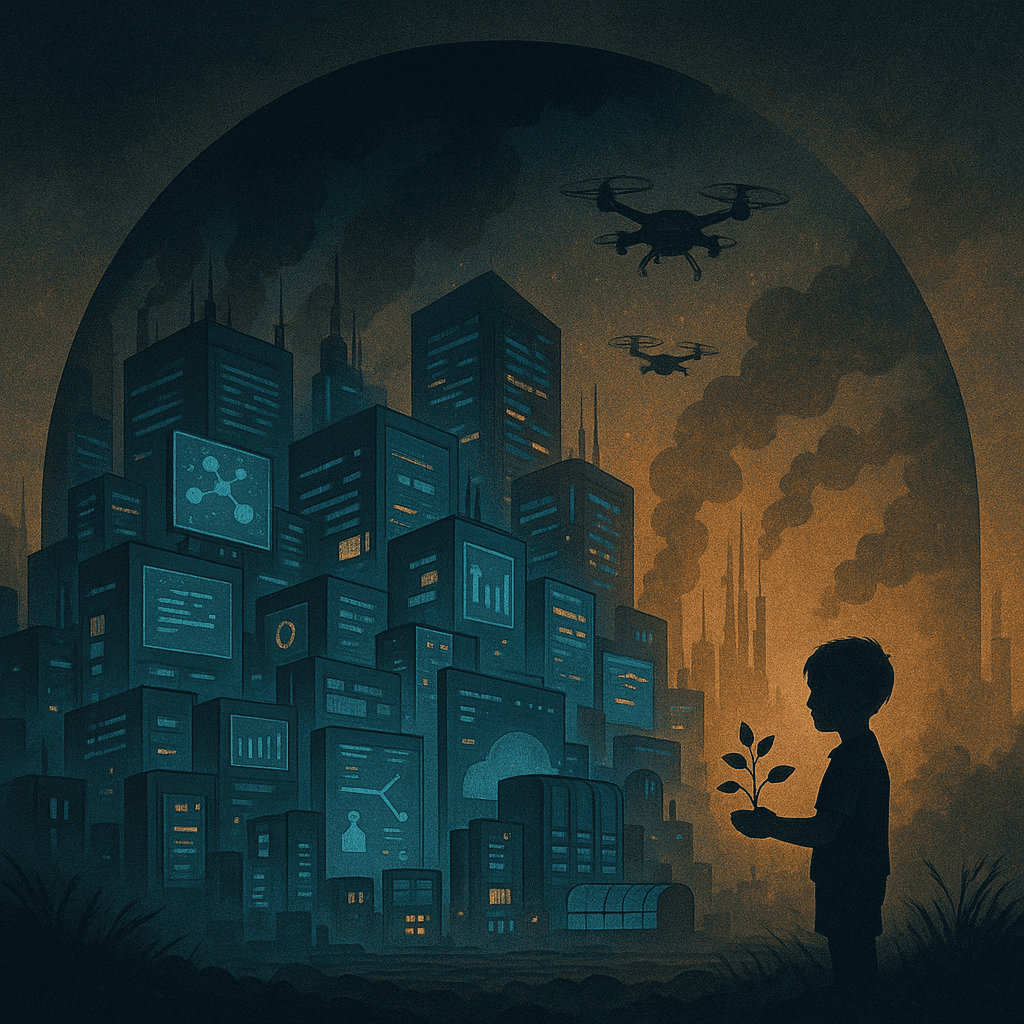
Scientific progress has always carried a double edge. The same chemistry that brews medicine can forge poison. The same physics that powers satellites can guide missiles. As our tools grow more powerful, so too does our responsibility. In the 21st century, the dark side of innovation is no longer hypothetical—it is immediate, structural, and global.
We now face a moment in which the side effects of science may overwhelm its benefits—unless we transform not just our technologies, but the systems and values behind them.
1. Surveillance, Capitalism, and the Algorithmic Cage
The digital revolution has enabled stunning new capacities for communication and collaboration. But it has also created vast, opaque systems of surveillance and control.
Social media, once a frontier of human connection, now fuels polarization, misinformation, and manipulation. The commodification of attention—measured, traded, and monetized by algorithms—has turned users into data points and behavior into profit.
AI tools, rather than liberating human potential, are often deployed to maximize engagement, automate bias, or increase productivity at the cost of autonomy. We are not yet living in Orwell’s dystopia, but we are not far from it—except that today’s control systems are decentralized, addictive, and market-driven.
2. The Crisis of Labor and the Automation of the Soul
Automation, robotics, and AI are transforming the workplace. From truck drivers to legal clerks, millions of jobs are being restructured—or eliminated—by intelligent systems. Yet most economies are unprepared for this shift.
The danger is not merely unemployment, but a deeper crisis of purpose. Work, for better or worse, provides identity, structure, and meaning for billions. What happens when intelligent machines outperform humans not only in physical labor but in creative and cognitive domains?
If science cannot address the ethical dimension of labor, we may trade technological abundance for widespread alienation.
3. Ecological Breakdown and the Mirage of Control
The planetary cost of scientific success is becoming undeniable. Industrial growth has driven mass extinction, deforestation, ocean acidification, and climate instability. Each new harvest of fossil-fueled progress accelerates the collapse of the biosphere.
Some now look to science for salvation: geoengineering, carbon capture, synthetic food. But these solutions often reproduce the same mindset that caused the crisis—an assumption that control and manipulation will always save us.
What we lack is not invention, but reverence. Without a shift from dominance to interdependence, our ingenuity will only hasten ecological unraveling.
4. Dual-Use Dilemmas: Biology, Weapons, and the Fragile Future
CRISPR can cure disease—or design bioweapons. AI can assist doctors—or enable autonomous drones. Quantum cryptography can protect privacy—or render current security systems obsolete overnight.
The problem of dual-use technology—where scientific tools have both beneficial and dangerous applications—is now central to nearly every emerging field.
But science has yet to create a robust system of global ethical oversight. Governance lags behind invention. And corporate, national, and ideological interests often overrule long-term safety or shared responsibility.
5. Privatization of Knowledge and the Erosion of Public Trust
As research becomes more expensive and competitive, private corporations increasingly dominate the funding and direction of science. Pharmaceutical companies shape clinical trials. Tech monopolies control AI development. Academic publishing walls off publicly funded research behind paywalls.
At the same time, conspiracy theories and disinformation thrive, feeding public distrust. This has created a dangerous paradox: knowledge has never been more abundant, and yet science has never been more politicized and distrusted.
If science loses its connection to public good—if it becomes a tool of markets, empires, or elites—it will not only lose its legitimacy. It will lose its soul.
Science and the Spiritual Crisis
Rediscovering Meaning in an Age of Calculation
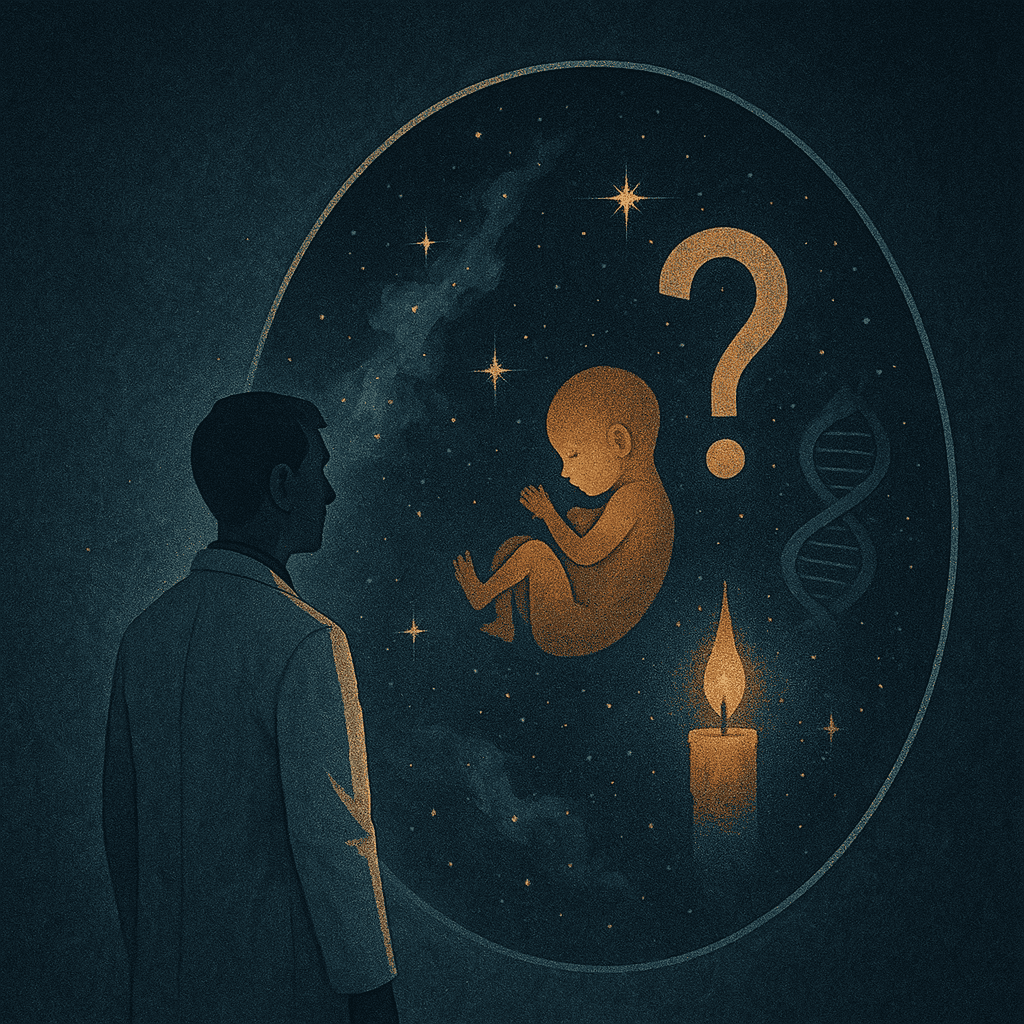
Despite its extraordinary power to describe, explain, and manipulate the material world, modern science has largely abandoned the question of meaning. The more it has mastered the “how,” the more it has retreated from the “why.” In doing so, it has opened a void that religion once filled—a void now exploited by ideology, conspiracy, and despair.
The crisis of science today is not simply ethical or political. It is existential. What does science serve? Who is it for? And what kind of human spirit does it cultivate?
1. The Myth of Objectivity and the Illusion of Neutrality
For centuries, science cultivated the ideal of objectivity: a neutral stance above culture, emotion, or belief. This ideal produced great rigor—but also profound blindness. Scientific institutions have often ignored their embedded values, reinforced structural biases, and dismissed human experience as “anecdotal.”
Neutrality, in practice, often serves the powerful. The failure to acknowledge the moral and cultural frameworks within which science operates has contributed to racism in medicine, sexism in technology, and colonialism in anthropology.
Today, there is a growing recognition that all knowledge is situated. The question is not whether science is value-laden—but what values it serves, and whether those values are chosen wisely.
2. The Bureaucratization of Wonder
The earliest scientists were not technicians—they were seekers. Kepler called his laws of planetary motion “a hymn to God.” Newton saw his discoveries as revelations of divine order. Even Einstein spoke of “cosmic religious feeling” as the source of deep inquiry.
But in many institutions today, science has become routinized—broken into grant cycles, publication quotas, and committee work. The joy of discovery is buried under metrics. Curiosity is sacrificed for careerism. Risk is punished, and wonder is rare.
This bureaucratic system produces research—but often not insight. It generates information—but rarely wisdom. The soul of science—its capacity for awe, humility, and existential engagement—is at risk of extinction.
3. False Dichotomies: Science vs. Religion, Mind vs. Matter
The modern world has inherited a war between science and religion—a narrative of mutual hostility that obscures a deeper truth. Both arise from the same root: the human need to understand, to belong, and to transcend.
While religious fundamentalism has often opposed scientific discovery, scientific materialism has often dismissed spiritual insight. This has led to a crisis on both sides: religions untethered from evidence, and sciences estranged from meaning.
A mature civilization must outgrow this binary. It must learn to value empirical truth and existential depth, skepticism and reverence, precision and poetry. The cosmos is not less beautiful because it is knowable. It is more so.
4. Reuniting Knowledge and Wisdom
What science needs now is not less rigor, but more reverence. Not a retreat into mysticism, but an integration of intellect and soul. We need a science that can speak to both the brain and the heart.
- One that investigates consciousness without reducing it to chemistry.
- One that models ecosystems not just for resource extraction, but for ecological harmony.
- One that includes ethics not as an appendix, but as an internal principle of operation.
Such a science does not deny mystery—it honors it. It sees the unknown not as an enemy to conquer, but as a horizon to approach with humility.
The future of science may depend not only on what we know, but on whether we remember why we seek to know at all.
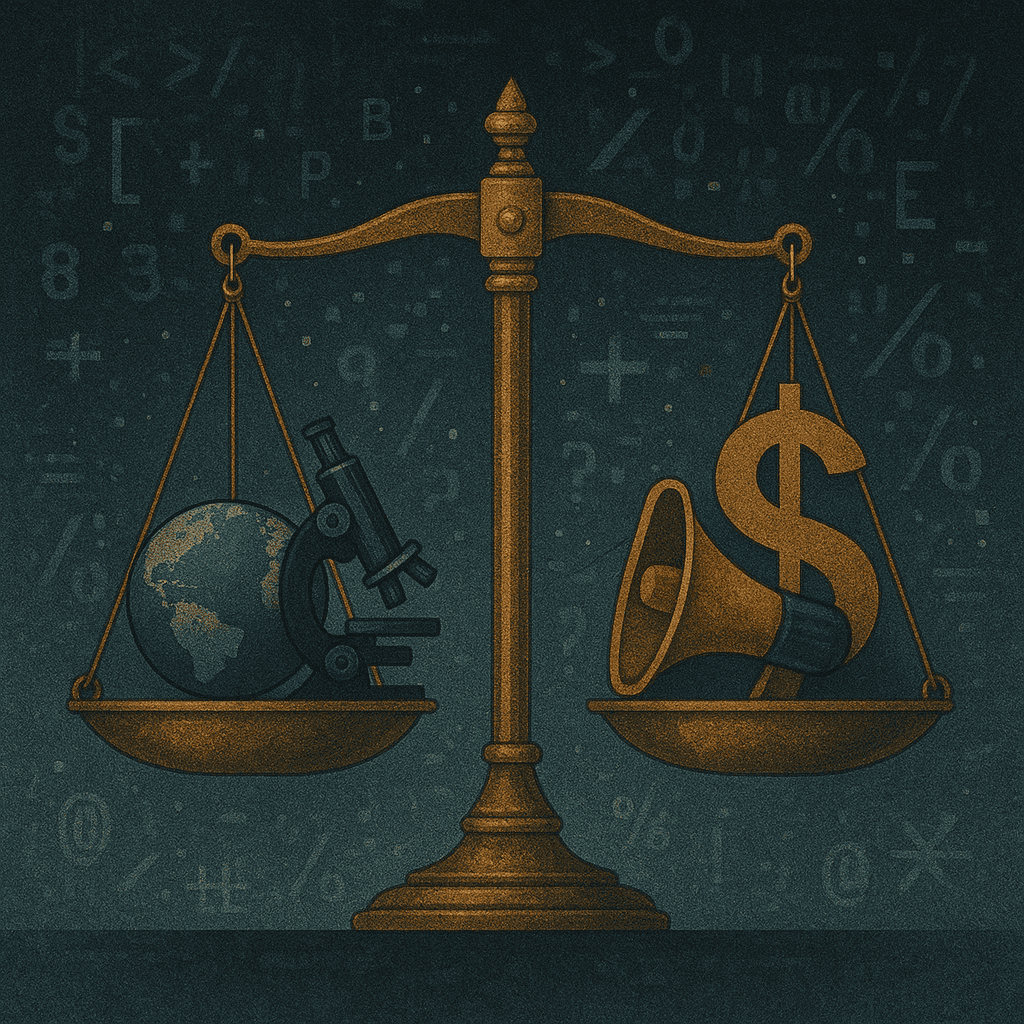
Political Power and the War on Truth
The Collapse of Trust and the Weaponization of Knowledge
In an age where knowledge is global and information instantaneous, science should be more powerful than ever. Yet paradoxically, science finds itself under siege—distrusted, distorted, and discredited by the very societies it seeks to serve. What once promised liberation now finds itself trapped in the crossfire of politics, profit, and propaganda.
The crisis is not just about ignorance. It is about power: who controls knowledge, who benefits from truth, and who fears it.
1. Populism, Misinformation, and the Erosion of Authority
The rise of populist movements across the globe has coincided with a widespread backlash against scientific institutions. In the name of sovereignty, tradition, or identity, entire swathes of public discourse have turned against vaccines, climate science, evolution, and even basic public health advice.
Social media has accelerated this trend, creating echo chambers where conspiracy theories thrive and expertise is viewed with suspicion. Platforms designed to connect people now amplify disinformation faster than facts.
In this environment, science becomes just another “opinion”—no longer a method for finding truth, but a narrative to be accepted or rejected based on tribal loyalty.
2. Science under Authoritarianism and Nationalism
In authoritarian regimes, science is increasingly subordinated to ideology. Climate data is suppressed. Health statistics are falsified. Technological development is weaponized. Dissenting researchers are censored, exiled, or imprisoned.
Even in nominal democracies, research can be distorted by nationalism. Space programs, biotech breakthroughs, and AI systems are often framed in militarized terms: as tools for strategic dominance rather than human advancement.
This politicization undermines collaboration. It turns science from a universal language into a nationalist script. It rewards secrecy over openness, compliance over curiosity.
3. The Political Economy of Research
Science does not float above society. It depends on funding, and funding follows interests.
Pharmaceutical research is steered by profit margins. Agricultural studies are often shaped by industrial lobbies. Environmental science may be muted by fossil fuel interests. Even university departments can become entangled with defense contractors or partisan donors.
When funding priorities are dictated by markets or ideology, the scope of inquiry narrows. Entire fields become distorted. And public trust erodes, as people perceive science as a servant of capital or politics—not a seeker of truth.
4. Censorship, Manipulation, and the Fragility of Free Inquiry
Even in open societies, scientific speech is under threat. Researchers fear backlash for politically sensitive work—on gender, race, climate, vaccines, or AI ethics. Some self-censor. Others are censored by institutions wary of controversy.
Meanwhile, algorithms manipulate what the public sees. Search engines, social platforms, and media feeds quietly shape the boundaries of acceptable discourse.
The ideal of the open, self-correcting scientific community is now endangered by the very tools it helped create.
5. Rebuilding Trust through Transparency and Civic Science
If science is to survive the age of disinformation, it must evolve. Authority will not be restored by credential alone. It must be earned—through openness, accountability, and public dialogue.
- Peer-reviewed journals must embrace open access.
- Data must be made transparent and reproducible.
- Scientific institutions must engage communities, not just policymakers.
- Civic science, citizen observatories, and participatory research must be expanded.
Science must become not only intelligible, but belonging to the people again—not as propaganda, but as a shared tool for understanding and improving the world.
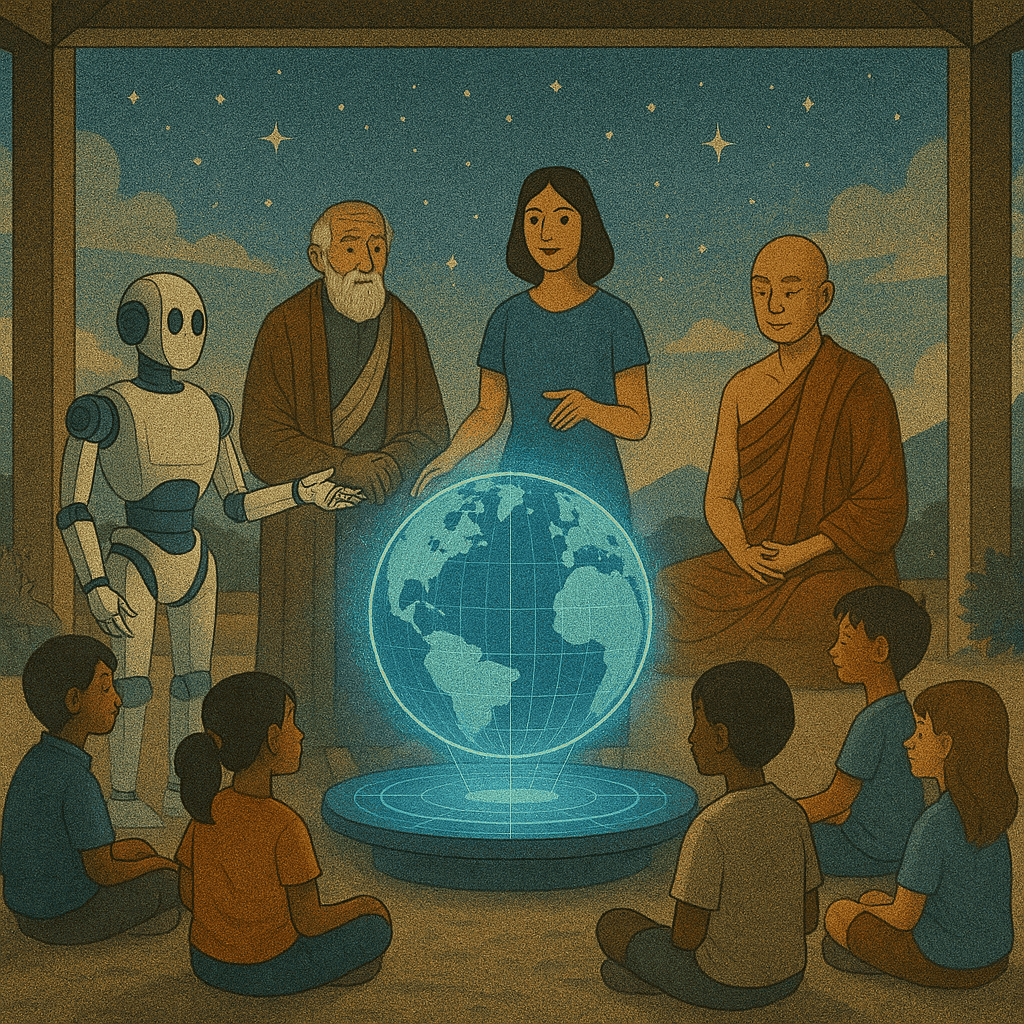
Education for the Planetary Mind
Rethinking Science Learning for a Shared Future
In a time when the fate of civilization depends on scientific understanding—from climate change to pandemics, from artificial intelligence to biosafety—science education is no longer a luxury. It is a planetary necessity.
Yet our current systems of education are relics of a different age. Industrial-era schooling emphasizes memorization, conformity, and obedience—skills suited to the factory and the bureaucracy, not the age of complexity, networks, and ecological interdependence.
To meet the challenges of our time, science education must become more than instruction. It must become initiation: into curiosity, systems thinking, ethical responsibility, and global citizenship.
1. The Failure of Standardization
Standardized testing and rigid curricula, designed for mass assessment and institutional control, often stifle the very qualities science most requires: creativity, critical thinking, experimentation, and wonder.
In many countries, students are taught to memorize facts they cannot question, repeat formulas they do not understand, and chase grades rather than insight. Teachers are overburdened, under-supported, and evaluated by metrics that discourage innovation.
This system does not produce scientists. It produces test-takers. And worse, it reinforces socioeconomic and cultural inequalities in access to knowledge.
2. Scientific Literacy for All Ages
Scientific understanding should not be confined to labs or universities. In a democratic society, every citizen must be equipped to engage with scientific issues: public health, climate resilience, technological ethics, and beyond.
Scientific literacy must begin in early childhood—not with rote facts, but with inquiry, observation, and imagination. At the other end of life, lifelong learning programs should support adults in navigating the ethical, social, and practical implications of rapid technological change.
A scientifically literate society is not one in which everyone is a physicist. It is one in which no one is helpless before science.
3. Teaching Interdependence and Systems Thinking
The major problems of our time—pandemics, global warming, economic inequality, digital manipulation—are not reducible to single causes. They are systemic: networks of relationships, feedbacks, and emergent dynamics.
Yet most science education still isolates disciplines: biology from ecology, physics from ethics, technology from sociology. This fragmentation blinds students to the very patterns that matter most.
To cultivate a planetary mind, we must teach systems thinking—how actions reverberate across scales, how change unfolds over time, and how local choices shape global consequences.
4. Open Access, Citizen Science, and Local Empowerment
Access to scientific knowledge remains profoundly unequal. Much research is locked behind paywalls, written in inaccessible jargon, or buried in data silos. This creates a science of elites, divorced from the public it claims to serve.
Open access publishing, creative commons licensing, and multilingual science communication must become standard. But beyond access, we must foster participation.
- Citizen science projects—from mapping biodiversity to monitoring pollution—reconnect people with discovery.
- Community labs and makerspaces democratize experimentation.
- Digital platforms can support localized learning tailored to cultural context and ecological needs.
In this way, science becomes not only a global enterprise—but a local tool for empowerment.
5. Educating Scientists as Whole Humans
Finally, we must transform not just how we teach science, but who we believe a scientist is. The future scientist is not merely a technician, coder, or data analyst. They are also a philosopher, a steward, a communicator, and a moral agent.
We must teach ethics not as an afterthought, but as a foundation. We must include history, philosophy, and emotional intelligence as part of scientific training. We must encourage empathy as much as excellence.
The world needs not only more scientists. It needs better ones: awake to their own assumptions, connected to humanity, and capable of stewarding knowledge with wisdom.
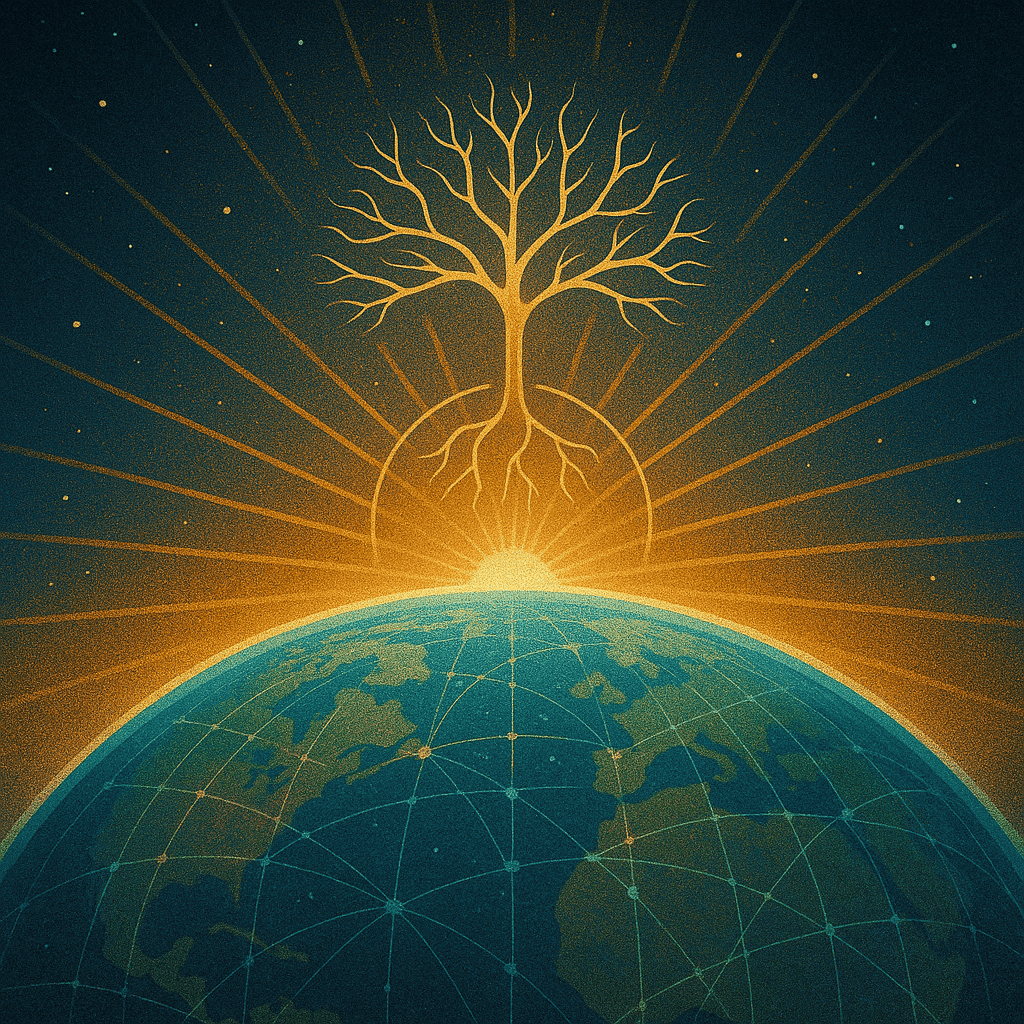
Scientific Humanism and the Future of Knowledge
Integrating Ethics, Empathy, and Discovery
The modern scientific project was born in a time of great upheaval—when old religious orders were giving way to empirical curiosity, and when knowledge began to be liberated from dogma. But in casting off the chains of superstition, science also shed much of its soul.
Today, a new synthesis is emerging—one that seeks not to revert to mysticism, but to integrate knowledge with compassion, democracy, and human purpose. This vision is scientific humanism: the commitment to use reason and evidence in service of human flourishing, planetary wellbeing, and universal dignity.
This is not just a philosophy of science. It is a transformation of science itself.
1. What Is Scientific Humanism?
Scientific humanism affirms that science is not merely a collection of facts or a method of inquiry. It is a human activity—shaped by our values, guided by our needs, and dependent on our ability to live with what we know.
It embraces the Enlightenment ideal of truth through reason, but grounds it in the 21st-century realities of ecological interdependence, global inequality, and technological power. It recognizes that knowledge is not neutral, and that wisdom must accompany intelligence.
Scientific humanism calls for:
- A science rooted in evidence, but conscious of context.
- A practice that is curious, yet compassionate.
- A pursuit of truth that includes the emotional, ethical, and existential dimensions of life.
2. From Institutions to Networks
The 20th century was the age of Big Science: national laboratories, sprawling universities, and massive government-funded programs. These institutions gave us the moon landing, the internet, and the human genome.
But they also created hierarchies, bureaucracy, and insulation from the public. The future will likely be shaped more by networks than by empires—open platforms, collaborative research communities, and decentralized knowledge ecosystems.
- Open-source movements, citizen science, and crowd-sourced data are already redefining how discovery happens.
- Independent researchers, nonprofits, and interdisciplinary institutes are emerging as powerful engines of innovation.
- Online platforms and AI tools are lowering the barriers to entry, empowering individuals across borders to contribute meaningfully to science.
This shift is not anti-institutional—it is post-institutional. It asks how we might reimagine scientific authority as participatory, inclusive, and transparent.
3. Empathy, Wisdom, and the Moral Compass of Inquiry
As our power increases, so must our ethical maturity. We are reaching the point where what we can do vastly exceeds our capacity to understand its long-term consequences.
Scientific humanism demands a new kind of researcher—not just skilled in methods, but grounded in meaning. This includes:
- Empathy: the ability to consider the impact of research on diverse populations, future generations, and non-human life.
- Wisdom: the discernment to ask which problems are worth solving, and which technologies may do more harm than good.
- Responsibility: a willingness to speak out, to question funding priorities, and to place the common good above institutional allegiance.
These are not soft skills. They are the future of science.
4. Science in Service of Humanity and the Earth
Scientific humanism is not only a critique. It is a call to action.
- To put innovation at the service of human rights and global equity.
- To reorient research agendas around climate stability, public health, and cultural resilience.
- To build a civilization where the frontiers of knowledge are aligned with the frontiers of justice.
In this vision, science becomes a kind of stewardship—not of nature alone, but of knowledge itself. A practice of humility and courage. A way of seeing, asking, and caring.
If we succeed, the sciences of the future will be wiser, kinder, and more integrated than those of the past—not because we know less, but because we understand more deeply what knowledge is for.
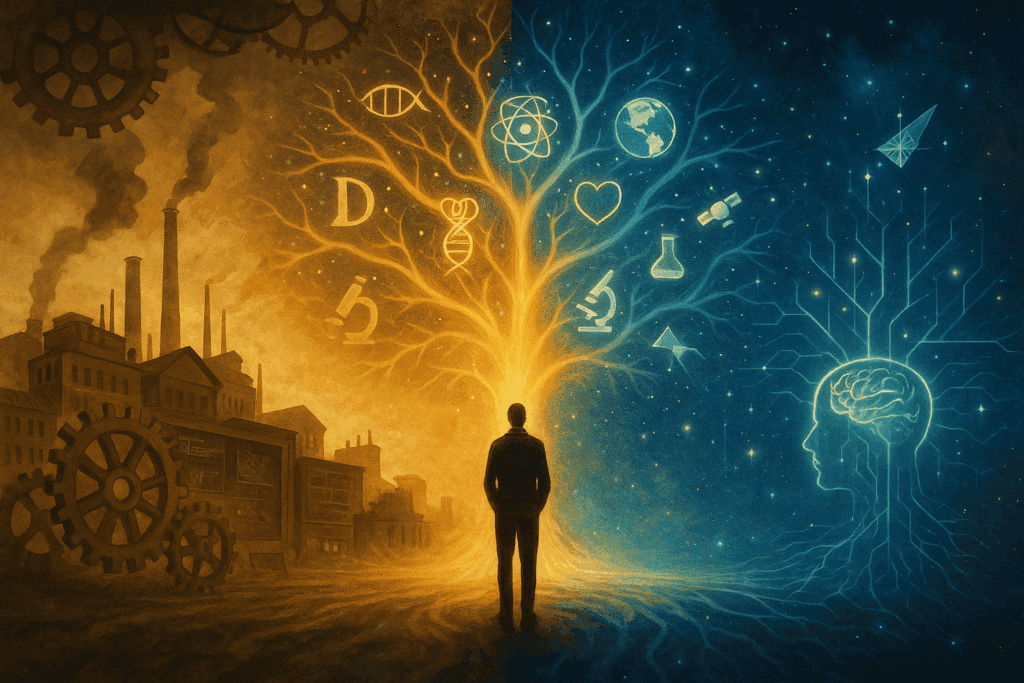
IX. Conclusion: The Intelligent Age
From Knowledge to Wisdom, from Power to Purpose
We are entering a new epoch—not merely another phase of technological advancement, but a deep civilizational transition. The Age of Intelligence will not be defined by machines alone, but by how we choose to live with our machines, our knowledge, and one another.
This is a turning point not just for science, but for humanity.
1. Intelligence Beyond Computation
The term intelligence has too long been confined to computation, speed, or rational problem-solving. But true intelligence includes:
- Emotional intelligence—the capacity for empathy, resilience, and self-awareness.
- Ecological intelligence—an awareness of interdependence, limits, and sustainability.
- Moral intelligence—the ability to discern good from harm, and choose long-term flourishing over short-term gain.
- Spiritual intelligence—not in the religious sense alone, but in the capacity to hold mystery, meaning, and reverence for life.
In this broader sense, the Intelligent Age demands more than clever tools. It calls for whole humans.
2. Toward a Wise Civilization
The question we now face is not only what can science do? but what kind of world should it help build?
If the 20th century gave us the power to reshape the Earth, the 21st must give us the wisdom to live in balance with it.
That wisdom will not come from data alone. It will emerge from dialogue—between cultures, between disciplines, between generations. It will arise when the scientific method meets the moral imagination, and when the search for truth is guided by the spirit of compassion.
In this sense, the future of science is inseparable from the future of civilization itself.
3. The Rediscovery of Purpose
The next renaissance will not be a return to ancient dogmas or a glorification of new machines. It will be the rediscovery of purpose—a shared understanding of why we seek to know, to heal, to invent, and to transform.
Science without purpose becomes a mechanism of control. But science with purpose can be a practice of liberation.
It can help us imagine worlds not yet born. It can help us correct our course when we stray. It can help us remember that knowledge is not an end in itself—but a sacred trust between generations, a torch passed from mind to mind, from heart to heart.
A Final Reflection
In the Age of Intelligence, may we remember that wisdom is not the opposite of science.
It is its completion.
May we build laboratories of empathy, classrooms of wonder, and democracies of truth.
May we plant the seeds of a scientific culture that is as humble as it is brilliant—and as devoted to life as it is to logic.
The future is not yet written. But it will be shaped by how we learn to ask the right questions—and who we become in the process.
The History of Science
The History of Science Archives
The Global History of Philosophy: A Journey Through the Human Search for Wisdom
Before Science: The Genius of the Ancient World
The First Scientists: The Greek Philosophers of Ionia
The Ancient Musaeum and Library of Alexandria
The Royal Art: Alchemy and Science
Alchemy and the Birth of Modern Science