
Updated 2026
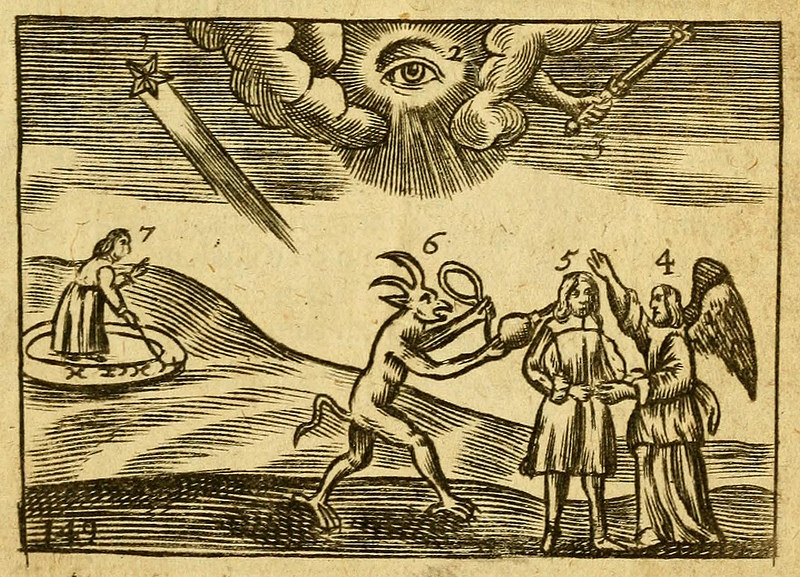
Table of Contents
Introduction
From Magic to Science: The Evolution of Human Explanation
Magic
Sympathetic Causation and the Roots of Spiritual Thought
The Heavenly Realm and the Soul
Invisible Substance and the Theory of Connection
Spiritual Hierarchies
Fertility Gods, Paternal Deities, and Cosmic Order
Church and State
Magician-Kings, Bloodlines, and Sacred Authority
The Paternal Deity
Royal Descent and the Archetype of Divine Sovereignty
The Spirit World
Angels, Daemons, Jinn, and Psychological Archetypes
Conceptions of the Spirit
Breath, Life-Force, and the Immortality of Nature
Mind, Body, and Spirit
Holistic Conceptions of Human Nature
Alchemy and the Science of Spirit
Qi, Prana, Pneuma, and the Philosopher’s Stone
Meditation and Illumination
From Ritual Invocation to Contemplative Inquiry
Conclusion
The Science of Wholeness and the Integration of Spirit
Introduction
Before theology became doctrine and before philosophy became system, humanity sought explanation in symbol, ritual, and story. What we now call religion began not as blind faith, but as an early and earnest attempt to understand the forces governing existence. As Richard Dawkins once observed, religion originally functioned as a kind of primitive scientific theory—an explanatory framework for life, death, weather, fertility, misfortune, and the structure of the cosmos.
To understand modern spirituality, one must first examine these early explanatory systems. Sir James George Frazer’s The Golden Bough remains one of the most comprehensive studies of the magical worldview that preceded organized religion.
In this landmark work, Frazer describes how early humans constructed a coherent—if scientifically incomplete—model of causation based on what he called Sympathetic Magic: the belief that hidden connections link all things, allowing influence to pass between them through resemblance or contact.
These early systems were not random superstitions but structured attempts to interpret reality. They represent humanity’s first large-scale metaphysical hypothesis: that invisible forces—spirits, souls, gods, energies—mediate the relationship between cause and effect.
Whether expressed in alchemical mottos, Daoist cosmology, biblical creation accounts, or Greek mythology, the central question remained the same: What is the unseen principle that animates life and orders the world?
Here we explore those ancient conceptions of spirit and deity, neither romanticizing nor dismissing them, but understanding them as foundational stages in humanity’s evolving effort to explain existence. We cannot understand the fruits without first knowing the roots.
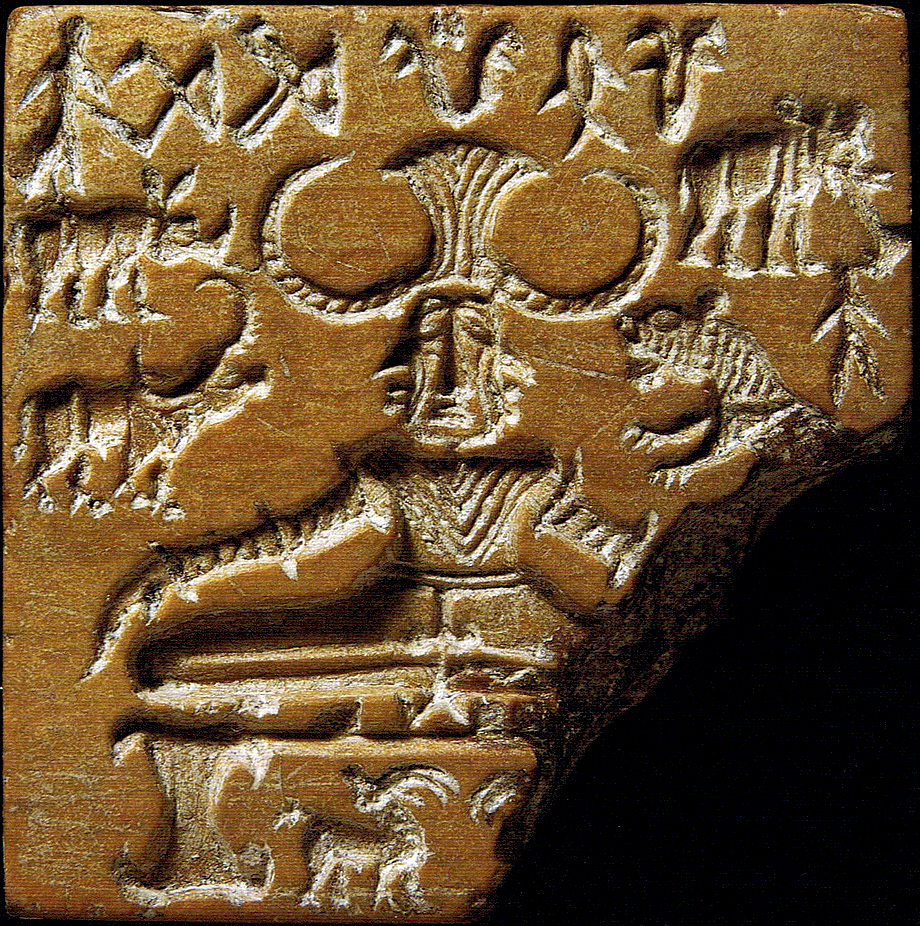
Magic
The famous atheist Richard Dawkins, Professor for Public Understanding of Science in the University of Oxford from 1995 to 2008, said:
“…until recently one of religion’s main functions was scientific; the explanation of existence, of the universe, of life… So the most basic claims of religion are scientific. Religion is a scientific theory” (The Independent, 20th April, 1992).
The Golden Bough by Sir James George Frazer is the best treatise written upon the subject of primitive magic to date. This article can offer only a brief summary of what may be explored in Frazer’s classic and monumental survey. This is a necessary introduction to primal spirituality for everyone interested in human spirituality. One cannot understand the fruits without first knowing the roots.
Our roots are, as one might expect, deep in the earth, as the alchemical motto in the L’Azoth des Philosophes of fifteenth century alchemist Basilius Valentinus suggests: “Visita Interiora Terrae Rectificando Invenies Occultum Lapidem,” which means, “Visit the interior of the earth and purifying you will find the hidden stone.”
Frazer notes that all primitive magic is founded on a single principle called Sympathetic Magic. Sympathetic Magic is based on the assertion that things act on each other at a distance through a spiritual sympathy, or connection.
In contagious magic sympathy is implied between a thing and its part, or between two objects that have had contact with each other at one time. Thus a person may be affected by action upon separated blood, hair, teeth, or nails, personal possessions, immediate family members, even by their own shadow, reflection, footprint or name.
Homeopathic magic uses imitation to work its effect. The magician may imitate the subject he aims to act upon or he may imitate the effect he desires, or both. Thus a magician might injure or destroy an image of his enemy in order to harm him.
Frazer distinguishes this positive kind of magic, or sorcery, from negative magic, or taboo, which prohibits the primitive person from doing certain things that resemble undesired effects. Thus certain plants and animals, which are endowed with undesirable qualities, are avoided as food.
Magic, then, was not irrational chaos but an early theory of causation. It assumed that the universe was ordered, interconnected, and intelligible—even if the mechanisms of that order were misunderstood. Sympathetic Magic expressed a profound intuition: that reality is bound together by hidden correspondences.
Though modern science has replaced imitation and taboo with experimentation and verification, the underlying impulse remains the same—the search for lawful connection beneath surface appearance. Primitive magic represents humanity’s first systematic attempt to explain and influence the forces of nature. It is the root from which religion, philosophy, and eventually science itself would grow.
To study magic is not to regress into superstition, but to understand the earliest architecture of human reasoning and the beginnings of our enduring quest to comprehend the invisible bonds that hold the world together.
The Heavenly Realm and the Soul
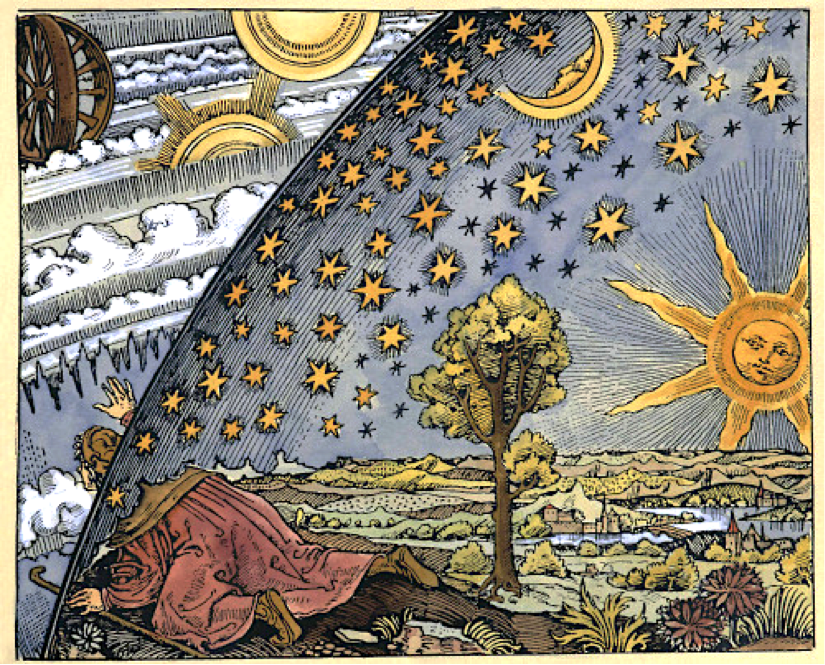
The whole theory of Sympathetic Magic rests upon the hypothesis of the existence of the spirit or soul, which is the invisible substance that explains how two objects can physically affect one another from a distance. Such a substance, Frazer suggests, is not unlike the aether hypothesized by scientists to explain the same phenomenon in non-human dimensions.
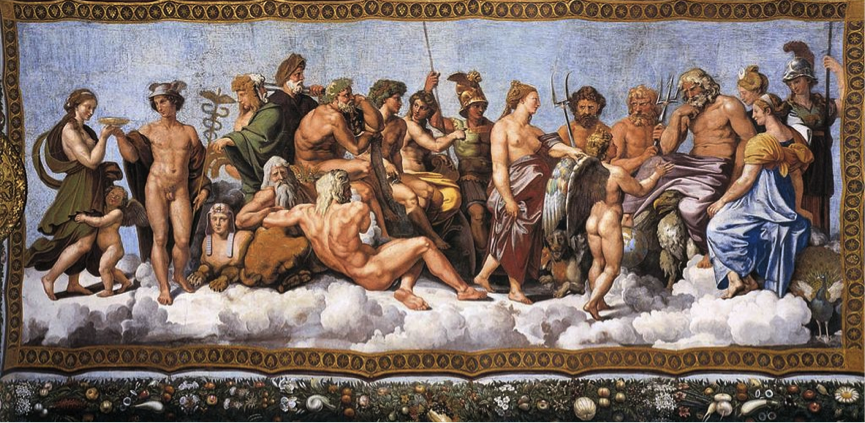
Early man generally considered gods to be sentient, human-like beings with super-human powers, invisible, yet in charge of governing the universe according to prescribed laws. Each god ruled over a particular part of the universe, such as heaven, earth, water, fire, various geologic and climatic forces of nature, livestock and crops, love and war, government and health, etc.
These gods are thus analogous to the angels, spirits or “daemons” of the occultist, which indeed often proceeded from the ancient theology.
It is common knowledge that before the Communist revolution a Chinese alchemical Daoist monastery’s main income often came from exorcisms or displays of marvels. The recluses viewed these duties as a tiresome inconvenience. Evoking demons has been known to have been done anciently, but only very rarely.
According to various traditions, some demons are self-existing entities, others are creations of the mind. It is believed that the former may be given sacrifices, the latter are simply destructive tools of magicians, and must be killed by the stroke of a sword. There are Daoist alchemist tree spirits, ghosts, fox-spirits and gods, of varying benevolence and malevolence.
These entities, gods or daemons, have often in human history been invoked and evoked to assist the mortal. The psychoanalyst invokes the gods in therapy as archetypes, models or epitomes of personalities or parts of character. This is meant to eventually lead the subject to self-actualization through alchemical isolation of the Prime Matter and the union of the macrocosmic and microcosmic archetypes in the Chymical Wedding.
Spiritual Hierarchies
A comparison of early cultures reveals a universal belief in the existence and benevolence of a fertility spirit or god that created and ordered the heavens and the earth. Most often the good spirit was imagined as a male deity, the Father and King, who brought sun and rain (thunder and lightning) to produce the harvest, and fire to give heat, light, and protection in the night.
He was the producer and sustainer of life, who made livestock and humans fertile, as well as crops. He was the provider and protector during the hunt, raid or battle, who bestowed wisdom upon the people.
This entity, diverse as his attributes have been throughout history and various cultures, is archetypal, and he will hereafter be referred to as the Paternal Deity. His counterpart was the good Mother Earth or Mother Nature who also represented the power of fertility, often governing the hearth and home and assisting during pregnancy and childbirth.
Some peoples attributed all of their circumstances to a single entity, be it a monotheistic or polytheistic god. They imagined themselves punished for their own evil when misfortune betook them, and rewarded for good at their good fortune. They saw day and night as contrary phases of the same cycle, and likewise did they conceive of the seasons.
Perhaps, like the sages, our ancient human ancestors conceived of the world or universe as a continuous whole wherein good and evil are subjective reflections upon natural phenomena not universally benevolent or malevolent, but only so from the human perspective.
In many cultures, however, the public did not see the necessity or justification of the totality of nature; to oppose the benevolent Paternal Deity was the malignant evil spirit or god. The evil one was the cold and dark night, the death of the sun; he was winter, the death of the crops, and he was illness, death, and misfortune, in general among people and their possessions. The Paternal Deity was compelled or petitioned and then praised for his blessings while the Evil Deity was banished and cursed for his interference.
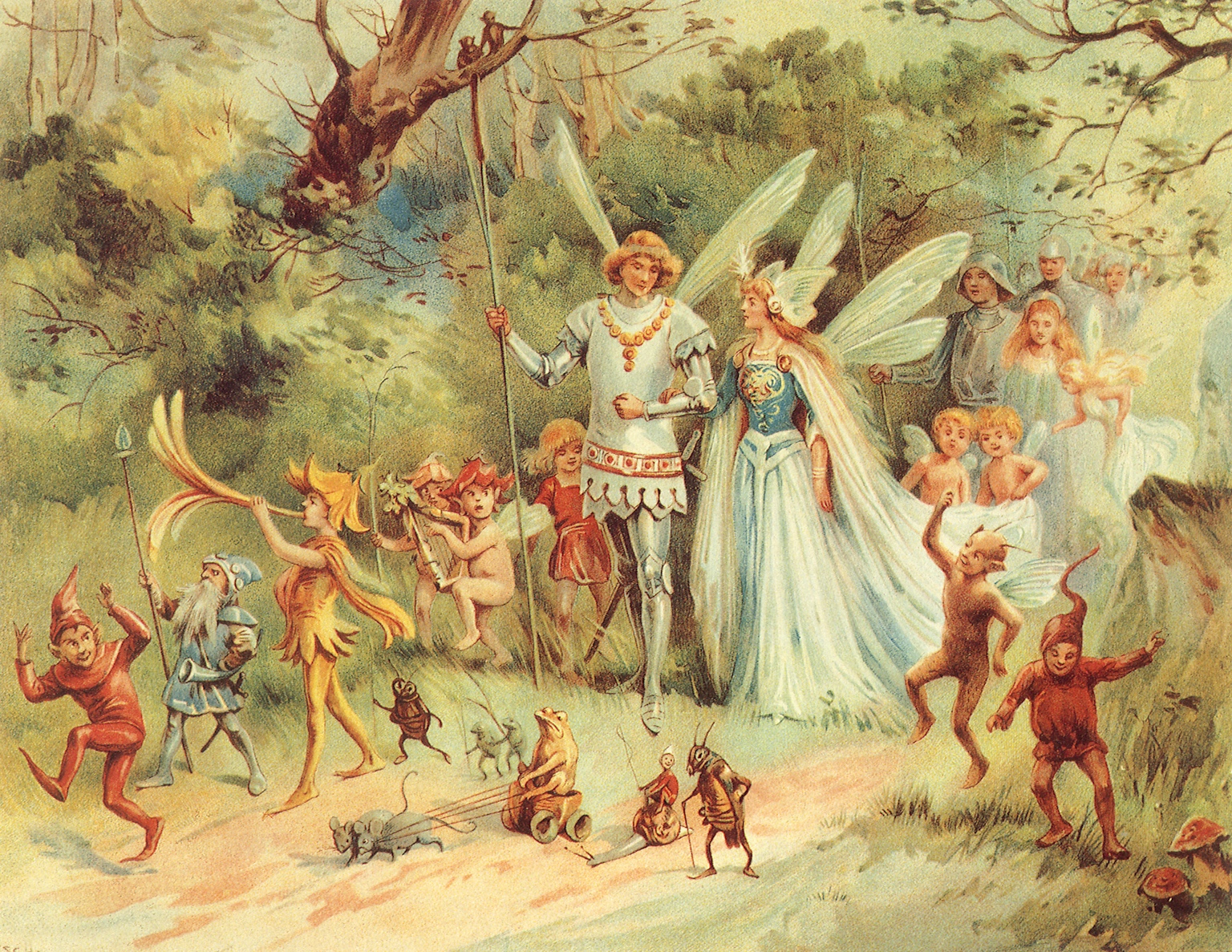
In some cosmologies the gods could not be communicated with directly, but messengers were placed between them and their human neighbors. Thus evil spirits and demons were evoked to converse with the devil, or banished to combat his influence; good spirits or a single “holy spirit” were evoked to commune with the good god, or a messenger god or spirit beings (angels, jinn or fairies) were sent by the god to aid men.
Some magic systems organize the forces invoked during ritual into a hierarchy of spirits or archangels and angels. Each concept or idea may be characterized by an angel just as it may be symbolized by a god, an “element,” a “metal” a “planet,” or a “constellation.”

Conceptions of the Spirit
Conceptions of the spirit have always been diverse. Physical bodies may be conceived of as being mere manifestations of immortal spirits, or gods. Thus gods are simply the forces and elements of nature; Apollo is the sun, Ceres is the corn, Dionysus the vine, etc. Any time the sun gave way to night, or autumn with its harvest of crops gave way to winter, the light and the crops were resurrected in the morning and the spring, respectively, due to the immortality of the god associated with them.
This conception is not essentially anthropomorphic: the gods are identified directly with the thing they represent. But it may become anthropomorphic when personal names are given to the gods and images that personify the gods are used as symbols to signify them.
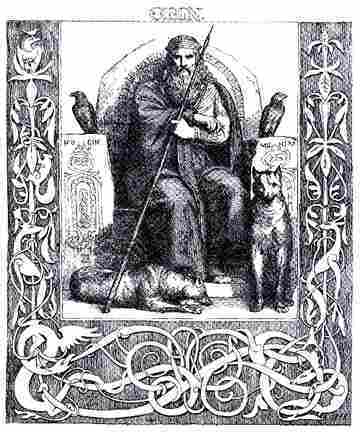
Gods might also be separate from their charges, rulers over them that live disembodied in an ethereal place unavailable to mortals; the Greek Mount Olympus was home of the gods, notably Zeus the father of the gods who ruled heaven and earth; the Judeo-Christian Heaven, home to Yaweh the Father and Lord, and the Nordic Asgard, home of father Odin and the other gods. Ancient man theorized not only invisible beings associated with the elements and forces of nature in general, they were interested in particular objects, as well.
Many ancient peoples imagined invisible living beings inhabiting each of the different forms they saw in nature. They imagined an astral double dwelling within every lake, mountain, stone, tree, animal, and person. The spirit might share the shape of the physical body it is clothed in or it might take the shape of an animal, person, or imaginary being.
The spirit may be considered to exist outside of its physical form, as in the case of gods who ruled over the elements or sometimes the souls of people. The soul of a person could leave through the mouth or nostrils and cause dream, trance, illness or death. It might escape during sleep or a sneeze or yawn, or it might be stolen by a ghost, a magician, or a demon or devil. A soul or the souls of an entire family might be stored in some sacred object like a plant, tree, or animal, to keep them safe.
Church and State:
Blood Sacrifice and Succession
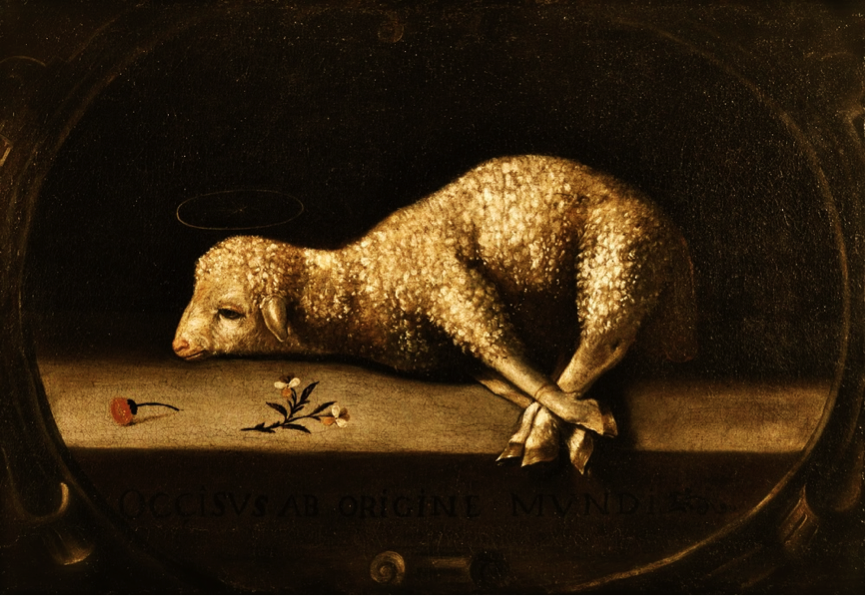
The magician is sometimes a king or priest, and sometimes he or she is considered a criminal or an outcaste. In ancient times the magician practiced his magic publicly for the welfare of his community.
The magician’s people depended on him for the very maintenance of life; he was to control the sun, the rain, and the success of his community in every endeavor. His position afforded him power and influence among his people, giving him a leading role in the religious and political life of mankind. The medicine men or priests were historically the first and earliest chiefs or kings of ancient tribes.
One who became chief or king through heroism, inheritance, or other circumstances, was expected to perform magical duties. In time, as medical, spiritual and political duties became more complex and time consuming, the head office was divided between the three functions.
Those who had been victorious in battle took over political sovereignty, those more spiritually inclined learned and developed the religious discipline of the community, and the more scientific-minded adopted the rigors of medicine.
Various societies grew to have either priestly-kings with war veteran advisors, or warrior kings with spiritual advisors. To understand the natural relationship between Church and State it is necessary here to briefly discuss early conceptions of monarchy, of succession, of evil, and of the function of blood sacrifice in human society.
The Paternal Deity
As far in the past as human memory and resource has the power to penetrate the earliest magician-king had been chosen to rule due to his descent from a yet more ancient magician or god. As ghosts of dead rivals haunted early man, and were warded off with rituals, spells and talismans, the spirits of his ancestors watched over him and received his veneration.
The Paternal Deity produced the royal line in most cultures, but the minor gods had their share of offspring with mortal maidens. It was common in the early history of man for an unmarried woman, who was by strict custom a virgin, to explain her pregnancy by the polite excuse of divine conception.
The ancient world was in no short supply of so conceived demi-gods, as many primitive kings claimed descent from such unions. To trace their ancestors to the Greek heroes of divine descent, both the Roman poet Virgil and the British historian Geoffrey of Monmouth contrive royal blood connections through Aeneas, a legendary prince of Troy who fled to Italy after the Trojan War.
The immortal Paternal Deity is supposed to share his soul with his descendants, the family of chieftainship or line of royalty. He is the archetype for his successors. Likewise, the wife of the king often was the embodiment of the tribal goddess. Royalty could thus claim divinity through their bloodlines.
Indeed, as gods are nothing more than the perceived forces of nature, and the leaders of men are incontestably natural forces, it is not presumption or vanity to recognize the divinity of the government. The ruler is a god not less or more than sun, rain, sky or earth.
The Spirit World
Spirits are interpreted differently by different cultures, for example, as Daoist gods and spirits, Chinese internal organs or life functions, as the Egyptian and Greco-Roman gods, the Jinni or genies of Islam, the Catholic Patron Saints, or Goetic and Enochian spirits.
The “Shemhamphorash” of the Goetia of The Lesser of Solomon the King is a list of seventy-two spirits with various powers. These spirits are, in part, forces in nature which may be perceived, and in part, “portions of the human brain,” as the philosopher magus Aleister Crowley conjectured in The Initiated Interpretation of Ceremonial Magic (1904).
To veil such things in darkness, out of the application of science, is wrong. It is an illusion, this division between science and spirit. Thus the knowledge must be gathered into one book, the spirits revealed as energy, as forces, and the methods discovered scientifically.
Spirit is often, but not always, sought in stillness and silence. One method of dwelling in the spirit involves meditating by following the breaths to the source of life or simply counting the breaths or focusing on inhalation and exhalation. This method is used, for example, in yogic, Daoist, and Zen Buddhist meditation.
The Zen Buddhist with insight knows her own perceptions, views, and ideas of the world are illusions, or emptiness. In meditation known as Zazen she cultivates prajna, or transcendental wisdom, by always staying vigilantly mindful in the moment without attending to thoughts, emotions, or other distractions. The Zen meditation method of shikantaza, or “just sitting,” allows the sitter to grow wiser by doing “nothing.”
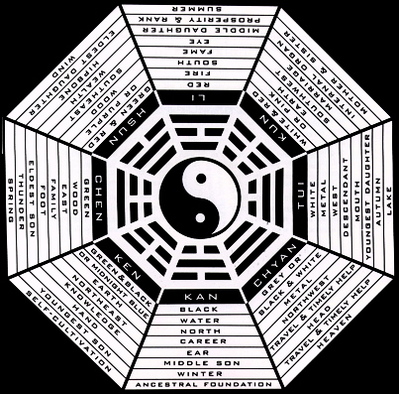
To the Daoist alchemist the “Three Treasures,” Jing, Qi, and Shen, each represent a kind of spirit. The practice of Daoist alchemy begins with self-restraint, moderation and stillness. The alchemist learns to control the heart, the seat of fire, that it may not be stirred by the seven emotions:
pleasure, anger, sorrow, joy, love, hate, desire; or the five thieves: eye, ear, nose, tongue, body. This is the foundation of the preservation and growth of jing, or generative force, which is dispersed by the senses and emotions.
According to the second chapter of the Daode jing, the One gives birth to the two (yin and yang), the two to the three (jing, qi, shen), and the three to the 10,000 things (an archaic Chinese term for the totality of all things in the universe.) Cultivating the Three Treasures thus leads to Daoist Immortality.
Cultivating jing, or essence, leads to a store of generative energy. Cultivating qi, life-force or vitality, leads to the realization of eternal life. Cultivating shen, or spirit, leads to the realization of essential nature; No-mind or Samadhi.
In the Hebrew Torah, the words of Moses describe God’s creation of heaven and earth from void, “Darkness over the surface of the deep” with the ruach, translated as “wind”, “spirit”, or “breath” of God “Sweeping over the water.” The Christian term for ruach is Holy Ghost or Holy Spirit, the English “spirit” deriving from spiritus, the Latin for “breath.”
This is usually considered to be distinct from the human soul. “Soul,” describes simply the functions of the mind, or the whole person itself, as distinct from the spirit, the conjectured active spark of life within all living things.
Ageless Chinese Meditation | Alchemy, Qigong and Taijiquan
Chinese Daoist Alchemical Meditation
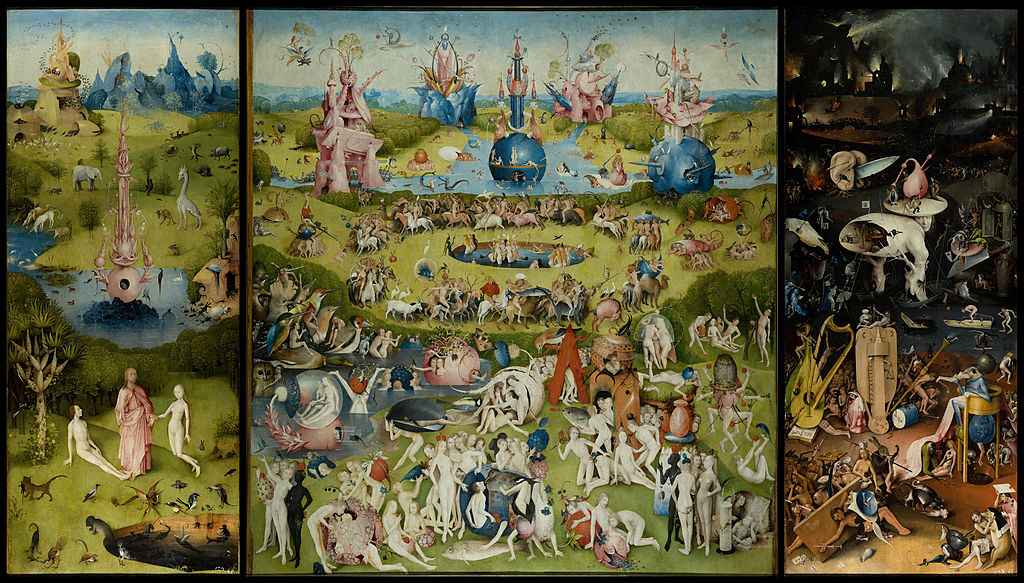
Some Christian theologians identify spirit and soul as a single element of the human being, in a duality with the flesh, or material body. This spirit or soul is the inner, intangible, immortal substance that leaves the body at death to soar to a spiritual paradise called Heaven ruled by a disincarnate Jesus, or descend to a tortuous underworld called Hell ruled by the devil.
Some claim that the afterlife described in the Gospels is allegorical, which is the likely explanation from the perspective of modern science and critical thinking. A life of compassion and ethical behavior is an eternal reward in itself, whereas a life of narcissism and sociopathic crime is a punishment that lasts forever.
A “spirit” may also mean a force in nature, equivalent to a god or more specific in character. In this sense a spirit is simply an archetype, such as the spirit of love, the spirit of the sun or the spirit of the laws. The religious concepts and terminology of “divine” or “spiritual,” referring to the gods or forces of nature which rule over the temporal things, may be dismissed, unless aligned with natural law, as a reference to ideal things as a purely psychological set of phenomena.
Evidence does not suggest the existence of life-force as a tangible thing. The concept of life-force may be nothing more than a mental construct to account for various essential elements of a healthy and enlightened life or state of mind. Defined as such it is useful in visualization leading to meditation.
Salon: You Don’t Have a Soul. The Real Science…
John Shelby Spong, “Yes We’re Going to Heaven, But It’s Not Where You Think”
There is No Scientific Evidence for a Tangible Qi/Prana/Life-force…But Scientists Are Searching For It.
Meditation Methods Utilizing the Concept of Qi/Prana/Life-force Effect Physical and Mental Health:
Mind, Body, and Spirit
Holistic health typically addresses body, mind and spirit.
Body, of course, refers to the physical body whereby the human being exists. According to modern medical science, the human body is distinguished by twelve interconnected organ systems that perform the particular functions necessary to the perpetuation of human life.
The mind is the entity that comprises sensations, perceptions, emotions, consciousness, imagination, memories, and thoughts; it is the nervous system and the information that flows through it.
Spirit is defined as that part of the human being that connects one to the greater whole. It is the life-force or quintessence of life; the combination of material elements and bodily organ systems that perpetuate life. It is often associated with pure consciousness, the self-awareness that knows, “I am.”
Alchemy, the precursor of science, was centered on the operations to purify and cultivate spirit. The alchemical “Spirit” refers to the primordial life-force generally imagined to reside in the air and the breath of all living beings.
The Chinese word is qi, the Indian yogic term is prana, the Hebrew is ruach, the Common Greek is πνεῦμα (pneuma), the Latin is spiritus, and the French is élan vital. Alchemy ascribes this force to Mercury or Quicksilver, the quintessence of the natural elements, the cultivation of which culminates in pure consciousness and enlightenment, the Philosopher’s Stone.
Psychologists such as Kenneth I. Pargament and Jeremy McCarthy regard spirituality as “the search for the sacred,” the sacred in this sense meaning anything that is deeply meaningful in a subjective way. This gives spirit an emotional element, a feeling of fulfillment, as well as a conceptual idea of one’s connection to the greater whole.
The science of spirit, then, leads to the spiritual or mystical experience of enlightenment. The science of the sacred inevitably does point toward spiritual awakening and Illumination meditation. Most spiritual traditions therefore are centered on some form of independent or communal meditation or prayer, and usually some sacred ritual, along with basic tenets. This is why Illumination meditation is one of the three pillars of Science Abbey, along with science and community.
Conclusion
Across civilizations, humanity has imagined spirit as god, breath, archetype, life-force, ancestor, or cosmic principle. Though the symbols differ, the impulse is consistent: to explain the unseen dimensions of experience and the felt coherence of life. What earlier cultures expressed in mythic language—qi, ruach, pneuma, daemon—modern inquiry reframes in terms of energy systems, neurobiology, psychology, ecology, and consciousness.
The apparent divide between science and spirit is therefore historical, not essential. Magic preceded religion; religion gave way to philosophy; philosophy matured into empirical science. Each stage refined humanity’s method of inquiry into the invisible structures underlying experience. The ancient magician invoked spirits to account for hidden causation; the modern scientist models forces and systems through disciplined investigation. The underlying question has remained unchanged: What binds the parts into a whole?
This is the question addressed by the Science of Wholeness. Rather than fragmenting reality into opposing domains—material and spiritual, sacred and secular—it examines how biological, psychological, social, and cosmological systems interrelate within a unified framework. In this light, “spirit” is neither dismissed nor literalized; it is understood as the experiential awareness of participation in larger systems of meaning and order. Wholeness is not supernatural—it is systemic.
Integrated Humanism emerges from this recognition. It affirms that human beings are embedded within lawful natural processes, capable of reason, compassion, and self-reflection. It preserves reverence without dogma and transcendence without superstition. What ancient traditions sought through ritual hierarchy and divine mediation, Integrated Humanism approaches through evidence-based ethics, global responsibility, and contemplative discipline.
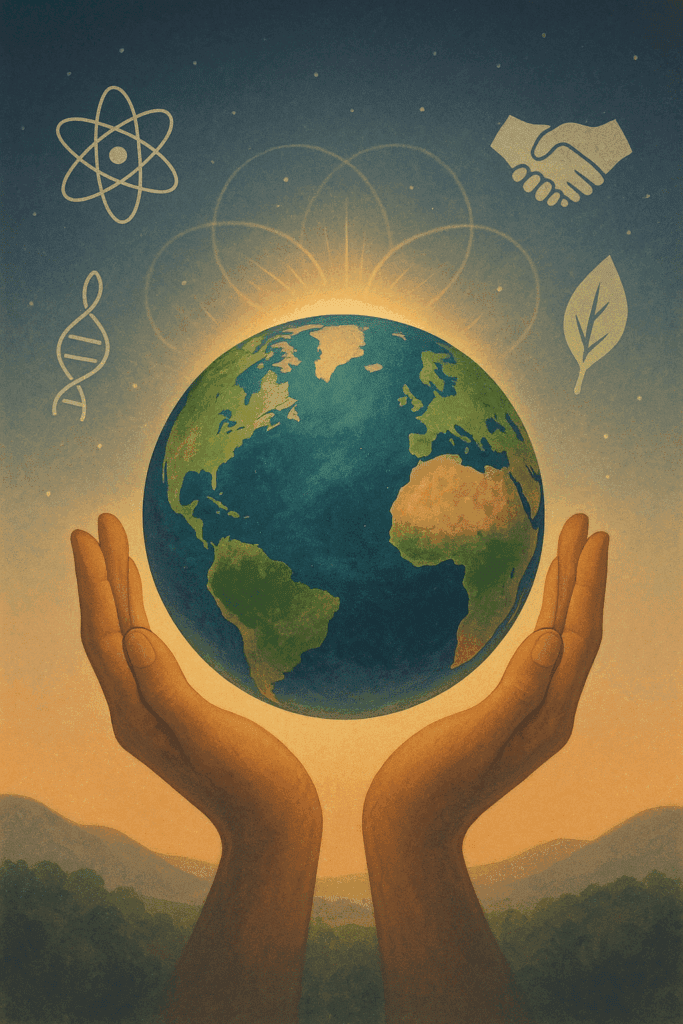
Illumination meditation—one of the three pillars of Science Abbey alongside science and community—serves as the experiential counterpart to this philosophy. Where early spiritual systems dramatized union with unseen forces, meditation investigates consciousness directly. Through sustained attention and mindful awareness, the practitioner observes the construction of perception, emotion, and identity. The “spirit” encountered is not an external entity but the lucid awareness that knows experience as it unfolds.
Thus ancient conceptions of spirit and deity are not discarded; they are contextualized. They represent humanity’s early cosmological hypotheses, expressed in symbolic form. The Science of Wholeness interprets them as stages in an evolving understanding of interconnected systems. Integrated Humanism carries the trajectory forward, uniting rational inquiry with contemplative insight.
In this synthesis, the roots of magic, the growth of religion, and the flowering of science converge—not as contradictions, but as phases in a single unfolding search for coherence. The quest for spirit becomes the quest for understanding the whole.
Bibliography
Crowley, Aleister. “The Initiated Interpretation of Ceremonial Magic.” The Equinox 1, no. 1 (1909): 159–190. (Originally written 1904.)
Dawkins, Richard. “A Scientist’s Case Against God”, The Independent, 20th April, 1992.
Dawkins, Richard. The God Delusion. Boston: Houghton Mifflin, 2006.
Frazer, James George. The Golden Bough: A Study in Magic and Religion. Abridged ed. New York: Macmillan, 1922. (Originally published 1890.)
Geoffrey of Monmouth. The History of the Kings of Britain. Translated by Lewis Thorpe. London: Penguin Classics, 1966.
Hobbes, Thomas. Leviathan. 1651. Edited by Richard Tuck. Cambridge: Cambridge University Press, 1996.
Laozi. Daodejing. Translated by D. C. Lau. London: Penguin Classics, 1963.
Pargament, Kenneth I. Spiritually Integrated Psychotherapy: Understanding and Addressing the Sacred. New York: Guilford Press, 2007.
Pargament, Kenneth I., and Jeremy McCarthy. “Spirituality: The Search for the Sacred.” In APA Handbook of Psychology, Religion, and Spirituality, edited by Kenneth I. Pargament, 3–19. Washington, DC: American Psychological Association, 2013.
Spong, John Shelby. Eternal Life: A New Vision: Beyond Religion, Beyond Theism, Beyond Heaven and Hell. San Francisco: HarperOne, 2009.
The Holy Bible. New Revised Standard Version. New York: Oxford University Press, 1989.
The Torah. The Five Books of Moses. Translated by Robert Alter. New York: W. W. Norton, 2004.
Virgil. The Aeneid. Translated by Robert Fagles. New York: Viking, 2006.

D. B. Smith
Historian · Zen Practitioner · Founder of Science Abbey
D. B. Smith is an American historian, curator, and author whose life bridges the contemplative practices of East and West. A Master Mason and 32° Scottish Rite Freemason, he served as Librarian and Curator at the George Washington Masonic National Memorial in Alexandria, Virginia, where he managed rare Masonic archives and artifacts linked to George Washington himself. His work included collaboration with leading fraternal scholars, military and intelligence professionals, and global Masonic leaders.
Smith was initiated into the Lodge of the Nine Muses No. 1776, an elite esoteric lodge in Washington, D.C., founded by past masters of George Washington’s own lodge. He has lectured and advised in both national and international Masonic and academic circles.
In parallel with his Western initiatic training, Smith received the Dharma name “Wu Yi,” or “Mui,” (“Depends on Nothing”) from a Korean Jogye Order monk in 2004. Today he is a lay practitioner in Soto Zen Buddhism, training under lineages rooted in Eihei Dogen Zenji and Dainin Katagiri Roshi, including participation in the Iowa City Zen Center and the Ryumonji Zen Monastery in the American Midwest.
He is the founder of Science Abbey, an independent research and educational platform that explores the intersection of mysticism, science, ritual, and philosophy. His work encourages a modern contemplative life grounded in historical wisdom traditions, transdisciplinary learning, and global spiritual citizenship.